
Institutional Ethics and the Legacy of Philanthropy: The Movement to Rename the Wexner Center for the Arts
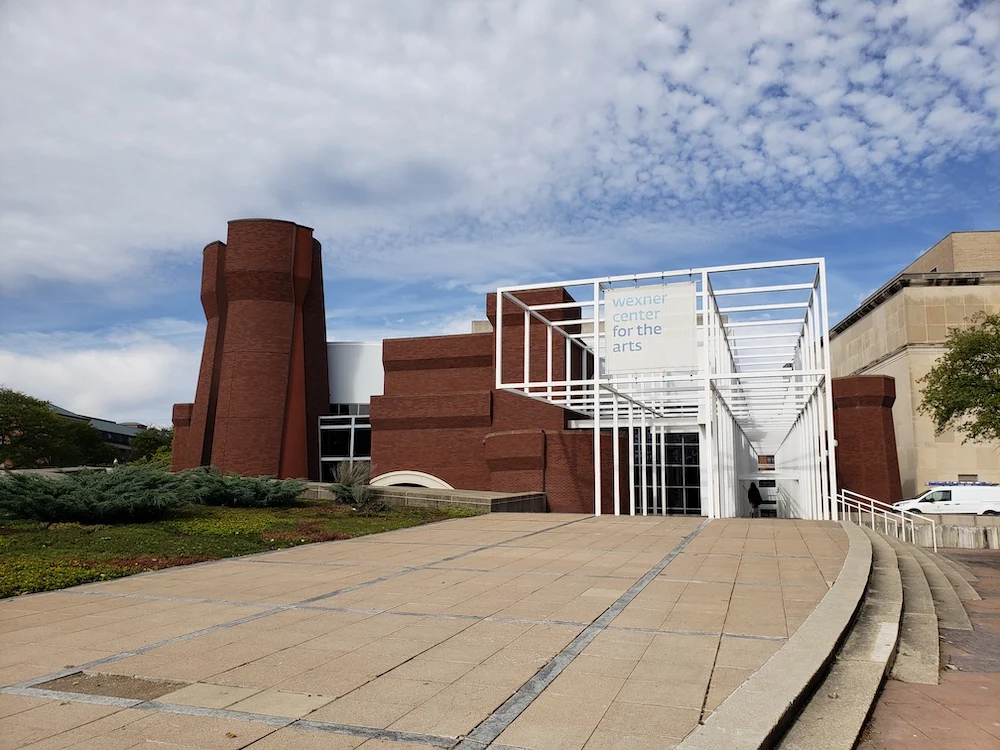
COLUMBUS, OH — The Wexner Center for the Arts, a cornerstone of the American contemporary art scene and a landmark of Ohio State University’s (OSU) campus, is currently facing an internal reckoning that threatens to reshape its institutional identity. Unionized staffers, organized under the banner of Wexner Workers United (WWU), have formally demanded the removal of billionaire Les Wexner’s name from the institution. The demand follows years of intensifying scrutiny regarding Wexner’s historical and financial ties to the late Jeffrey Epstein, a convicted sex offender whose international sex-trafficking ring has cast a long shadow over the worlds of finance, politics, and high-society philanthropy.
The movement represents a significant escalation in the ongoing debate over "tainted money" in the arts, echoing global campaigns that have successfully scrubbed the names of controversial donors from the walls of the world’s most prestigious museums. As the primary benefactor and namesake of the center, Les Wexner’s legacy is inextricably linked to the building’s existence; however, for the workers who maintain its daily operations, that legacy has become an untenable burden.
Main Facts: A Call for Moral Accountability
On May 21, Wexner Workers United (WWU), a branch of the AFSCME Ohio Council 8, Local 332, utilized social media and formal correspondence to challenge the leadership of Ohio State University. In a pointed letter addressed to the university’s administration, the union argued that the continued association with the Wexner name constitutes a "profound disservice" to the artists, staff, and the broader Columbus community.
The core of the union’s grievance lies in the moral friction between the center’s mission—to foster provocative, progressive, and community-oriented art—and the allegations surrounding its founder. The union stated that community members "deserve to engage with art without feeling complicity in supporting human traffickers, rapists, and pedophiles." This move marks one of the first instances where a museum’s own staff has led a public charge to de-name an institution based on the ethical conduct of its primary living donor.
The Wexner Center for the Arts is a "non-collecting" institution, meaning it does not maintain a permanent collection of artworks but instead hosts rotating exhibitions, performances, and film screenings. This status, the union argues, makes the "brand" and the name of the building its most significant asset—and its most significant liability.
Chronology: From Retail Empire to Institutional Crisis
The history of the Wexner Center is a story of mid-century retail success translated into late-century cultural dominance. To understand the current crisis, one must look back at the trajectory of Les Wexner’s influence and his subsequent entanglement with Jeffrey Epstein.
1. The Foundation (Late 1980s)
Les Wexner, the founder of L Brands (formerly Limited Brands) and the visionary behind retail giants like Victoria’s Secret, Bath & Body Works, and Abercrombie & Fitch, sought to gift his alma mater, Ohio State University, a world-class arts facility. In the late 1980s, Wexner contributed $25 million—a staggering sum at the time—toward the construction of the center. The building, designed by renowned architect Peter Eisenman, opened in 1989 and was named in honor of Wexner’s father, Harry Wexner.
2. The Epstein Connection (1980s–2000s)
Around the same time the center was being built, Les Wexner met Jeffrey Epstein. For nearly two decades, Epstein served as Wexner’s personal financial advisor and held sweeping power of attorney over his vast fortune. Their relationship was remarkably close; Epstein was granted access to Wexner’s private planes, properties, and social circles. It was during this period that Epstein acquired his New York City mansion—a property previously owned by Wexner.
3. The Severance and Revelation (2007–2019)
Wexner has stated that he severed ties with Epstein in 2007 after discovering that the financier had misappropriated "vast sums of money" from his personal accounts. However, the full extent of Epstein’s criminal enterprise did not become a matter of global public record until his 2019 arrest and subsequent death in federal custody. As investigations unfolded, the depth of Wexner’s involvement became a focal point for journalists and legal investigators.

4. The "Epstein Files" and the 2024–2025 Fallout
The momentum for the renaming campaign gained significant traction following the release of the "Epstein Files"—a massive cache of legal documents unsealed by court order. These documents mentioned Wexner’s name over 1,000 times. Further complicating the matter were the allegations made by Virginia Giuffre, a prominent survivor and advocate who tragically passed away in 2025. Giuffre had named Wexner as one of the high-profile men to whom she was trafficked by Epstein. While Wexner has consistently denied these allegations and maintained he was unaware of Epstein’s illegal activities, the public perception of his brand has been irrevocably altered.
Supporting Data: The Weight of Evidence and Precedent
The demand for the removal of the Wexner name is not an isolated event but is bolstered by two primary factors: the sheer volume of mentions in investigative records and the established precedent of the "Sackler removal" movement.
The Epstein Files
According to reports by PBS and other investigative outlets, the 1,000+ mentions of Les Wexner in the Epstein documents suggest a relationship that was far more integrated than a simple client-advisor dynamic. The documents detail travel logs, financial transfers, and social engagements that spanned decades. While Wexner’s legal team has maintained that he was a victim of Epstein’s financial manipulation, the union argues that the proximity to such "monstrous behavior" renders his name toxic to a public-facing cultural institution.
The Sackler Precedent
WWU has specifically cited the successful campaigns against the Sackler family as a roadmap for their own demands. The Sackler family, owners of Purdue Pharma, became pariahs in the art world due to their role in the opioid epidemic. In a series of landmark decisions:
- The Louvre (Paris): In 2019, the museum removed the Sackler name from its wings.
- The Metropolitan Museum of Art (New York): In 2021, the Met removed the Sackler name from seven exhibition spaces, including the iconic Temple of Dendur wing.
- The British Museum and Guggenheim: Both followed suit, citing a commitment to institutional integrity over donor recognition.
The union argues that if the art world can hold the Sacklers accountable for the opioid crisis, it must hold Wexner accountable for his association with a sex-trafficking ring.
Official Responses: The Institutional Stance
As the controversy has moved from private whispers to public demands, the leadership at Ohio State University and the Wexner Center has been forced to respond.
Ohio State University (OSU)
The university, which operates the center under its academic and administrative auspices, has taken a procedural stance. In a statement provided to Artforum and other outlets, an OSU spokesperson emphasized that there is a formal system in place for such grievances.
"Ohio State has an established procedure for requests regarding space and entity names," the spokesperson stated. "Students, faculty, staff, and alumni can submit requests online, and each request receives full consideration."
This response suggests that the university is not currently planning an immediate or unilateral removal of the name, but is instead directing the union toward a bureaucratic review process that could take months or years to resolve.

Les Wexner and the Wexner Family
Les Wexner has largely retreated from public life in recent years, stepping down as CEO of L Brands in 2020. His representatives have consistently issued denials regarding any knowledge of Epstein’s crimes. In previous statements, Wexner expressed regret over his association with Epstein, describing it as a betrayal of trust. However, his camp has not issued a direct response to the WWU’s latest demand for the removal of his father’s and family’s name from the arts center.
Implications: A Watershed Moment for Arts Labor
The standoff at the Wexner Center carries implications that extend far beyond the borders of Columbus, Ohio. It signals a shift in the power dynamics of cultural institutions, where the "rank-and-file" staff are beginning to assert moral authority over the board of directors and major donors.
1. The Ethics of Philanthropy
The Wexner case highlights the precarious nature of "naming rights." For decades, museums have relied on the "Gospel of Wealth"—the idea that the origins of money matter less than the good that money can do for the public. The WWU’s demand suggests that this era is ending. If a donor’s name is perceived to cause active harm or "complicity" among the public, the financial contribution no longer buys permanent social absolution.
2. Labor Unions as Moral Actors
Historically, museum unions have focused on wages, benefits, and working conditions. Wexner Workers United’s focus on the name of their building represents a new frontier in "social justice unionism." By framing the name removal as a workplace issue—arguing that working in a building named after Wexner is a "disservice" to their professional integrity—the union is expanding the definition of labor rights to include ethical alignment.
3. The Future of the Wexner Center
If the name is removed, the center faces a logistical and financial crossroads. As a non-collecting institution, it relies heavily on its endowment and ongoing university support. Removing the name of its most significant benefactor could complicate future fundraising efforts, particularly among the wealthy elite who may fear similar "cancellation" in the future. Conversely, keeping the name risks alienating the very artists and audiences the center seeks to attract.
4. Impact on Ohio State University
As a public land-grant university, OSU must balance its gratitude toward a major donor with its responsibility to its student body and staff. The university’s "naming request" process will be a test of its commitment to its stated values of inclusion and safety.
In the coming months, the OSU administration will likely face increasing pressure to act. Whether the "Wexner" name remains a permanent fixture of the Columbus skyline or is relegated to the annals of controversial history remains to be seen. What is certain, however, is that the workers of the Wexner Center have fundamentally changed the conversation about who gets to define the identity of an American cultural institution.



Leave a Comment