Meta’s Ecosystem Expansion: Threads Arrives on Quest and Ray-Ban Display Amidst Connectivity Controversy
The landscape of spatial computing and social media has shifted once again as Meta continues its aggressive push to integrate its software ecosystem across all hardware verticals. In a series of updates rolling out over the late summer of 2026, Meta has officially launched native Threads applications for both its Quest VR/MR headsets and the latest Meta Ray-Ban Display smart glasses. While the move signals Meta’s intent to cement Threads as the primary communication layer of the "metaverse," the rollout has not been without significant friction, particularly regarding user autonomy and device management.
Main Facts: A Multi-Platform Social Integration
Meta’s latest software offensive centers on Threads, the microblogging platform launched in 2023 as a direct competitor to Elon Musk’s X (formerly Twitter). After three years of rapid iteration and aggressive user acquisition, Threads has moved beyond the smartphone to become a foundational element of Meta’s Horizon OS.
Threads on Quest: A Native Experience
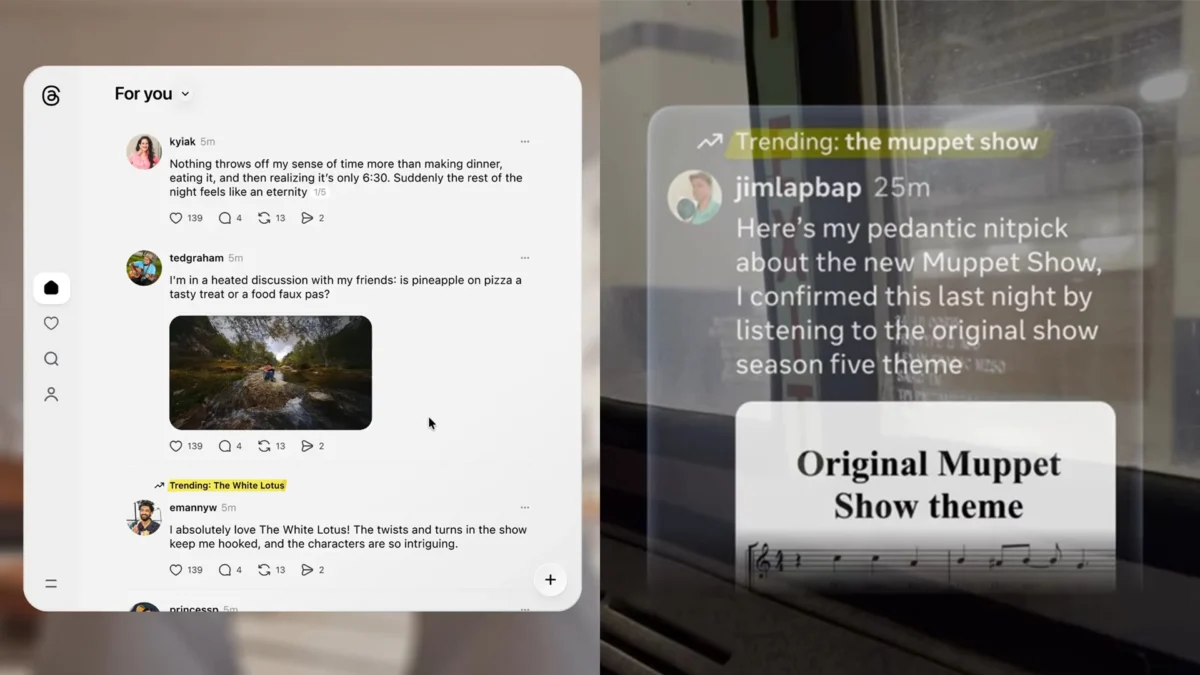
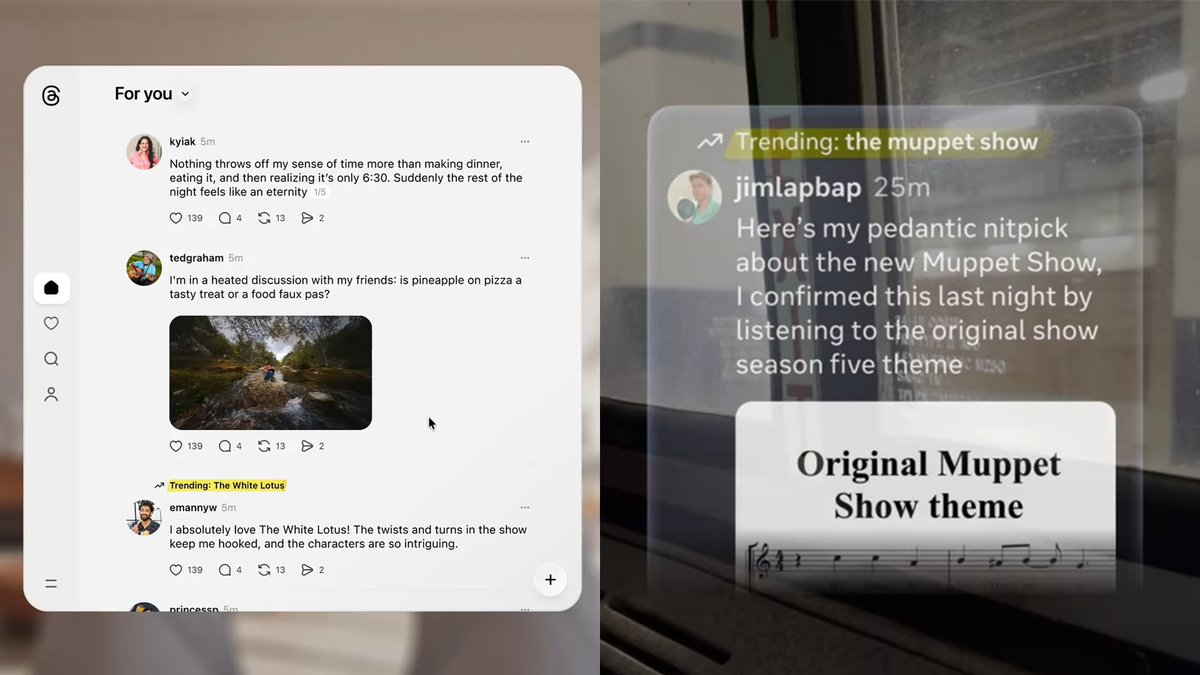
In early August 2026, Meta released a dedicated Threads client on the Meta Horizon Store. Unlike previous iterations that required users to access the platform via a progressive web app (PWA) or the Meta Quest Browser, the new native app is optimized for spatial multitasking. It features a refined, translucent UI designed to hover within the user’s peripheral vision, allowing for real-time feed monitoring while engaged in other virtual activities.
However, the launch was overshadowed by Meta’s decision to make the app a "preinstalled system component." This resulted in a forced download across millions of Quest 2, Quest 3, and Quest Pro headsets. Users reported that the installation occurred automatically, in some cases interrupting active VR gaming sessions or high-intensity productivity workflows, sparking a debate over "bloatware" in the VR ecosystem.
Threads on Meta Ray-Ban Display
Parallel to the VR update, Meta brought Threads to its Ray-Ban Display monocular HUD (Head-Up Display) glasses. This version of the app represents a significant leap in wearable social tech. Rather than a full immersive window, the HUD provides a minimalist stream of text and media.
The integration utilizes Meta’s proprietary "Neural Band"—a wrist-worn wearable that interprets micro-gestures. Users can scroll through their Threads feed by swiping a thumb against the side of their index finger, a gesture that has become the standard for discreet interaction with the Ray-Ban Display line. Despite the simplified interface, the app supports liking, sharing, and even short-form video playback directly on the lens.
Chronology: The Summer of XR Integration
The rollout of Threads across Meta’s hardware portfolio followed a calculated, albeit controversial, timeline throughout the summer of 2026:
- Late July 2026: Meta launches the Threads client for the Meta Ray-Ban Display. This followed the earlier integration of Instagram, establishing the smart glasses as a viable secondary screen for social consumption.
- Early August 2026: The native Threads app appears on the Meta Horizon Store for Quest headsets. Simultaneously, Meta initiates a global "force-push" update, installing the app on all active devices without prior user consent.
- Mid-August 2026: User backlash reaches a peak on forums like Reddit and X. Quest owners express frustration over the "forced" nature of the app and the inability to easily uninstall the system-level application.
- Late August 2026: Meta releases a series of minor patches for the Ray-Ban and Oakley smart glasses, improving the "Neural Band" response time and refining how Threads notifications appear during outdoor use.
- September 2026 (Upcoming): Meta Connect 2026 is scheduled to take place. Industry analysts expect this event to be the culmination of the summer’s updates, with rumors of new "Orion" AR glasses and further AI-driven features for the Threads ecosystem.
Supporting Data: The Growth of a Social Giant
The expansion of Threads onto wearable hardware is backed by impressive, albeit hard-fought, metrics. Since its inception, Threads has capitalized on the volatility of X, leveraging the massive existing user base of Instagram to bridge the gap.
User Metrics and Market Share
As of mid-2026, Threads boasts an active user count that nearly rivals X. Internal Meta data suggests that the platform has successfully captured the "mainstream" social audience, though analysts note that X still retains a stronger hold on the political and intellectual "breaking news" demographic.
The push into Quest and Ray-Ban hardware is seen as an attempt to capture "ambient attention." By placing the feed on a user’s face (Ray-Ban) or within their workspace (Quest), Meta increases the frequency of interactions—a key metric for advertising revenue.
Technical Performance of the Neural Band
The "Meta Neural Band," which powers the interaction on the Ray-Ban Display, has seen a 40% increase in gesture recognition accuracy since the 2025 model. The "thumb-to-finger" scroll used for Threads is now the most frequently used gesture in the Meta ecosystem, surpassing voice commands for navigation. This data highlights a shift in user preference toward "silent and discreet" interactions in public spaces.
Official Responses: Meta’s Vision vs. User Autonomy
Meta has remained firm in its strategy, framing the forced installation of Threads as a "convenience" rather than an intrusion.
Meta’s Perspective
A spokesperson for Meta’s Reality Labs division commented on the Quest update:
"Our goal is to create a seamless social fabric across all our devices. By integrating Threads directly into Horizon OS, we ensure that users can stay connected with their communities without needing to leave their immersive environments. Threads is no longer just an app; it is a core service of the spatial computing era."
Regarding the forced downloads, Meta executives have privately suggested that the integration was necessary to ensure that the "Spatial Share" features—allowing users to quickly post VR screenshots to Threads—functioned correctly at the OS level.
The Critical Response
The tech community has been less forgiving. Digital rights advocates have likened the forced Threads download to the infamous 2014 incident where Apple pushed a U2 album to every iTunes account. Critics argue that VR headsets are highly personal devices, and forcing software onto them—especially software that consumes storage and background processing power—erodes trust between the manufacturer and the power-user community.
"Forcing a social media app onto a productivity and gaming device is a move straight out of the 2010s bloatware playbook," says XR analyst Sarah Jenkins. "Meta is treating the Quest like a billboard for its other services, which risks alienating the very enthusiasts who built the platform."
Implications: The Future of Spatial Social Media
The arrival of Threads on Quest and Ray-Ban Display is more than just a software update; it is a preview of the "Always-On" social future Meta envisions. There are several long-term implications for the industry and the user experience.
1. The Death of the Smartphone Dependency
Meta’s ultimate goal is to decouple social media from the smartphone. By refining the Threads experience on smart glasses, Meta is training users to consume short-form text and media in "micro-moments" throughout the day—walking the dog, waiting for coffee, or commuting. If successful, this reduces the "friction of the pocket," making social interaction a constant, ambient layer of reality.
2. The Standardization of Gesture-Based UI
The success of the Neural Band gestures on the Threads app for Ray-Ban Display sets a precedent for how we will interact with AR in the future. As Apple and Google prepare their own glasses, Meta’s "thumb-swipe" gesture is becoming the de facto language of wearable computing, much like the "pinch-to-zoom" became the standard for smartphones.
3. Privacy and Cognitive Load
The "always-on" nature of a social feed in a monocular HUD raises concerns about cognitive load and safety. While Meta has implemented "Focus Modes" that silence Threads notifications during high-movement activities, the psychological impact of having a social media feed inches from one’s eye remains a subject of study. Furthermore, the integration of these apps deeper into the OS allows Meta to collect more granular data on how and where users engage with content in the physical world.
4. Anticipation for Meta Connect 2026
All eyes are now on Meta Connect 2026. The summer’s updates appear to be the "software foundation" for a major hardware reveal. Speculation suggests that Meta will debut a more advanced version of the Ray-Ban Display with a wider field of view and full-color binocular AR, which would transform the "simplified" Threads interface into a rich, interactive 3D experience.
Conclusion
Meta’s decision to force Threads into the hands—and onto the faces—of its hardware users is a high-stakes gamble. It reinforces the company’s dominance in the social XR space while simultaneously testing the limits of user patience. As Threads continues to evolve from a mobile app into a spatial operating system component, the boundary between our digital social lives and our physical reality continues to blur. Whether users embrace this "forced" future or retreat toward more closed ecosystems will likely be determined by the innovations showcased at the upcoming Meta Connect.