Shadows in the Living Room: The Convergence of FMV and Mixed Reality in ‘Spirit Ritual’
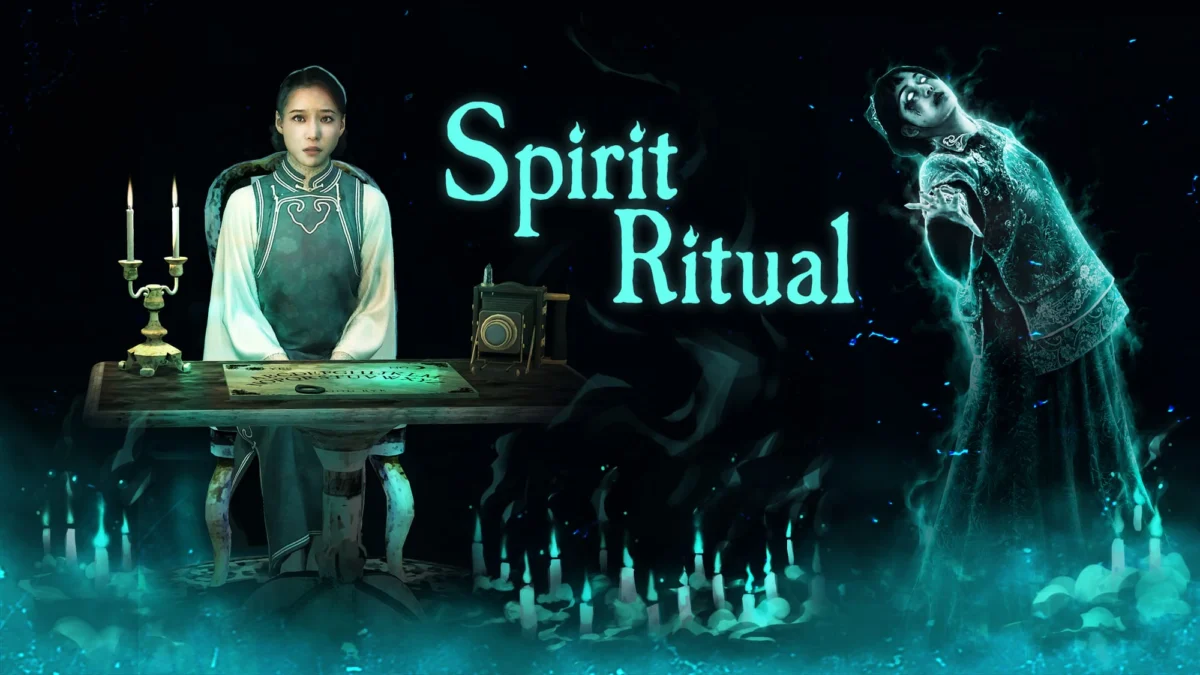
The landscape of immersive horror is undergoing a radical transformation. As virtual reality (VR) hardware evolves to prioritize high-fidelity passthrough and spatial awareness, the boundary between the digital abyss and the safety of the home is blurring. Announced during the latest VR Games Showcase, Spirit Ritual emerges as a pioneer in this new frontier. Developed by Nyamyam—the studio previously acclaimed for the visually stunning Tengami—this upcoming title promises to blend the nostalgia of 1990s Full Motion Video (FMV) with the cutting-edge capabilities of Mixed Reality (MR).
By casting the player as a psychic medium tasked with exorcising demonic entities, Spirit Ritual leverages the most intimate setting possible: the player’s own living space. With a focus on tactile hand-tracking and a hauntingly realistic aesthetic, the title is positioned to be a benchmark for the next generation of domestic horror.
I. Main Facts: A New Paradigm for Supernatural Horror
Spirit Ritual is a supernatural horror experience designed primarily for Mixed Reality, though it offers a traditional Virtual Reality mode for those seeking total immersion. The core premise involves the player assuming the role of a medium attempting to break a multi-generational demonic curse. Unlike many contemporary horror games that rely on physics-based combat or stealth, Spirit Ritual focuses on ritualistic interaction and observation.
Key features of the title include:
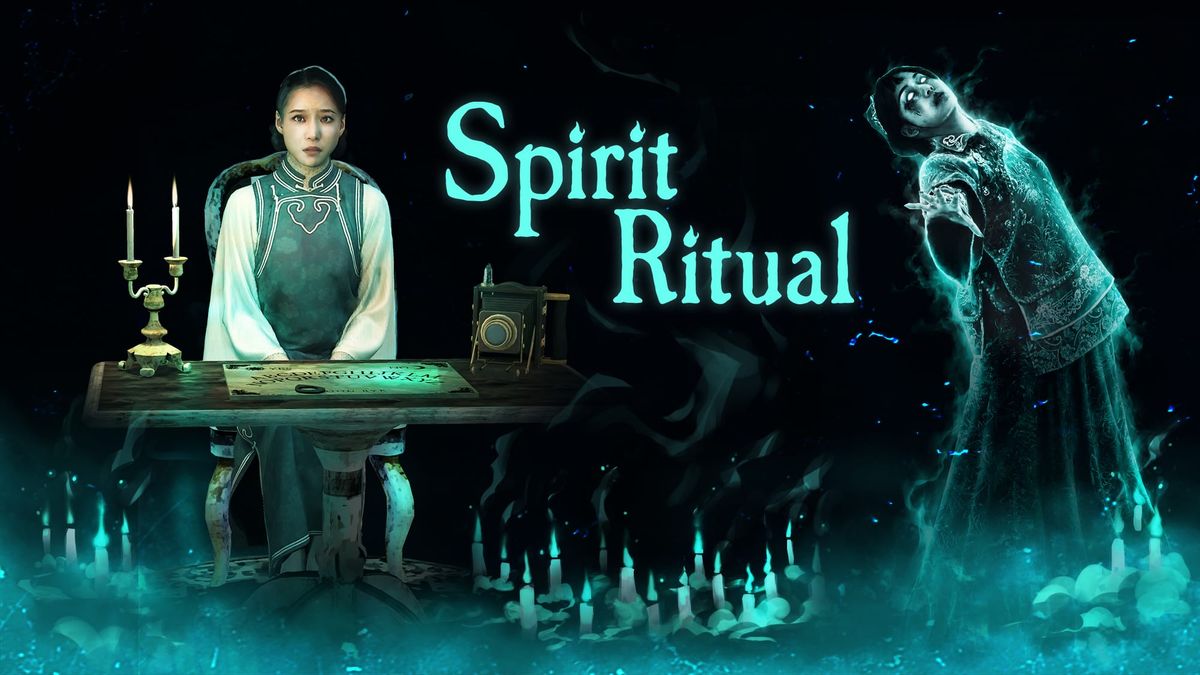
- 3D Full Motion Video (FMV): Utilizing real-life actors captured in three dimensions, the game bypasses the "uncanny valley" of traditional 3D modeling to present ghosts that look disturbingly human.
- Mixed Reality Integration: The game utilizes the passthrough cameras of modern headsets to map the player’s actual environment, allowing spirits to manifest behind furniture or peer through real-world doorways.
- Hand-Tracking Controls: Moving away from plastic controllers, the game encourages players to use their bare hands to manipulate a "spirit board" (a digital Ouija-style interface) and operate an "old-timey" spirit camera.
- Multi-Platform Release: The game is slated for release on Meta Quest (2, 3, and Pro), PICO 4, and SteamVR, ensuring wide accessibility across the current VR ecosystem.
While a specific release date remains under wraps, the reveal trailer showcased a level of polish that suggests a deep understanding of how to use spatial computing to elicit primal fear.
II. Chronology: From ‘Tengami’ to the Spirit Realm
To understand the trajectory of Spirit Ritual, one must look at the history of its developer, Nyamyam. Based in the UK, the studio first made waves with Tengami, a game styled after a Japanese pop-up book. That title demonstrated the team’s obsession with tactile interfaces and unique visual storytelling.
The development of Spirit Ritual represents a significant pivot for the studio, moving from the serene and artistic to the visceral and terrifying. The chronology of the project’s public life began with the VR Games Showcase, a digital event dedicated to the future of immersive medium.
- Pre-Announcement Phase: Throughout 2023 and early 2024, rumors circulated regarding a new project from Nyamyam that would utilize the Quest 3’s improved color passthrough.
- The Reveal (August 2024): The game was officially unveiled via a one-minute trailer. This footage highlighted the 3D FMV performances, showing a spectral woman interacting with a physical-looking environment.
- Post-Showcase Reception: Following the trailer, horror enthusiasts quickly drew comparisons to the Fatal Frame (Project Zero) series, noting the use of a camera as the primary defensive tool.
The developer has hinted that the project has been in the works for several years, specifically waiting for MR technology to reach a point where the "blending" of real and digital worlds was seamless enough to maintain the "suspension of disbelief" required for horror.
III. Supporting Data: The Technology of Terror
The effectiveness of Spirit Ritual rests on three technological pillars: spatial mapping, hand-tracking, and 3D video capture.
1. The Resurgence of FMV
In the mid-1990s, FMV was the pinnacle of gaming technology, used in titles like Night Trap and Phantasmagoria. However, it fell out of favor as 3D engines became more sophisticated. Spirit Ritual revives this concept but adapts it for the 21st century. By using volumetric capture or high-quality 3D video, the developers can place a real human performance into a 360-degree space. This is particularly effective in horror; the subtle micro-expressions of a human actor are often more unsettling than a highly detailed but ultimately "fake" CGI monster.
2. Spatial Mapping and Environmental Horror
In traditional VR, you are transported to a haunted house. In Spirit Ritual’s MR mode, your house becomes the haunted house. Data from Meta and PICO suggests that MR "passthrough" gaming is one of the fastest-growing segments of the market. By using the headset’s depth sensors, Spirit Ritual identifies walls, tables, and ceilings. This allows for "occlusion"—a technical term meaning a ghost can walk behind your actual sofa and disappear, only to reappear from a different corner. This psychological intrusion into a "safe space" is a powerful tool that traditional media cannot replicate.
3. Tactile Interaction via Hand-Tracking
The choice to use hand-tracking rather than controllers is a deliberate design move to increase "presence." When a player uses their actual fingers to move a planchette across a spirit board, the brain’s proprioception (the sense of where one’s limbs are) aligns with the digital action. This reduces the "barrier" of the hardware, making the subsequent jump-scares or atmospheric shifts feel more personal.
IV. Official Responses: The Developer’s Vision
In statements following the VR Games Showcase, the team at Nyamyam emphasized that Spirit Ritual is not just about scares, but about the "ritual" itself.
A spokesperson for the developer noted:
"We wanted to create a sense of vulnerability. When you are holding a controller, you feel like a ‘gamer.’ When you are using your bare hands to fend off a spirit that is standing in your own kitchen, the experience becomes much more primal. The 3D FMV allowed us to bring a level of humanity to the ghosts that we felt was missing from traditional character models."
Industry analysts have also weighed in on the game’s potential. "Horror has always been the ‘killer app’ for VR," says tech consultant Marcus Thorne. "But MR horror is different. It’s an invasion of privacy. Spirit Ritual is leaning into that discomfort by using real actors. It’s a bold move that could redefine how we perceive ‘live-action’ in games."
The developer has also confirmed that while the MR mode is the "intended" way to play, the VR mode will feature a fully realized environment for those who do not have the physical space or the hardware (such as older SteamVR headsets) to support high-quality passthrough.
V. Implications: The Future of Domesticated Fear
The announcement of Spirit Ritual carries significant implications for the VR industry and the horror genre at large.
1. The "Home as the Stage" Trend
As Apple’s Vision Pro and Meta’s Quest 3 continue to push the concept of "spatial computing," we are seeing a shift away from "escapism" (going somewhere else) toward "augmentation" (changing where you are). Spirit Ritual is at the forefront of this. If successful, it could lead to a wave of "domesticated horror" titles where the scares are procedurally generated based on the layout of the user’s home.
2. Evolution of the "Fatal Frame" Formula
The Fatal Frame series established the "camera as a weapon" trope decades ago. Spirit Ritual evolves this by making the camera a physical object the player must lift and aim with their hands. This physicalizes the tension. In a world where players are becoming desensitized to standard jump-scares, this level of physical engagement provides a new way to generate adrenaline.
3. Hardware Requirements and Accessibility
By targeting Meta Quest, PICO, and SteamVR, Nyamyam is attempting to capture the entire spectrum of the VR market. However, the experience will likely vary significantly between platforms. On the Quest 3, players will see their home in full color with high-fidelity ghosts. On older headsets like the Valve Index or Quest 2, the passthrough may be grainy or black-and-white, potentially altering the intended atmosphere. This highlights a growing challenge for developers: creating a consistent experience across rapidly evolving hardware generations.
4. Psychological Impact
There is a burgeoning discussion among psychologists regarding the intensity of MR horror. Because the brain perceives the home as a place of absolute safety, "invading" that space with terrifying imagery can have a more lasting psychological impact than a movie or a traditional game. Developers like Nyamyam are walking a fine line between entertainment and genuine psychological distress, a balance that will likely be a topic of debate upon the game’s release.
Conclusion
Spirit Ritual stands as a testament to the creative possibilities of modern spatial computing. By merging the "lost art" of FMV with the futuristic capabilities of Mixed Reality, Nyamyam is crafting an experience that promises to be as technically impressive as it is terrifying. As we wait for a firm release date, one thing is certain: after playing Spirit Ritual, players may never look at their own living rooms the same way again. The ghosts aren’t just in the machine anymore; they are in the house.