The Canvas of Ingenuity: How Fantasketch is Redefining the Physics-Puzzle Genre
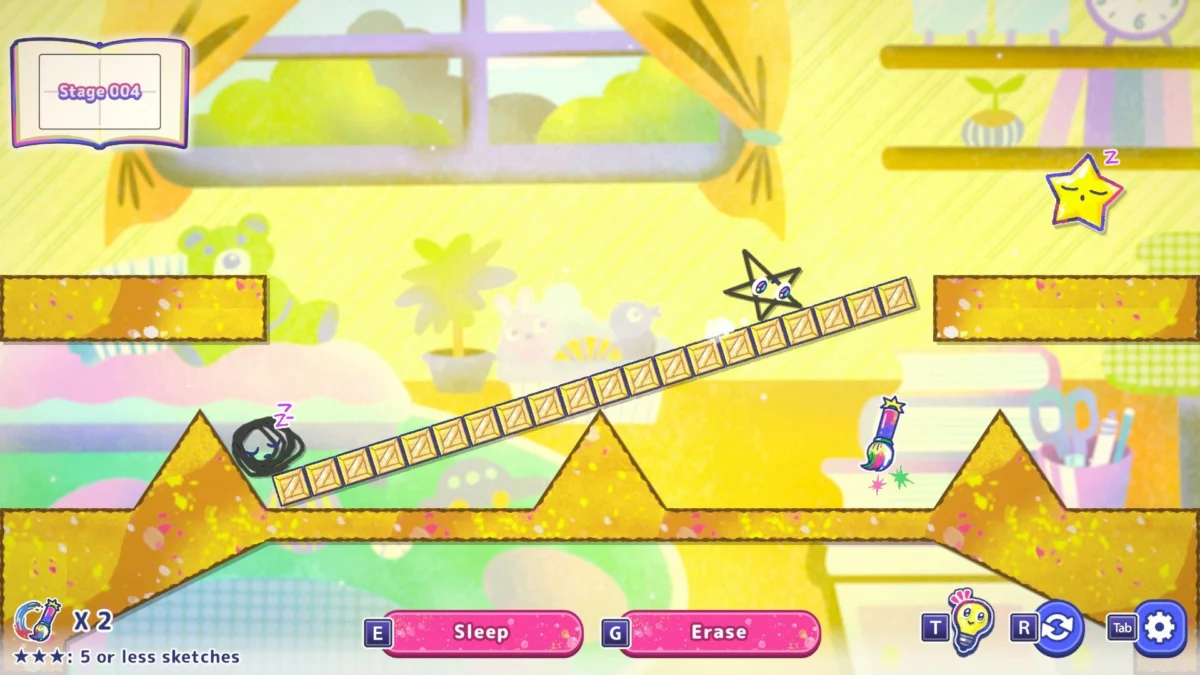
In the saturated landscape of indie gaming, where the "physics-based puzzler" often struggles to find new ground, a newcomer titled Fantasketch is drawing significant attention. By merging the tactile joy of freeform sketching with complex spatial reasoning, the game seeks to transcend the superficiality of the "draw-to-solve" mobile advertisements that have populated social media feeds for years. Recently showcased at the Hyper Japan event in London, Fantasketch presents a sophisticated evolution of the "doodle-to-play" subgenre, emphasizing charm, resource management, and emergent gameplay.
Main Facts: A New Perspective on Digital Sketching
At its core, Fantasketch is a 2D physics puzzle game that empowers players to manifest physical objects within a digital environment simply by drawing them. While the concept of "drawing a bridge" or "sketching a ramp" is not entirely new—recalling classics like Crayon Physics Deluxe or Scribblenauts—Fantasketch introduces a distinct mechanical duality: the "Awake" and "Asleep" states.
The primary objective in each level is to guide a character or object to a designated goal, often a star or an exit point. To achieve this, players are provided with a limited reservoir of magical paint. The game distinguishes itself through three primary pillars:
- Freeform Creation: Unlike games that force players to choose from a palette of pre-determined shapes, Fantasketch allows for total creative freedom. If a player needs a lever, a counterweight, or a protective shell, they must sketch it by hand.
- The Persistence of the "Asleep": When a drawn object has fulfilled its initial kinetic purpose—or if the player realizes the shape was a mistake—it doesn’t simply vanish. It enters a "sleeping" state. These dormant entities become permanent fixtures of the level’s geometry, allowing players to build complex structures through iterative failure.
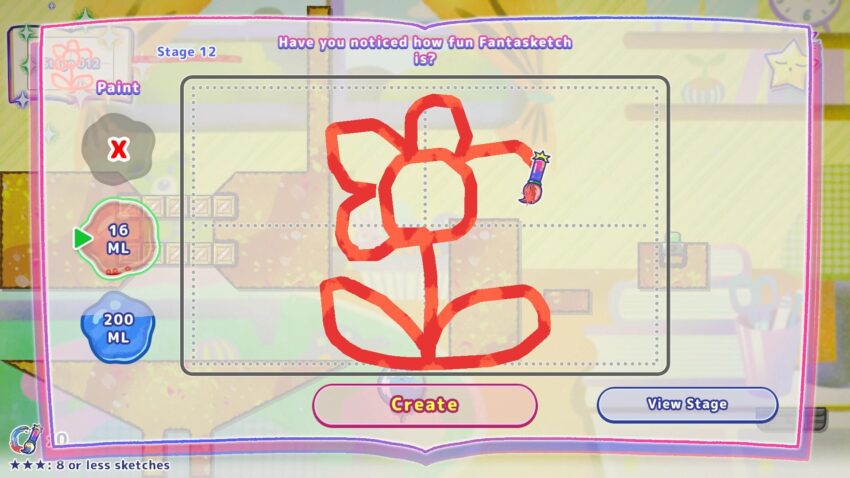
- Elemental Properties: The game utilizes a color-coded system where different paints bestow unique abilities upon the sketches. Red paint, for instance, imbues a shape with thermal properties, allowing it to incinerate obstacles like wooden crates.
Chronology: From Concept to the Floors of Hyper Japan
The development of Fantasketch follows a trajectory common among modern "passion-project" indies, focusing on a refined "gameplay-first" philosophy. While the developer has kept a low profile during the early stages of production, the game’s public timeline reached a significant milestone in mid-2024.
- Initial Reveal and Steam Listing: The game first appeared on Steam with a cryptic but visually arresting trailer, highlighting its hand-drawn aesthetic and fluid physics engine. It was quickly identified by indie enthusiasts as a title to watch due to its high level of polish compared to typical physics sandboxes.
- The Hyper Japan Showcase: In July 2024, a playable demo of Fantasketch was featured at Hyper Japan, the UK’s largest celebration of Japanese culture, which frequently hosts a "Sake Experience" and an "Indie Gallery." The demo allowed the public to experience the first two "worlds" of the game, introducing the basic physics and the fire-based mechanics.
- Version 1.1 Preview: Following the feedback from the Hyper Japan event, the developers released "Preview Trailer 1.1," which showcased optimized drawing sensitivity and more complex level designs involving moving platforms and "strange walls" that require specific elemental interactions to bypass.
Currently, the game remains in active development. While a definitive release date has not been set, the developers have encouraged the community to "Wishlist" the title on Steam to track its progress toward a late 2024 or early 2025 launch.
Supporting Data: Mechanics, Resource Limits, and Level Design
The depth of Fantasketch lies in its constraints. Journalistic analysis of the gameplay reveals that it is not a "sandbox" where players have infinite power, but rather a "resource-management puzzle."
The Paint Economy
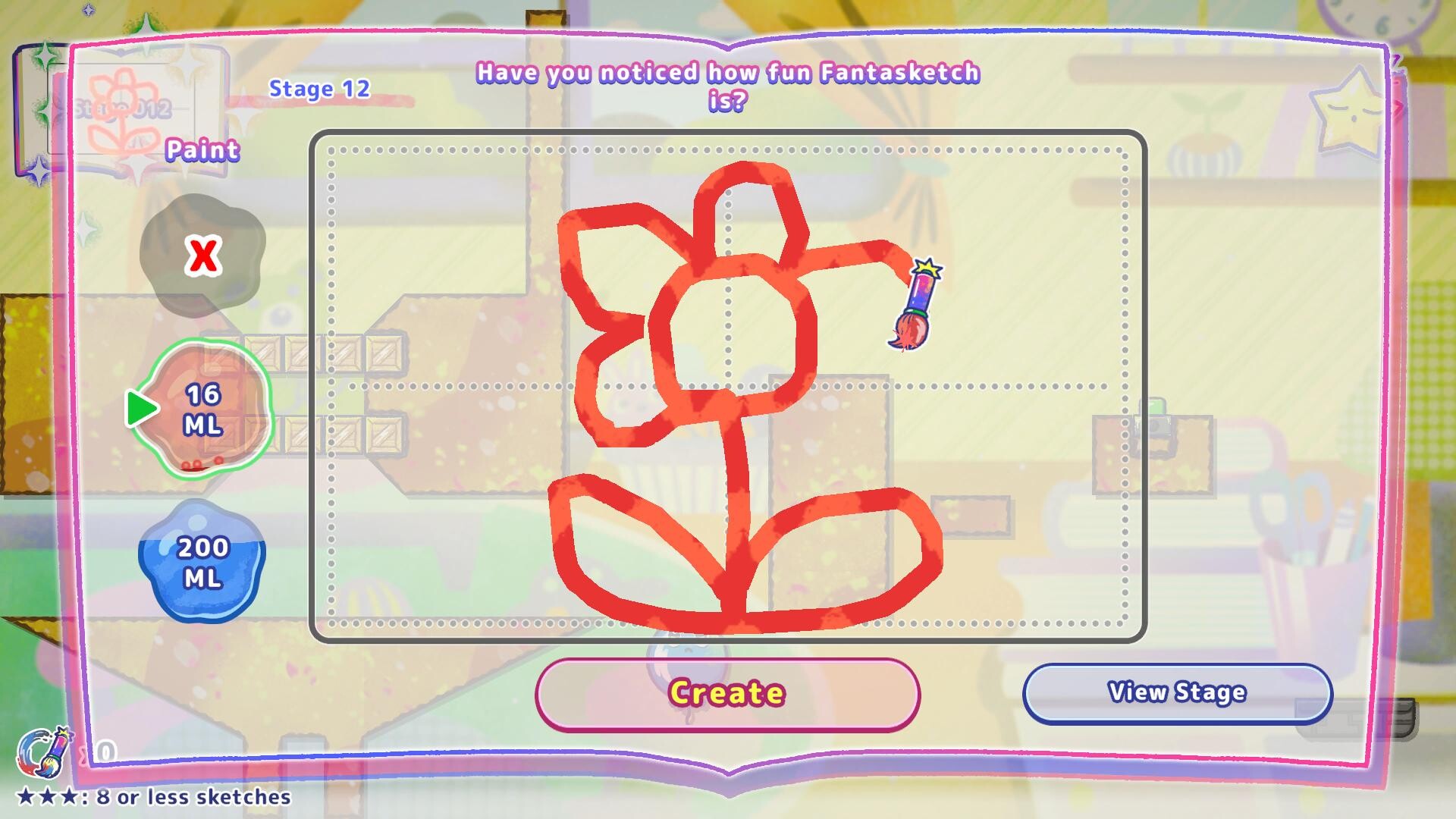
Each level provides a specific volume of paint, categorized by color. A HUD element tracks the remaining milliliters of ink. This prevents the player from simply filling the screen with ink to brute-force a solution. Large, bulky shapes consume more paint, forcing players to think about structural efficiency—drawing a hollow arch instead of a solid block, for example.
The "Asleep" State as a Strategic Layer
One of the most praised aspects of the Hyper Japan demo was the "Asleep" mechanic. In most physics games, a "reset" button clears the board. In Fantasketch, players can choose to let a failed attempt remain. If a player draws a ramp that is too steep, they can leave it there and draw a smaller wedge at its base. If timed correctly, these "sleeping" shapes can stick together, allowing for the construction of makeshift bridges and towers. This turns the player’s past mistakes into the foundation for their eventual success.
Elemental Interactions
The introduction of the "Fire Flower" and red paint mechanics adds a layer of logic-puzzle complexity. Red characters/objects can burn through obstacles, but there is a catch: the "burn" effect often only triggers when the object is in a specific state or location. This requires the player to navigate the object through the environment’s hazards before it can be used as a tool to clear the path for the "main" character.
Official Responses: Addressing the "Mobile Clone" Comparison
During the Hyper Japan showcase, the developers and early testers addressed a common observation: the visual similarity to low-quality mobile game advertisements. The "fake game" ads often show a hand drawing a line to save a character from bees or lava—concepts that are usually absent or poorly implemented in the actual downloaded app.
In response to these comparisons, the sentiment from the Fantasketch camp emphasizes "authenticity" and "mechanical depth." Unlike those advertisements, which are often pre-rendered videos, Fantasketch utilizes a robust, real-time physics engine where the weight, friction, and center of gravity of a hand-drawn shape are calculated instantly.
"The goal was to take that satisfying ‘what if I drew this?’ feeling and actually give it a brain," noted one observer of the demo. The developers have focused on ensuring that the "charm" of the game—the way the characters blink, the soft watercolor textures, and the whimsical soundtrack—elevates the experience from a simple tool to a cohesive world.
Implications: The Future of Creative Puzzles
The emergence of Fantasketch signifies a broader trend in the indie gaming industry: the return to "tactile" digital experiences. As AI-generated content becomes more prevalent, games that celebrate the "humanity" of a hand-drawn line are finding a dedicated audience.
Educational Potential
Beyond entertainment, the mechanics of Fantasketch have clear implications for educational gaming. By requiring players to manage resources (paint) while understanding physics (slopes, bridges, gravity), the game serves as an intuitive primer for basic engineering principles. It encourages the "trial and error" mindset essential for scientific inquiry.
Market Positioning
By choosing Steam as its primary platform rather than a mobile-first release, the developers are positioning Fantasketch as a premium experience. This allows them to avoid the "free-to-play" traps of microtransactions and intrusive ads that plague the mobile market. If successful, Fantasketch could pave the way for a new wave of "Doodle-to-Play" titles that prioritize artistic integrity over "click-bait" mechanics.
The "Cozy" Revolution
Finally, Fantasketch fits neatly into the "Cozy Gaming" trend. Despite being a puzzle game that requires thought, its lack of a "game over" screen (due to the ability to use sleeping shapes) and its non-violent, colorful aesthetic make it accessible to a wide demographic. It joins the ranks of games like Unpacking or Townscaper, where the act of creation is just as rewarding as the act of winning.
Conclusion
Fantasketch is more than just a digital sketchpad; it is a testament to the enduring appeal of interactive creativity. By taking a maligned marketing trope—the "draw a line" puzzle—and infusing it with genuine physics, resource depth, and a soulful art style, the developers are creating something that feels both nostalgic and fresh. As it moves toward its full release, the gaming community will be watching to see if this "charming" project can draw a permanent place for itself in the pantheon of great puzzle games. For now, it remains a highly anticipated title that promises to turn every player into an architect of their own solutions.