
The Grand Strategy of the Blue and Gray: A Deep Dive into the Great Campaigns of the American Civil War Series
Wargaming, in its myriad forms, offers enthusiasts a unique portal to history, allowing them to not only observe but actively participate in pivotal conflicts. Among the vast array of titles simulating the American Civil War, few series have achieved the legendary status and enduring appeal of the Great Campaigns of the American Civil War (GCACW). This series stands as a testament to the power of operational-level hex-and-counter wargaming, immersing players in the strategic challenges and unpredictable chaos that defined the conflict between the Union and the Confederacy.
This article, the first in a series exploring various hex and counter/board wargame systems, will delve into the GCACW series, offering both an introduction for newcomers and a comprehensive review for seasoned strategists. It will explore its rich history, intricate mechanics, and the unique blend of strategic depth and emergent storytelling that has cemented its place in wargaming lore.
A Storied History: The Genesis and Evolution of GCACW
The lineage of the Great Campaigns of the American Civil War series is as rich and complex as the historical period it portrays, marked by influential designers, shifting publishers, and a steadfast community.
Early Forays and Foundational Concepts
The intellectual progenitor of the GCACW series emerged in 1988 with the release of Lee vs Grant: The Wilderness Campaign of 1964. While not formally part of the GCACW series, this title, designed by Joseph M. Balkoski, laid the crucial groundwork. It introduced many of the core concepts and rule mechanisms that would later define the series, focusing on the operational challenges of command and the inherent uncertainty of battlefield conditions. Die-hard fans of the later GCACW games often debate its merits, with some arguing that its raw, unfiltered approach offered a unique charm that was, in certain aspects, even superior to subsequent, more refined iterations. Balkoski’s vision for simulating the fluidity and friction of Civil War campaigning proved to be remarkably prescient.
Avalon Hill Era: Birth of a Legend
The series proper began its illustrious journey in 1992 with Stonewall Jackson’s Way, published by the venerable Avalon Hill Game Company. In an era when many wargames focused on simulating individual battles, Stonewall Jackson’s Way took an audacious step: it modeled the entire Shenandoah Valley campaign, not just the Second Bull Run (Manassas) engagement. This innovative approach meant that the actual battle could unfold in entirely different locations, or even not at all, depending on the strategic decisions of the opposing generals. This emphasis on dynamic, player-driven alternative history became a hallmark of the series.
Avalon Hill, a titan in the wargaming industry, continued to expand the GCACW line, releasing titles that covered other pivotal campaigns, including Antietam, Gettysburg, Shenandoah, Chancellorsville, and the Peninsular Campaign. Each new release further solidified the series’ reputation for historical immersion and strategic depth, attracting a dedicated following.
Turbulence and Revival: The Hasbro-MMP Transition
The future of the GCACW series, however, faced an existential threat in 1998 when the Avalon Hill company was acquired by Hasbro Games. This corporate takeover led to significant layoffs, including much of the original design and development staff. Despite another game being in the development pipeline, the fate of the beloved series hung precariously in the balance, leaving its burgeoning community in a state of anxious uncertainty.
Thankfully, the story did not end there. Multi-Man Publishing (MMP), a company dedicated to preserving and expanding niche wargaming titles, stepped in. They successfully licensed the rights to the series from Hasbro, breathing new life into the GCACW franchise. MMP’s first contribution, Grant Takes Command, focusing on the Overland Campaign, was released in 2001, signaling a triumphant return.
Under MMP’s stewardship, the series not only continued to grow but also diversified. The publisher began releasing much-needed titles covering the Western Theater of the war, previously underrepresented. Furthermore, MMP undertook the ambitious task of remaking and reissuing older Avalon Hill titles, often bundling two campaigns into a single box, enhancing accessibility and value for players. The latest installment, Thunder on the Mississippi, which simulates the critical siege of Vicksburg, saw release in 2024. The future remains bright, with plans for further expansion, including strong rumors pointing to a remake of Stonewall in the Valley as the next anticipated title. This continuous development underscores MMP’s commitment to the series and its community.
The Operational Battlefield: Unpacking GCACW’s Core Mechanics
The Great Campaigns of the American Civil War series distinguishes itself through a unique and deeply immersive rule system designed to capture the essence of operational command during the 19th century. Its core ethos revolves around the concept of "uncertainty," a pervasive element that mirrors the historical realities faced by Civil War generals.
Scale and Scope: A Campaign Perspective
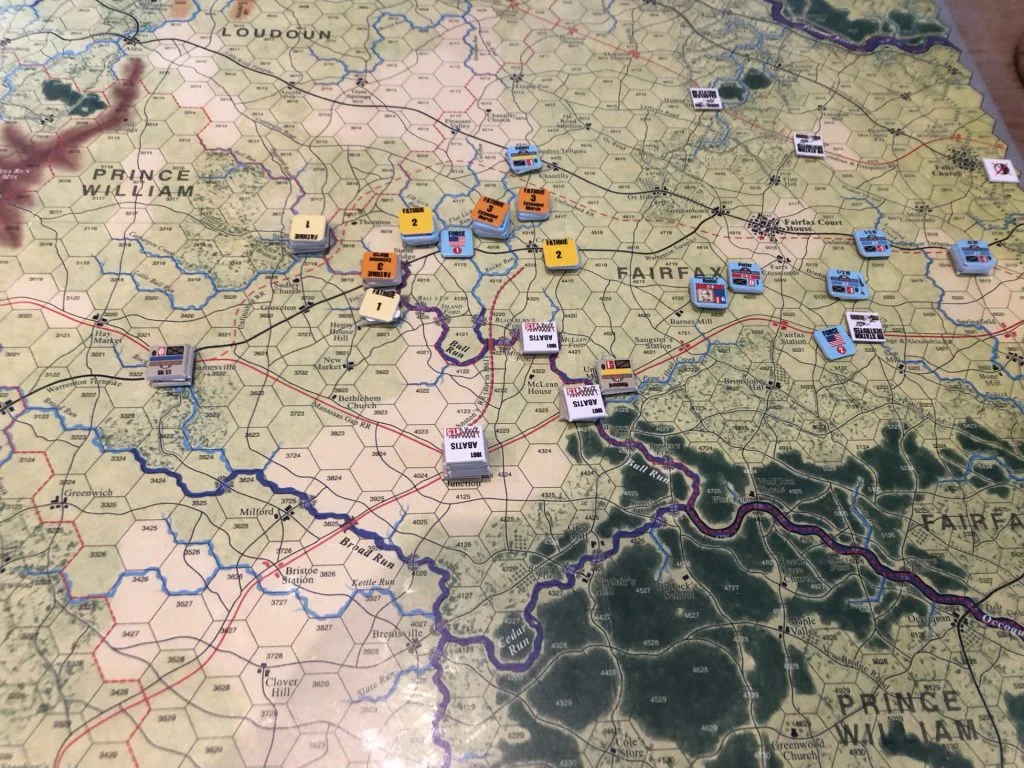
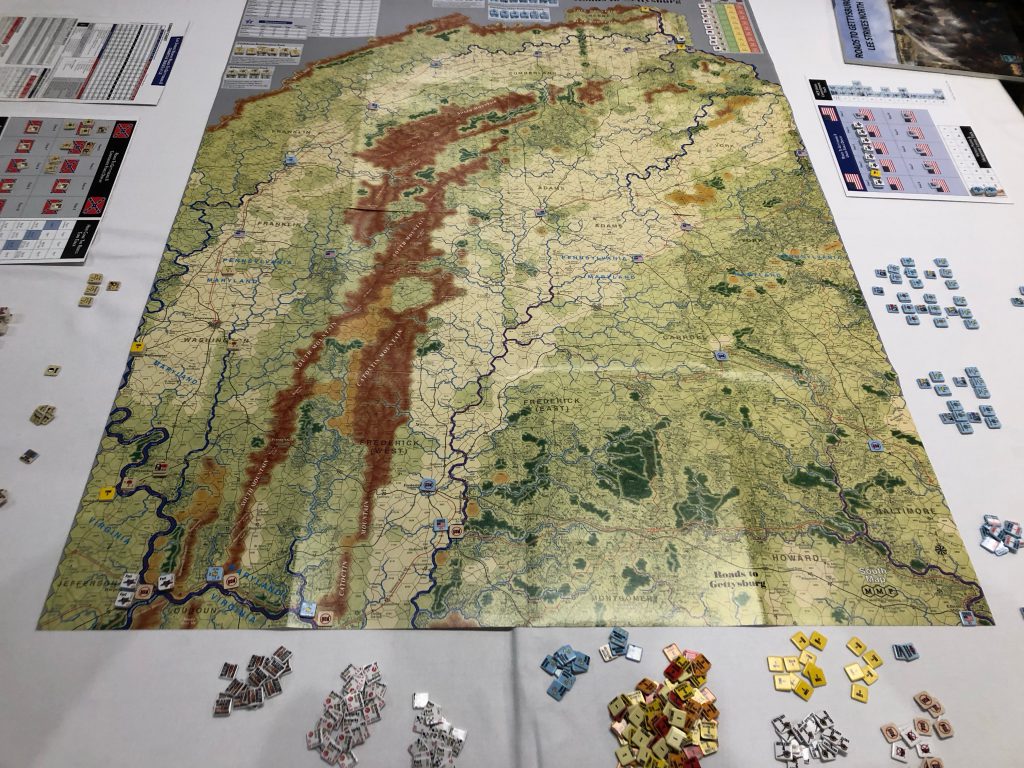
GCACW operates at an operational level, a scale that allows for both strategic maneuver and significant tactical engagements without bogging down in individual skirmishes. Unit counters primarily represent divisions, although the granularity can extend to individual regiments in specific scenarios or situations. The map scale is consistently maintained across all games at approximately one mile per hex, providing a vast and detailed canvas for campaigns.
A defining characteristic is that battles, which might be the sole focus of other wargames, are often resolved swiftly within GCACW, typically requiring only a few dice rolls. This efficiency allows the series to encompass not just major engagements but also the countless smaller skirmishes, advances, and retreats that characterized entire campaigns. Scenarios within each game are broadly categorized: basic scenarios depict pivotal moments or specific battles, while advanced scenarios, featuring more complex rules for logistics, supply, and broader campaign objectives, aim to simulate the entirety of a historical campaign.
The Ethos of Uncertainty: Command and Control in the Civil War
The genius of GCACW lies in its dynamic rule system, which masterfully injects uncertainty at every possible turn. This is not mere randomness for randomness’s sake, but a deliberate design choice to simulate the inherent friction, miscommunication, and fog of war that plagued Civil War command. Players are constantly confronted with the unknown:
- Random Events: Unpredictable occurrences like sudden rainstorms or command paralysis can abruptly derail meticulously crafted plans.
- Reaction Rolls: The ability of units to react to an opponent’s flanking maneuver or unexpected advance is not guaranteed, dependent on a crucial die roll. Even if a unit successfully activates, its speed of movement might not be sufficient to arrive in time.
- Attack Contingencies: Even when troops are successfully brought into position, they might fail to attack as intended, or attack only piecemeal, leading to potentially catastrophic outcomes.
This constant undercurrent of unpredictability means that players must constantly adapt, revise, and gamble. The rules often seem to conspire against the best-laid plans, until, in a sudden turn of fortune, an enemy force is routed, and a daring maneuver pays off. This dynamic tension is central to the series’ appeal.
The Action Cycle: A Dynamic Turn Structure
At the heart of the GCACW system is the "action cycle," which governs each game turn, representing a single day of the campaign. Unlike traditional I-GO-U-GO systems where one player completes all their actions before the other, GCACW employs a more interactive and historically resonant approach:
- Initiative Roll: At the start of each action cycle, players roll for initiative. The winner gains the opportunity to activate a single unit.
- Unit Activation: Once a unit is activated (typically for a march), the initiative is rolled again. This continues until both players pass consecutively, signifying the end of the action cycle. This iterative process ensures constant player engagement and mimics the stop-and-start nature of operational command.
- Variable Movement: A distinctive feature is the absence of a fixed movement allowance. Instead, players roll a die to determine how far an activated unit can move. While this "roll-and-move" mechanic might seem overly simplistic or random at first glance, it is modified by factors such as the presence of leaders or the decision to "force march" troops, albeit at the cost of increased fatigue.
- Fatigue System: Units can be activated multiple times within a turn, but each activation contributes to their fatigue levels, up to a maximum of four. Pushing troops too hard can lead to disorganization, loss of manpower, or even demoralization, reflecting the severe toll of continuous campaigning.
Engaging the Enemy: Combat and Leader Actions
Combat in GCACW is resolved through two primary methods:
- March Attacks: Units can initiate an attack while on the march by expending movement allowance. These are typically smaller, more opportunistic engagements.
- Leader-Led Assaults: To coordinate a larger attack involving multiple units, players must activate a leader and declare an assault. This method, while powerful, carries inherent risks. A crucial "leader check" roll is required, which might prevent the attack from unfolding entirely or result in only a fraction of the intended units participating, potentially turning a planned offensive into a disaster.
Actual combat resolution involves a host of modifiers, accounting for terrain, flank advantages, and artillery support. The combat result table is designed to discourage large-scale attacks unless a substantial numerical or positional advantage exists, reflecting the bloody and often indecisive nature of Civil War battles.
While the system’s reliance on dice rolls and inherent uncertainty might initially appear daunting or frustrating, in practice, it consistently generates compelling narratives of daring flanking maneuvers, last-minute reinforcements, and desperate charges. This emergent storytelling is a core strength of the series.
Strategic Depth and Narrative Power: The Strengths of GCACW
The Great Campaigns of the American Civil War series possesses several distinct strengths that elevate it beyond mere historical simulation, transforming it into a powerful engine for emergent narratives and immersive strategic thinking.
An Open Canvas for Alternative History
One of GCACW’s most celebrated attributes is its expansive, open-ended campaign maps. Unlike games that meticulously recreate a single battle with a fixed setup, GCACW provides a vast operational theater. This "open canvas" empowers players to explore divergent historical paths, leading to unique and memorable campaign narratives.
A prime example comes from an early play experience with Here Come the Rebels, which models the Antietam Campaign. In a particular session, the Confederate player eschewed the historical defensive lines, instead fortifying positions on the Monocacy River and entrenching the city of Frederick. The Union forces, after inconclusive initial engagements, eventually managed to push through these defenses, pursuing the Rebels past South Mountain. Crucially, the campaign concluded without any engagement near Antietam Creek or Sharpsburg, the historical site of the bloody battle. Both players collaboratively "wrote" their own slice of alternative history, a testament to the series’ capacity for player agency and emergent storytelling. The starting setup for games like Roads to Gettysburg perfectly illustrates this, presenting a wide operational front where the climactic battle could conceivably unfold anywhere, not just on historical ground.
Immersive Simulation of Command
The pervasive uncertainty woven into the GCACW rule set is not a design flaw but a brilliant mechanism for historical immersion. It deftly models the "fog of war" and the constant friction that plagued Civil War generals. Delays in communication, unexpected enemy attacks, lost orders, and the sheer unpredictability of large-scale troop movements were constant realities for commanders like Lee and McClellan. The initiative system, with its variable activations and outcomes, elegantly encapsulates these challenges, forcing players to grapple with the same strategic anxieties and tactical dilemmas faced by their historical counterparts. This deep immersion fosters a genuine sense of being in command during a chaotic and uncertain period.
Accessible Complexity: Playability Despite Scale
Despite its grand scale and operational depth, GCACW is surprisingly playable. The maps, while large, typically feature a relatively low unit density, especially when compared to complex operational-level World War II games. This means that much of the game involves strategic movement across the board, a process that doesn’t require constant, fastidious checks of minute rules.
Furthermore, the dynamic initiative system significantly enhances playability. Unlike I-GO-U-GO systems, where players might endure long periods of inactivity while their opponent takes their turn, GCACW’s constant rolling for initiative ensures frequent opportunities to act or react. This snappy cadence keeps players engaged and on the edge of their seats, fostering a continuous sense of tension and anticipation as they await their next chance to influence the unfolding campaign.
Navigating the Challenges: Addressing GCACW’s Weaknesses
While the Great Campaigns of the American Civil War series offers a compelling and rewarding experience, it is not without its challenges and potential drawbacks, which prospective players should consider.
The Double-Edged Sword of Randomness
Perhaps the most significant strength and weakness of GCACW is its reliance on randomness. While the uncertainty fosters immersion and dynamic narratives, it can undoubtedly frustrate some players. There will be moments when victory feels snatched away, or defeat imposed, not through strategic missteps but through an unforgiving string of low dice rolls. Players might find themselves in situations where an opponent receives multiple activations consecutively, methodically dismantling their army while they can only watch, unable to react due to poor initiative rolls. For those who prefer highly deterministic systems where every outcome feels directly attributable to player skill, GCACW’s "swingy" dice rolls can be a source of considerable annoyance. This aspect can make the series less appealing for highly competitive players who seek to minimize luck as a factor.
Time Commitment and Scenario Scope
The advanced campaign scenarios, which represent the core strength of the series, demand a substantial time commitment. Completing a full campaign often requires multiple days or even several weekends, necessitating the ability to keep the game set up for extended periods. This makes finding dedicated opponents and scheduling play sessions a significant challenge for many.
While the basic scenarios offer a quicker play experience, they often suffer from being overly swingy. With a single battle result frequently deciding the entire scenario, the impact of individual dice rolls is amplified, making them feel less strategically robust than the expansive advanced campaigns. The true depth and narrative power of GCACW are best realized in the longer, more intricate campaign scenarios, where individual moments of luck are smoothed out over the broader strategic sweep.
Fiddliness and Table Footprint
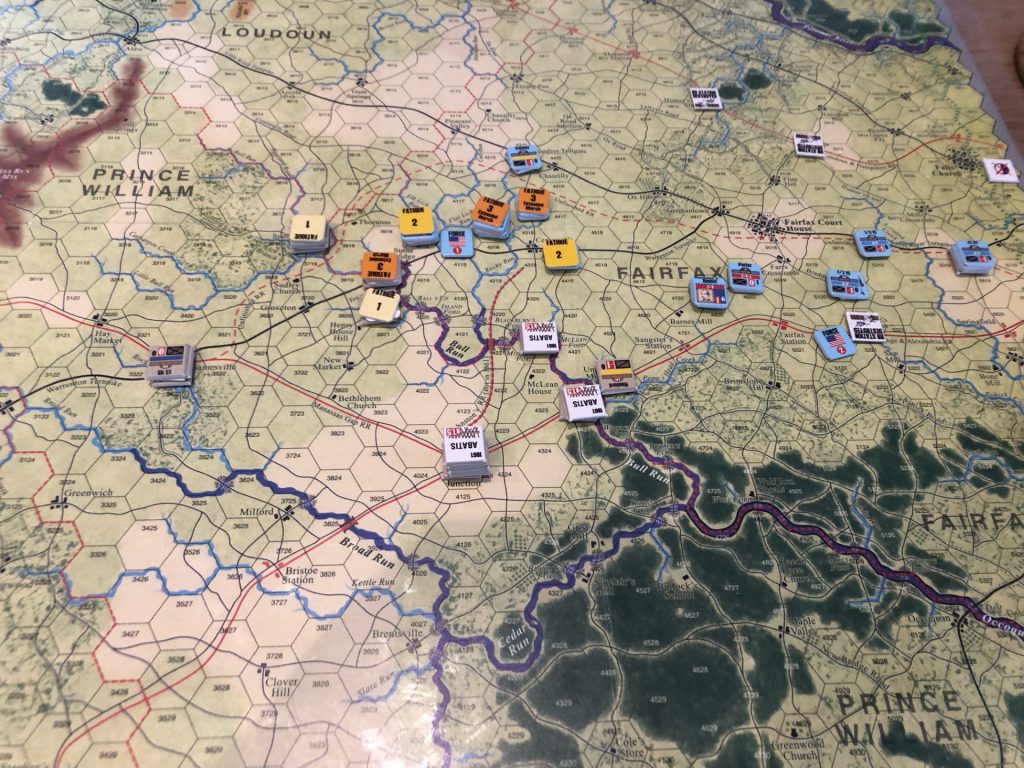
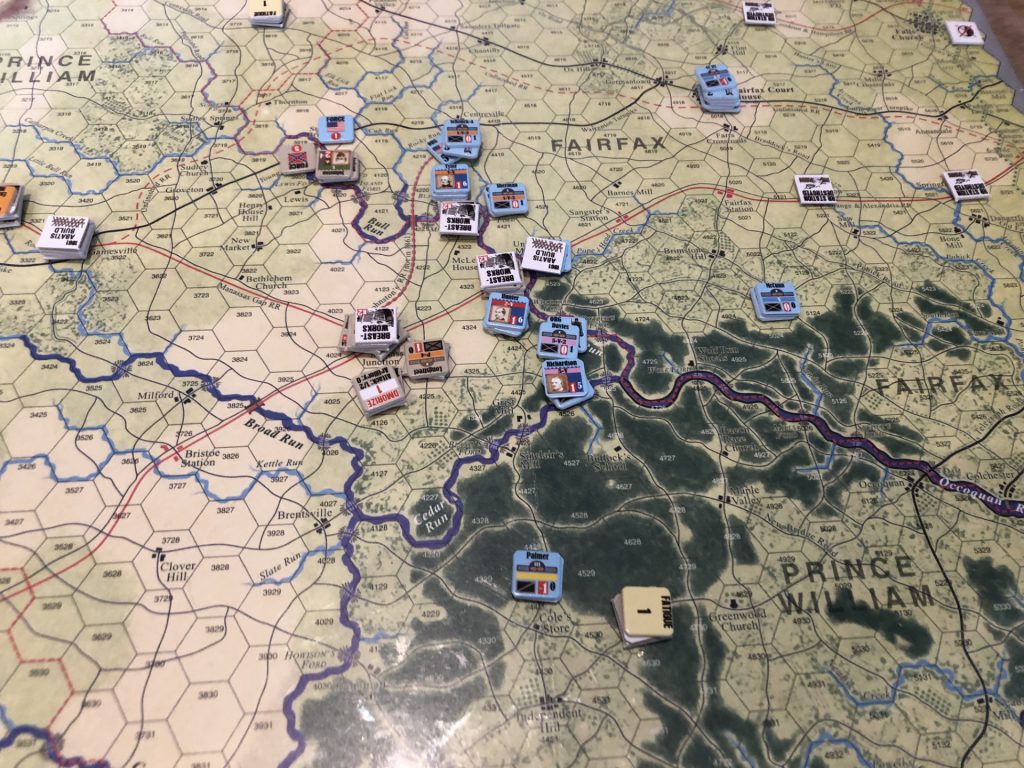
The level of detail in GCACW, while enriching, can also lead to a degree of "fiddliness." Each individual unit can accrue a host of potential status effects—ranging from different levels of fatigue, to being disorganized, out of supply, exhausted, or demoralized. These are represented by additional counters or by flipping unit and manpower markers, and they are constantly changing throughout the game. This can become quite cumbersome, especially with tightly stacked units, leading to a cluttered board and frequent adjustments. While digital adaptations like Vassal modules often feature "all-in-one" counters that simplify status assessment, physical play can be more demanding.
Furthermore, the series tends to be a "table hog." Most games require at least two maps, necessitating a large, empty table for play. The maps themselves are typically not mounted, meaning players must contend with annoying bumps and creases, or invest in plexiglass overlays to keep them flat and prevent shifting during play.
Learning Curve and Rulebook Clarity
While the core rules of GCACW are surprisingly simple in practice, the initial reading of the rulebook can be quite a chore. The rules are often dense and replete with exceptions, requiring frequent cross-referencing. Even experienced players often find themselves needing to consult the rulebook for specific interactions, such as how woods affect zones of control or marching. The advanced scenarios, with their additional rules for reinforcements, supply lines, and campaign-specific requirements, can appear particularly daunting to new players, presenting a significant initial learning curve.
Entry Points: Recommendations for New Commanders
For those intrigued by the strategic depth and narrative potential of GCACW, choosing a starting point can seem overwhelming given the series’ extensive catalog. Unlike some other wargame series that offer a designated "starter game," GCACW does not have a single, universally agreed-upon entry point.
The most pragmatic advice is to begin with whichever campaign genuinely interests you the most, or whichever game you can find at an affordable price. Multi-Man Publishing (MMP) does not frequently reprint older titles, meaning that unless a game has been released recently, prospective players will often need to navigate the secondary market, which can sometimes involve significant markups.
However, if a specific recommendation is needed, two titles stand out as excellent entry points:
- Hood Strikes North: This game is one of the few single-map campaigns in the series, making it less of a "table hog" and potentially more manageable for players with limited space or time. Its focused scope allows newcomers to grasp the core mechanics without the added complexity of multi-map operations.
- Roads to Gettysburg II: This robust offering features two of the most pivotal campaigns of the war—Gettysburg and Antietam—providing immense value. Crucially, its advanced scenarios incorporate some of the most straightforward and forgiving supply rules within the series, easing the burden of managing complex logistics for new players.
The Enduring Legacy: GCACW’s Place in Wargaming
The Great Campaigns of the American Civil War series occupies a cherished and influential position within the wargaming hobby. It has successfully carved out a unique niche, appealing strongly to those with a deep interest in the American Civil War, particularly at the operational level.
Fulfilling a Niche
For many years, the Civil War wargaming landscape was dominated by tactical-level games, which, while offering their own distinct pleasures, often failed to capture the grand strategic sweep and command challenges that truly defined the conflict. GCACW emerged as a revelation for players seeking an operational-level simulation that faithfully represented the complexities of managing armies across vast distances, grappling with uncertain intelligence, and making critical decisions that could alter the course of history. Its innovative approach filled a significant void, resonating deeply with enthusiasts.
A Generator of Epic Narratives
Ultimately, the enduring appeal of GCACW lies in its unparalleled ability to generate epic, player-driven narratives. It creates memorable sessions where individual leaders rise above expectations or falter disastrously, where a daring flanking maneuver secures an improbable victory, or a brave charge turns the tide of battle. These are the "stories" that wargamers, whether of miniature armies or hex-and-counter systems, actively seek: moments of high drama, strategic brilliance, and the visceral thrill of command. GCACW delivers these experiences in droves, cementing its reputation not just as a game, but as a powerful storytelling engine.
For anyone with an interest in the American Civil War, particularly those drawn to the challenges of operational command and the thrill of shaping alternative histories, the Great Campaigns of the American Civil War series comes with a heartfelt and resounding recommendation. It is a series that continues to captivate, challenge, and inspire, ensuring its legacy for generations of wargamers to come.


Leave a Comment