The Human Canvas: Exploring the Painterly AI Aesthetics of Jacob Holster
Main Facts: Bridging the Gap Between Algorithm and Artistry
In the rapidly evolving landscape of generative media, the digital art world is currently witnessing a profound shift. While the initial wave of artificial intelligence (AI) art was characterized by a fascination with hyper-realistic renders and the "uncanny valley" of digital precision, a new movement is emerging—one that prioritizes texture, emotion, and the "painterly" quality of traditional fine arts. At the forefront of this movement is Jacob Holster, known to the digital community as @bandyquantguy.
Holster occupies a unique position in the contemporary art world. He is not merely a creator of digital imagery; he is a scholar and educator whose work is deeply rooted in the intersection of technology and human pedagogy. Serving as an Assistant Teaching Professor of Music Education at Penn State University, Holster’s professional life is dedicated to understanding how humans learn, create, and interact with complex systems. This academic foundation provides a rigorous conceptual framework for his artistic output, distinguishing his work from the deluge of purely aesthetic generative content found on social media.
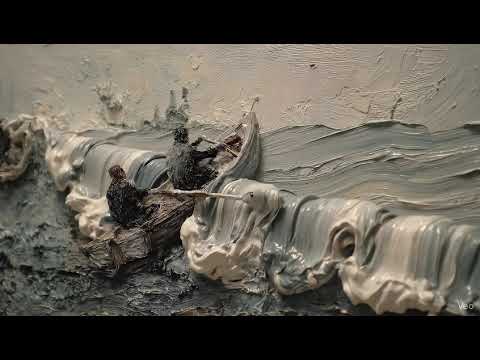
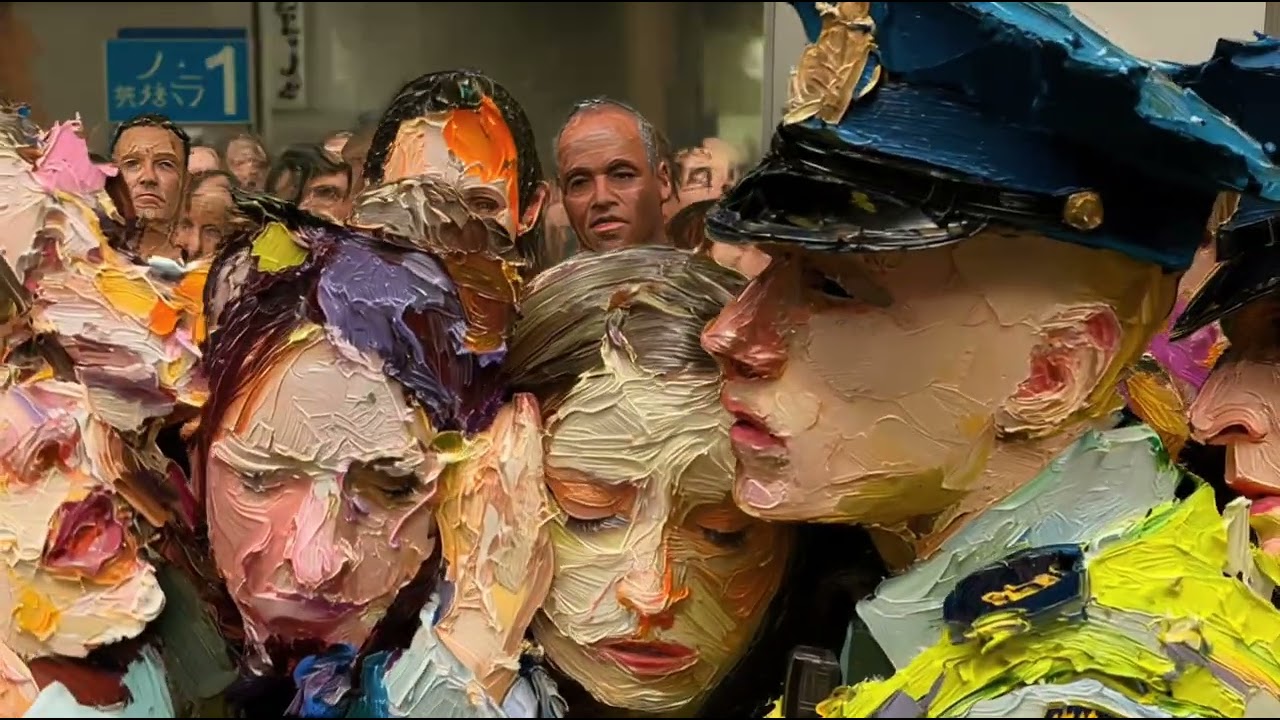
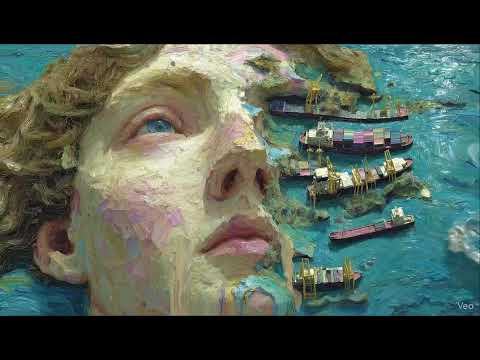
Holster’s signature style, most notably seen in his ongoing "Paint World" series, rejects the clinical, glossy finish often associated with AI tools like Midjourney or Stable Diffusion. Instead, his films and still images evoke the tactile qualities of traditional oil painting. His work features warm palettes, visible "brushstrokes," and a sense of atmospheric depth that suggests a human hand guided the machine. His recent short film, Art Is Human Terrain, serves as a manifesto for this approach, arguing that technology is not a replacement for the human spirit but a new landscape through which human experience can be explored.

Chronology: The Evolution of a Digital Impressionist
The trajectory of Jacob Holster’s career reflects the broader evolution of creative technology over the last decade. To understand his current "painterly" phase, one must look at the chronological development of his interests in music, education, and visual media.
The Academic Foundation (2010s)
Before becoming a prominent figure in the AI art scene, Holster’s primary focus was the structure of sound and the methodology of teaching. His time in academia allowed him to explore how information is processed and how creative intuition can be fostered within structured environments. This period was crucial in developing his "quant" (quantitative) perspective—the "quantguy" in his handle—referring to the use of data and systematic approaches to creative problems.
The Shift to Generative Media (Early 2020s)
As generative AI began to enter the mainstream, Holster recognized a parallel between the algorithmic structures of music and the latent spaces of visual AI models. He began experimenting with how these models could be "taught" to replicate the nuances of human expression. Unlike many early adopters who sought to create the most realistic images possible, Holster’s early experiments focused on the "glitch" and the "texture"—the areas where the AI failed to be perfect and instead became expressive.
The Birth of "Paint World" (2023–Present)
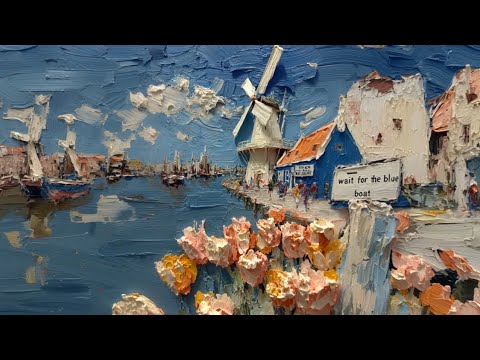
The emergence of the "Paint World" series marked a turning point in Holster’s aesthetic. Beginning with short, evocative clips on Instagram and YouTube, Holster developed a workflow that prioritized the "painterly" look. Titles like Le Voyage [Paint World 28] and wait for the blue boat [Paint World 18] showcased a growing mastery over movement and light. By the time he released Art Is Human Terrain [Paint World 33], Holster had moved beyond simple experimentation into cohesive narrative filmmaking. His work now serves as a bridge between his role at Penn State and the global digital art community, demonstrating how AI can be integrated into high-level creative practice.
Supporting Data: The Technical and Philosophical Architecture
Holster’s work is supported by a sophisticated understanding of both the technical tools of AI and the philosophical implications of their use. To achieve the specific "painterly" aesthetic that defines his brand, Holster utilizes a complex pipeline of generative tools, likely involving custom prompts, LoRA (Low-Rank Adaptation) models trained on specific art styles, and post-production techniques that introduce organic grain and light flicker.
Texture and Visual Density
Data analysis of viewer engagement with AI art suggests a growing "AI fatigue" regarding hyper-realistic, plastic-looking renders. Holster’s work counters this by increasing "visual density"—the amount of perceived information in the texture of the image. While a standard AI render might have smooth gradients, Holster’s "Paint World" frames contain simulated impasto and scumbling, techniques used by traditional painters to create physical depth. This choice is backed by psychological studies suggesting that humans find "imperfect" or "textured" visuals more emotionally resonant than sterile ones.
The Multimodal Connection
As a Professor of Music Education, Holster’s use of sound is as critical as his visuals. His films are not silent; they are immersive experiences where the audio track is often as "textured" as the image. This multimodal approach—using sound to inform the rhythm of the visual "brushstrokes"—is a hallmark of his methodology. It reflects a data-driven understanding of how human perception synthesizes different sensory inputs to create a feeling of "presence" or "soul" in a digital work.
Perspectives and Official Context: The Academic View
The reception of Holster’s work extends beyond the likes and shares of Instagram. In the academic halls of Penn State and within the broader music education community, his work is viewed as a vital case study in the future of pedagogy.
The Role of the "Assistant Teaching Professor"
In his official capacity at Penn State, Holster examines how AI can be a tool for empowerment in the classroom. His artistic output serves as a "proof of concept" for his research. He argues that if a music educator can use AI to become a visual filmmaker, then the traditional boundaries of "subject matter" are dissolving. This perspective is revolutionary in education, suggesting that AI allows for a "trans-disciplinary" creativity where the skill lies in the conceptualization and the "curation of the algorithm" rather than just the manual execution.
Critic and Peer Response
While the fine art world has been slow to embrace AI, critics have noted that Holster’s work is harder to dismiss because of its clear lineage from traditional art movements. By referencing Impressionism and Surrealism, Holster grounds his digital work in a historical context. Peers in the AI space, such as those documenting the "Surrealism Today" movement, have highlighted Holster’s ability to inject "warmth" into a medium that is often criticized for being cold. His work is frequently cited as a rebuttal to the idea that AI art lacks a "human soul."
Implications: The Future of Humanistic AI
The work of Jacob Holster carries significant implications for the future of art, education, and our relationship with technology. As AI becomes more ubiquitous, the "Holster Model" suggests three key shifts in the creative landscape:
1. From Replacement to Augmentation
Holster’s work demonstrates that the most successful use of AI is not to replace the artist, but to augment the artist’s ability to explore "human terrain." By using AI to handle the labor-intensive task of rendering, Holster is free to focus on the high-level narrative and emotional resonance of the piece. This suggests a future where artists are valued for their "visionary" capabilities—their ability to guide a machine toward a specific emotional output.
2. The Democratization of Mastery
The "Paint World" series implies that "mastery" is being redefined. In the past, achieving the look of a master oil painter required decades of physical practice. Holster shows that while the physical practice is bypassed, a different kind of mastery—intellectual and aesthetic mastery—is required to produce work of this caliber. This democratization allows creators from different fields (like music education) to contribute to the visual arts in meaningful ways.
3. The Re-Enchantment of the Digital
Finally, Holster’s aesthetics point toward a "re-enchantment" of the digital world. For years, the digital realm has been associated with the "clean," the "flat," and the "efficient." Holster is using the most efficient tools ever created to produce work that feels "slow," "messy," and "human." This paradox is where the power of his work lies. It suggests that as our lives become more digital, our art will strive to become more tactile and grounded in the physical sensations of the past.
In conclusion, Jacob Holster (@bandyquantguy) is more than an Instagram artist; he is a pioneer of a new aesthetic philosophy. By combining his academic rigor with a deep love for the painterly tradition, he is mapping the "human terrain" of the 21st century, proving that even in a world of algorithms, the most important element remains the human heart behind the prompt. His work invites us to look past the pixels and see the paint, reminding us that art, in any medium, is a reflection of our collective consciousness.