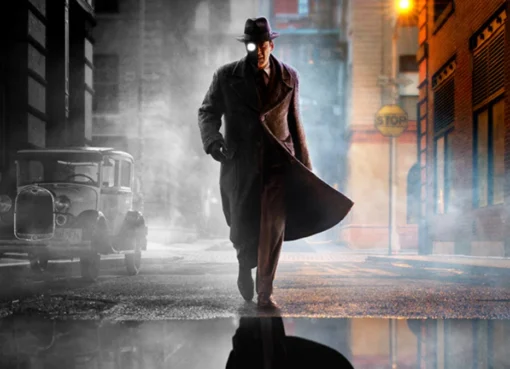
The King’s Tribute: Srijit Mukherji to Chronicle the Making of Satyajit Ray’s ‘Goopy Gyne Bagha Byne’
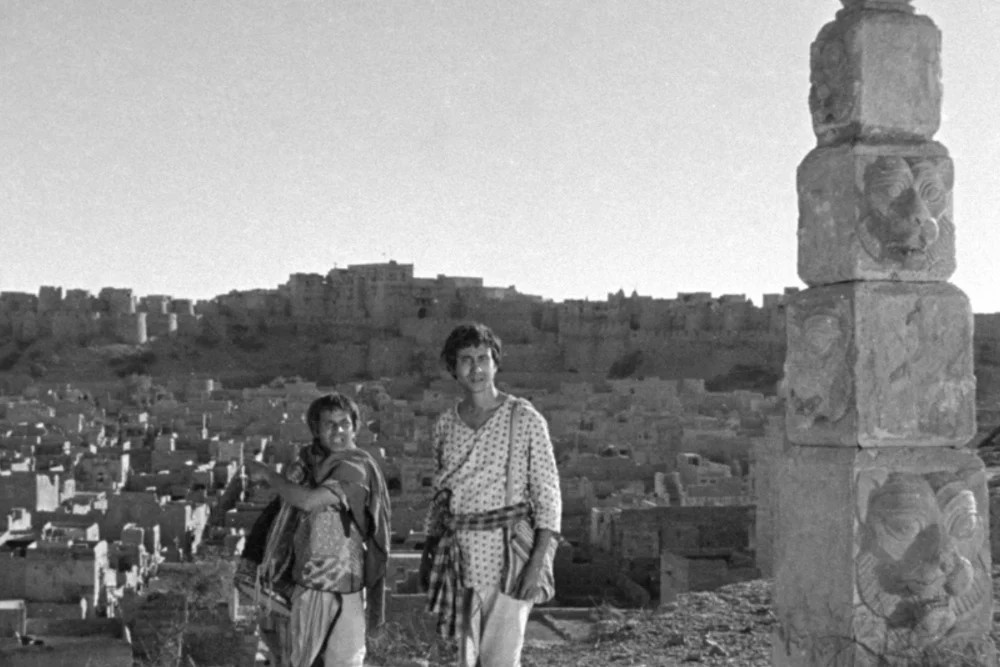
The landscape of Indian cinema is preparing for a monumental intersection of eras as National Award-winning filmmaker Srijit Mukherji announces his next ambitious project, Maharaja Tomare Selam. The film is set to delve into the arduous, fascinating, and often turbulent journey behind the creation of Satyajit Ray’s 1969 masterpiece, Goopy Gyne Bagha Byne. By turning the lens toward the legendary "Manik-da" (as Ray was affectionately known), Mukherji aims to capture the essence of a visionary who willed a fantasy epic into existence during a time of intense political upheaval in West Bengal.
Main Facts: A Convergence of Cinematic Titans
Maharaja Tomare Selam—a title borrowed from one of the most iconic songs in the original film—represents a collaborative effort to honor the legacy of Satyajit Ray. The project is produced by a powerhouse trio: Hoichoi Studios, Friends Communication, and Piyali Films Pvt. Ltd. Notably, Piyali Films was the original producer of the 1969 classic, lending an unprecedented layer of historical authenticity to this contemporary recreation.
The Ensemble Cast
The casting choices reflect a blend of seasoned performers and rising stars, many of whom have deep ties to the Bengali intellectual and artistic tradition:
- Jeetu Kamal: Following his critically acclaimed portrayal of a Ray-esque figure in Anik Dutta’s Aparajito, Kamal returns to embody the maestro himself. His ability to capture Ray’s distinctive baritone, towering stature, and focused intensity has made him the premier choice for such biographical roles.
- Ritwik Bhowmik: Known for his nuanced performances in digital spaces, Bhowmik brings a fresh energy to the production.
- Rudranil Ghosh: A veteran of Bengali cinema, Ghosh’s involvement suggests a focus on the character-driven drama that characterized Ray’s own sets.
- Supporting Cast: The film also features Satakshi Nandy, Sairity Banerjee, and Arijit Dutta in pivotal roles, likely representing the crew, family, and collaborators who populated Ray’s inner circle during the late 1960s.
Production Timeline
While anticipation is already mounting, the production is playing a long game. Principal photography is scheduled to commence in January 2027. This extended pre-production period suggests a commitment to meticulous period detail, from recreating the streets of "Calcutta" in the 60s to the intricate set designs of the original fantasy world.
Chronology: From Folklore to the Silver Screen
To understand the significance of Mukherji’s new film, one must look at the timeline of the source material and the legacy it spawned.
1915: The Seeds are Sown
Upendrakishore Ray Chowdhury, Satyajit Ray’s grandfather, publishes the story of Goopy Gyne Bagha Byne in the children’s magazine Sandesh. It is a whimsical tale of two untalented musicians who receive three boons from the King of Ghosts.
1966–1968: The Struggle for Funding
Despite his international fame following the Apu Trilogy, Ray struggled to find producers for a high-budget fantasy film. Many in the industry viewed a "children’s film" with skepticism. It was during this period that Ray faced the pressures and choices that Maharaja Tomare Selam seeks to dramatize.
May 8, 1969: The Release
Goopy Gyne Bagha Byne premieres. It is an instant sensation, running for a record-breaking 51 consecutive weeks in some theaters. It marks a departure from Ray’s social realism, showcasing his mastery over music, costume design, and special effects.
1980–1992: The Trilogy and the End of an Era
Ray returns to the characters with Hirak Rajar Deshe (1980), a sharp political allegory against the Emergency in India. The trilogy concludes with Goopy Bagha Phire Elo (1992), directed by his son, Sandip Ray. In the same year, Satyajit Ray receives an honorary Academy Award for lifetime achievement shortly before his passing.
2027 and Beyond: The Meta-Narrative
Srijit Mukherji’s Maharaja Tomare Selam will begin filming, nearly 60 years after the original’s release, marking a new chapter in how Indian cinema commemorates its pioneers.
Supporting Data: The Cultural Weight of ‘Goopy Gyne Bagha Byne’
The original film was far more than a fairy tale. It was a cultural phenomenon that reshaped the Bengali identity. Mukherji’s film intends to explore the "why" and "how" behind its creation.
The Political Context
The late 1960s in Kolkata were defined by the Naxalite movement, labor strikes, and a sense of impending social revolution. Maharaja Tomare Selam will specifically address how Ray navigated this "politically charged" atmosphere. While the city was burning, Ray was creating a world of ghosts and magic—a choice that was criticized by some radicals at the time as escapism, but later recognized as a profound commentary on the futility of war and the power of art.
Technical Innovations
The 1969 film featured the famous "Dance of the Ghosts," a six-and-a-half-minute sequence utilizing shadows, percussion, and innovative cinematography. Mukherji’s film is expected to provide a "behind-the-scenes" look at how Ray achieved these effects with limited technology, showcasing the ingenuity that defined 20th-century Indian filmmaking.
Musical Heritage
Ray was not just the director; he was the composer. The songs of Goopy Gyne Bagha Byne are staples of Bengali households. By naming his film after the song "Maharaja Tomare Selam," Mukherji signals a deep reverence for the musical landscape Ray constructed, which blended Indian classical music with folk and Western influences.
Official Responses: A Director’s Vision
Srijit Mukherji, a filmmaker known for his deep intellectual engagement with Bengali history (as seen in Jaatishwar and Ek Je Chhilo Raja), views this project as a personal mission.
In a statement regarding the film, Mukherji remarked:
"I am just trying to tell the incredible true story of how one of the greatest classics of Indian cinema, ‘Goopy Gyne Bagha Byne,’ was conceived and made. It is not just about the technicalities of filmmaking; it is about the spirit of a man who refused to compromise his vision regardless of the political or financial hurdles."
Industry analysts suggest that the involvement of Hoichoi Studios is a strategic move to bring this quintessentially Bengali story to a global streaming audience, while Friends Communication and Piyali Films provide the traditional cinematic backbone required for a production of this scale.
Implications: The Rise of the "Ray-Verse"
The announcement of Maharaja Tomare Selam confirms a growing trend in Indian cinema: the dramatization of film history itself. This "meta-cinema" movement serves several purposes:
1. The Preservation of Legacy
As the generation that worked directly with Ray begins to fade, films like Mukherji’s serve as a living archive. By dramatizing the making of GGBB, the film educates younger audiences on the craft of filmmaking before the digital age.
2. The "Aparajito" Effect
The success of Anik Dutta’s Aparajito (2022) proved that there is a massive commercial and critical appetite for stories about Satyajit Ray. Mukherji is tapping into a proven market, but with a focus on a different era of Ray’s life—transitioning from the young, struggling artist of the 1950s to the established but challenged maestro of the late 60s.
3. Re-evaluating the Political Ray
By focusing on the "choices he made against the backdrop of a politically charged Kolkata," Mukherji may be attempting to re-contextualize Ray. For decades, Ray was sometimes seen as "less political" than his contemporaries like Mrinal Sen or Ritwik Ghatak. Maharaja Tomare Selam has the potential to show that Ray’s politics were deeply embedded in his creative process and his insistence on humanism over dogma.
4. Setting a Benchmark for Period Dramas
With a 2027 start date, the film sets a high bar for production values. Recreating the 1960s requires more than just vintage cars; it requires an understanding of the intellectual fervor of the era. Mukherji’s track record suggests a film that will be as much a scholarly exercise as it is a cinematic one.
In conclusion, Maharaja Tomare Selam is poised to be more than just a movie; it is a bridge between the golden age of Bengali cinema and the modern era. As Srijit Mukherji prepares to step onto the set in 2027, he carries the weight of a nation’s cinematic heritage on his shoulders, promising to give the "Maharaja" of Indian cinema the salute he deserves.