The New Frontier of Immersive Drama: ‘Empire At Sea’ and the Solarpunk Evolution of Narrative

The 83rd Venice International Film Festival has long been a sanctuary for cinematic purists, yet in recent years, its "Venice Immersive" program has emerged as the global vanguard for the future of storytelling. This year, the spotlight falls on a production that promises to bridge the gap between traditional prestige drama and cutting-edge spatial computing: Empire At Sea.
Directed by acclaimed immersive creator Peter Flaherty, Empire At Sea is a 22-minute "solarpunk AR drama" that leverages the advanced capabilities of the Apple Vision Pro to create a shared, multi-user experience. Starring a high-caliber cast including Orlando Jones and Ayelet Zurer, the production marks a significant milestone in the maturation of augmented reality (AR) as a medium for serious, character-driven narrative.
Main Facts: A Convergence of Star Power and Spatial Computing
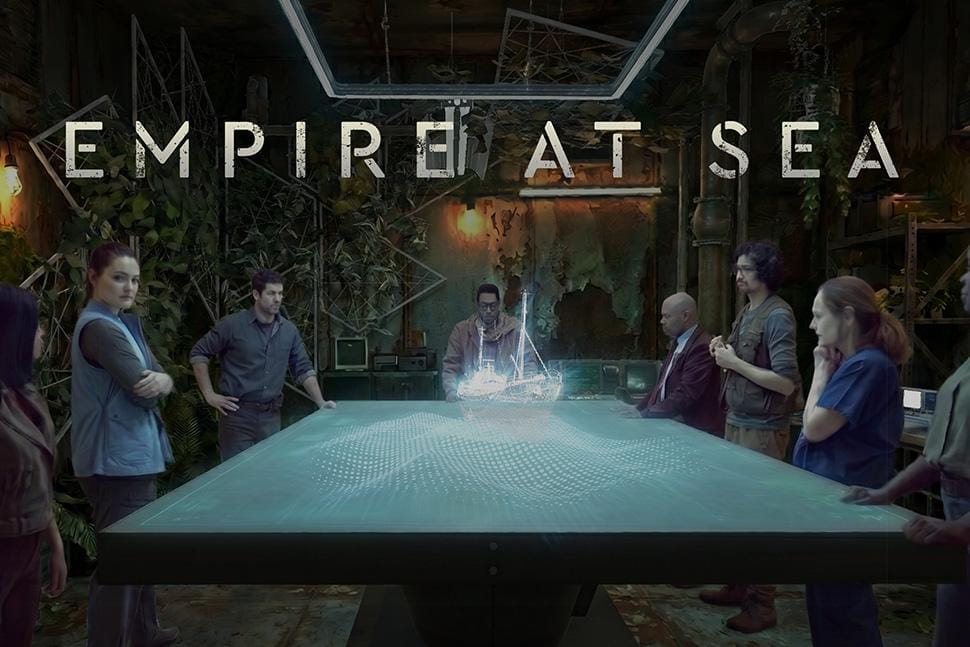
At its core, Empire At Sea is a collaborative theatrical experience designed for ten simultaneous participants. Clad in Apple Vision Pro headsets, viewers gather around a custom-built LED table. Through the device’s high-fidelity passthrough mixed reality, the physical room remains visible, but the table becomes a stage for volumetrically captured actors who appear as life-sized, three-dimensional entities within the shared space.
The Creative Team and Cast
The project’s pedigree is notable for its blend of Hollywood talent and technological expertise. The cast features:
- Orlando Jones: Known for his commanding presence in American Gods.
- Ayelet Zurer: The veteran actress of Munich and Daredevil.
- Geoffrey Arend: Noted for his roles in Goliath and 500 Days of Summer.
- Beth Grant: A character actress staple from No Country for Old Men.
- Imani Jade Powers and Mary Chieffo: Rounding out a cast that brings emotional weight to the digital avatars.
The production is directed by Peter Flaherty, whose previous work—including the AR experience The Dial and Disney’s Eternals AR—has consistently pushed the boundaries of how audiences interact with digital light.
The Solarpunk Premise
The narrative is set in a future defined by "solarpunk"—a genre of science fiction that, unlike the grim cynicism of cyberpunk, envisions a world where humanity attempts to build sustainable, ecologically harmonious futures despite past climate catastrophes.
The story follows a group of climate scientists who have transformed a remote oil rig into a self-sustaining community. After a mainland disaster severs their connection to the world, they live in isolation for five years. The drama ignites when a young woman, Lani, spots a boat on the horizon, forcing the community to confront a harrowing choice: isolationist security or the risk of welcoming the unknown.
Chronology: From Concept to the Venice Biennale
The journey of Empire At Sea reflects the rapid evolution of the immersive media industry over the last decade.
- Pre-Production and Commissioning: The project was commissioned by the Lincoln Center for the Performing Arts and ASU Gammage (Arizona State University). This partnership highlights the growing interest from traditional arts institutions in funding digital-native works that can tour as installations.
- Technological Integration (2023-2024): As the Apple Vision Pro moved toward its commercial release, Flaherty and his team utilized volumetric capture technology from 4DV.ai. This process involves filming actors with dozens of cameras simultaneously to create a 3D digital asset that retains every nuance of a live performance.
- Venice Immersive Debut (September 2-12, 2024): The project makes its world premiere at the 83rd Venice International Film Festival. It competes in the Venice Immersive section, a category that has become the most prestigious platform for VR/AR creators worldwide.
- Domestic Premiere (January 2027): Following its festival run, Empire At Sea is scheduled for a major North American residency at Lincoln Center in early 2027.
- Future Distribution: While the current version is a site-specific "around-the-table" experience, the producers have confirmed plans to adapt the narrative for home-based VR headsets and mobile AR, ensuring the story reaches an audience beyond the festival circuit.
Supporting Data: The Mechanics of Volumetric Immersion
The technical sophistication of Empire At Sea is a response to the "uncanny valley" often found in digital storytelling. By using volumetric capture (6DoF video) provided by 4DV.ai, the production avoids the stiffness of traditional 3D animation.
The Multi-User Synchronization Challenge
One of the most difficult hurdles in AR is "shared spatial anchors." For ten people to see the same digital actors in the exact same spot on a physical table, the headsets must communicate with millisecond precision. Empire At Sea utilizes the Apple Vision Pro’s M2 and R1 chips to map the environment and ensure that when Orlando Jones’s character points at a map on the table, all ten viewers see his finger land on the same pixel.
Branching Narrative and Participation
Unlike traditional cinema, Empire At Sea is participatory. The narrative features branching paths, where the collective or individual actions of the ten participants can influence the direction of the scene. This "gamification" of drama transforms the viewer from a passive observer into a stakeholder in the community’s survival.
The Solarpunk Aesthetic
Statistically, the "Solarpunk" movement has seen a 300% increase in search interest over the last three years, reflecting a cultural shift toward "hope-core" narratives. By choosing this aesthetic, Flaherty aligns the project with contemporary environmental anxieties while offering a visual palette of greenery, recycled tech, and oceanic vistas that contrast sharply with the industrial skeleton of the oil rig.
Official Responses: Redefining the Theatrical Experience
The commissioning bodies have expressed a clear vision for why Empire At Sea represents the next step for the performing arts.
Lincoln Center spokespeople have noted that the project fits into their mission of "reimagining the stage." By supporting works that use AR, they are effectively expanding the definition of a "theater" to include any space where a digital layer can be applied.
Peter Flaherty, in press notes accompanying the Venice debut, emphasized the intimacy of the medium: "In AR, the actors aren’t on a screen; they are in your personal space. You can lean in and see the grief in their eyes or walk around them to see the tension in their posture. It creates a level of empathy that a flat screen simply cannot replicate."
The Venice Biennale organizers have lauded the project for its "spatial choreography," noting that the way audiences move around the table is as much a part of the performance as the digital content itself.
Implications: The Future of Shared Digital Reality
The success of Empire At Sea at Venice carries several long-term implications for the media and tech industries.
1. The Decline of the "Solitary VR" Myth
For years, the criticism of VR was its inherent isolation—a person wearing a plastic box on their face, cut off from the world. Empire At Sea proves that the future of the medium is social. By using passthrough MR, users can see their friends’ faces and reactions while simultaneously watching the digital drama unfold. This "co-presence" is essential for the wide-scale adoption of immersive tech.
2. A New Revenue Model for "Digital Installations"
Because the production is commissioned by entities like Lincoln Center and ASU Gammage, it suggests a new touring model. Instead of a massive cast and crew traveling with sets and lighting rigs, a "production" can now consist of a dozen headsets and a custom table. This lowers the carbon footprint of touring theater while maintaining high production values through digital assets.
3. The Professionalization of AR Talent
The involvement of actors like Ayelet Zurer and Orlando Jones signals to the industry that AR is no longer just for "tech demos." As high-end talent enters the space, the writing and directing standards must rise to meet them. This creates a feedback loop that attracts more investment and better hardware.
4. Climate Narrative as Immersive Education
By placing viewers in the shoes of climate scientists on an oil rig, Empire At Sea serves as a "soft power" tool for environmental awareness. Immersive media has been proven in psychological studies to produce higher "emotional memory" than traditional media. Participants aren’t just hearing about a sustainable future; they are standing within it, making the stakes of the solarpunk genre feel personal and urgent.
As Empire At Sea continues its run in Venice and prepares for its 2027 New York debut, it stands as a lighthouse for the industry. It proves that the Apple Vision Pro is not just a tool for productivity or solo entertainment, but a digital campfire around which a new generation of shared stories will be told. The transition from the "silver screen" to the "spatial table" has officially begun.