
The Occult Allure of ‘Burn With Me’: A Strategic Descent into Forbidden Rituals
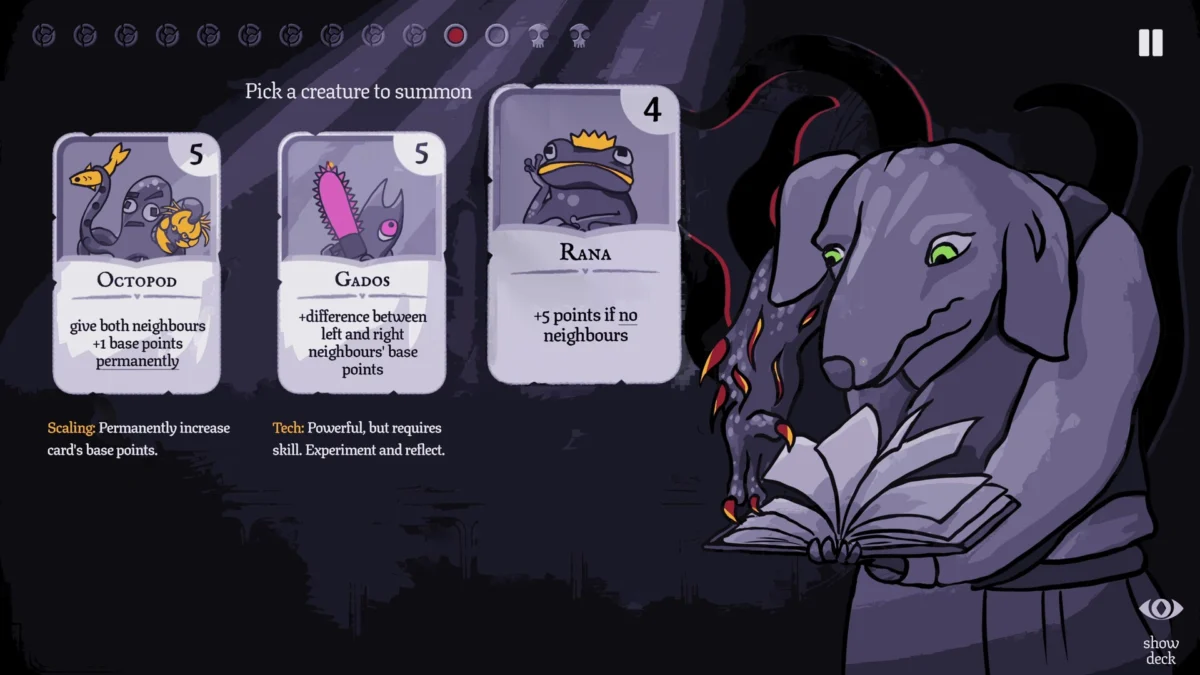
The indie gaming landscape has recently seen a resurgence in "dark" card games, a subgenre that blends the tactical depth of traditional deckbuilders with the unsettling atmosphere of psychological horror. Standing at the forefront of this movement is Burn With Me, a title that eschews the standard tropes of high-fantasy card battling in favor of something far more visceral and unsettling. Currently in development and gaining significant traction on Steam, Burn With Me tasks players with a grim objective: executing eerie occult rituals through the calculated sacrifice of creature cards.
As players navigate this somber experience, they find themselves caught between the mechanical rigor of a strategy game and the haunting narrative of a teacher obsessed with the forbidden. The game is not merely about winning a match; it is about the cost of knowledge and the physical manifestation of ritualistic fervor.
Main Facts: The Core Architecture of ‘Burn With Me’
At its heart, Burn With Me is an atmospheric strategy game centered on the concept of ritualistic sacrifice. While the developer’s marketing may categorize it as a deckbuilder, early impressions suggest a more nuanced classification. Unlike traditional deckbuilders where players spend the majority of their time refining a deck for long-term synergy, Burn With Me focuses on the immediate, high-stakes decisions of a deck that evolves and consumes itself in real-time.
The Narrative Hook
The game’s premise is uniquely unsettling. The story follows a passionate, perhaps mad, educator who begins lecturing their class on the intricacies of ancient, forbidden rituals. This isn’t a dry academic exercise; the teacher’s fervor translates into the gameplay, where the player acts as the practitioner of these dark arts. The ultimate goal is to play and "burn" cards to accumulate enough ritualistic power to overflow a vial. This vial, once filled, leaks its contents into a central heart—a gruesome but effective visual metaphor for the player’s progress and their descent into the occult.
Strategic Nuance
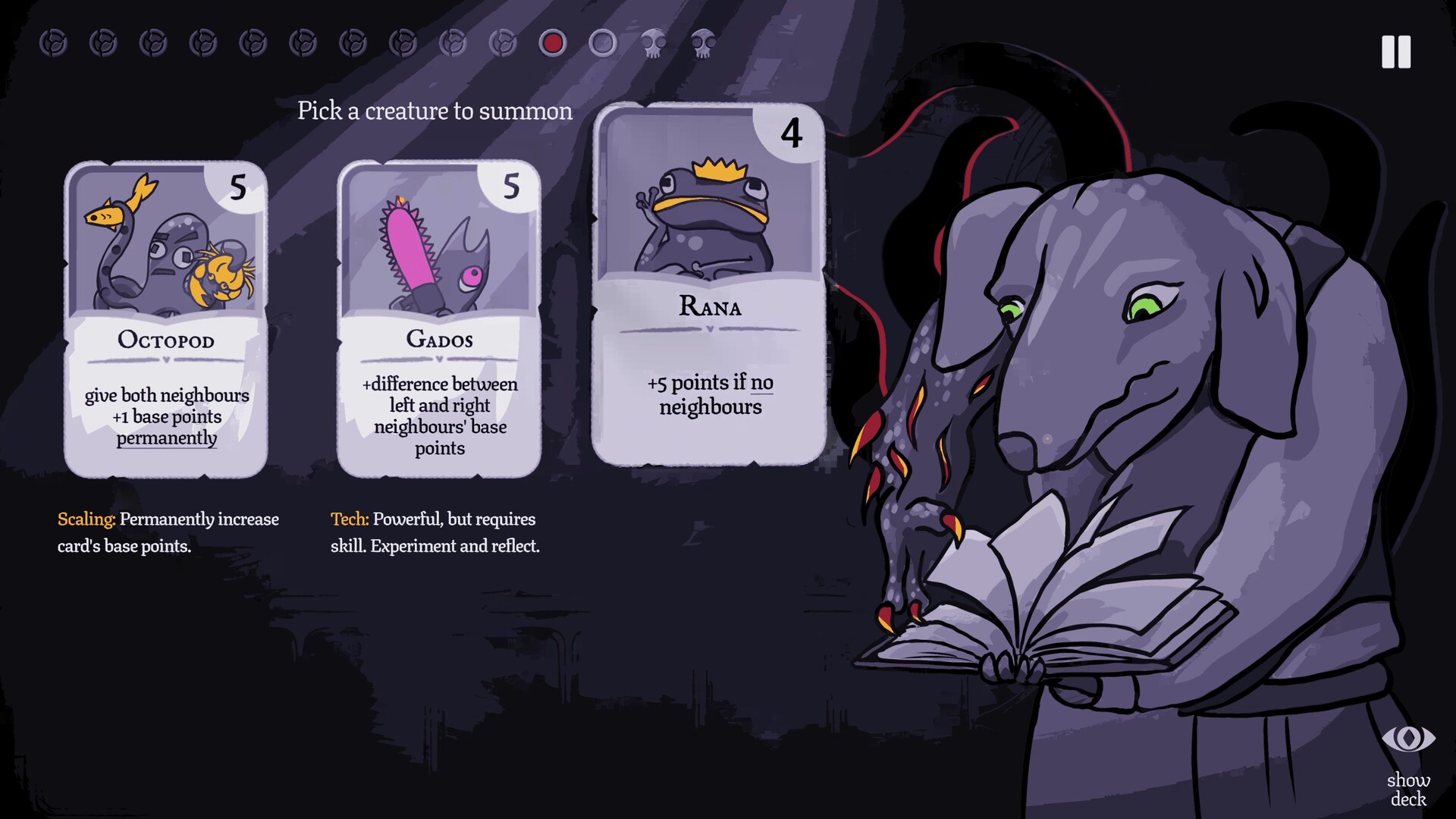
The gameplay loop revolves around a series of rounds leading up to a climactic boss encounter. In each round, players are presented with a choice of three sacrificial creature cards. These cards are added to the player’s pool for the subsequent round. The strategy lies in the specific conditions required to activate these cards:
- Positional Requirements: Some cards demand to be played in isolation, with no adjacent cards.
- Numerical Constraints: Other cards require specific "odd" or "even" values on either side to trigger their bonuses.
- Self-Sacrifice: A subset of powerful cards provides massive point boosts but is permanently destroyed for the remainder of the game once played.
This creates a tension between short-term point gains and long-term survival, a hallmark of sophisticated strategy design.
Chronology: The Journey Through the Ritual
To understand the impact of Burn With Me, one must look at the progression of the gameplay experience, which mirrors a slow descent into madness.
Phase 1: The Classroom Initiation
The experience begins in the classroom. The player is introduced to the teacher—a figure who serves as both narrator and guide. The interactive story elements here set the tone. As the teacher "spouts off" about the rituals, the player is introduced to the basic mechanics of card placement. The initial rounds feel educational, yet the "moody details" of the UI—the strange, on-screen hand that guides the cards—ensure that the player never feels entirely comfortable.
Phase 2: The Building of the Sacrifice
As the game progresses, the "deck-building" aspects come to the fore, though in a non-traditional sense. Each round offers a draft-like choice. The player must weigh the immediate needs of the current ritual against the looming threat of the boss. This is where the strategy deepens. The player is not just building a deck; they are managing a dwindling resource. The decision to use a "self-destructing" card in round three might provide a high score, but it leaves the player vulnerable in round five.
Phase 3: The Ritualistic Overflow
The climax of each segment involves the filling of the vial. The visual feedback here is paramount. As cards are "burned," the points contribute to a liquid volume. The overflow into the heart provides a visceral sense of completion. This leads directly into the boss encounters, where the player must utilize every strategic advantage they have cultivated to overcome a more complex set of ritual requirements.
Supporting Data: Mechanics and Aesthetic Immersion
The strength of Burn With Me lies in its marriage of mechanics and aesthetics. The game uses its visual identity to reinforce the mechanical weight of the player’s choices.
Tactile Feedback and Visual Identity
The "vibes" of the game are frequently cited as its most compelling feature. The color palette of each screen changes to reflect the intensity of the ritual, moving from somber, muted tones to aggressive, sanguine hues during the burning phase. The "strange on-screen hand" provides a layer of tactile immersion that is often missing from digital card games. It doesn’t just move cards; it "gestures" to them, creating a sense that the player is being watched or guided by an external force.
Card Synergy and Constraints
The mechanical depth is supported by a rigorous logic system. By requiring players to consider the "odd numbers" or "empty spaces" around a card, the game forces a spatial awareness that elevates it above simple arithmetic.
- Isolation Cards: These encourage a "less is more" approach, challenging the player to score high with fewer moves.
- Neighbor-Dependent Cards: These create a puzzle-like environment where the order of operations is critical.
- Permanent Loss: The inclusion of cards that destroy themselves for the rest of the game introduces a "legacy" mechanic within a single run, forcing players to live with the consequences of their desperation.
Official Responses and Developer Intent
While the developer remains focused on the "in-development" phase, the official gameplay trailers and Steam descriptions provide insight into the intended experience. The developer’s choice to label the game a "deckbuilder" despite its heavy strategic pivot suggests a desire to appeal to fans of the genre while subverting their expectations.
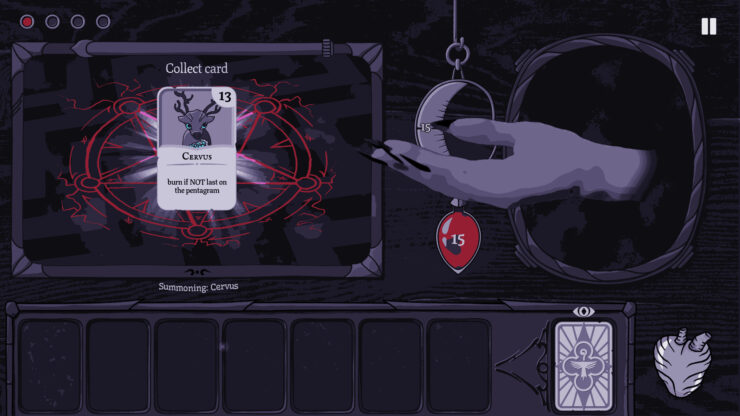
The official trailer highlights the "monstrous deer-like creature" and other chimeric entities that populate the deck. These designs are intended to evoke "wonder and dread," a juxtaposition that the narrative of the passionate teacher supports. The developer’s communication emphasizes the "interactive story elements," suggesting that the narrative is not just a backdrop but a functional part of the gameplay that evolves based on the player’s success in the rituals.
The community response, even in the wishlist stage, has been focused on the game’s "mood." In an era where many indie games prioritize "clean" UI and fast-paced action, Burn With Me is leaning into a slower, more deliberate, and atmospheric pace. The developer has signaled that the final version of the game will feature even more "various characters on the cards," each with unique backstories that tie back into the teacher’s forbidden knowledge.
Implications: The Future of Atmospheric Strategy
The emergence of Burn With Me carries significant implications for the indie gaming sector and the card game genre at large.
Subverting the Deckbuilder Genre
For years, the "Roguelike Deckbuilder" has been dominated by the Slay the Spire model—additive growth, relic collecting, and health management. Burn With Me represents a shift toward "Subtractive Strategy." By focusing on the burning and destruction of resources as a path to victory, it offers a fresh psychological profile for the player. It’s no longer about becoming an unstoppable god; it’s about managing a desperate, crumbling ritual.
The Rise of "Analog" Digital Games
There is a growing trend of digital games trying to feel "analog" or "physical." Burn With Me achieves this through its hand animations and the "burning" mechanic. This "visceral feel" is becoming a key differentiator in a crowded market. Games that can make the player "feel" the cards—through sound design, screen shake, and unique animations—are finding greater success than those with static boards.
Narrative-Mechanical Integration
The most significant implication is the seamless integration of story and play. By making the "teacher" the source of the mechanics, the game avoids the "ludonarrative dissonance" that plagues many titles. The player isn’t just playing a card game; they are a student in a classroom they can never leave, practicing a craft they don’t fully understand.
As Burn With Me continues its development journey toward a full release on Steam, it stands as a testament to the power of atmosphere in strategy gaming. It challenges the player to not only think about the numbers on the screen but to feel the weight of the sacrifice they are making. For those who enjoy their strategy with a side of occult mystery, Burn With Me is a title that demands to be watched—and eventually, burned.


Leave a Comment