The Privacy Pivot: Meta to Unveil Camera-Free Smart Glasses Amid Growing Surveillance Concerns
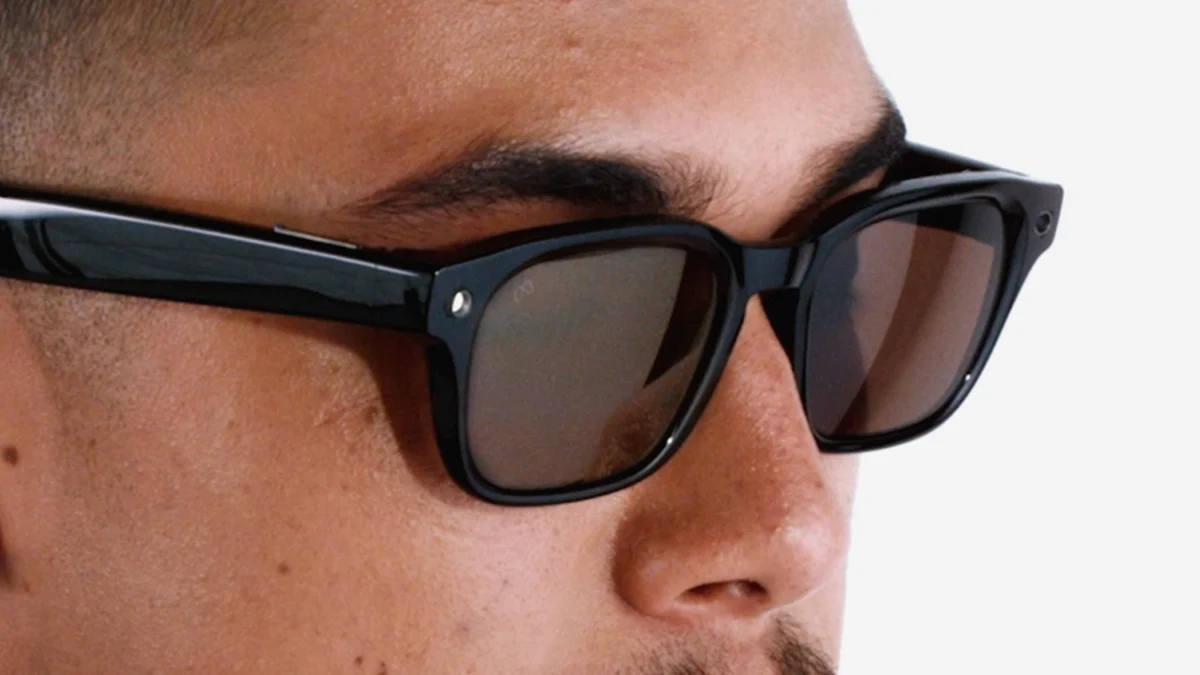
In a strategic shift that highlights the tension between technological advancement and social privacy norms, Meta is reportedly preparing to launch a new iteration of its smart glasses—one that conspicuously lacks a camera. According to reports from The Information, the social media giant plans to unveil this hardware at its upcoming Meta Connect event. The move comes as the company faces a mounting "privacy backlash" regarding the form factor of its current Ray-Ban Meta smart glasses, which have been criticized by some as intrusive or even "nefarious."
While Meta’s wearable journey has been defined by the pursuit of "multimodal AI"—where the device can see what the user sees—the introduction of a camera-free model suggests a recognition that a significant portion of the market remains uncomfortable with pervasive, head-mounted surveillance. This new product line aims to balance the utility of an AI assistant with the aesthetic and social requirements of traditional eyewear.
Main Facts: A Hardware Compromise for Social Acceptance
The upcoming smart glasses represent a departure from the "see what I see" philosophy that has driven Meta’s recent AI updates. While the current Ray-Ban Meta glasses rely heavily on their 12MP camera to feed data into the Meta AI "Muse" agent, the new camera-free version will pivot entirely toward audio-based interaction and sleek design.
Core Specifications and Features
The reported camera-free glasses will retain the fundamental "smart" features that do not require visual input:
- Audio Integration: High-quality open-ear speakers and a multi-microphone array will remain central, allowing for music streaming, phone calls, and podcast consumption.
- Meta AI & Muse: Users will still be able to interact with Meta’s AI assistant. However, instead of asking "What am I looking at?", users will be limited to voice-based queries, scheduling, and information retrieval.
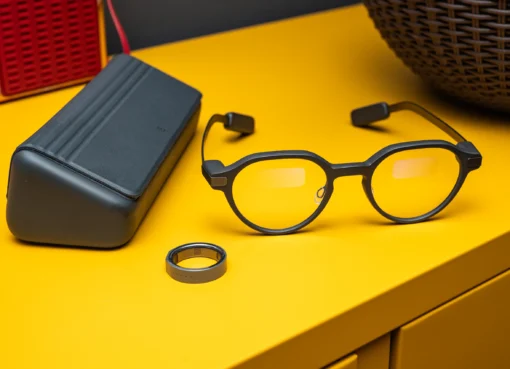
- Physical Design: By removing the camera modules and the associated processing hardware, Meta is reportedly able to achieve a significantly slimmer temple design. This allows the devices to look nearly identical to standard, non-smart prescription frames.
- Price Point: Though official pricing has not been announced, industry analysts expect the removal of the camera and sensor suite to allow for a more accessible entry-level price point, potentially expanding Meta’s reach into the mass consumer market.
The Trade-off: Blind AI
The primary drawback of this new model is the limitation it places on Meta’s burgeoning AI ecosystem. The company has heavily promoted its "Multimodal AI" capabilities, where the glasses can translate signs, identify landmarks, or give fashion advice by "looking" through the camera. Without visual input, the camera-free glasses will be "blind," functioning more like sophisticated hearables than true augmented reality (AR) predecessors.
Chronology: The Evolution of Meta’s Wearable Strategy
To understand Meta’s decision to remove the camera, one must look at the turbulent history of their partnership with EssilorLuxottica.
2021: The Ray-Ban Stories Debut
Meta (then Facebook) launched "Ray-Ban Stories" to much fanfare but ultimately lackluster sales. The device was criticized for poor battery life and a lack of clear utility. More importantly, it introduced the world to the "privacy LED"—a small white light intended to signal when the device was recording. However, the light was easily covered with tape or paint, leading to early privacy concerns.
2023: The Ray-Ban Meta Success
The second generation, rebranded simply as "Ray-Ban Meta Smart Glasses," was a massive success. Improvements in audio quality, camera resolution, and the integration of Meta AI led to sales exceeding 10 million units. Despite this success, the "creep factor" began to permeate the public consciousness. Viral videos showed how the recording light was often invisible in bright sunlight, and the "game of cat-and-mouse" between Meta and users who tampered with the LED began in earnest.
2024-2025: The Rise of the "Creep Glasses" Narrative
As the glasses became more common, so did the backlash. Reports of individuals using the glasses for "personal perversion" or covertly recording private interactions led to some segments of the public branding them "pervert glasses." Meta responded with a massive PR campaign and firmware updates to combat tampering, but the reputational damage among privacy-conscious consumers remained.
2026: The Camera-Free Pivot
Looking toward the upcoming Meta Connect, the company appears ready to offer a bifurcated product line: a "Pro" version with cameras for creators and AI enthusiasts, and a "Lite" or "Privacy" version for the general public who want AI assistance without the social stigma of a camera.
Supporting Data: The Scale of Tampering and Public Perception
While Meta maintains that the vast majority of its users are law-abiding, the sheer scale of its sales means even a tiny percentage of misuse results in a significant number of incidents.
The 0.1% Problem
Meta officially claims that less than 0.1% of its sold smart glasses have been tampered with to disable the recording LED. On the surface, this sounds negligible. However, when applied to the 10 million units sold by Meta and EssilorLuxottica, that 0.1% equates to 10,000 units currently in the wild that have been modified to record covertly. This "tamper market" has created a cottage industry for hackers who physically disassemble the frames to remove the LED or its light sensor.
Technical Limitations and Visibility
A significant driver of the backlash is the technical reality of the recording indicator. Meta uses a white LED that pulses during recording. To prevent "taping over" the light, Meta included an ambient light sensor; if the sensor detects that the light is blocked, the camera refuses to record.
However, data suggests this is not a foolproof solution:
- Daylight Washing: In outdoor settings, the intensity of natural sunlight often dwarfs the lumen output of the small LED, making it nearly impossible for a bystander to notice the light from a distance.
- Thermal and Battery Constraints: Some public fears—such as the idea that the glasses are "always recording"—are debunked by thermal data. Continuous recording would cause the glasses to overheat and deplete the battery in under 30 minutes. Nevertheless, the perception of constant surveillance persists.
Official Responses: Meta’s PR and Technical Countermeasures
Meta has not been silent in the face of these criticisms. The company has engaged in a multi-pronged strategy to save the reputation of the form factor.
The PR Blitz
Meta recently launched a widespread PR campaign consisting of instructional videos and social media posters. These materials are designed to educate the non-user rather than the user. By informing the public that "the light means recording," Meta hopes to create a social environment where the glasses are self-regulated by the community.
Firmware Interventions
On the technical side, Meta has rolled out aggressive firmware updates. These updates are designed to detect if the LED circuitry has been tampered with or bypassed. If the system detects a hardware anomaly, it "bricks" the camera functionality entirely. However, hackers continue to find workarounds, leading to the aforementioned "cat-and-mouse" scenario.
The "Tool vs. Intent" Argument
In various statements, Meta executives have compared the smart glasses to other everyday objects. Their internal stance reflects a classic philosophical defense: "A knife can be used to prepare a delicious meal or kill someone. Should the tool be defined by its worst use?" Meta argues that the benefits—hands-free memories, accessibility for the visually impaired, and instant AI help—outweigh the risks posed by a small minority of bad actors.

Implications: The Future of Wearables and Social Contracts
The decision to launch a camera-free model has profound implications for the future of the "Metaverse" and the wearable industry at large.
1. Mainstreaming the "Always-On" Assistant
By removing the camera, Meta is lowering the barrier to entry for the "average" person. Many people who would never wear a camera on their face are perfectly comfortable with a voice assistant. This move could turn smart glasses into a standard accessory, similar to how AirPods transitioned from "weird-looking" to a universal fashion staple.
2. Design Over Function
The removal of the camera allows for "sleeker design with slimmer temples." In the eyewear world, aesthetics are king. If Meta can make smart glasses that are indistinguishable from a pair of Ray-Ban Wayfarers, they solve the "glasshole" problem that plagued Google Glass a decade ago. The camera-free model is, in many ways, a concession that fashion often trumps high-tech utility.
3. The Bifurcation of Privacy
We may be entering an era where there are "public-friendly" and "creator-centric" devices. This could lead to specific social zones where camera-equipped glasses are banned (theaters, locker rooms, private parties), while camera-free versions are permitted. Meta’s new product provides a "safe" option for these environments.
4. Integration with the "Phoenix" Headset
The report from The Information also hints at a demo of Meta’s next-generation "Phoenix" headset, which may feature full-body Codec Avatars. This suggests that while Meta is scaling back on cameras for its "everyday" glasses, it is doubling down on high-end sensors for its immersive VR/AR headsets. The strategy appears to be: cameras for the home and professional settings, and audio-only for the street.
Conclusion
Meta Connect 2026 (or the upcoming session) will likely be remembered as the moment the company acknowledged that technology cannot always override social discomfort. By offering a camera-free alternative, Meta is not retreating from the wearable market; rather, it is diversifying its approach to ensure that "smart" features become an invisible part of daily life. Whether the public will embrace these "blind" AI glasses or continue to view the entire form factor with suspicion remains the $10 billion question for Mark Zuckerberg’s hardware division.
As UploadVR and other outlets prepare for on-site coverage, the focus will not just be on what the glasses can do, but what they—by design—refuse to do.