The Return of a Master: Lee Chang-dong’s ‘Possible Love’ and the Cinema of Human Struggle
The global cinematic landscape is often defined by the steady output of prolific directors, but few figures command as much reverence through scarcity as Lee Chang-dong. After an eight-year hiatus following his 2018 masterpiece Burning, the South Korean auteur is set to return with his seventh feature film, Possible Love. For cinephiles and critics alike, a new Lee Chang-dong project is more than a mere release; it is a seismic event that promises a profound, often painful, interrogation of the human condition.
Possible Love arrives at a pivotal moment for South Korean cinema, which has seen unprecedented global growth since Lee’s last outing. As the film prepares for its world premiere at the 2026 Venice International Film Festival, it carries the weight of immense expectation, bolstered by a powerhouse cast and a thematic foundation rooted in the works of Krzysztof Kieślowski.
Main Facts: A Convergence of Literary Sensibility and Cinematic Mastery
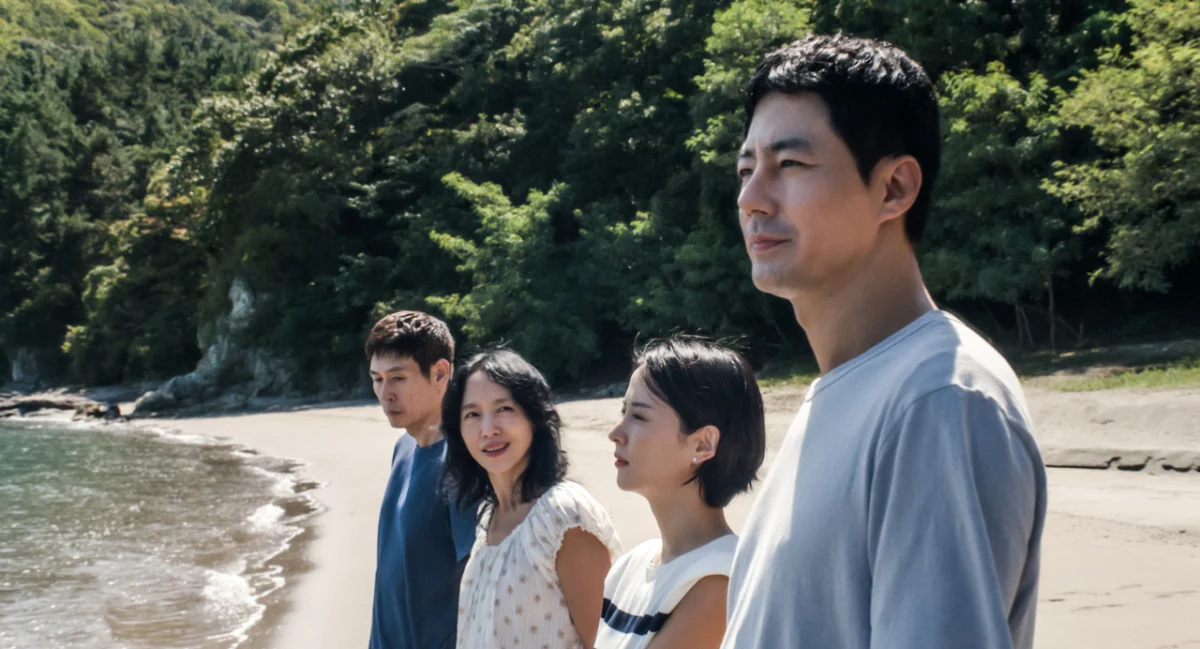
At its core, Possible Love is a domestic drama that expands into a complex web of psychological and social inquiry. The film follows the intersecting lives of two married couples: a recently laid-off worker and his wife, and a documentary filmmaker and her spouse. Their paths cross during the production of a documentary, a meta-narrative device that Lee uses to peel back the layers of artifice that define modern relationships.
The film is loosely inspired by a segment of Krzysztof Kieślowski’s Dekalog, the legendary ten-part Polish television series that explored the Ten Commandments in a contemporary Warsaw housing complex. By drawing from Dekalog, Lee joins a prestigious lineage of filmmakers re-examining these moral parables. Notably, Possible Love is the second high-profile film of 2026 to look toward Kieślowski’s magnum opus, following Asghar Farhadi’s Parallel Lives, which debuted at Cannes earlier this year.
The cast of Possible Love represents a "who’s who" of South Korean acting royalty:
- Jeon Do-yeon: Known as the "Queen of Cannes" after winning Best Actress for Lee’s own Secret Sunshine (2007).
- Sul Kyung-gu: A frequent Lee collaborator who delivered career-defining performances in Peppermint Candy and Oasis.
- Zo In-sung: A versatile star known for both high-stakes thrillers and nuanced dramas.
- Cho Yeo-jeong: Globally recognized for her standout role in Bong Joon-ho’s Academy Award-winning Parasite.
Co-written by Lee and his long-time collaborator Oh Jung-mi (who also co-penned Burning), the film is positioned as a rigorous exploration of hidden desires and the quiet desperation of the middle class.
Chronology: The Eight-Year Journey to ‘Possible Love’
The timeline of Possible Love is marked by the deliberate, slow-burning pace characteristic of Lee Chang-dong’s creative process.
2018–2022: The Post-Burning Hiatus
Following the critical adoration of Burning—which won the FIPRESCI Prize at Cannes and became the first Korean film to make the Oscar shortlist for Best Foreign Language Film—Lee retreated from the director’s chair. During this period, he focused on his first love, literature, and participated in various international film juries. Rumors of his seventh film circulated for years, with many wondering if the director, now in his late 60s, would return to the screen.

2023–2024: Development and Casting
In late 2023, reports emerged that Lee was collaborating with Oh Jung-mi on a script inspired by Kieślowski. By early 2024, the "dream team" cast was finalized. Production took place primarily in Seoul and the surrounding Gyeonggi Province, maintaining a level of secrecy typical of Lee’s productions.
2025: Post-Production and Festival Strategy
Throughout 2025, the film underwent an extensive editing process. Lee is known for his exacting standards in the edit suite, often spending months refining the rhythm of his scenes to capture the "invisible" emotions of his characters.
2026: The World Stage
The 2026 Venice International Film Festival officially announced Possible Love as a contender for the Golden Lion. Following Venice, the film is slated for a North American premiere at the Toronto International Film Festival (TIFF).
Late 2026: Global Distribution
Netflix secured the domestic and international streaming rights, marking a significant partnership between the streaming giant and one of cinema’s most traditionalist auteurs. The film will receive a limited theatrical window starting October 23, 2026, before arriving on Netflix worldwide on November 6.
Supporting Data: The Lee Chang-dong Legacy
To understand the anticipation for Possible Love, one must look at the statistical and critical track record of Lee Chang-dong’s filmography. Since his debut with Green Fish in 1997, Lee has directed only seven films in 29 years. Despite this low volume, his impact is outsized:
- Cannes Pedigree: Lee has been a mainstay at the Cannes Film Festival. Secret Sunshine won Best Actress (2007), Poetry won Best Screenplay (2010), and Burning received the highest critical score in the history of Screen International’s Cannes jury grid (3.8 out of 4).
- Oscar Trajectory: South Korea has officially selected Possible Love as its submission for the Best International Feature category at the 99th Academy Awards. This marks the third time a Lee Chang-dong film has represented the country, following Oasis (2002) and Burning (2018).
- The "Burning" Effect: Burning was a transformative moment for Lee’s global brand. It moved away from the more overt melodrama of his earlier works into a "cinematic mystery" that resonated deeply with a younger, international audience. Possible Love is expected to build on this atmospheric, psychological style.
Official Responses: On the Struggle for Meaning
Lee Chang-dong has rarely been one for the glitz of the red carpet, preferring to speak through the philosophical underpinnings of his work. In a rare 2024 interview with IndieWire, Lee reflected on the themes that have come to define his legacy and how they manifest in his latest project.
“Everyone unexpectedly faces pain and suffers from hopelessness and failure,” Lee stated. “That is life. The world unjustly suppresses and gives pain to an individual. The problem is how you cope with the pain.”
He continued by explaining the "struggle" that sits at the center of Possible Love: “The struggle is more important than the pain itself. Through the struggle, humans find the purpose of life and find salvation. Protagonists in tragedies are those types of people. I tried to capture the human struggle for meaning through my films.”

Early buzz from those close to the production suggests that the film is "devastatingly intimate," with the performances of Jeon Do-yeon and Sul Kyung-gu being highlighted as potentially career-best work. Critics who have followed Lee’s career note that while his films are often categorized as "bleak," the director views them as hopeful because they acknowledge the reality of existence rather than offering easy escapes.
Implications: A New Era for Auteur Cinema on Streaming
The release of Possible Love carries several significant implications for the industry and the future of South Korean cinema.
The Auteur-Streaming Paradox
Lee’s decision to partner with Netflix is a bellwether for the industry. While purists may lament the shift from traditional theatrical models, the partnership ensures that a challenging, slow-paced art film like Possible Love will be accessible to millions of viewers in over 190 countries simultaneously. This follows the path of other masters like Alfonso Cuarón, Martin Scorsese, and Bong Joon-ho, who have utilized streaming budgets to realize uncompromising visions.
The Kieślowski Influence and the "New Universalism"
By adapting themes from Dekalog, Lee is participating in a dialogue with European cinema history. This suggests a "new universalism" in Korean film—moving beyond local social critiques to address broader, existential questions that transcend borders. If both Lee and Farhadi find success with Kieślowski-inspired narratives in the same year, it may signal a trend toward "remaking" intellectual properties not for commercial gain, but for philosophical re-examination.
South Korea’s Oscar Ambitions
Following the historic sweep of Parasite in 2020, the Academy of Motion Picture Arts and Sciences has paid significantly more attention to Korean cinema. Possible Love is viewed as a formidable contender for the 99th Academy Awards. If Lee secures a nomination—or a win—it would solidify his status as the "director’s director" of the Korean New Wave, a figure who paved the way for Bong Joon-ho and Park Chan-wook.
The Evolution of Domestic Drama
Possible Love promises to deconstruct the "hidden secrets" of marriage. In a South Korean society currently grappling with changing gender roles and declining marriage rates, Lee’s exploration of "hidden desires" within the domestic sphere is likely to spark significant cultural conversation.
Conclusion
As the trailer for Possible Love begins to circulate, it evokes the familiar, haunting atmosphere that only Lee Chang-dong can conjure. The imagery of a documentary camera capturing the "unseen" moments of a marriage suggests a film that will be as much about the act of looking as it is about the act of loving.
On October 23, 2026, when the film hits select theaters, and subsequently on November 6 when it debuts on Netflix, the world will finally see what Lee has been ruminating on for the last eight years. If his past work is any indication, Possible Love will not offer easy answers, but it will undoubtedly provide a profound, necessary struggle for meaning in an increasingly complex world.