The Sacred Implement: Unearthing the Enduring Legacy of Sumer’s "Song of the Hoe"
Main Facts
Deep within the annals of ancient Mesopotamia, a unique literary gem, The Song of the Hoe, emerges as a profound testament to the foundational role of agriculture in Sumerian civilization. This Sumerian praise poem, dated to approximately 2000 BCE, is not merely a lyrical ode to a humble farming implement; it is a sophisticated cultural artifact that celebrates the hoe for its myriad uses, from tilling the earth to constructing cities, and astonishingly, links it directly to the very act of creation by the great god Enlil. In a region where the economy was almost entirely predicated on agriculture, the elevation of an agricultural tool to such divine status underscores its unparalleled significance in the daily lives and cosmic understanding of the Sumerians.
Discovered across various archaeological sites, most notably Nippur (Nibru), the poem’s numerous copies attest to its widespread popularity and importance. However, its precise function remains a subject of scholarly debate. Some researchers posit that its repetitive structure and rhythmic qualities made it suitable for field hands, a melodic accompaniment to the arduous, repetitive tasks of farming, akin to work songs of later eras. Conversely, others argue that its intricate wordplay and mythological depth point to its use within the elite scribal schools (edubba), serving as an educational text for future administrators and priests. Central to this debate, and indeed to the poem’s literary charm, is the constant reiteration of the Sumerian word for "hoe," al, embedded within a rich tapestry of other words and names, creating a linguistic puzzle and a rhythmic beat that captivated ancient audiences, regardless of their social standing.
Chronology
Dating the Poem
The Song of the Hoe is generally dated to circa 2000 BCE, placing its composition firmly at the twilight of the 3rd millennium BCE and the dawn of the 2nd millennium BCE. This period, following the collapse of the Neo-Sumerian Ur III Empire and preceding the rise of the Old Babylonian period, was a time of significant cultural and political transition in Mesopotamia. Despite the political shifts, Sumerian literary traditions, including hymns, myths, and praise poems, continued to be copied, adapted, and celebrated, highlighting their enduring cultural value. The poem’s themes of creation, order, and the essential nature of labor resonated deeply within a society constantly striving to maintain harmony with both the natural world and the divine.
Discovery and Rediscovery
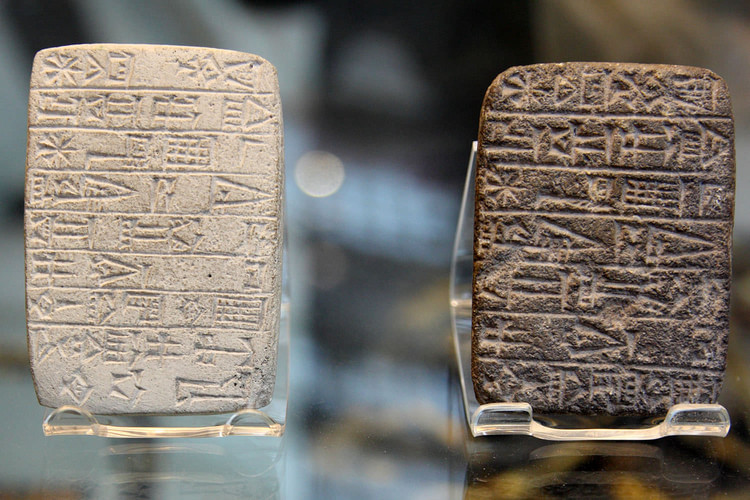
The journey of The Song of the Hoe from ancient clay tablets to modern scholarship spans nearly two centuries of archaeological endeavor. The first copies began to surface in the 19th century, part of the broader wave of Mesopotamian archaeological discoveries that brought cuneiform literature to light. Excavations at sites like Nippur, a prominent religious and intellectual center in ancient Sumer, proved particularly fruitful, yielding numerous tablets containing fragments and complete versions of the poem. Throughout the mid-20th century, further discoveries continued to enrich the corpus of available texts, allowing scholars to reconstruct a more complete and accurate rendition of the original work. The meticulous work of archaeologists and epigraphists, painstakingly piecing together fragments and deciphering the complex cuneiform script, has been instrumental in preserving and transmitting this ancient wisdom to the present day. The fact that multiple copies, some with slight variations, were found across different locations underscores the poem’s wide circulation and enduring popularity in antiquity.
Evolution of Interpretation
Initial translations and studies of The Song of the Hoe in the early 20th century primarily focused on its mythological content, recognizing its praise of Enlil and its connections to creation narratives. However, as scholarly understanding of Sumerian educational practices deepened, new interpretations emerged. The work of pioneering scholars like Samuel Noah Kramer brought the poem to a wider academic audience, with Kramer himself viewing it as a creation myth, specifically focusing on the creation and wonders of the hoe itself, rather than solely the cosmic creation. Later, Jeremy Black and his colleagues offered a compelling alternative, emphasizing the poem’s pedagogical function within the scribal schools. This evolution reflects a growing appreciation for the multi-layered nature of ancient texts, which often served diverse purposes—religious, didactic, and entertaining—simultaneously. The ongoing dialogue among scholars continues to refine our understanding, revealing the poem as a dynamic artifact open to multiple, valid readings.
Supporting Data
The Mesopotamian Hoe: A Vital Tool
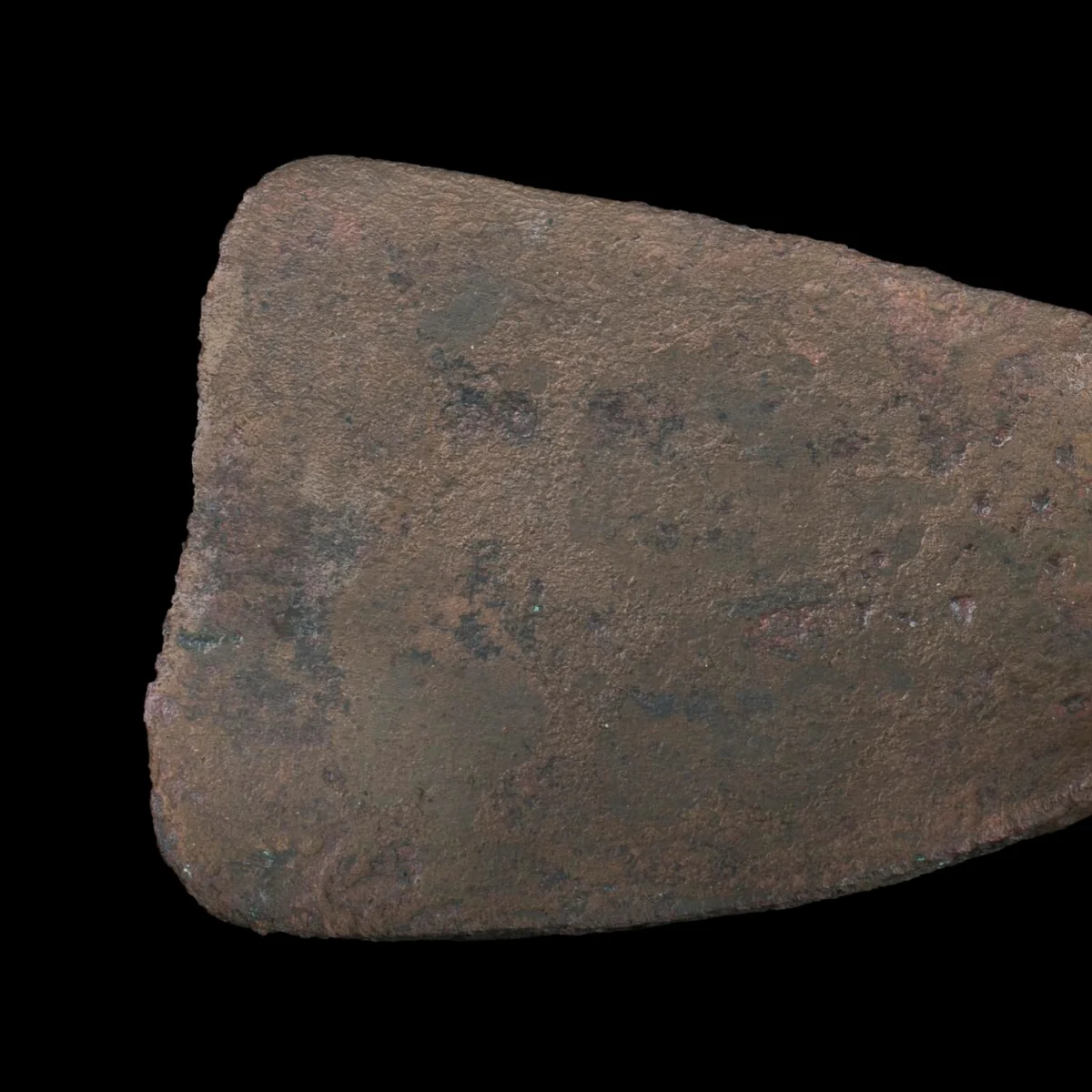
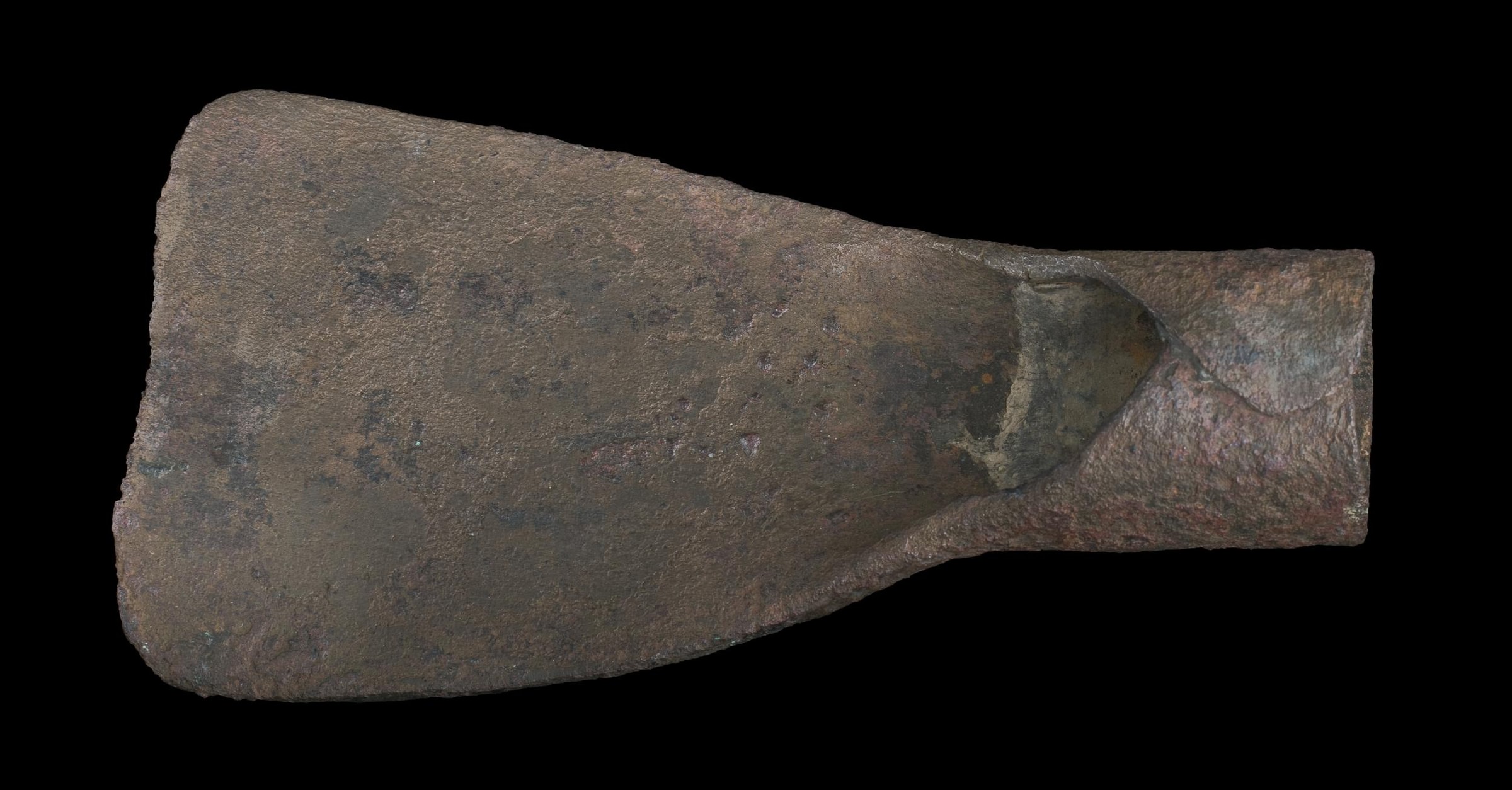
The hoe celebrated in the Sumerian poem was far from the lightweight garden tool familiar to modern audiences. As Jeremy Black notes, it was more akin to a mattock, characterized by a wide blade set at a right angle to the shaft. This design made it exceptionally versatile, capable of breaking up stubborn earth like a pickaxe, tilling soil for planting, smoothing surfaces for construction, and even digging intricate irrigation channels—a lifeblood for Mesopotamian agriculture. Beyond its agricultural prowess, the hoe was also a formidable tool in construction, used for shaping mudbricks, laying foundations, and erecting the monumental temples and ziggurats that defined Sumerian cities. Its utility even extended to warfare and defense, serving as an improvised weapon or a tool for building fortifications. In a society where survival depended on mastering the land and harnessing its resources, the hoe was not just an implement; it was the quintessential instrument of civilization, empowering humans to transform their environment and sustain their communities. Its indispensability is precisely why it earned such exalted status in Sumerian literature and cosmology.
Scribal Schools (Edubba) and Education
The edubba, or "House of Tablets," represented the pinnacle of formal education in ancient Mesopotamia. These scribal schools were the crucibles where the literate elite of Sumerian society were forged—future priests, administrators, scribes, and legal professionals. The curriculum was rigorous and highly structured, beginning with the fundamental mastery of cuneiform script. Students would spend years copying signs, words, and eventually, entire literary compositions.
The educational progression involved mastering increasingly complex texts. Beginners would tackle the "Tetrad," groups of four relatively simple compositions designed to build foundational literacy. Upon demonstrating proficiency, students advanced to the "Decad," a collection of ten more challenging works. The Song of the Hoe was a prominent inclusion in the Decad, signifying its importance in the advanced stages of a scribe’s training. Mastering this text, with its intricate wordplay, mythological allusions, and repetitive linguistic patterns, was a crucial hurdle before students could progress to even more complex literary and administrative compositions, ultimately leading to graduation and a career in service to the temple or palace. Jeremy Black’s insight into the urban background of most Nippur scribes—affluent individuals unlikely to have wielded a hoe in a field—lends significant weight to the argument that the poem served as an intellectual exercise, a "word game" designed to challenge their linguistic and memorization skills, while simultaneously reminding them of the manual labor that underpinned their society’s prosperity.
The Poem’s Narrative: A Summary and Analysis
The narrative of The Song of the Hoe is a rich tapestry weaving together cosmology, mythology, and the celebration of human endeavor, all centered around its titular tool.
The poem opens with a cosmic flourish, depicting Enlil, the supreme god of wind, air, and storms, as the primordial architect. With his magnificent hoe—described as being crafted from resplendent gold and inlaid with brilliant lapis lazuli—Enlil separates heaven from earth, forging the very space for humanity’s existence. The ancient Anuna gods, witnessing this divine act, acknowledge its profound goodness, and Ninmena (also known as Ninhursag, the revered mother goddess) subsequently decrees the fundamental principle of reproduction, ensuring the proliferation of life.
A pivotal shift occurs when Enlil, referred to by his alternative name Nunamnir, is praised not directly, but through his instrument. Enki, the sagacious god of wisdom and water, lauds Enlil’s hoe itself, mirroring the Anuna’s earlier admiration for the work rather than the deity. This subtle but significant distinction elevates the tool to a near-divine entity.
The goddess Nisaba, initially associated with grain but here in her later, influential role as goddess of writing and accounts, is tasked with meticulously recording these foundational decisions. This detail is ingeniously linked to humanity’s subsequent actions, as people take up their own hoes, emulating Enlil’s creative act. Nisaba thus becomes the divine chronicler not just of harvests or finances, but of humanity’s deeds, particularly their participation in the ongoing act of creation and civilization-building.
From line 35 onwards, the poem cascades into a fervent adoration of the hoe’s practical applications. It describes the E-Kur, Enlil’s sacred temple, as being founded and built by the hoe’s diligent work. Ninlil, goddess of air and Enlil’s consort, and Ninisina (Gula), the goddess of healing, bring offerings, recognizing the hoe’s centrality. Even Enki, now called Nudimmud, is given the epithet "hoe wielder" as he sculpts the freshwater realm of the Abzu. Further divine collaboration sees Ninhursag and the war god Ninurta (referred to as Cul-pa-eda) utilizing the hoe for constructing temple altars.
The theme of divine-human partnership in creation continues as Inanna, the goddess of love, war, and fertility, labors on her own city with the assistance of Utu, the sun god, while Nisaba undertakes similar construction elsewhere. Inanna’s son, Sara (Cara), explicitly requests tools for establishing order, and among the crucial implements he receives is, fittingly, a hoe. These passages underscore the Sumerian belief that humans were co-workers with the gods, entrusted with maintaining and nurturing the divine order established at creation.
The poem even extends the hoe’s influence to the underworld and divine justice. References to Dumuzid, an underworld deity, and Gibil, god of fire, the hearth, and justice, imply the hoe’s role in burial rites and maintaining cosmic balance. The temple of Jectin-ana (Gestiana), Enlil’s daughter and goddess of song, resonates with Enlil’s calls to his hoe as he works, highlighting its musicality and rhythmic presence.
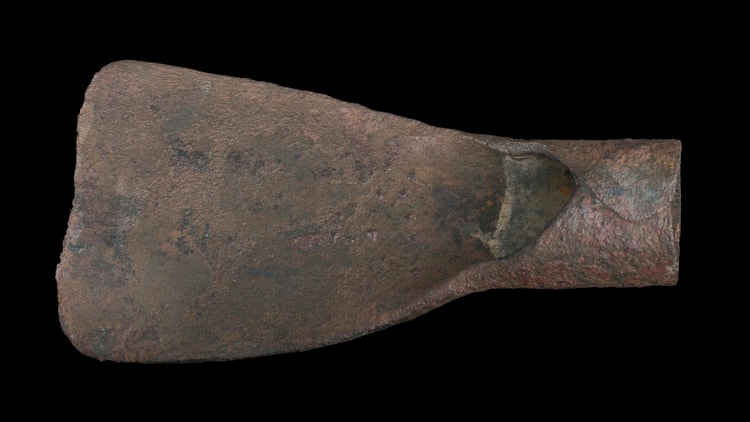
The hoe’s versatility is celebrated in its roles as a construction tool, an agricultural implement, and even a weapon. Nergal, god of war and the underworld, and the legendary hero Gilgamesh are invoked. Gilgamesh, "with the hoe, he is the great barber of the watercourses," a vivid metaphor for the hoe’s essential function in digging and maintaining the intricate irrigation ditches vital for Mesopotamian prosperity.
The concluding lines (83-109) elegantly tie everything together, emphasizing the established order of the cosmos and the hoe’s fundamental role in enabling it. Its destiny, fixed by Enlil, ensures that "the hoe makes everything prosper; the hoe makes everything flourish." The poem concludes with a traditional invocation, praising Nisaba for her inspiration and guidance, thereby cementing the hoe’s sacred status within both the divine realm and human endeavor.
Linguistic and Literary Devices
The most striking linguistic feature of The Song of the Hoe is the pervasive and ingenious use of the Sumerian word for hoe, al. This constant repetition is not merely a stylistic quirk but a sophisticated literary device serving multiple purposes. Phonetically, the reiteration of al and its various derivations (e.g., aled for "daylight broke forth," altare for "distributing," jal for "did" or "took," al-dug for "demanded" or "desired," aljaja for "set going" or "subdues," aldue for "building," almumu for "caused to grow," altar for "hoe wielder" or "construction site," immal for "good cow," dajal for "broad" or "extend," bal for "rebel" or "recalcitrant," algigi for "roars," allumlum for "makes fertile," alhulhuledec for "rejoicing," irigal for "grave," jisal for "oars," kindajal for "barber," huljal for "wicked," altirigu for a bird, allub for a battle-axe, alluhab for a battle-net, maltum for a bowl, mayaltum for a sledge, argibil for a cupboard, munjal for "occurs," allanum for oak, arganum for balm, algamec for steatite, lugal for "owner," hirin for weeds) creates a hypnotic, rhythmic quality. This could have aided memorization for students or provided a steady beat for field workers.
Beyond rhythm, the intricate wordplay around al functions as an intellectual challenge. Students would have been required to understand and articulate the various semantic nuances and grammatical forms derived from the root word. This transformation of a simple noun into a versatile linguistic element, appearing in verbs, adjectives, and compound words, showcases the richness of the Sumerian language and the poetic skill of the author. The poem also employs vivid imagery, such as the hoe made of gold and lapis lazuli, the hoe roaring like a storm and striking like a dragon, or Gilgamesh as the "great barber of the watercourses." These metaphors elevate the hoe from a mundane tool to a symbol of divine power, human ingenuity, and the very force of creation and order in the universe.
Official Responses
Scholarly Debates on Purpose
The scholarly community has long engaged in a vibrant debate regarding the primary purpose of The Song of the Hoe. Two prominent perspectives, championed by Samuel Noah Kramer and Jeremy Black, offer compelling, though distinct, interpretations.
Samuel Noah Kramer, a towering figure in Sumerian studies, firmly contended that the piece functions as a creation myth. His translation, "The Creation of the Pickaxe," underscores his belief that the poem’s central ‘character’ is the hoe itself, not merely the gods who wield it. Kramer saw the text as celebrating the genesis and wonders of this fundamental implement, which enabled the planting of crops, the building of cities, and the very flourishing of civilization. While acknowledging its use in scribal schools, Kramer emphasized the mythological and celebratory core of the work, portraying it as an explanation for the hoe’s pivotal role in shaping the world.
In contrast, Jeremy Black and his colleagues proposed that the poem’s primary function was pedagogical. Black observed that scribal students in Nippur were typically affluent urbanites, destined for careers in temple or palace administration, and unlikely to have practical experience with agricultural labor. He suggested that the poem, with its elaborate intellectual word games built around the Sumerian word al, served as a sophisticated educational tool. It challenged students to master complex linguistic derivations and mnemonic skills through recitation after copying. Black argued that the poem simultaneously reminded these future elites that their institutional prosperity rested on the manual labor performed by others, while paradoxically distancing them from that labor through an intellectualized, abstract celebration of the tool.
These two perspectives are not necessarily mutually exclusive. It is entirely plausible that The Song of the Hoe was a multi-functional text. It could have served as an engaging educational exercise in the edubba, challenging students with its linguistic complexity and mythological content, while simultaneously transmitting a deeply ingrained cultural message about the sacredness of labor and the vital role of the hoe in Sumerian cosmology. Its enduring popularity, evidenced by the numerous copies, suggests its resonance across different strata of society, even if its context of reception varied.
Impact on Mesopotamian Studies
The Song of the Hoe holds a revered position within Mesopotamian studies today, much as it did over two millennia ago. It is among the most frequently anthologized Sumerian literary works, making it a cornerstone for students and scholars alike. Its popularity stems from its unique blend of mythological narrative, cultural insight, and linguistic ingenuity. The poem offers an invaluable window into the Sumerian worldview, revealing their deep reverence for agricultural tools, their sophisticated understanding of the relationship between gods and humans, and their educational practices. For linguists, it provides rich material for studying Sumerian vocabulary, grammar, and poetic devices. For historians and cultural anthropologists, it illuminates the socio-economic foundations of ancient Mesopotamia and the ways in which daily life, labor, and cosmology were intricately intertwined. Its continued study contributes significantly to our understanding of early human civilization, demonstrating the enduring power of literature to reflect and shape a culture’s most fundamental values.
Implications
Cultural Significance
The Song of the Hoe is far more than a simple hymn; it is a profound declaration of the hoe’s cultural significance as a symbol of civilization itself. By linking the hoe directly to Enlil’s act of separating heaven and earth and creating a space for humanity, the poem elevates a utilitarian object to a sacred instrument of divine will. This reflects a Sumerian worldview where the mundane and the sacred were not distinct but deeply interconnected. The hoe becomes an embodiment of progress, enabling humanity to move from a state of raw wilderness to organized society, built upon agriculture and urban centers. The poem illustrates the Sumerian belief in divine-human partnership: the gods initiate creation, but humans, by wielding their hoes, participate actively in maintaining and expanding this order. This concept imbued daily labor with a sacred dimension, dignifying the work of farmers and builders by connecting their efforts to the grand cosmic design.
Socio-Economic Insights
The poem offers invaluable socio-economic insights into ancient Mesopotamia. Its very existence as a widely circulated and copied text reinforces the fundamental agricultural basis of the Sumerian economy. The hoe was not just one tool among many; it was the primary implement that facilitated the vast irrigation networks, fertile fields, and brick-built cities that were hallmarks of Mesopotamian prosperity. The scholarly debate regarding its audience—field hands versus scribal students—also sheds light on societal stratification. If sung in fields, it served as a morale booster and a rhythmic aid, connecting workers to a divine narrative. If studied in schools, it acted as a cultural bridge, reminding the literate elite of the manual labor that supported their privileged positions, albeit through an intellectualized lens. This duality highlights how literature could function both as a unifying cultural force and as a subtle mechanism for reinforcing social roles and the interconnectedness of different societal strata, even if those connections were understood differently by various groups.
Legacy and Relevance
The enduring legacy of The Song of the Hoe extends far beyond the dusty tablets of ancient Sumer. For contemporary historians, archaeologists, and linguists, it remains a crucial primary source for reconstructing the intricate tapestry of Sumerian life, thought, and language. It provides unparalleled insights into their pantheon, their creation myths, their educational systems, and their agricultural practices.
Beyond academic circles, the poem resonates with a universal message about the dignity of labor and the profound impact of human ingenuity on shaping the world. It serves as a powerful reminder that even the most basic tools can hold immense symbolic weight and be celebrated as instruments of creation and progress. In an age of advanced technology, The Song of the Hoe encourages us to reflect on the foundational technologies that enabled the rise of civilization and to appreciate the timeless connection between human effort, sustenance, and the construction of societal order. Its message, bridging the divine and the everyday, the cosmic and the practical, continues to offer a compelling window into the enduring human quest for meaning in work and purpose in life.