The Topography of Memory: The Luminous Surrealism of Christian Quintin
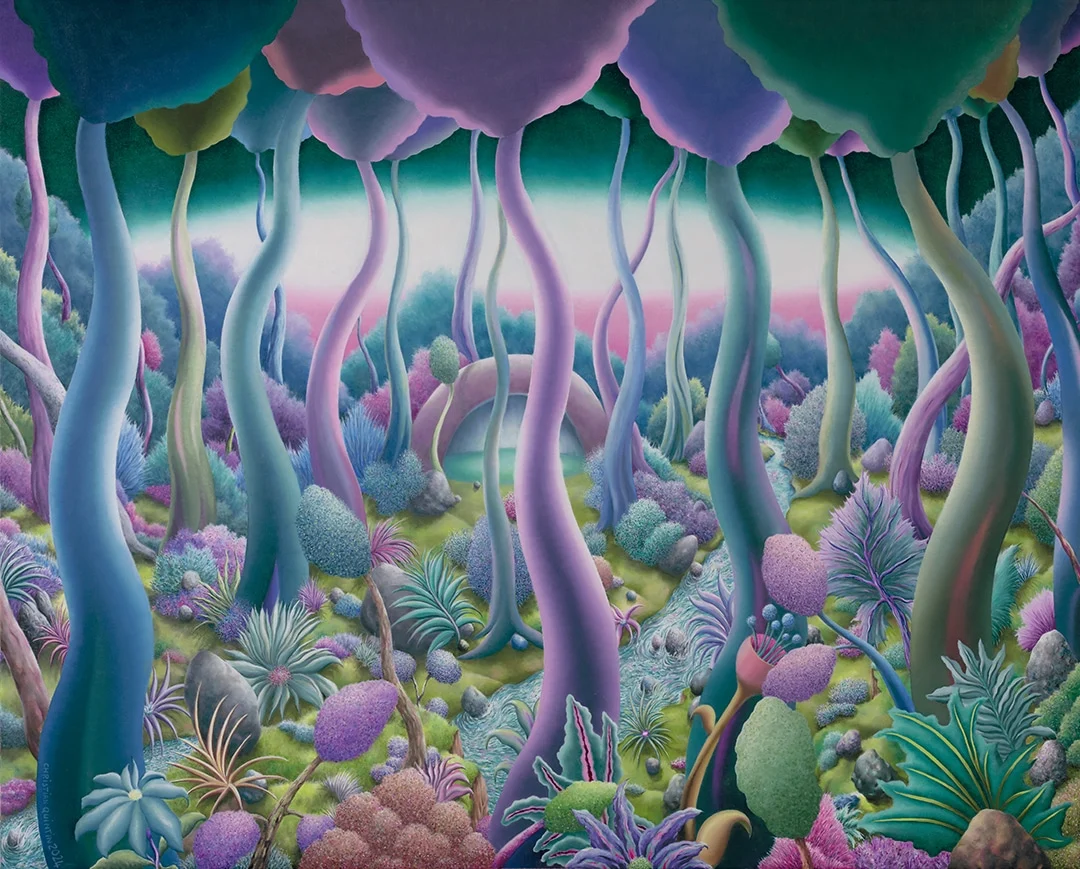
In an era where the contemporary art world often prioritizes irony, rapid-fire spectacle, and digital detachment, the work of Christian Quintin stands as a profound counter-narrative. A French-born artist who has spent over four decades refining his craft in Northern California, Quintin does not paint the world as it appears to the eye; rather, he maps the world as it is felt by the psyche. His canvases serve as a "wondrous sanctuary for the soul," inviting viewers to step into a realm where the boundaries between the human form and the natural landscape dissolve into a unified, poetic language.
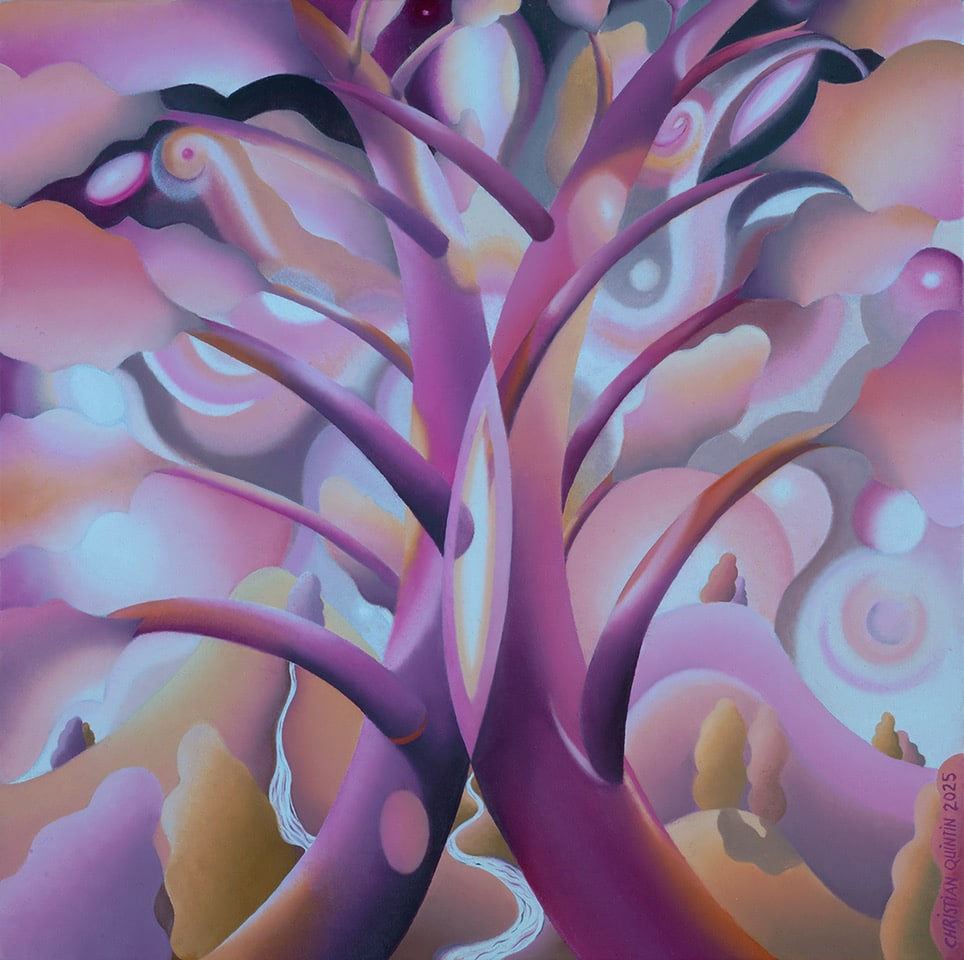
Through a meticulous mastery of ink, oil, graphite, and pastel, Quintin has carved out a unique space in the "Visionary Continuum." His work is characterized by a "kaleidoscopic consciousness"—a term used to describe his ability to layer memory, emotion, and technical precision into images that evoke a sense of déjà vu. Whether it is a face emerging from a crystal or a tree swaying with the grace of a professional dancer, Quintin’s art explores the twin landscapes of the inner mind and the outer world, proving that beauty, when executed with intent, can be a radical form of defiance.

Chronology: From the Storm-Lashed Cliffs of Brittany to the Valleys of Sonoma
The evolution of Christian Quintin’s artistic voice is a tale of two landscapes, each providing a distinct vocabulary for his visual philosophy.
The Formative Years in France (1957–1980)
Born in 1957 in the port town of Saint Brieuc, Brittany, Quintin’s early life was framed by the moody, dramatic coastline of Northern France. The region, known for its ruined castles, ancient myths, and storm-lashed cliffs, instilled in him a lifelong sensitivity to the grandeur and melancholy of nature. A recurring motif in his work, L’Île de la Comtesse, serves as a mythic point of reference—a solitary island whose architecture and storybook aura appear in his paintings like a recurring dream.

In 1975, Quintin moved to Paris to study at the prestigious École des Beaux-Arts. It was here that his romantic instincts were tempered by rigorous classical discipline. Under the tutelage of masters at the Academy, he developed the precise draftsmanship and control of form that remain the hallmarks of his work today. While he absorbed the legacy of French Surrealism, he found himself more aligned with the Symbolists and Romantic painters. His goal was never to shock the viewer, as the early Surrealists often did, but to reveal hidden truths through meticulous craftsmanship.
The California Transition (1981–Present)
The trajectory of Quintin’s career changed forever in 1981 when he crossed the Atlantic and settled in Northern California. In the vineyards and rolling hills of Sonoma County, he discovered a second spiritual home. The "sacred ecology" of the American West provided a new palette and a fresh set of symbols.

In California, Quintin began to synthesize his European roots with the expansive spirit of his new environment. He famously noted, "I feel the same spirit in a tree as in myself." This communion with the landscape led to a prolific period where the old myths of Brittany found their mirror in the oaks and rivers of Sonoma. Over the next forty years, he established himself as a vital voice in the regional art scene before his work eventually caught fire on the international stage.
Supporting Data: The Mechanics of "Kaleidoscopic Consciousness"
To understand the depth of Quintin’s work, one must look at the data of his process—the sheer time and technical variation required to produce a single masterpiece.

Technical Precision and Mediums
Quintin’s approach is the antithesis of "fast art." He treats each medium like a musician choosing an instrument, matching the material to the emotional resonance of the piece:
- Ink and Graphite: Used for his most intricate surrealist explorations, where cross-hatching and fine lines create a sense of architectural mystery.
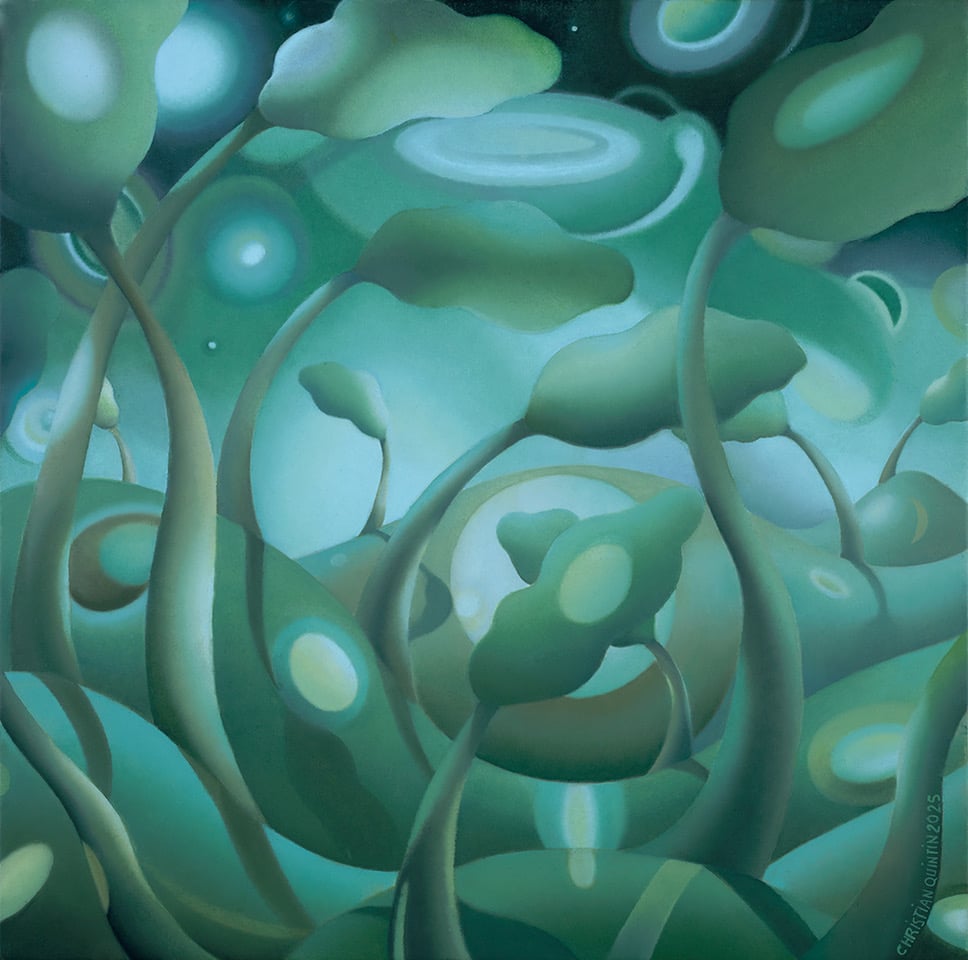
- Oil and Pastel: Reserved for his "emotional terrains," where color becomes the primary vehicle for mood. In works like A Lake Color of Emeralds, he uses unconventional palettes—brown-orange skies and violet clouds—to signal that the viewer is looking at a landscape of feeling rather than a geographic location.
The Six-Month Cycle
The complexity of Quintin’s compositions often requires months of labor. His seminal work, The Aviary, took six months to complete. In this piece, boundaries are entirely fluid: his face emerges from a crystal, his neck transforms into a tree trunk, and his hair becomes a leafy canopy. Similarly, La Porte Ouverte, inspired by the poetry of Rumi, required seven months of painstaking cross-hatching. This slow-burning process ensures that each stroke is a "negotiation between spirit and form."

The Thematic Bridge
Quintin’s portfolio is often divided into two modes: "Surrealist Maps" and "Romantic Landscapes." However, data from his four-decade career suggests these are not opposing practices but a unified vision. In his "realistic" landscapes, such as West Sonoma County, a floating face may emerge from the clouds, while in his surrealist works, the biological accuracy of the flora remains grounded in his classical training. This hybridity is what critics refer to as his "unified inner/outer world."
Official Responses: Critical Reception and Market Evolution
The art world’s response to Quintin has evolved from regional appreciation to international acclaim, with critics frequently citing his work as a necessary antidote to modern cynicism.

Critical Acclaim
Critics have long been fascinated by the "mental landscapes" Quintin creates. Suzanne Munich, in a notable review, described his work as a gateway to the subconscious, while Dan Taylor of the Press Democrat highlighted his "emerging beauty."
Perhaps the most poignant assessment came from a 2022 Calabi Gallery review, which stated: "In an era largely devoid of it, his work is beautiful. We could all use more beauty in our lives." This sentiment reflects a growing critical consensus that Quintin’s rejection of irony is not a regression, but a courageous act of artistic integrity.
Institutional and Gallery Milestones
The "official" validation of Quintin’s career can be traced through several key milestones:
- Awards: He received the Grumbacher Award in 1987 and the Award of Excellence from the California State Fair in 1990.
- The Vorpal Connection: In 1999, Quintin began showing at the Vorpal Gallery, the institution famous for introducing M.C. Escher to the American public. This placed Quintin in a lineage of "mathematical poets" and masters of perspective.
- Global Expansion: In the 2020s, under the representation of Lorin Gallery (Los Angeles/Paris), Quintin’s work reached global markets, appearing at KIAF in Seoul and Art Central in Hong Kong.
Implications and Legacy: Art as Sanctuary
The implications of Christian Quintin’s body of work extend beyond the aesthetics of Surrealism. He represents a bridge between several disparate worlds: the classical discipline of Europe and the visionary freedom of California; the precision of the architect and the intuition of the poet.
Defying the "Irony Trap"
Most contemporary art of the last thirty years has been defined by a "post-modern irony"—a tendency to critique or deconstruct rather than to build or celebrate. Quintin’s legacy is his steadfast refusal to participate in this trend. By prioritizing beauty and intuition, he offers a "form of resistance" against the speed and spectacle of modern culture. His work implies that the human need for wonder is timeless and that art’s highest calling is to provide a "sanctuary for the soul."
The Visionary Continuum
While Quintin is often compared to Surrealists like Dalí or Magritte, his work lacks the aggressive "unsettling" nature of 1920s Surrealism. Instead, he aligns more closely with the Visionary Art movement, which seeks to map higher states of consciousness. However, where many visionary artists lean toward chaotic psychedelia, Quintin remains anchored in "sacred geometry" and classical form. This makes him a unique figure in the "visionary continuum"—a master who uses the tools of the Old World to explore the frontiers of the New Mind.
Conclusion: The Echo of the Invisible
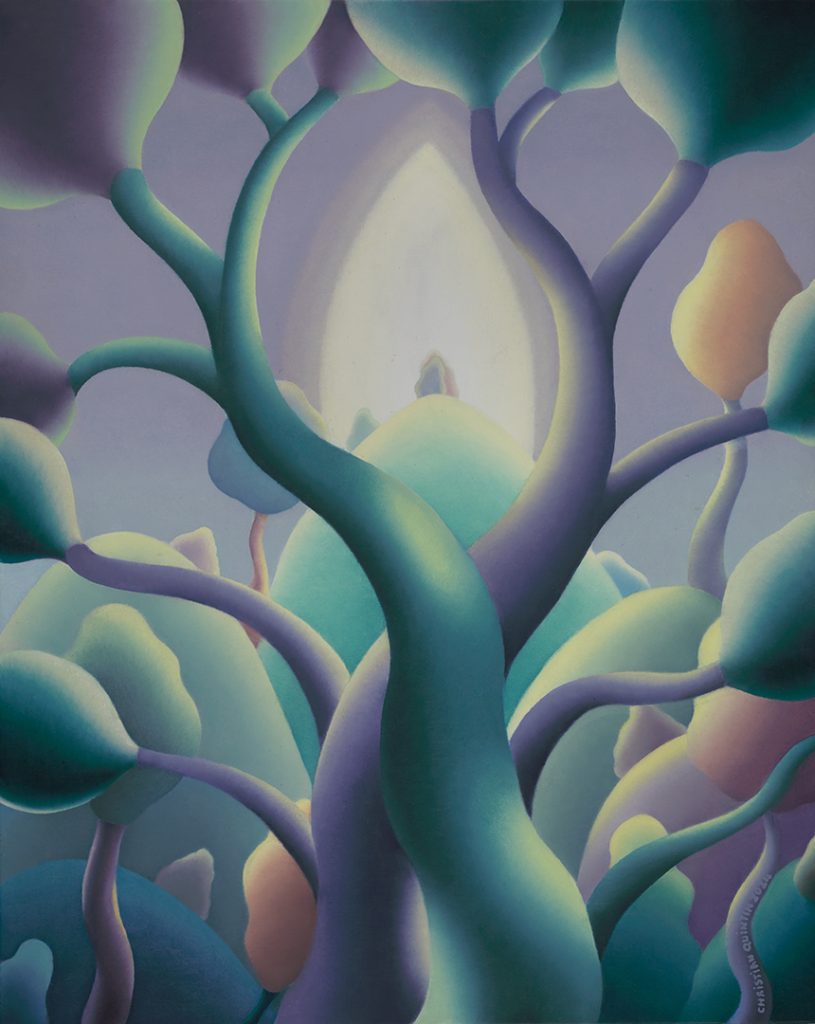
Christian Quintin’s art is a reminder that the world we see is only a fraction of the world we inhabit. By painting "what you remember feeling before you had words for it," he captures the liminal space between reality and dream. His career—spanning the moody coasts of Brittany and the sun-drenched valleys of California—is a testament to the power of a unified vision.
As his work continues to gain international traction through upcoming exhibitions at the Morrison Gallery and beyond, the message remains consistent: beauty is not an escape; it is a reentry into the hidden dimensions of existence. In the intricate lines of a Quintin drawing, we find not just a tree or a face, but a map of our own internal wilderness—a place where the sky can be brown-orange, the lake can be bright emerald, and the soul can finally breathe.