The Unseen Hand: Artists Grapple with AI’s Challenge to Creativity and Livelihood
The rapid proliferation of Artificial Intelligence (AI) within creative domains has ignited a fierce debate, casting a long shadow over the future of human artistic endeavors. From visual arts to literature, creators are confronting existential questions about authenticity, intellectual property, and the very definition of artistry. A recent personal account from writer S.M. Carrière, published on Blackgate.com, powerfully articulates the profound anxiety and frustration gripping the artistic community, highlighting the ethical quagmire and practical challenges posed by generative AI.
The article, originally a candid reflection by Carrière, underscores a growing sentiment that AI’s intrusion into creative fields threatens to devalue the arduous, deeply personal process of creation. While acknowledging AI’s potential in other sectors, such as medicine, Carrière draws a firm line, arguing that its application in art and writing often stems from a desire for "perceived reward of creative work, without ever having to put in the actual work." This sentiment resonates with countless artists worldwide who view the mastery of craft as an ongoing journey of practice, experimentation, and diligent effort—a journey they believe AI shortcuts, rather than genuinely replicates.
The Core of the Conflict: The Act of Creation
At the heart of the contentious discussion lies the fundamental distinction between human creation and AI generation. For many artists, the intrinsic value of art is not merely in the finished product but in the process of bringing it forth. Carrière eloquently captures this, stating, "It is the act of creating it that makes it worth the time and effort… pulling something beautiful out of the mind and onto something to be shared with the world… that is by far the worthiest part." This perspective posits that true art is imbued with the artist’s lived experience, their struggles, their joys, and their unique perspective—elements that AI, by its nature as an algorithm, cannot possess.
Writers, in particular, often speak of the "glorious" act of wrestling stories from their imagination onto the page. While acknowledging the discipline and hard work involved, many, like Carrière, find immense joy and euphoria in the creative struggle itself. The prevalent saying, "I hate writing, I love having written," is met with skepticism by those who cherish the journey as much as the destination. The concern is that AI, by offering instant gratification through prompts, bypasses this vital, human-centric aspect of artistic engagement, thus stripping the creative process of its inherent worth.
A Rapid Chronology of Disruption
The current friction points are the culmination of a swift technological evolution. Generative AI, capable of producing text, images, and other media from simple prompts, has moved from niche academic research to mainstream accessibility in a remarkably short period.
- Early 2010s: Foundational research in deep learning and neural networks begins to show promise in pattern recognition and data generation.
- Mid-2010s: Generative Adversarial Networks (GANs) emerge, demonstrating the ability to create realistic images and media, often indistinguishable from human-made content to the untrained eye.
- Late 2010s – Early 2020s: Large Language Models (LLMs) like GPT series gain significant capabilities, producing coherent and contextually relevant text, leading to widespread public awareness and accessibility. Image generation models (DALL-E, Midjourney, Stable Diffusion) also rapidly advance, allowing users to create complex visual art from text prompts.
- 2022-Present: The widespread public release of user-friendly AI tools leads to an explosion of AI-generated content. This period also marks the sharp escalation of ethical concerns, copyright disputes, and job displacement fears within creative industries, as artists and writers find their work being replicated, sampled, or outright replaced by AI. The speed of this adoption has left legal frameworks and industry standards struggling to keep pace.
Supporting Data: The Multi-Faceted Impact on Creative Fields
The impact of AI on creative fields is manifesting in several critical areas, raising alarms across the industry.
Ethical Minefield: Training Data and Plagiarism
A primary concern revolves around the training data used for generative AI models. These models are often trained on vast datasets scraped from the internet, which frequently include copyrighted works of human artists and writers without their consent or compensation. Critics argue that this constitutes systemic plagiarism and intellectual property theft on an unprecedented scale. AI-generated outputs, while not direct copies, can often mimic styles, themes, and even specific elements of existing works, raising questions about originality and attribution. Carrière’s strong condemnation of AI users as "patron[s] who, irritatingly, refuses to actually support the arts" and instead commission "an environment-destroying plagiarism machine" encapsulates the anger felt by many whose livelihoods and creative legacies are threatened by this practice.
Economic Devaluation and Market Saturation
The influx of AI-generated content is leading to market saturation, particularly in sectors like publishing and digital art. AI-written books are "flooding the market," as Carrière notes, making it increasingly difficult for human authors to stand out, gain visibility, and secure publishing deals. The ability to produce content rapidly and at minimal cost puts human creators, who invest significant time and effort, at a severe disadvantage. This "race to the bottom" drives down prices and devalues creative labor, threatening the economic viability of a career in the arts.
The "False Positive" Dilemma and Loss of Trust
Perhaps one of the most insidious threats highlighted by Carrière is the unreliability of AI detection tools. As AI models become more sophisticated, their outputs increasingly resemble human writing. Paradoxically, this means that genuinely human-created work can be flagged as AI-generated by imperfect detection software. The real-world consequences are dire:
- Ruined Careers: Carrière cites the case of Jerry Falade, who reportedly lost a $2.4 million publishing contract with MacMillan due to suspicions of AI use, a claim Falade vehemently denies. This incident underscores the fragility of an artist’s career in an environment where algorithmic judgment can override human verification. The impossibility of definitively proving one’s innocence creates an atmosphere of pervasive distrust.
- Self-Censorship: The fear of being falsely accused is forcing writers to "change the way they write to avoid coming off like A.I." This involves "stripping texts of their own voices, of character," a tragic compromise that undermines the very essence of artistic expression and individuality. Artists are being compelled to dilute their unique styles, ironically making their work less distinctively human, to satisfy the demands of flawed AI detection algorithms.
Environmental Impact
While not the central focus of the original piece, Carrière’s reference to AI as an "environment-destroying plagiarism machine" touches upon another emerging concern: the significant energy consumption associated with training and running large AI models. The massive computational resources required contribute to carbon emissions, adding an environmental dimension to the ethical debate.
Official Responses: Navigating the New Creative Frontier
The challenges posed by generative AI have elicited a range of responses from various stakeholders, reflecting the complexity and novelty of the situation.
Artist and Writer Organizations
Unions and guilds representing artists and writers have been at the forefront of advocating for protections. Organizations like the Authors Guild, the Writers Guild of America (WGA), and SAG-AFTRA have voiced strong concerns regarding copyright infringement, fair compensation, and the ethical use of AI. During the 2023 Hollywood strikes, AI’s role in potentially replacing writers and actors was a major sticking point, leading to specific contractual language aimed at regulating its use and ensuring human creative control. These bodies are actively lobbying for stronger copyright laws that protect creators from unauthorized use of their work in AI training and demand transparency from AI developers.
Publishing Industry
Publishing houses are grappling with how to manage the influx of AI-generated manuscripts. Some have implemented strict policies requiring authors to disclose AI usage, while others are investing in their own detection tools. However, the Falade case illustrates the industry’s struggle to differentiate genuine human work from sophisticated AI output, leading to a climate of caution and suspicion. Major publishers are also part of ongoing discussions with legal experts and tech companies to establish industry-wide standards for AI integration and content verification.
Governmental and Legal Responses
Governments worldwide are beginning to acknowledge the need for regulatory frameworks concerning AI, particularly regarding intellectual property.
- In the United States, the U.S. Copyright Office has issued guidance clarifying that only human-created works are eligible for copyright protection, but the nuances of AI-assisted creation remain ambiguous. Lawsuits have been filed against AI companies by artists and media organizations alleging copyright infringement based on training data.
- The European Union is developing comprehensive AI regulations, including provisions related to transparency and data governance, which could have implications for creative industries.
- These legal battles are crucial in shaping future policies, determining who owns the output of AI systems, and how original creators are compensated when their work forms the basis of AI models.
AI Developers and Tech Companies
AI companies, while touting the transformative potential of their technologies, often frame their tools as "assistive" rather than "replacement" for human creativity. They argue that AI can help artists overcome creative blocks, automate mundane tasks, and unlock new forms of expression. Some are developing opt-out mechanisms for artists who do not wish their work to be included in training datasets, though the efficacy and scope of these measures are debated. However, their primary focus remains on innovation and market expansion, often clashing with the ethical concerns raised by the creative community.
Implications: The Future of Art and Human Creativity
The ongoing AI debate carries profound implications for the future of art, culture, and human society.
Redefining Artistry and Authenticity
The rise of AI forces a re-evaluation of what constitutes "art" and who qualifies as an "artist." If a machine can generate compelling imagery or narratives from a simple prompt, does the prompt-writer become the artist? Or is the true artistry still reserved for those who hone a craft through years of dedicated practice? This existential question challenges established notions of skill, intention, and authorship. The emphasis shifts from the output to the underlying human connection and effort, strengthening the argument that "the work is imperfect, but it is mine, and the work is wonderful."
The Value of Human Labor and Expression
If AI can produce content cheaply and quickly, the economic value of human creative labor is significantly diminished. This threatens not only individual livelihoods but also the broader cultural ecosystem that relies on a thriving community of professional artists. There is a risk that society, accustomed to instant and inexpensive AI-generated content, may lose its appreciation for the unique depth, nuance, and emotional resonance that only human expression can provide.
The Role of the Consumer
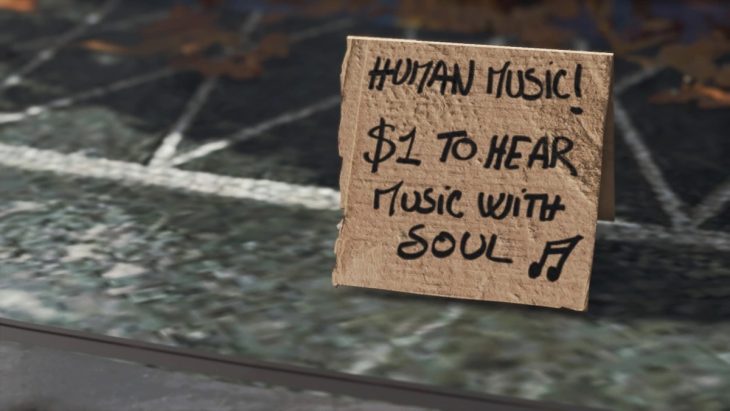
Carrière’s plea to readers to "turn their back on A.I. slop, to support real human writers" highlights the critical role of consumers. The choices of patrons—whether to prioritize cheap, AI-generated content or to actively seek out and compensate human creators—will heavily influence the trajectory of creative industries. Supporting human artists is not just an act of economic solidarity but a reaffirmation of the intrinsic value of human ingenuity and storytelling.
The Imperative to Create Anyway
Despite the overwhelming challenges, the enduring message from many artists, including Carrière, is one of resilience: "What we can do is create anyway. Paint anyway. Write anyway." This call to action is a defiant assertion of the human spirit’s innate drive to create, irrespective of technological disruption. It suggests that even if the path to making a living becomes increasingly arduous, the fundamental joy and fulfillment derived from the act of creation will persist. Artists will continue to carve out their moments, whether in libraries, laundromats, or late evenings, to bring their unique visions to life.
In conclusion, the advent of AI has ushered in a period of unprecedented turbulence for creative fields. While AI offers tantalizing possibilities in other domains, its application in art and literature presents a complex web of ethical dilemmas, economic threats, and philosophical challenges to the very nature of human creativity. The struggle is not merely about adapting to new tools but about preserving the integrity of artistic expression, safeguarding the livelihoods of creators, and upholding the irreplaceable value of the human hand and mind in shaping our shared cultural landscape. The conversation is far from over, and its outcome will profoundly shape the future of how we define, consume, and celebrate art.