Toronto International Film Festival Unveils Powerhouse Speaker Lineup for Inaugural "TIFF: The Market"
The Toronto International Film Festival (TIFF) has officially signaled a new era in its storied history with the announcement of a high-profile speaker lineup for its first-ever official industry market. Set to run from September 10 to 16, "TIFF: The Market" aims to formalize and elevate the business side of the festival, transforming it from a premier launchpad for awards-season contenders into a structured hub for global film commerce.
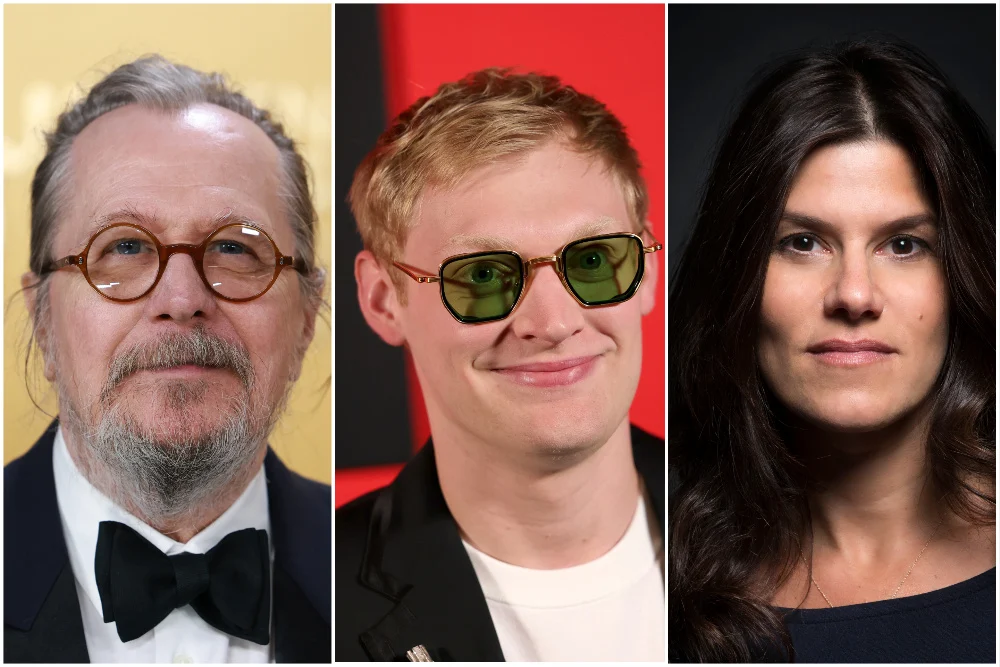
The inaugural roster of speakers features a formidable blend of Academy Award winners, industry titans, and breakout creative voices. Leading the charge is Academy Award winner Gary Oldman, whose presence underscores the market’s ambition to bridge the gap between high-level artistry and commercial viability. Joining him are "Barbie" producer and Mattel Films executive Robbie Brenner, visionary South Korean director Lee Chang-dong, and the legendary producing duo behind Killer Films, Christine Vachon and Pamela Koffler.
Main Facts: A Strategic Expansion of the TIFF Ecosystem
The launch of "TIFF: The Market" represents a significant pivot for the organization. While Toronto has long been considered the most important film festival in North America for consumer engagement and Oscar campaigning, it has historically lacked the formalized market structure of its European counterparts, such as the Marché du Film in Cannes or the European Film Market (EFM) in Berlin.
The 2024 speaker lineup is divided into two primary pillars: the Visionaries Program and the Dialogues series. These sessions are designed to provide a 360-degree view of the contemporary film landscape, covering everything from the granular details of the creative process to the macro-level shifts in global distribution and intellectual property management.
The Visionaries Program
The Visionaries Program focuses on individuals whose work has fundamentally altered the trajectory of the medium.
- Gary Oldman: The "Slow Horses" star will participate in a career-spanning conversation. The festival has noted that the talk will be "anchored in Oldman’s creative process," celebrating a career that has spanned from the punk-rock energy of Sid and Nancy to his recent Emmy-nominated turn as Jackson Lamb in the Apple TV+ espionage drama.
- Robbie Brenner: As the President and Chief Content Officer of Mattel Studios, Brenner is at the center of one of the industry’s most significant shifts: the transition of iconic toy brands into prestige cinema. Following the billion-dollar success of Barbie, Brenner will discuss her career and her latest project, The Housewife, which premieres at this year’s festival.
- Lee Chang-dong: The South Korean auteur, known for masterpieces such as Burning and Poetry, will discuss his upcoming release, Possible Love. Lee is also set to receive the Ebert Director Tribute Award, highlighting his influence as a novelist-turned-filmmaker who explores the complexities of the human condition.
The Dialogues Series
The Dialogues series is geared toward the "how-to" of the industry, featuring deep dives into production, financing, and the path to box-office success.
- Curry Barker and Inde Navarrette: The director and star of the breakout horror hit Obsession will discuss the film’s journey from its TIFF debut last year to becoming a major box-office success for Focus Features.
- Killer Films (Christine Vachon and Pamela Koffler): The founders of the iconic indie production house will share insights into their collaborative process. With a filmography that includes Past Lives, May December, and Carol, Vachon and Koffler are widely regarded as the architects of modern independent cinema.
Chronology: The Evolution of the Toronto Marketplace
The road to "TIFF: The Market" has been decades in the making. Since its inception in 1976 as the "Festival of Festivals," Toronto has served as an informal marketplace. Throughout the 1990s and 2000s, the festival became the site of massive distribution deals, often sparked by late-night bidding wars following world premieres at the Princess of Wales Theatre or Roy Thomson Hall.
However, as the global film economy became more complex—driven by the rise of streaming services and the globalization of content—the need for a more structured environment became apparent.
- Pre-2020: TIFF operated with an "Industry Office" that facilitated networking but lacked a centralized market floor or a formalized slate of business-oriented programming on the scale of Cannes.
- 2020–2022: The COVID-19 pandemic forced TIFF to innovate with digital platforms. This period served as a beta test for more structured industry interactions.
- 2023: Following the resolution of the Hollywood strikes, TIFF leadership recognized a window of opportunity to solidify Toronto’s position as the primary North American gateway for international film sales.
- September 2024: The official launch of "TIFF: The Market," featuring a dedicated physical space and a curated curriculum of speakers designed to attract international buyers, sellers, and producers.
Supporting Data: The Economic and Cultural Weight of TIFF
The decision to formalize the market is backed by the sheer volume of activity that already occurs in Toronto each September. According to historical data from the festival:
- Attendance: TIFF typically attracts over 450,000 attendees, including more than 5,000 industry professionals and 1,000 members of the press.
- Economic Impact: The festival contributes an estimated $200 million CAD annually to the local Toronto economy.
- Sales Activity: In previous years, even without a formal market, dozens of films have secured multi-million dollar distribution deals during the 11-day event. By centralizing this activity, TIFF aims to increase the "strike rate" for independent films seeking North American or global distribution.
The inclusion of the "The Town" podcast live recording, hosted by Matthew Belloni with guest Matthew Greenfield (President of Searchlight Pictures), further emphasizes the market’s data-driven approach. Belloni’s podcast is a staple for industry insiders who track box office metrics, streaming data, and executive maneuvers, signaling that "TIFF: The Market" is intended for the "math" side of Hollywood as much as the "art" side.
Official Responses: Leadership’s Vision for the Future
The leadership team at TIFF has been vocal about the strategic necessity of this new initiative. Charles Tremblay, the newly appointed Head of TIFF: The Market, emphasized that the caliber of the inaugural speaker lineup is a testament to the industry’s readiness for a formalized Toronto market.
"The high caliber of speakers participating in our first market reflects the industry’s strong support for our vision," Tremblay stated. "It highlights the intentional efforts we’re making to build on TIFF’s long-standing reputation as a welcoming space for creativity and commerce to co-exist."
Geoff Macnaughton, Vice President of Market Programming and Theatrical, echoed this sentiment, focusing on the educational and inspirational aspects of the programming. "Our Summit programming is designed to inspire creators, inform decision-makers, and fuel healthy discussions around the ever-evolving screen industries," Macnaughton said. He noted that the goal is to create a "virtuous cycle" where business success at the market leads to more ambitious creative projects in the future.
Implications: Reshaping the Global Festival Circuit
The formalization of "TIFF: The Market" has profound implications for the global film industry, particularly in North America.
1. Strengthening the North American Indie Sector
For decades, American independent filmmakers had to travel to Europe to find international partners. By establishing a robust market in Toronto, TIFF provides a more accessible venue for North American creators to interface with global capital. This is particularly vital in a post-strike environment where production costs are rising and traditional financing models are under pressure.
2. Competition with Venice and Telluride
TIFF often competes with the Venice Film Festival and the Telluride Film Festival for world premieres. While Venice offers prestige and Telluride offers exclusivity, neither has a formal market. By adding a robust business component, TIFF offers a "one-stop-shop" advantage that neither of its September rivals can match. A filmmaker can premiere their movie, launch an Oscar campaign, and close a worldwide distribution deal all within a five-block radius in downtown Toronto.
3. The "Mattel Effect" and Brand-Driven Cinema
The inclusion of Robbie Brenner suggests that TIFF is leaning into the reality of modern cinema: the dominance of intellectual property. By hosting discussions on how "Barbie" was shepherded from a toy line to a critical darling, TIFF is positioning itself as the place where the industry learns how to navigate the delicate balance between corporate branding and directorial vision.
4. Diversity of Voice in a Commercial Setting
The inclusion of Lee Chang-dong and the founders of Killer Films ensures that the market does not become solely about "blockbuster" commerce. It maintains the festival’s commitment to world cinema and the "naturalistic" storytelling that has long been TIFF’s hallmark. This suggests that "TIFF: The Market" will attempt to cultivate a unique identity—one that is as interested in the next South Korean masterpiece as it is in the next Hollywood franchise.
As the industry prepares for the September 10 kickoff, the eyes of the cinematic world will be on Toronto. "TIFF: The Market" is not just an addition to a festival schedule; it is a bold bid to redefine how films are bought, sold, and celebrated in the 21st century. With more speakers and programming to be announced in the coming weeks, the inaugural market is shaping up to be the most significant industry development in TIFF’s nearly fifty-year history.