Unearthing Ancient Echoes: Reppion and Holden’s "Fascinating Folklore" Compendium Ignites Modern Imagination
London, UK – In an era where ancient tales often find themselves relegated to academic texts or niche communities, a groundbreaking new compendium titled Fascinating Folklore is set to redefine how audiences engage with the world’s rich mythological heritage. Crafted by the acclaimed duo John Reppion and PJ Holden, two luminaries of the comic world, this ambitious project transcends traditional boundaries, blending scholarly essays with breathtaking graphic narratives to offer an unparalleled journey into the heart of global folklore.
Born from a creative pact ignited by the popular #FolkloreThursday hashtag, the endeavor has blossomed into an extraordinary volume, showcasing the magic of folklore with unprecedented depth and accessibility. Published by Liminal 11, a publisher known for its esoteric and beautifully produced works, Fascinating Folklore promises a sensory feast that might just leave readers spellbound.
Main Facts: A Modern Tapestry of Ancient Wisdom
Fascinating Folklore is more than just a book; it’s a meticulously curated portal into the myriad stories that have shaped human culture and imagination across millennia. At its core, the compendium is a collaborative masterpiece by John Reppion, a renowned writer celebrated for his work in comics and horror fiction, and PJ Holden, an esteemed artist whose dynamic style has graced titles for major publishers. Their combined expertise brings a unique synergy to the project, where Reppion’s narrative prowess meets Holden’s visual storytelling acumen.
The book’s innovative format is one of its most compelling features: "rich and informative essays dance hand in hand with breathtaking comics." This hybrid approach ensures that complex historical and cultural contexts are presented with academic rigor, while the visual medium of comics provides immediate, immersive engagement, making the often-dense world of folklore accessible to a broad audience, from seasoned enthusiasts to curious newcomers.
The thematic scope of Fascinating Folklore is remarkably vast, traversing continents and epochs. Readers will encounter iconic figures such as the fierce Celtic warrior queen Boudicca and the legendary Anglo-Saxon hero Beowulf, whose sagas are explored through fresh lenses. Beyond these well-known heroes, the compendium delves into the enchanting realm of plantlore, unearthing the mystical properties and ancient wisdom associated with flora like the Mandrake, Willow, and the mysterious Yedua. Ghost stories, a universal element of human storytelling, are given vivid life through tales of haunting specters like Okiku of Japan and the ancient Wandjing spirits of Western Australia. Furthermore, the book introduces readers to lesser-known deities, such as Anteros, the resolute guardian of slighted love, offering insights into the nuanced emotional landscapes of ancient pantheons. This diverse selection underscores the global tapestry of human belief and the enduring power of narrative.
Chronology: From Hashtag to Historical Tome
The genesis of Fascinating Folklore is a testament to the power of digital communities and shared passion. The project’s origins lie in a "creative pact" between Reppion and Holden, spurred by their mutual engagement with the #FolkloreThursday hashtag. This online movement, which encourages the sharing and discussion of folklore from around the world every Thursday, has cultivated a vibrant global community of scholars, storytellers, and enthusiasts. The hashtag serves as a dynamic, ongoing archive of traditional tales, local legends, and forgotten myths, demonstrating a persistent public appetite for such narratives.
For Reppion and Holden, #FolkloreThursday provided not just inspiration but a fertile ground for exploration. The constant influx of diverse stories and the enthusiastic engagement of the community likely fueled their desire to create a more permanent, curated collection. Their respective careers provided the perfect foundation for such an undertaking. John Reppion, known for his critically acclaimed work in comics (such as Albion, The Thrill Electric) and his deep interest in occultism and folklore, brought a scholarly yet imaginative approach to the textual components. His ability to distill complex historical narratives into engaging prose is evident throughout the essays. PJ Holden, with a distinguished career illustrating for 2000 AD, Judge Dredd, and other titles, contributed the striking visual interpretations that are integral to the book’s appeal. His dynamic and atmospheric artwork transforms abstract concepts and ancient descriptions into compelling visual experiences, making the fantastical elements of folklore tangible and immediate.
The transition from a digital spark to a physical compendium represents a significant evolution. What began as a series of shared interests and creative impulses gradually coalesced into a structured project, culminating in its publication by Liminal 11. While the exact timeline from initial concept to publication isn’t detailed, the meticulous crafting of both essays and comics suggests a considerable period of research, writing, and artistic development. The choice of Liminal 11 as publisher is also significant, as the independent press has a strong reputation for publishing works that explore mythology, esotericism, and cultural history with a focus on high-quality production and aesthetic appeal, making them an ideal home for Fascinating Folklore.
Supporting Data: Echoes of Myth and Meaning
The excerpts provided from Fascinating Folklore offer a tantalizing glimpse into the depth and breadth of its content, illustrating how the compendium seamlessly weaves together historical fact, mythical narrative, and artistic interpretation.
The Island Monster: Aspidochelone and Zaratan
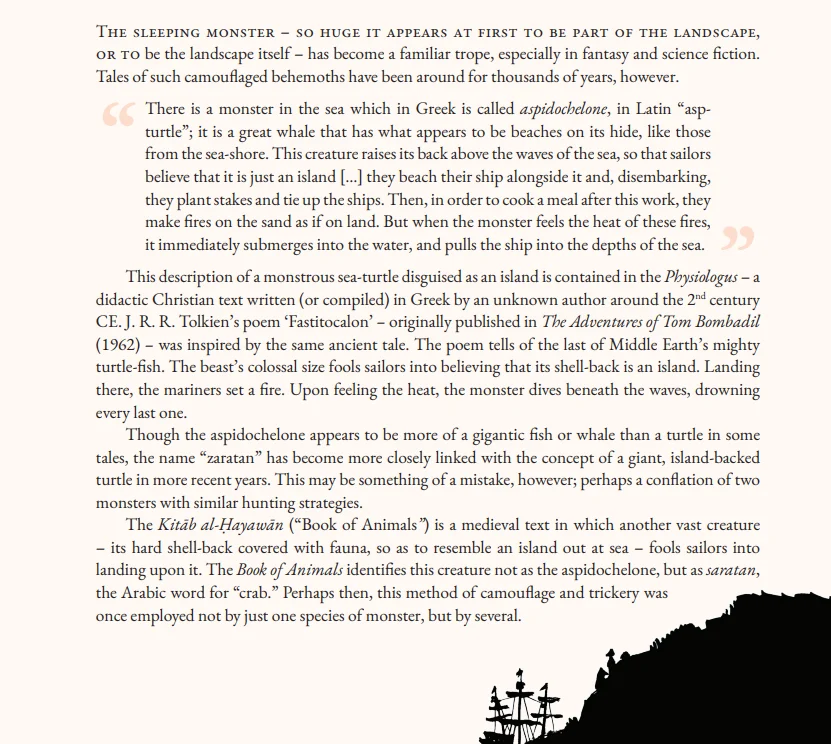
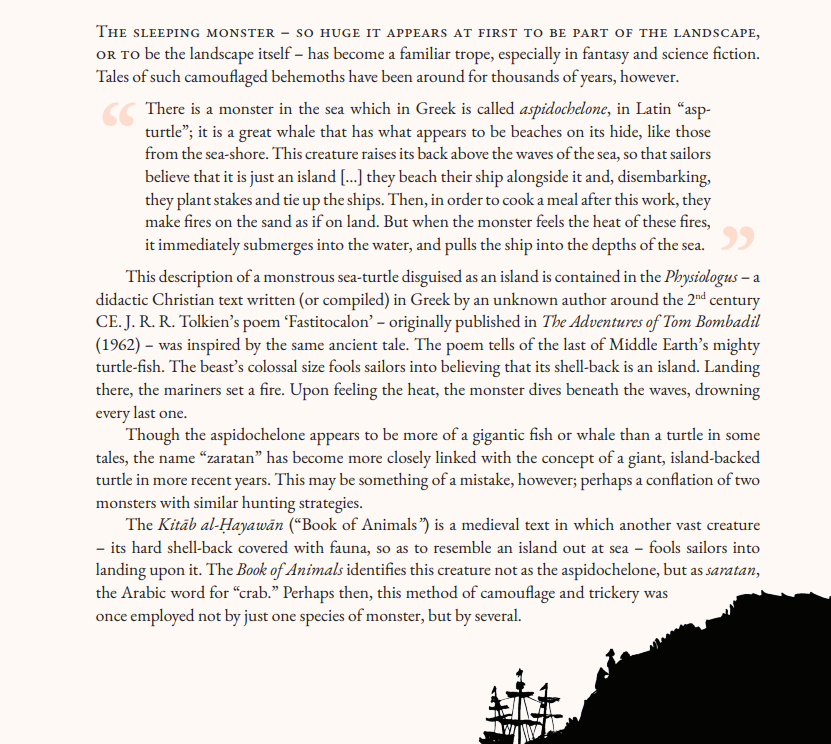
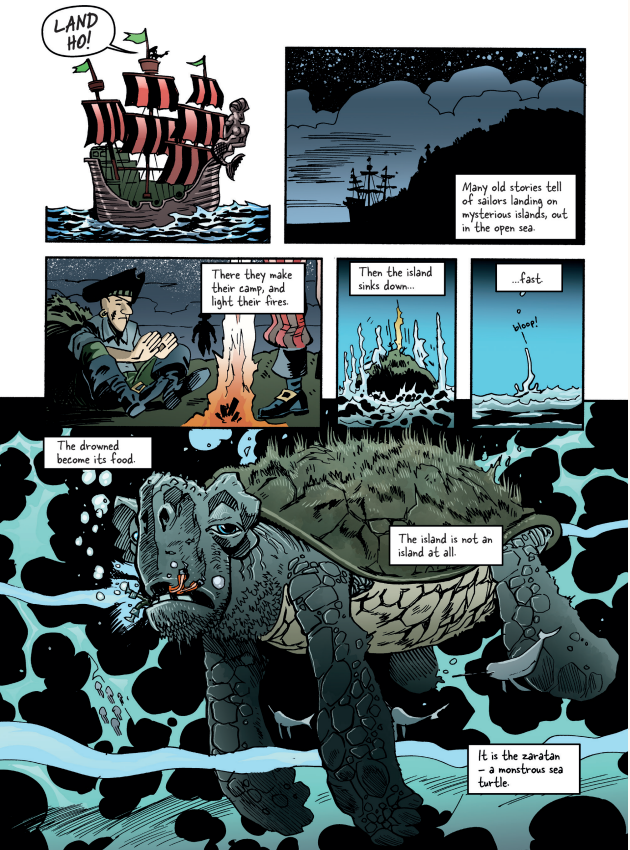
The tale of the aspidochelone, or "asp-turtle," exemplifies a pervasive mythical trope found across numerous cultures: the colossal creature mistaken for land. The excerpt vividly describes a great whale with a hide resembling sea-shore beaches, lulling unsuspecting sailors into mooring their ships and even lighting fires upon its back. The monster’s sudden submergence, dragging ships and crew into the depths, is a powerful metaphor for nature’s deceptive beauty and inherent dangers.
The detailed caption further enriches this narrative, tracing its origins to the Physiologus, a didactic Christian text from the 2nd century CE. This ancient bestiary often imbued descriptions of animals, both real and mythical, with allegorical religious meanings, likely portraying the aspidochelone as a symbol of temptation or false security leading to spiritual damnation. The enduring power of this myth is highlighted by its influence on J.R.R. Tolkien’s "Fastitocalon" in The Adventures of Tom Bombadil (1962), demonstrating how ancient folklore continues to inspire contemporary fantasy.
The discussion also introduces the term "zaratan," now often associated with giant island-backed turtles, though the text suggests this might be a conflation. It intelligently references the Kitāb al-Ḥayawān ("Book of Animals"), a medieval Arabic text that describes a similar creature identified as saratan—the Arabic word for "crab." This etymological distinction is crucial, revealing how myths evolve and intertwine, and suggesting that the concept of a camouflaged, predatory "island" might have been attributed to various colossal sea creatures across different cultural traditions, each reflecting regional encounters with the unknown and the awesome power of the ocean. This section expertly blends etymology, literary history, and comparative mythology.
Anteros: The God of Reciprocated Love
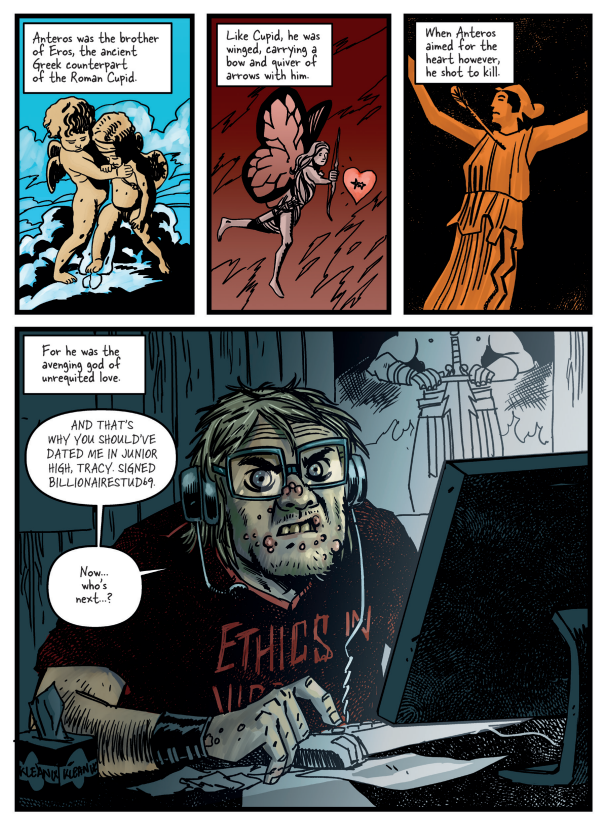
The exploration of Anteros, the lesser-known brother of Eros, delves into the subtle complexities of ancient Greek mythology and the nuanced understanding of love in classical thought. While Eros embodies desire, Anteros, whose name means "love returned," represents the vital balance of affection. His primary role as the punisher of those who fail to reciprocate love speaks to an ancient moral code that valued mutual respect and emotional equity in relationships.
The accompanying text expands significantly on Anteros’s place within the Greek pantheon. Born to Aphrodite and Ares, he is one of the Erotes, winged deities assisting their mother. The distinction between Eros (love and sex) and his brothers—Hedylogos (sweet talk), Pothos (longing), Hymenaeus (weddings), and Hermaphroditus (fertility)—illustrates a sophisticated categorization of love’s various facets. Thomas Swinburne Carr’s A Manual of Classical Mythology (1846) is cited, reinforcing Anteros’s role as Deus ultor, the avenging deity of slighted love. The fable of Cupid gaining strength when Anteros is near beautifully symbolizes how love thrives on reciprocity.
Perhaps the most fascinating detail is the revelation that the iconic statue atop the Shaftesbury Memorial Fountain in Piccadilly Circus, widely believed to be Eros, is in fact Anteros. Cast in aluminum in 1892, this figure was chosen to represent "love given blindly, or without expectation of return," symbolizing the philanthropy of Lord Shaftesbury. This historical correction highlights how myths can be misremembered or reinterpreted over time, and how their original meanings can be profound and surprising. It also underscores the enduring presence of classical mythology in modern urban landscapes, even if often unrecognized.

Okiku: The Vengeful Spirit of Himeji Castle
The legend of Okiku offers a chilling journey into Japanese folklore, particularly the concept of the onryō, or "vengeful spirit." The story, set within the historical Himeji Castle, details the tragic fate of a beautiful servant, Okiku, who spurns the advances of the samurai Aoyama Tessan. His cruel plot—hiding one of ten prized delft plates and framing Okiku—leads to her murder and subsequent haunting of the castle well. Her tearful, endless counting, culminating in a terrifying scream at the missing tenth plate, is a classic motif of obsessive, tormented vengeance.
The text provides critical context for the onryō phenomenon. These are not mere specters but powerful entities capable of physical harm and death, embodying the profound societal impact of injustice. The historical reference to Genbō’s alleged murder by Fujiwara no Hirotsugu’s onryō in 746 grounds this supernatural belief in real-world anxieties and historical accounts. The description of the onryō‘s iconic appearance—long black hair, white burial robes, pale face—directly links the folklore to its pervasive influence in Japanese popular culture, particularly J-horror cinema (e.g., Ring, Grudge), demonstrating how ancient myths continue to shape contemporary media.
The enduring nature of the legend is further emphasized by the mention that Okiku’s well still stands in Himeji Castle, with stories persisting of her nightly haunting. This reinforces the tangible connection between historical sites and the folklore they embody. The variations in the tale’s ending—whether Okiku is appeased by the tenth plate or eternally torments Aoyama—speak to the fluid, adaptive nature of oral traditions and their capacity to reflect different cultural desires for resolution or retribution. This section brilliantly connects a specific ghost story to broader cultural concepts, historical sites, and modern artistic expressions.
Official Responses: The Publisher’s Vision and Community Endorsement
While Fascinating Folklore is still fresh on the market, the publisher, Liminal 11, has articulated a clear vision for the compendium, aligning with its mission to bridge the gap between ancient wisdom and contemporary understanding. Their promotional material, from which much of the initial article description is drawn, emphasizes the book’s unique format and comprehensive scope, positioning it as an essential resource for anyone interested in cultural history, mythology, and art. The language used – "extraordinary compendium," "sensory feast," "unparalleled pathway" – suggests a high level of confidence in the book’s quality and its potential impact.
The very genesis of the project, stemming from the #FolkloreThursday hashtag, serves as a powerful endorsement from a grassroots community. The sustained popularity of this online movement, with its thousands of participants sharing and discussing folklore weekly, underscores a significant and ongoing public demand for accessible and engaging content about myths and legends. Reppion and Holden’s decision to channel this collective enthusiasm into a physical book can be seen as an "official response" to this community’s needs, transforming ephemeral digital discussions into a lasting, curated collection. The positive reception within the #FolkloreThursday community, as evidenced by early buzz and enthusiasm for the project, further solidifies its anticipated success.
Moreover, the reputation of John Reppion and PJ Holden as "masterful minds of two comic world luminaries" acts as a powerful implicit endorsement. Their established track records within the comics industry lend immediate credibility to the artistic and narrative quality of Fascinating Folklore. Readers familiar with their previous works will approach this compendium with an expectation of high standards in both writing and illustration, which the book appears designed to meet. Liminal 11’s selection of these creators and their project signals a commitment to bringing high-caliber talent to the exploration of cultural heritage.
Implications: Preserving Heritage, Inspiring Future Narratives
The publication of Fascinating Folklore carries significant implications for cultural preservation, education, and the future of storytelling. In an increasingly globalized and digitized world, there’s a risk of ancient narratives fading into obscurity or being lost amidst the cacophony of modern information. Fascinating Folklore actively counteracts this trend by presenting these stories in a fresh, engaging, and accessible format, ensuring their continued relevance and reach. By blending scholarly essays with dynamic comics, the compendium caters to diverse learning styles and preferences, making complex cultural information digestible and enjoyable for a broad demographic, including younger generations who might otherwise find traditional academic texts daunting.
Educationally, the book serves as an invaluable resource. Its interdisciplinary approach—merging history, literature, art, and cultural studies—makes it suitable for both informal learning and as a supplementary text in academic settings. It encourages critical thinking about the origins, evolution, and cultural significance of myths, prompting readers to consider how these ancient tales reflect human fears, desires, and societal values. The detailed analysis of specific legends, such as the aspidochelone, Anteros, and Okiku, provides templates for understanding broader mythological patterns and cross-cultural comparisons.
Furthermore, Fascinating Folklore has the potential to inspire a new generation of creators. The innovative blend of essays and comics demonstrates how traditional narratives can be revitalized and reinterpreted through contemporary artistic mediums. This could spur artists, writers, and filmmakers to explore folklore as a rich source for new works in fantasy, horror, and other genres, ensuring that these ancient stories continue to evolve and resonate in modern contexts. The book itself becomes a testament to the enduring power of storytelling and the infinite ways in which human beings seek to understand their world through myth.
Ultimately, Fascinating Folklore by John Reppion and PJ Holden is more than just a collection of stories; it is a vibrant testament to the human imagination and our perennial need to connect with the past. By making these "fascinating" tales accessible and visually stunning, the compendium not only preserves a vital part of our shared heritage but also enriches our understanding of ourselves and the cultures that shaped us. It stands as a beacon for the ongoing relevance of folklore in a rapidly changing world, inviting everyone to delve into its pages and experience the magic for themselves. Readers are encouraged to "order your copy" and embark on this spellbinding journey.