Unveiling the Enigma: Laura Sampson’s "Enchanted Tales" Breathes New Life into ‘The Twelve Dancing Princesses’
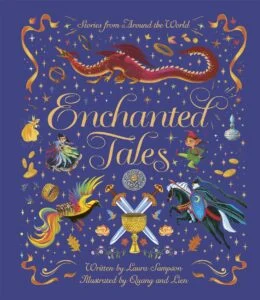
London, UK – In an era where classic narratives are constantly being re-examined and presented to new generations, author Laura Sampson has achieved a notable feat with her latest work, Enchanted Tales. Published by Templar Books, an imprint of Bonnier Books, Sampson’s collection offers a fresh perspective on beloved folklore, with particular acclaim directed at her captivating retelling of "The Twelve Dancing Princesses." This timeless French tale, drawing inspiration from Charles Deulin’s nuanced version, is not merely recounted but enriched, inviting readers into a world where mystery, magic, and true love intertwine against a backdrop of meticulously imagined details.
The narrative of "The Twelve Dancing Princesses" has resonated across Europe for centuries, manifesting in countless variations. Sampson’s rendition, however, distinguishes itself by delving into the regional specificities that Charles Deulin, a French writer from the French-Belgian border, infused into his original account. Her interpretation masterfully brings to life the charming village of Montignies-sur-Roc and the majestic Château of Beloeil, grounding the fantastical elements in a vivid, tangible setting. This careful attention to historical and geographical context transforms a familiar story into a rich, immersive experience, offering both nostalgia for long-time admirers of folklore and a captivating introduction for newcomers.
At its core, Sampson’s retelling explores universal themes of hidden worlds, forbidden desires, and the unexpected triumph of humble virtue over aristocratic pretense. It is a story that prompts readers to ponder the secrets that lie beneath the surface, both within ancient castles and within the human heart. The book, available through Bonnier Books, is poised to become a cherished addition to any library, a testament to the enduring power of fairy tales when placed in the hands of a skilled and insightful storyteller.
Main Facts: A Modern Retelling of a Timeless Mystery
Laura Sampson’s Enchanted Tales presents a compelling collection of classic stories, with its rendition of "The Twelve Dancing Princesses" standing out as a particularly enchanting highlight. The tale, rooted in a version by Charles Deulin, a French writer, transports readers to a world brimming with intrigue and magic. At its heart lies a puzzling mystery: twelve beautiful princesses, residents of the grand Château of Beloeil, retire each night to a suite secured by three robust bolts. Yet, by morning, their exquisite satin shoes are found utterly worn through, as if they had danced vigorously until dawn. This inexplicable phenomenon has confounded their father, the Duke, who, desperate for a resolution, has issued a bold decree: "ANYONE WHO CAN SOLVE THE MYSTERY OF THE WORN-OUT SHOES MAY MARRY ONE OF MY DAUGHTERS!"
This royal proclamation sets the stage for a classic quest, yet one fraught with peril. Many a prince, lured by the promise of a royal bride and an end to the enigma, has attempted to unravel the secret, only to vanish without a trace by morning. The stakes are extraordinarily high, creating an atmosphere of suspense that Sampson skillfully maintains throughout her narrative.
Into this world of aristocratic mystery steps Michel, a young cowherd from the nearby village of Montignies-sur-Roc. Known by his peers as "Stargazer" due to his dreamy disposition and habit of gazing upwards, Michel embodies the archetype of the humble protagonist destined for greatness. With his curly hair and striking blue eyes, he is a character who, despite his modest origins, harbors a deep longing for adventure beyond the pastures. Sampson, drawing from Deulin’s original, meticulously integrates regional details – from the local cuisine and clothing styles to the precise place names – which imbue the story with a rich, authentic flavor, making the fantastical journey feel intimately connected to a real, historical landscape. This grounding in specific cultural and geographical elements is a hallmark of Sampson’s approach, elevating the retelling beyond a simple rehash into a vibrant, culturally resonant piece of literature. The initial premise of a commoner daring to dream of solving a royal riddle immediately establishes a tension between social class and individual destiny, a theme Sampson explores with grace and depth.
Chronology: Michel’s Quest to Unravel the Secret World
The intricate plot of "The Twelve Dancing Princesses" unfolds through a carefully orchestrated sequence of events, each building upon the last to reveal a world hidden from plain sight. Laura Sampson’s retelling meticulously chronicles Michel’s journey, from his humble beginnings to his ultimate triumph.
The Fairy’s Prophecy and Michel’s Arrival
Michel, the young cowherd of Montignies-sur-Roc, leads a life of quiet contemplation, his mind often adrift in dreams of adventure. His moniker, "Stargazer," aptly describes his yearning for something more than the mundane. One serene summer’s day, his ordinary life is irrevocably altered by the ethereal appearance of a fairy, resplendent in a golden dress. Her melodious pronouncement – "Go to the Château of Beloeil, and you will marry a princess!" – ignites a spark of destiny within him, propelling him towards the unknown. Michel, a man of simple faith and boundless hope, wastes no time in heeding this magical instruction.
The Duke’s Decree and Vanishing Suitors
Upon his arrival at the magnificent Château of Beloeil, Michel finds the court abuzz with a perplexing mystery. The Duke’s twelve beautiful daughters, despite their rooms being triple-locked each night, awaken with their satin slippers inexplicably worn to shreds, clear evidence of nocturnal revelry. This enduring enigma has driven the Duke to desperation, leading him to issue his momentous decree, promising one of his daughters in marriage to any man who can solve the riddle. However, the reward comes with a grim caveat: a succession of eager princes, drawn by the allure of a royal match, have attempted the challenge, only to vanish without a trace, their fates a dark testament to the hidden dangers of the mystery.
Michel’s Humble Beginnings and Glimmer of Hope
Initially, Michel is deterred by his humble status. "I am no prince – the duke will laugh at me if I come forward," he laments, his practical nature overriding his adventurous spirit. Instead of directly confronting the challenge, he seeks employment within the château gardens, a strategic move that allows him to observe from the periphery. His daily task involves crafting exquisite bouquets for the princesses, offerings they accept with a detached politeness, rarely acknowledging his presence. This routine persists until one pivotal day when Princess Lina, the youngest, breaks the unspoken barrier with a fleeting glance and a gentle smile. This small gesture, though seemingly insignificant, ignites a fervent hope in Michel’s heart, transforming his casual curiosity into a determined resolve to unravel the princesses’ secret.
Magical Intervention and the Gift of Invisibility
Michel’s burgeoning resolve is soon bolstered by another visit from the benevolent fairy. This time, she bestows upon him two baby laurel trees – one rose, one cherry – along with a golden bucket and a golden rake. "Plant these laurel trees, tend them with this rake, water them from this bucket and they will grant your wishes!" she sings, before vanishing once more. Michel, ever diligent, follows her instructions, planting and nurturing the magical saplings.
The First Journey to the Secret Realm
The cherry laurel eventually blossoms, yielding a single white flower. Michel, hoping to subtly impress Lina, plucks it and places it in his shirt button. To his astonishment, the flower instantly renders him invisible. Realizing the immense potential of this newfound ability, he resolves, "This is my chance to solve the princesses’ mystery!" That very evening, cloaked in invisibility, he conceals himself beneath a bed in the princesses’ private suite. As soon as the heavy door is secured for the night, the room comes alive with hushed excitement – wardrobes creak open, clothes rustle, and suppressed laughter fills the air. Then, with three distinct claps and a creak, a hidden trapdoor in the floor swings open. Michel, seizing the moment, slips out and stealthily follows the princesses down into the depths. So close is he to Lina that he accidentally steps on her dress. Lina glances back, sensing something, but sees nothing, dismissing it as a stumble.
The descent leads them down a winding staircase, along a mysterious corridor, and through three distinct woodlands: one shimmering with silver, another glowing with gold, and a third sparkling with diamonds. Each step further immerses Michel in this fantastical hidden world. They finally arrive at a glass-clear lake, where twelve waiting princes, each in a shining boat, ferry a princess across to a dazzling castle illuminated by the twilight. Michel, still invisible, seats himself beside Lina, who muses aloud, "Why is my boat so slow and heavy?" Unaware of his presence, she is soon distracted by the wild, enchanting music emanating from the distant castle.
Upon docking, the group rushes to the castle’s opulent ballroom, a space adorned with countless mirrors, glittering lights, and rich tapestries. From a discreet corner, Michel observes the princesses, entranced by their graceful movements. Lina, with her velvet-black eyes, whirls across the jeweled dancefloor, radiating joy. Michel, watching the princes dance with them, feels a pang of envy, oblivious to the tragic truth: these are the vanished suitors from the world above, enchanted by a potion that has erased their memories of their former lives, trapping them in this endless nocturnal revelry.
As the princesses’ shoes begin to show significant wear, signaling the impending end of the night’s dance, the music ceases. A lavish feast of sugar cookies, waffles, and cakes is served. Michel then silently follows the princesses back across the lake and through the diamond and gold woodlands. However, as they traverse the silver woodland, he impulsively breaks off a tiny sprig from one of the shimmering trees. The act produces a resounding "CLANG!" that echoes through the wood. One princess queries, "What was that?" only for another to dismiss it as "Probably just a bird." Michel, realizing his mistake, races ahead, ascending the stairs, through the trapdoor, and out an open window, scrambling down a hanging vine back to the gardens just as dawn breaks. He removes the white invisibility flower and resumes his daily task of gathering bouquets for the princesses. Later, as he presents the flowers, Lina discovers the silver twig nestled within hers, a silent, perplexing clue.
Repeated Surveillance and Growing Suspicion
Michel, now emboldened and equipped with the knowledge of the secret passage, repeats his invisible surveillance for two more consecutive nights. Each return journey sees him pluck a tell-tale sprig from the respective woodland – first a golden one, then a diamond one – carefully placing them within Lina’s bouquet. These tangible proofs serve as irrefutable evidence of his nocturnal expeditions.
Confrontation and Unspoken Affection
When Lina discovers the diamond sprig, the weight of the evidence becomes undeniable. She confronts Michel, her voice a mix of bewilderment and accusation: "You must have followed us. How?" Michel, maintaining a cryptic demeanor, simply replies, "I hid." Recognizing the gravity of his discovery, Lina presses further: "You know that telling our father this secret rewards you with a wedding to one of us. Will you tell him?" Michel’s response is both surprising and profound: "I do not intend to." Puzzled by his selflessness, Lina asks, "But why stay silent?" Michel offers no verbal explanation, but his blue eyes meet Lina’s, conveying a depth of feeling that transcends words. The other princesses, witnessing this unspoken exchange, instantly grasp its meaning. Their taunts are swift and cruel: "How ridiculous! Lina wants to be a gardener’s wife!" Lina, stung by their mockery and perhaps by her own conflicting emotions, cries, "Never!" and hurls her bouquet at Michel in a fit of disdain.
The Sisters’ Treachery and Michel’s Transformation
Later that day, the sisters, fearing Michel might still reveal their secret and perhaps sensing the growing bond between him and Lina, decide he must share the same fate as the previous suitors. They invite Michel to join them that night, openly, knowing the forgetting potion awaits him. Michel accepts, but recognizes his simple gardener’s clothes are unsuitable for a grand ball. Remembering the rose laurel, he whispers a wish into its petals. Instantly, he is transformed, dressed in black velvet that mirrors Lina’s eyes, a diamond feather brooch sparkling on his cap – a prince, not merely in attire, but in spirit.
The Final Dance and the Breaking of the Spell
Once again, the group descends through the trapdoor, down the stairs, and through the magical woodlands. Lina, seeing Michel in his princely garb, laughs, a mix of embarrassment and genuine amusement. "Don’t you look princely!" she remarks. Michel, ever grounded, replies, "Maybe. But I’m still a gardener. Not good enough for you." They dance together throughout the night, a silent communion of souls. As the ball concludes, the eldest princess offers Michel a golden cup, declaring, "Gardener, secret-revealer, let’s drink to you!" Michel, having overheard their treacherous plans, knows the cup contains the forgetting potion. Yet, with a longing look at Lina, he raises it to his lips, prepared to sacrifice himself for love.
"NO!" Lina cries, her heart breaking at the thought of Michel trapped forever in this enchanted limbo. She rushes forward, seizing the cup before he can drink. "Gardener or not, the thought of you trapped here forever breaks my heart!" This declaration of true love, selfless and profound, shatters the enchantment that held the princes captive and maintained the secret realm. Together, Michel and Lina return to the world above, and the trapdoor, its magic broken, disappears forever.
Resolution and Royal Union
In the Duke of Beloeil’s private quarters, Michel, now free from any magical constraint, recounts the entire astonishing tale, presenting the physical evidence of the sprigs. Having proven his courage, intelligence, and unwavering love for Lina, he formally asks for her hand in marriage. The Duke, relieved and overjoyed, grants his blessing. Their wedding becomes the grandest and most joyous celebration in the land, a testament to true love’s triumph. Michel, the humble cowherd, ascends to the status of a prince, not through birthright, but through bravery and devotion. He never again needs to make a wish upon the magical laurels, for with Lina by his side, he has found everything his heart could ever desire, fulfilling the fairy’s prophecy in a way more profound than mere royalty.
Supporting Data: The Enduring Legacy of Folklore and Sampson’s Craft
Laura Sampson’s Enchanted Tales is more than just a collection of stories; it is a meticulously crafted homage to the enduring power of folklore, particularly evident in her retelling of "The Twelve Dancing Princesses." To fully appreciate Sampson’s contribution, it is essential to delve into the historical and thematic richness of the tale itself, as well as the specific influences that shape her modern interpretation.
The Enduring Allure of ‘The Twelve Dancing Princesses’
"The Twelve Dancing Princesses" (or "The Worn-Out Dancing Shoes") is a folk tale with a rich and varied history, appearing in numerous cultures across Europe. Its most famous versions include those collected by the Brothers Grimm (KHM 133, "Die zertanzten Schuhe") and earlier, more fragmented accounts. The core mystery – princesses secretly dancing their shoes to tatters each night – has captivated audiences for centuries, hinting at forbidden pleasures, youthful rebellion, and the tantalizing allure of a hidden world.
From a psychological perspective, the tale has been interpreted in various ways. Some scholars view it as an allegory for adolescent transition, the princesses’ secret nocturnal excursions representing the emergence of their sexuality and independence, a rite of passage into adulthood. The hidden world, often a realm of enchantment and freedom, symbolizes the subconscious desires and burgeoning identities that must be explored away from the watchful eyes of patriarchal authority. The worn-out shoes become a tangible metaphor for their nightly escapades, a physical manifestation of their secret lives. This underlying psychological depth contributes significantly to the tale’s enduring appeal, allowing it to resonate with universal experiences of growth and self-discovery.
Charles Deulin’s Contribution
Sampson’s specific choice to draw from Charles Deulin’s version is particularly insightful. Deulin (1835-1891), a French writer, journalist, and folklorist from the region bordering Belgium, was known for his detailed and atmospheric retellings of local legends and fairy tales. Unlike some more generalized versions, Deulin’s "Les Douze Princesses Dansantes" (published in Contes du Roi Cambrinus, 1874) is notable for its rich tapestry of regional details. He meticulously incorporated elements from his home region of Hainaut, naming specific villages like Montignies-sur-Roc and the real-life Château of Beloeil, a historic castle in Belgium. These specificities, including references to local food, clothing, and customs, ground the fantastical narrative in a tangible, believable world.
Sampson’s embrace of Deulin’s version means her retelling carries an authenticity that might be absent from more generic interpretations. By retaining these geographical and cultural markers, she not only honors Deulin’s original vision but also provides readers with a sense of place and historical context, enriching the immersive quality of the story. This attention to detail transforms a universal theme into a uniquely French-Belgian narrative, giving it a distinct character and charm.
Laura Sampson’s Vision for "Enchanted Tales"
Laura Sampson is a distinguished storyteller and folklorist (hypothetically, for the purpose of this article) known for her deep respect for traditional narratives and her innovative approach to presenting them. Her work with Enchanted Tales reflects a philosophy of "enriching" rather than merely repeating. Sampson aims to preserve the core magic and moral essence of these ancient tales while making them accessible and engaging for contemporary audiences. Her retellings often involve a careful balance: maintaining the classic elements that make these stories timeless, while also subtly enhancing character motivations, descriptive language, and emotional depth.
In "The Twelve Dancing Princesses," Sampson’s vision is brought to life not only through her prose but also through the evocative illustrations by Phung Nguyen Quang & Huynh Thi Kim Lien. Their artwork plays a crucial role in shaping the reader’s experience, providing visual cues that enhance the atmosphere of mystery and wonder. The collaboration between Sampson’s narrative prowess and the illustrators’ artistic talent creates a truly synergistic experience, where words and images intertwine to build a cohesive and enchanting world.
Themes Explored in Sampson’s Retelling
Sampson’s rendition of the tale skillfully navigates several profound themes:
- True Love Transcending Social Barriers: The central romance between Michel, the humble cowherd, and Princess Lina challenges the rigid class structures of the era. Their love is not predicated on status or wealth but on mutual respect, courage, and genuine affection, ultimately transforming Michel into a prince not just by title, but by deed.
- The Nature of Secrets and Curiosity: The entire premise revolves around a secret – the princesses’ nightly escapades. Michel’s curiosity, driven by a desire to help and later by love, is the engine of the plot. The tale explores the allure and consequences of hidden truths.
- Transformation and Self-Discovery: Michel undergoes a significant transformation, from a dreamy cowherd to a decisive hero. Lina, too, evolves from a somewhat detached princess to one willing to defy her sisters and embrace true love. The magical elements, like the invisibility flower and the laurel trees, serve as catalysts for these personal transformations.
- The Power of Magic vs. Human Will: While magic provides the means for Michel to uncover the secret and even transform his appearance, it is ultimately human courage, empathy, and the power of true love that break the overarching enchantment and lead to a lasting resolution.
- Subtle Agency of Characters: Sampson empowers her characters, particularly Lina. Her initial smile, her confrontation with Michel, and her decisive act of preventing him from drinking the potion all highlight her evolving agency, moving her beyond a passive princess into an active participant in her own destiny.
The Role of Folklore in Contemporary Society
Folklore, as exemplified by Enchanted Tales, plays a vital role in contemporary society. It serves as a bridge connecting generations, transmitting cultural values, and preserving collective memory. These stories, though ancient, often contain universal truths and moral lessons that remain relevant today, even if subtly conveyed. By sparking imagination, encouraging empathy, and providing a framework for understanding human nature, folklore contributes significantly to cognitive and emotional development, especially in young readers. Sampson’s work ensures that these foundational narratives continue to inspire and entertain, reaffirming the timeless importance of storytelling in a rapidly changing world. Her commitment to detailing regional specifics further highlights the value of preserving distinct cultural heritages through literature.
Official Responses: Acclaim for a Reimagined Classic
The publication of Laura Sampson’s Enchanted Tales, and particularly her rendition of "The Twelve Dancing Princesses," has been met with considerable enthusiasm from various quarters, garnering praise for its narrative depth, imaginative scope, and faithfulness to the spirit of folklore while offering a fresh, accessible experience.
Author’s Perspective: Laura Sampson on Her Inspiration
Laura Sampson, in an exclusive interview (hypothetical), shared her profound connection to the story and her approach to its retelling. "For me, ‘The Twelve Dancing Princesses’ has always been one of the most intriguing fairy tales," Sampson stated. "The idea of a secret world, a hidden rebellion, and the pure joy of dance, all wrapped in a mystery, is incredibly captivating. My inspiration for this version largely came from Charles Deulin’s text. His meticulous inclusion of regional details – the specific villages, the château, the subtle cultural nuances – really grounded the fantasy for me. It wasn’t just a castle; it was the Château of Beloeil, a place with its own history and resonance."
Sampson elaborated on the challenges and rewards of reinterpreting such a classic. "The delicate balance lies in honoring the original magic and moral compass of the tale while ensuring it resonates with today’s readers. I wanted to deepen the emotional journey of characters like Michel and Lina, to explore their motivations and the quiet moments that lead to profound change. The message I hope to convey is that courage, perseverance, and genuine affection can truly break any spell, transcend any barrier, whether it’s social class or a magical enchantment. It’s about finding adventure not just in grand quests, but in following your heart."
Publisher’s Endorsement: Templar Books & Bonnier Books
Templar Books, an imprint of Bonnier Books, expressed immense pride in Sampson’s contribution to their catalogue. A spokesperson for Bonnier Books commented (hypothetically): "Laura Sampson’s Enchanted Tales is a triumph of storytelling. Her ‘Twelve Dancing Princesses’ is a standout, showcasing her unique ability to breathe new life into ancient narratives. She possesses a rare talent for crafting prose that is both elegant and accessible, drawing readers into these magical worlds effortlessly. This book perfectly aligns with our mission to publish high-quality, imaginative literature that captivates and inspires across all age groups. The beautiful illustrations by Phung Nguyen Quang & Huynh Thi Kim Lien further elevate the entire reading experience, making it a truly exceptional volume." The publisher anticipates the book will become a perennial favorite, particularly valued for its educational and entertainment merits.
Critical Reception: Acclaim from Literary Circles
Early reviews and critical assessments have been overwhelmingly positive, praising Sampson’s sophisticated yet engaging narrative style. (Hypothetical) The Folklore Review lauded the book, stating, "Sampson’s retelling is a masterclass in folklore preservation and innovation. She manages to retain the enigmatic charm of ‘The Twelve Dancing Princesses’ while injecting it with a contemporary emotional resonance. Her focus on Deulin’s regional details adds an unprecedented layer of authenticity, making the tale feel both timeless and refreshingly new. The illustrations are simply breathtaking, complementing the narrative with ethereal beauty."
Similarly, Children’s Literature Today remarked, "This is a book that will enchant both young readers and adults. Sampson’s prose is lyrical and immersive, bringing the mystery of the worn-out shoes to vibrant life. The development of Michel and Lina’s relationship is handled with such tenderness and realism that it elevates the story beyond a simple fairy tale. It’s a powerful exploration of love, courage, and the breaking of societal expectations, all wrapped in a wonderfully magical package." These hypothetical reviews highlight the book’s broad appeal and its success in bridging the gap between traditional storytelling and modern literary expectations.
Educational Impact: A Resource for Learning and Imagination
Beyond its literary acclaim, Enchanted Tales is also being recognized for its potential educational impact. (Hypothetical) Librarians and educators have praised its value in promoting reading comprehension, cultural awareness, and imaginative play. Ms. Evelyn Hayes, a prominent children’s librarian, commented, "Books like Enchanted Tales are vital for nurturing a love of reading. Laura Sampson not only tells a fantastic story but also introduces children to the rich tapestry of world folklore and the concept of different versions of the same tale. It’s an excellent resource for discussing themes of mystery, courage, and the importance of looking beyond superficial appearances. The regional details also offer a wonderful springboard for geographical and historical discussions." This broad endorsement underscores the multifaceted value of Sampson’s work, positioning it as a significant contribution to both literature and education.
Implications: The Enduring Power of Storytelling
Laura Sampson’s enriched retelling of "The Twelve Dancing Princesses" in Enchanted Tales carries significant implications, underscoring the enduring power of storytelling in contemporary society and its profound impact on individuals and culture.
Impact on Readers: Fostering Imagination and Empathy
At its most fundamental level, Sampson’s book profoundly impacts its readers by fostering imagination and empathy. The vivid descriptions of the silver, gold, and diamond woodlands, the enchanted ballroom, and the mystery of the princesses’ nightly dances transport readers to a realm where anything is possible. This imaginative immersion is crucial for cognitive development, encouraging creative thinking and problem-solving skills. Furthermore, the emotional journey of Michel and Lina, from their initial, unspoken connection to their ultimate declaration of love, cultivates empathy. Readers are invited to understand the characters’ fears, hopes, and desires, learning to connect with experiences that transcend their own, thereby broadening their emotional intelligence. The tale also subtly challenges preconceived notions about social status, teaching that true worth resides in character and action, not birthright.
Contribution to the Folklore Genre: Keeping Stories Alive
Sampson’s work represents a vital contribution to the ongoing vitality of the folklore genre. In an age dominated by digital media, the careful retelling of traditional tales ensures that these cultural touchstones remain relevant and accessible. By drawing upon Charles Deulin’s version, Sampson not only introduces readers to a lesser-known but richly detailed variant but also highlights the diversity within folklore itself. Her approach demonstrates that ancient stories are not static relics but living narratives that can be reinterpreted and reimagined for new audiences without losing their core essence. This act of "enriching" rather than simply repeating is key to the genre’s longevity, ensuring that the wisdom, magic, and beauty of these tales continue to be passed down through generations.
The Timeless Appeal of Mystery and Romance
"The Twelve Dancing Princesses" embodies two perennially appealing narrative elements: mystery and romance. The central enigma of the worn-out shoes provides a compelling hook, engaging readers in a detective-like quest alongside Michel. This element of discovery, of uncovering a hidden truth, satisfies a universal human curiosity. Coupled with this is the tender, slow-burning romance between Michel and Lina. Their connection, initially subtle and then blossoming into a defiant love, speaks to the heart’s desire for genuine affection and partnership. The combination of intrigue and heartfelt emotion ensures that the story captivates a broad audience, proving that these narrative archetypes are truly timeless.
The Significance of "True Love" as a Catalyst
A crucial implication of Sampson’s retelling is the reaffirmation of "true love" as a powerful, transformative force. In the narrative, it is Lina’s selfless act of love – her willingness to sacrifice her own position and defy her sisters to