
Unearthing Ancient Wisdom: A Journey Through Time with "The Time Traveller’s Herbal"
By [Journalist Name/FolkloreThursday Staff]
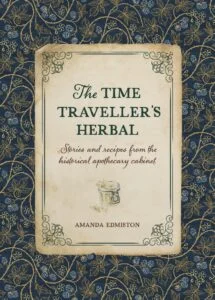
[City, Country] – [Date] – In an age where digital immediacy often eclipses the slow wisdom of the earth, a remarkable new book invites readers to step back in time and reconnect with the enduring power of plants. "The Time Traveller’s Herbal: Stories and recipes from the historical apothecary cabinet," penned by acclaimed herbal storyteller Amanda Edmiston of Botanica Fabula, is more than a mere guide; it is an immersive journey into the historical tapestry woven with folklore, early science, and the forgotten wisdom of herbalists. Edmiston’s work illuminates the often-misunderstood figures of the past – the cunning women, wise women, and even "witches" – recasting them as the pioneering scientists and custodians of traditional knowledge they truly were.
The Ancient Roots of Healing: Redefining the Herbalist
For millennia, before the advent of modern pharmaceuticals, humanity relied on the natural world for sustenance, comfort, and healing. At the heart of this symbiotic relationship stood the herbalist – a figure whose role has been dramatically reinterpreted throughout history. Edmiston argues passionately that these individuals, often marginalized or persecuted, were in fact the vanguards of empirical observation and early scientific inquiry. They meticulously documented plant properties, understood their efficacy, and developed sophisticated remedies, laying the groundwork for much of what we now recognize as pharmacology.
"The Time Traveller’s Herbal" posits that these early practitioners were not merely purveyors of superstition, but keen observers of nature, employing a blend of practical knowledge, intuitive understanding, and communal wisdom. Their practices, deeply embedded in the cultural and spiritual fabric of their societies, formed the bedrock of community health and well-being. From ancient Sumerian clay tablets detailing herbal remedies to Egyptian papyri cataloging medicinal plants, the evidence of sophisticated herbal practice spans civilizations and millennia. Edmiston’s work seeks to reclaim this narrative, presenting these figures as vital contributors to human progress, rather than enigmatic outliers.
The book serves as an invitation to traverse this historical spiral, uncovering the rich narratives, vibrant folklore, and potent remedies that are intrinsically linked to the plants around us. It encourages readers to perceive the landscape not just as scenery, but as a living archive, brimming with stories waiting to be rediscovered.
A Journey to 200 AD: Meadow Phantoms and Pictish Shores
Edmiston’s unique approach begins with a profound connection to the land itself. Her stories, recipes, and sensory experiences are rooted in the very places she frequents. By pausing, observing, and reflecting on the seasonal and historical changes of a landscape, she unearths the layers of folklore and plant knowledge associated with specific locations. This mindful engagement forms the foundation of her "time travel."
In one particularly vivid excursion, Edmiston transports us to 200 AD, to a wild floodplain meadow in Scotland, nestled behind a castle where two rivers converge. This ecologically significant site, a wellspring of inspiration for her narratives, becomes the backdrop for an encounter with "meadow phantoms."
Visualizing this ancient landscape requires a deliberate act of imagination. The familiar architectural constructs of our time – the castle, the modern paths – are absent. The tree line, though present, is sculpted differently; ancient oaks stand where larches now grow, and a tunnel of blackthorn, a seemingly constant feature, stretches further, composed of young saplings unpruned by human intervention. Yet, amidst these shifting details, certain constants endure: the majestic arc of the rivers, the immutable contours of the hills and mountains. These geological anchors provide a profound sense of geographical certainty, grounding the temporal shift.
Our journey places us on a rocky outcrop overlooking the confluence of the two rivers, the natural boundary of the meadow. The future site of the castle lies behind us, but on the opposite bank, a bustling Pictish village thrives, a testament to the vibrant communities that once inhabited these lands. As we descend towards the flower-strewn field, a distinctive scent wafts through the air: the faintly medicinal, yet sweet and antiseptic, aroma of salicylates.
Meadowsweet: The Queen of the Meadows and a Mythic Encounter
Approaching the riverbank, creamy clouds of flowers blur the view, creating an ethereal veil. The scene evokes a sense of enchantment, as if a mythical queen were deliberately concealing herself. Edmiston describes a moment of fleeting illusion, brushing past the blooms, scattering petals in pursuit of a perceived presence, only to find nothing concrete. The river ripples, a silvery tremor slipping downstream, perhaps hinting at watchful eyes from the nearby woods. A young bullock grazes serenely on the opposite bank, but the shimmering regal figure remains elusive.
This phantom-like experience, however, is not mere fantasy. It is a direct sensory pathway into the heart of folklore. Checking for a fever – a practical response to a disorienting sensation – Edmiston instinctively adds a few heads of meadowsweet (Filipendula ulmaria) to her flask of hot water. As she sips the resulting tisane, a story whispers to her, and the pieces fall into place: they are in the presence of the Morrigan, the formidable phantom queen of Celtic mythology.
The Morrigan, a shapeshifter and goddess associated with battle, fate, and sovereignty, is one of the complex, often unacknowledged, feminine figures in Celtic tradition. Her presence here, invoked by the meadowsweet, transports us into the epic tale of the warrior Cú Chulainn.
The narrative recounts Cú Chulainn’s journey to Skye to train with the warrior maid Sgathaich, where he became betrothed to her daughter, Uathach. Despite his heroic stature, Cú Chulainn’s life was marked by violence and a fiery temper, and his encounters with women were often fraught. In this particular episode, during a fierce battle at a ford, he encounters the Morrigan in the guise of a beautiful young woman. She offers him aid in exchange for his love, an offer he rebuffs, citing his loyalty to Uathach.
Enraged by his rejection, the Morrigan transforms into an eel, attempting to trip him as he crosses the water. Cú Chulainn, powerful and swift, wrenches her off, injuring her. Undeterred, she transforms again, this time into a huge grey wolf, inciting a cattle stampede against him. Again, Cú Chulainn strikes her, wounding her leg with his slingshot. Her final transformation sees her as a white heifer, leading the stampede directly towards him. With a final thrust of his spear, he injures her once more, and she vanishes, mist-like, into the river.
After the battle, weary and bruised, Cú Chulainn makes his way along the riverbank, fearing an encounter with the ominous Bean Nighe (washerwoman of the shrouds) or the mournful cry of the Caointeach (banshee) – harbingers of death. Instead, he finds an old woman milking a deer, her body bearing the very injuries he had inflicted upon the eel, the wolf, and the heifer. Thirsty, he asks for a drink. With each cup she offers, he blesses her, and with each blessing, her wounds miraculously heal. By the third blessing, the warrior realizes the true identity of the woman before him. As a gift, she bestows upon him meadowsweet, and though some tales suggest his regret, it is said he carried it on his belt from that day forward, using its healing properties to bathe his wounds, reduce fevers, and temper his fiery spirit.
Bridging Folklore and Modern Understanding: The Science of Meadowsweet
This rich tapestry of myth and personal experience highlights meadowsweet’s profound significance. In Gaelic, the plant is known as crios Chu-chulainn (Cú Chulainn’s belt), a direct reference to its legendary use. It was also affectionately called "bride-wort" due to its popularity as floral confetti, underscoring its cultural prominence.
Edmiston’s work deftly bridges the gap between ancient folklore and modern scientific understanding. Meadowsweet (Filipendula ulmaria) is indeed a powerhouse of natural compounds, most notably salicylates. These compounds are the natural precursors to acetylsalicylic acid, the active ingredient in aspirin. Historically, infusions of meadowsweet were used to alleviate pain, reduce fever, and soothe inflammation – precisely the ailments Cú Chulainn sought to remedy. This traditional knowledge, passed down through generations, predates the pharmaceutical synthesis of aspirin by centuries.
The "official response" to such traditional practices, once dismissed as unscientific, has undergone a significant shift in recent decades. The field of ethnobotany, the study of the relationship between people and plants, now actively seeks to document and understand these traditional uses. Researchers are increasingly recognizing that indigenous and folk knowledge systems often contain valuable insights into plant biochemistry and therapeutic properties that can inform modern drug discovery. Edmiston’s storytelling, by highlighting the efficacy and historical context of remedies like meadowsweet, contributes to this broader effort to validate and preserve traditional ecological knowledge. Her work serves as a reminder that science and folklore are not always diametrically opposed but can, in fact, be complementary pathways to understanding the world.
Practical Applications: Recipes from the Historical Apothecary
Inspired by Cú Chulainn’s legendary use, Edmiston provides practical applications for meadowsweet, allowing readers to incorporate this ancient wisdom into their own lives. These recipes offer a tangible link to the historical apothecary cabinet, designed to ease discomforts that have plagued humanity for millennia.
Soothing Meadowsweet Bath
Meadowsweet blossoms have long been valued for their calming and anti-inflammatory properties. Adding them to a bath can provide relief from fevers, muscle soreness, and irritated skin.
- Ingredients: Three to four fresh or dried meadowsweet flower heads, a muslin (or similar) bag. (Optional: a handful of oats for additional skin soothing.)
- Method: Place the meadowsweet blossoms (and oats, if using) into the muslin bag. As the bath water runs, add the bag to the tub, allowing the warm water to infuse with the plant’s beneficial compounds. Immerse yourself and feel the gentle relief.
Meadowsweet Tisane for Internal Comfort
A simple herbal infusion, or tisane, of meadowsweet can be a valuable remedy for mild pain relief and particularly effective in soothing indigestion due to its gentle anti-inflammatory and antacid properties.
- Ingredients: A few heads of meadowsweet (fresh or dried), freshly boiled water.
- Method: Place the meadowsweet in a cup. Pour freshly boiled water over the blossoms and steep for three to four minutes. Strain and sip slowly.
**A Cordial for a Phantom Queen: Easing Tempers, Fevers, and Heartburn**
This cordial is a delightful and potent way to harness meadowsweet’s properties, creating a refreshing drink that can help soothe inflammation and settle digestion, reminiscent of the queenly essence of the Morrigan.*
- Ingredients:
- 30 heads of meadowsweet blossoms, in full flower.
- Juice of one unwaxed, freshly squeezed lemon and a little grated rind.
- 300 grams of blossom honey (locally produced honey offers additional regional benefits).
- 1 litre of filtered water.
- Method:
- Bring the filtered water to a boil. Dissolve half of the honey into the hot water, stirring until fully incorporated.
- Once the honey has dispersed, add the meadowsweet blossoms, lemon juice, and grated rind. Allow the mixture to simmer gently for a further three minutes.
- Remove from the heat and let it rest overnight, or for at least one to two hours, to allow the meadowsweet to infuse thoroughly and impart its full flavour and properties.
- Strain the mixture, pressing down on the solids to extract as much liquid as possible.
- Return the strained liquid to the pot. Add the remaining honey and bring it back to a boil, allowing it to simmer for approximately five minutes or until it begins to reduce and takes on the consistency of a cordial. More honey can be added to taste and desired thickness.
- Bottle the cordial in sterile glass jars or Kilner-style bottles. When kept cool, it will last for up to three months.
- Serving Suggestion: Mix with still or sparkling water for a refreshing drink, or even a sparkling wine, to help dissipate heat and soothe the senses.
The Enduring Legacy: Why We Still Need Herbal Stories
Amanda Edmiston’s "The Time Traveller’s Herbal" is more than a collection of historical facts and recipes; it is a powerful catalyst for a deeper connection with our environment and our heritage. The book’s implications extend far beyond the kitchen or the garden, touching upon critical aspects of cultural preservation, ecological awareness, and holistic well-being.
By inviting us to perceive plants through the lens of history and folklore, Edmiston encourages a profound reconnection with nature. In an increasingly urbanized and digitized world, her work reminds us that the remedies for many modern ailments, both physical and spiritual, can still be found in the enduring wisdom of the natural world and the stories it tells. This approach fosters a greater appreciation for biodiversity and the delicate ecosystems that sustain us.
Furthermore, the act of storytelling, central to Edmiston’s methodology, is a vital mechanism for transmitting knowledge across generations. By weaving scientific understanding with myth and personal narrative, she makes complex information accessible and memorable. This method not only preserves traditional knowledge that might otherwise be lost but also challenges us to reconsider historical narratives, particularly those concerning the roles of women as healers and knowledge keepers.
Ultimately, "The Time Traveller’s Herbal" empowers individuals. It offers tools for self-care rooted in ancient practices, encouraging informed choices about personal well-being. It’s a call to observe, to question, and to engage with the world in a more mindful and interconnected way, demonstrating that the "twist in time" – the ebb and flow of years – is a visceral experience that continues to shape our present and future.
To continue this enriching journey with Amanda Edmiston and delve deeper into the historical apothecary, "The Time Traveller’s Herbal" is available in all good bookshops and via the Botanica Fabula website.
Disclaimer: FolkloreThursday takes no responsibility for folklore practices listed on the website, and information is provided for entertainment only. FolkloreThursday does not offer medical advice, and recommends that you consult a medical professional before trying out any remedies or practices listed on the website. This information should not be used as a substitute for professional medical advice, diagnosis, or treatment. Always seek the advice of your physician or other qualified health provider with any questions you may have regarding a medical condition.



Leave a Comment