The Bronze Sentinel of Portland: The History, Fall, and Resurrection of the Thompson Elk
In the tumultuous summer of 2020, as social justice protests swept across the United States, the physical landscape of American cities underwent a radical transformation. Public monuments, long regarded as immutable fixtures of the urban environment, suddenly became the primary targets of iconoclasm. Popular Mechanics even took the unprecedented step of publishing a guide on the physics of toppling statues—a gesture of solidarity that highlighted the zeitgeist of the era. While most of the statues removed during this period represented Confederate generals, colonizers, or slave traders, Portland, Oregon, witnessed a curious anomaly: the removal of a life-sized bronze elk.
The Thompson Elk, a fixture of Portland’s downtown for over a century, did not fall because of its subject matter. Unlike the monuments to white supremacy that were rightfully dismantled elsewhere, the elk was a beloved symbol of the city’s identity. Its removal was a preventative measure by the city government, necessitated by the collateral damage of a city in revolt. Now, with the statue’s recent return to its pedestal in April 2026 and the release of T. Edward Bak’s graphic history, The Peoples’ Elk, the story of this bronze ungulate offers a profound lens through which to view Portland’s history, its creative resilience, and the complicated geography of its political dissent.
Main Facts: The Return of a Portland Icon
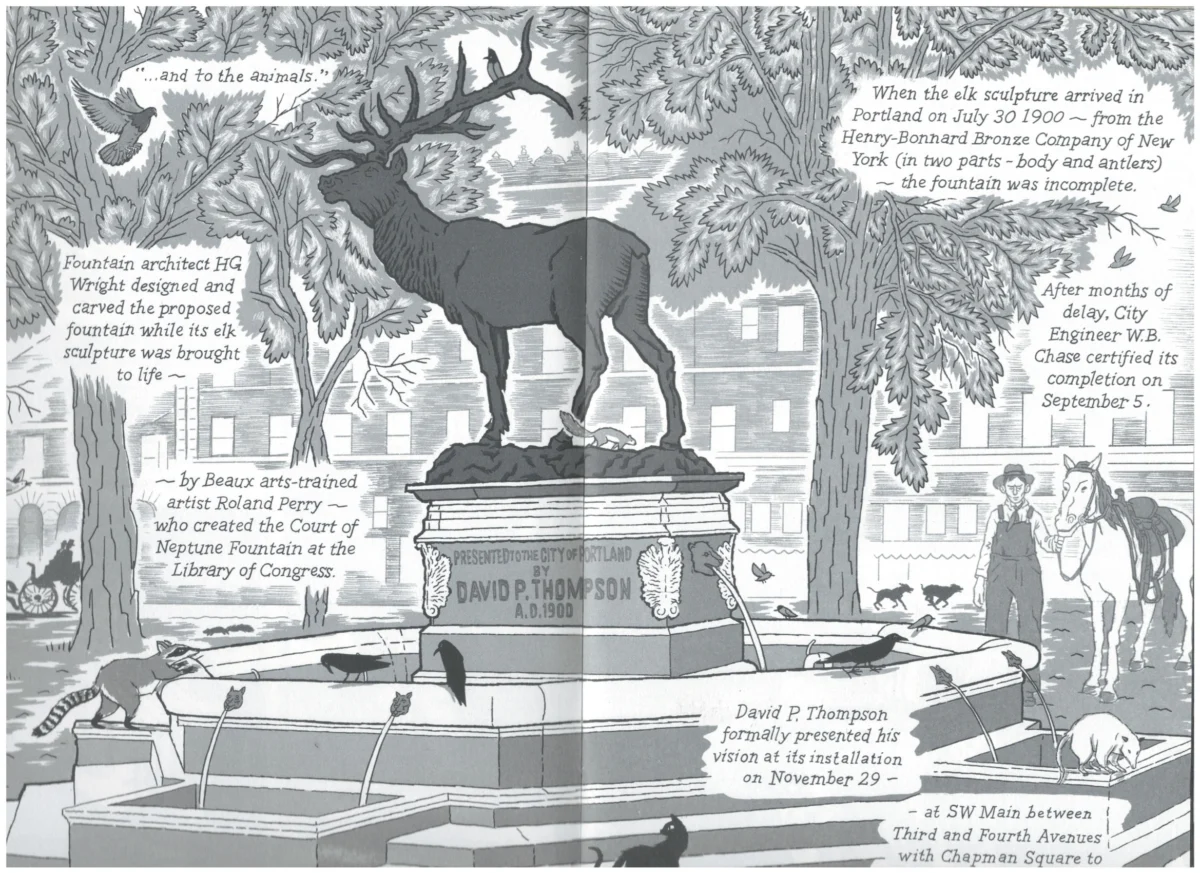
The Thompson Elk statue, officially titled the David P. Thompson Fountain, is a life-sized bronze sculpture of a Roosevelt elk. Since 1900, it has occupied a prominent position on a granite plinth in the middle of Main Street, situated between Chapman Square and Lownsdale Square. After a six-year absence caused by the civil unrest of 2020, the statue was officially re-installed in April 2026.
The restoration was a meticulous and costly endeavor. The original granite base, which had functioned as a watering trough for horses in the early 20th century, was severely damaged during the 2020 protests. Demonstrators frequently lit fires within the trough, causing the stone to crack and compromising the structural integrity of the monument. To ensure an authentic restoration, the City of Portland sourced replacement stone from the original quarry used in 1900.
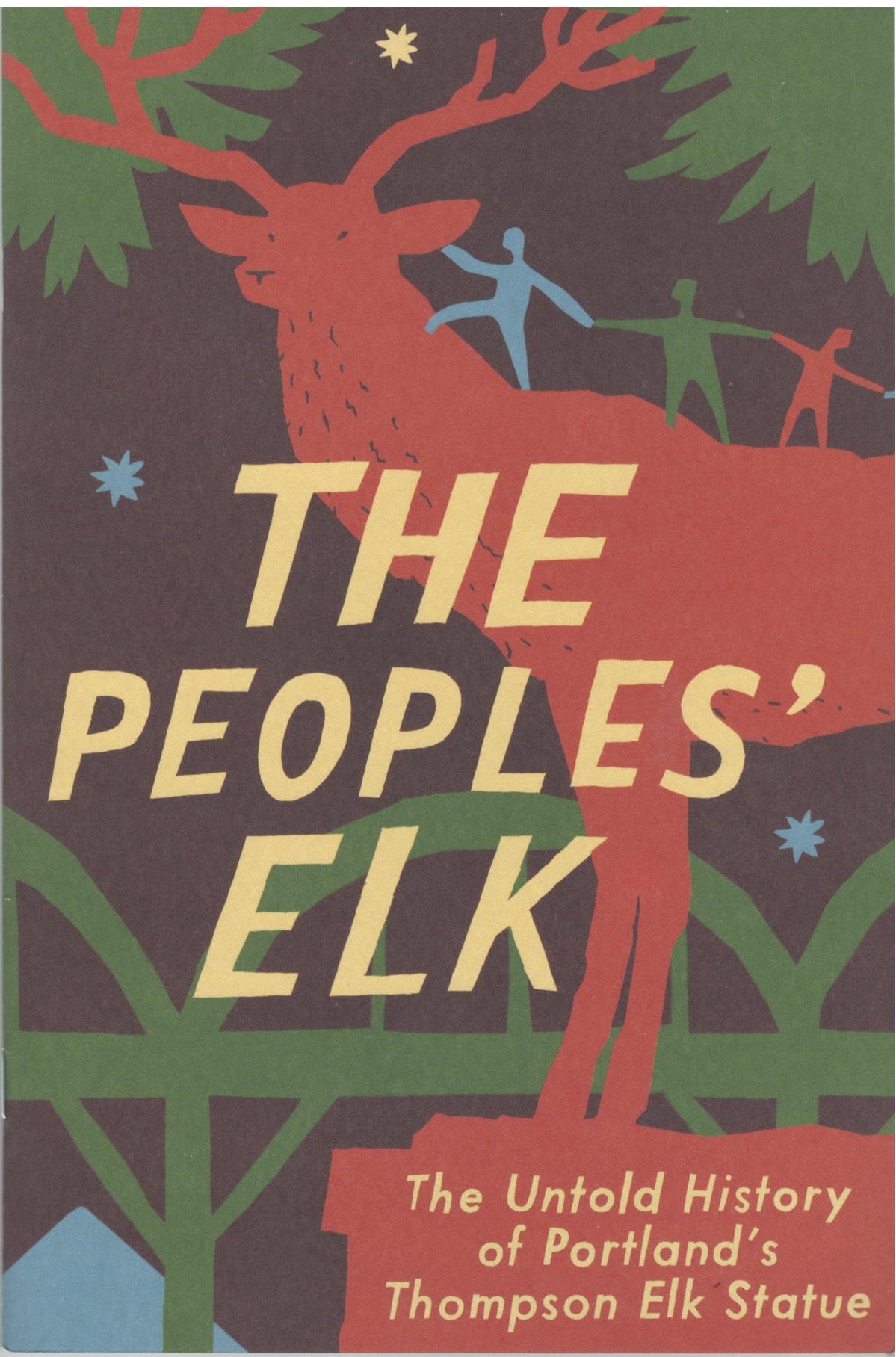
Coinciding with the statue’s return is the publication of The Peoples’ Elk by acclaimed illustrator T. Edward Bak. The book is a "graphic history" that traces the lineage of the site from its pre-settlement ecological roots to its role as a modern-day flashpoint for political activism. Bak’s work utilizes a varied aesthetic—ranging from whimsical and playful to stirring and poignant—to capture the elk’s transition from a philanthropic gift to a sacred emblem of the "city’s intrepidly creative spirit."
Chronology: From Wild Valleys to "Nightmare" Replicas
The history of the Thompson Elk is not merely the history of a piece of art, but a timeline of Portland’s evolution.
The Pre-Settlement Era and the Gilded Age
Before the arrival of European settlers, the Willamette Valley was a lush ecosystem where actual elk roamed freely. This era serves as the starting point for Bak’s narrative, grounding the statue in the natural history of the region. In the late 19th century, David P. Thompson—a wealthy industrialist, philanthropist, and former mayor of Portland—sought to honor this heritage. He donated the statue and fountain to the city in 1900, intending it to serve both as a monument to Oregon’s wildlife and a practical utility for the working horses of the city.
The 20th Century: A Site of Social Conflict
Throughout the 1900s, the parks surrounding the elk, Chapman and Lownsdale Squares, became microcosms of Portland’s social dynamics. Historically, these parks were gender-segregated, reflecting the Victorian mores of the time. Later, they became known as sites for gay cruising and subsequently became targets for police crackdowns, highlighting the tension between public space and state authority.
2011–2020: The Era of Mass Protest
The elk’s position as a silent witness to history intensified in the 21st century. In 2011, it stood at the heart of the Occupy Portland encampment. By the late 2010s, the intersection became a recurring battlefield for clashes between right-wing groups and anti-fascist protesters. The climax occurred in the summer of 2020, following the police murder of George Floyd. For over 100 consecutive nights, the area around the elk was the epicenter of a national conversation on racial justice and police brutality.
2020–2026: The "Nightmare Elk" and Restoration
In July 2020, following the damage to its base, the city removed the bronze elk for safekeeping. In its absence, a "Nightmare Elk"—a crude, ghostly homage welded from scrap metal—appeared on the empty plinth. This DIY sculpture was repeatedly stolen by right-wing detractors and repeatedly replaced by local artists, becoming a symbol of the city’s refusal to let the spirit of the site die. This cycle of loss and replacement continued until the city finally initiated the formal restoration process that culminated in the elk’s return this spring.
Supporting Data: The Geography of Dissent
A critical element of the elk’s story, which T. Edward Bak’s book is noted for omitting, is the surrounding geography. To the casual observer, it might seem as though the elk itself is a magnet for crowds. However, its significance is largely a result of its proximity to the "halls of power."
The elk is situated in a literal canyon of government authority. It is bordered by:
- The Portland Police Bureau Headquarters: Located directly to the east.
- The Mark O. Hatfield United States Courthouse: The site of intense federal intervention in 2020.
- Portland City Hall: The seat of municipal government, located one block south.
- The Multnomah County Courthouse: (The former site of which is adjacent).
- The Edith Green-Wendell Wyatt Federal Building: Another major federal outpost nearby.
The convergence of protesters at this specific site was not an accident of aesthetic preference for the statue, but a strategic choice to confront the institutions of the law and the state. The elk became a "sacred" object because it was the only neutral, living thing (even if made of bronze) in a landscape of concrete and bureaucracy.
Official Responses and Civic Impact
The City of Portland’s decision to remove the statue in 2020 was met with mixed reactions. While some saw it as a necessary act of preservation, others viewed it as the city "surrendering" a piece of public space to the chaos of the streets. The Portland Parks & Recreation department and the Regional Arts & Culture Council (RACC) maintained that the removal was purely a matter of public safety, as the heat from the fires in the granite trough threatened to cause the multi-ton statue to collapse onto protesters.
The restoration process, spearheaded by the City Arts Program, was intentionally slow and deliberate. Officials emphasized that the goal was not just to put the statue back, but to restore the entire fountain to its 1900 specifications. By using stone from the original quarry, the city aimed to provide a sense of continuity and healing for a downtown core that has struggled with post-pandemic recovery and political polarization.
The return of the elk in April 2026 has been treated as a milestone by city leaders. Mayor-led ceremonies framed the event as a symbol of Portland’s "comeback," attempting to reclaim the elk from its 2020 identity as a riot icon and return it to its status as a communal landmark.
Implications: The Creation of Sacred Space
The saga of the Thompson Elk raises profound questions about how urban societies assign meaning to objects. In his review of The Peoples’ Elk, Kristian Williams suggests that the distortion of history—attributing the site’s importance to the elk rather than the surrounding courthouses—tells us something about the human psyche.
We have a tendency to "make things sacred." The elk, originally a functional watering trough for beasts of burden, was transformed by the fires of 2020 into a totem. It was not a monument to a person, but to a creature that precedes the city itself. In a time of extreme division, the elk served as a rare point of consensus: everyone from the most radical anarchists to the most traditional preservationists seemed to agree that the elk belonged there.
The "Nightmare Elk" phase illustrated a grassroots "intrepidly creative spirit" that the city often claims as its brand. The fact that citizens felt the need to replace a missing government monument with a scrap-metal version suggests that public art is not just a decoration provided by the state, but a vital component of the civic soul.
As Portland moves forward, the Thompson Elk stands once again on its granite base. It is no longer just a statue of an animal; it is a weathered survivor of a transformative era in American history. Its presence serves as a reminder that while the "halls of power" provide the context for our conflicts, it is the symbols we choose to protect—and the stories we choose to tell about them—that ultimately define the character of a city. Bak’s The Peoples’ Elk ensures that even as the physical statue is polished and restored, the gritty, fiery, and defiant history of its recent years will not be forgotten.