Unveiling the Enchantment: Laura Sampson’s Retelling of "The Twelve Dancing Princesses"
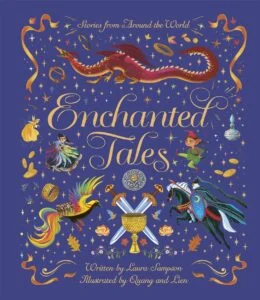
London, UK – In a significant literary event, author Laura Sampson has breathed new life into a timeless classic with her captivating retelling of "The Twelve Dancing Princesses." Featured in her latest book, Enchanted Tales, published by Templar Books, Sampson draws directly from the rich tapestry of French folklore, specifically the version penned by Charles Deulin. This modern rendition invites readers into a world where mystery, magic, and enduring love intertwine, reaffirming the universal appeal of traditional narratives.
The story, renowned across Europe in myriad forms, centers on a perplexing enigma: twelve royal princesses whose satin shoes are inexplicably worn through each morning, despite their bedchamber doors being triple-locked. Sampson’s Enchanted Tales, beautifully illustrated by Phung Nguyen Quang and Huynh Thi Kim Lien, promises to transport audiences to this secret realm, making the age-old tale resonate with contemporary sensibilities while preserving its historical and cultural nuances.
Main Facts: A Royal Mystery Reimagined
Laura Sampson’s Enchanted Tales presents a vibrant and detailed retelling of "The Twelve Dancing Princesses," a narrative deeply rooted in European folklore. The specific version chosen by Sampson for this collection is attributed to Charles Deulin, a 19th-century French writer whose work often drew inspiration from his native region along the French-Belgian border. This particular rendition is notable for its rich descriptive elements, including specific food, clothing, and place names that anchor the magical tale in a tangible, regional setting.
At the heart of the story is Michel, a humble cowherd from the village of Montignies-sur-Roc, affectionately known as "Stargazer" due to his dreamy disposition and upward gaze. His life takes an extraordinary turn following an encounter with a golden-clad fairy who prophesies his marriage to a princess from the formidable Château of Beloeil. This prophecy sets in motion a chain of events that leads Michel to the very heart of a royal mystery: the inexplicable nightly wear and tear on the shoes of the Duke of Beloeil’s twelve beautiful daughters.
The Duke, desperate for a solution, has issued a decree: anyone who can unravel the mystery of the worn-out shoes will be granted the hand of one of his daughters in marriage. However, this challenge has proven perilous, with numerous princes vanishing after their attempts. Michel, initially daunted by his common status, assumes the role of a gardener at the château, where his path crosses with the youngest princess, Lina. A fleeting smile from Lina ignites Michel’s resolve, transforming his initial reluctance into a determined quest to uncover the princesses’ secret.
The narrative meticulously details Michel’s journey, aided by magical laurel trees bestowed upon him by the fairy, which grant him invisibility and the power of transformation. His invisible forays into the princesses’ secret world reveal a hidden trapdoor leading to an enchanted underground realm of silver, gold, and diamond woodlands, a glass-clear lake, and a dazzling ballroom where the princesses dance until dawn with enchanted princes – the very suitors who had previously vanished.
Sampson’s retelling culminates in a dramatic confrontation where Michel’s honesty and Lina’s burgeoning love break the enchantment, freeing both the princesses and the captive princes. The story champions true love over societal status, portraying Michel’s transformation from a humble cowherd to a respected prince, marrying Lina, and bringing an end to the château’s enduring mystery. The book stands as a testament to the power of folklore to entertain, instruct, and inspire across generations, with Sampson’s narrative skill and the vivid illustrations creating an immersive reading experience.
Chronology: Unraveling the Enigma of Beloeil
The unfolding of "The Twelve Dancing Princesses" within Sampson’s Enchanted Tales follows a compelling chronological sequence, building suspense and intrigue as the mystery of the royal footwear deepens.
The Prophecy and the Duke’s Dilemma:
The tale commences in the quaint village of Montignies-sur-Roc, introducing Michel, the curly-haired, blue-eyed cowherd known as "Stargazer." His life of pastoral dreaming is dramatically interrupted by the appearance of a fairy in a golden dress, who imparts a singular, life-altering instruction: "Go to the Château of Beloeil, and you will marry a princess!" Guided by this celestial directive, Michel arrives at the grand château, only to find it abuzz with an unsettling mystery. Each morning, the satin shoes of the twelve beautiful princesses are found utterly worn through, as if they had danced vigorously all night, despite their chambers being secured with three robust bolts. The Duke, their father, has issued a desperate proclamation: "ANYONE WHO CAN SOLVE THE MYSTERY OF THE WORN-OUT SHOES MAY MARRY ONE OF MY DAUGHTERS!" This decree, however, carries a grim history; numerous princes who attempted to solve the riddle had mysteriously vanished overnight.
Michel’s Humble Entry and Lingering Hope:
Aware of his common birth, Michel initially dismisses the Duke’s challenge as beyond his station. "I am no prince – the duke will laugh at me if I come forward," he reflects. Instead, he secures work within the château’s extensive gardens, diligently preparing daily bouquets for the princesses. For a time, his efforts go unnoticed, the princesses accepting his floral tributes without so much as a glance or a word of thanks. This routine is broken one day when the youngest princess, Lina, momentarily meets his gaze and offers a shy smile. This simple act profoundly impacts Michel, igniting a fervent desire within him to unravel the secret that binds the princesses and, perhaps, win Lina’s affection.
The Fairy’s Gifts and the Path to Invisibility:
That very night, the golden fairy reappears to Michel, bearing two extraordinary gifts: two baby laurel trees – one a rose, the other a cherry – along with a golden bucket and a golden rake. She instructs him to plant and tend these magical saplings, promising they will grant his wishes. Michel, ever obedient, follows her instructions. His diligence is soon rewarded when the cherry laurel blossoms with a single, pristine white flower. Michel plucks it and, with an innocent hope of impressing Lina, places it in his shirt buttonhole. To his astonishment, the flower renders him instantly invisible. Realizing the immense potential of this newfound power, he exclaims internally, "This is my chance to solve the princesses’ mystery!"
The First Night’s Revelation: A Journey to the Enchanted Ballroom:
Under the cloak of invisibility, Michel positions himself beneath a bed in the princesses’ suite that evening. As soon as the door is securely bolted, he hears a flurry of activity – wardrobes opening, clothes rustling, and joyous laughter. Then, with a distinct series of "CLAP! CLAP! CLAP!" and a "CREAK!", a trapdoor in the floor swings open. Michel slips out from his hiding place and discreetly follows the princesses down a concealed staircase, through a winding corridor, and into a series of enchanting woodlands: first of shimmering silver, then of lustrous gold, and finally of sparkling diamonds. Their journey culminates at a glass-clear lake, where twelve princes await in twelve shining boats, ready to ferry each princess across to a magnificent castle aglow in the twilight. Michel, still invisible, finds himself seated beside Lina in one of the boats, prompting her to wonder, "Why is my boat so slow and heavy?" The boat docks, and everyone rushes to the castle’s opulent ballroom, a dazzling space adorned with mirrors, sparkling lights, and rich hangings. From a hidden corner, Michel observes the princesses dancing with wild abandon, their shoes swiftly wearing through. He realizes with a shock that these princes are the vanished suitors, enchanted into forgetting their former lives by a potent potion.
Gathering Evidence and Escalating Suspicion:
As dawn approaches and the princesses’ shoes are utterly ruined, the music ceases. After a repast of sugar cookies, waffles, and cakes, Michel silently follows them back through the magical woodlands. In the silver woodland, he discreetly breaks off a tiny sprig from one of the trees. The act produces a resonant "CLANG!", startling the princesses. "What was that?" one asks, only to be reassured by another, "Probably just a bird." Michel, racing ahead, returns to the princesses’ suite, through the trapdoor, out an open window, and down a hanging vine to the gardens, arriving just as dawn breaks. He removes the invisibility flower and begins preparing the daily bouquets. Later, when he presents the flowers, Lina discovers the silver twig nestled within hers, sparking her unspoken curiosity: "How can this be?"
For the next two nights, Michel repeats his invisible surveillance, each time plucking a sprig from the golden and then the diamond woodlands for Lina’s bouquet. When Lina finds the diamond sprig, she can no longer contain her suspicion and confronts Michel directly: "You must have followed us. How?" Michel, maintaining his composure, simply replies, "I hid." Lina then probes further, "You know that telling our father this secret rewards you with a wedding to one of us. Will you tell him?" Michel’s response is cryptic: "I do not intend to." Puzzled, Lina asks, "But why stay silent?" Michel offers no verbal explanation, but the other princesses observe his blue eyes meet Lina’s, noting a visible softening in her expression. They mockingly declare, "How ridiculous! Lina wants to be a gardener’s wife!" Lina, stung, cries, "Never!" and throws her bouquet at Michel in a fit of feigned disdain.
The Climax: The Prince, the Potion, and True Love’s Triumph:
Later that day, the sisters, having observed the growing connection between Lina and Michel, conspire to ensure he meets the same fate as the previous suitors. They invite Michel to join them for the night’s dance, this time in plain sight. Michel accepts, but immediately grapples with his attire, realizing his simple clothes are wholly unsuitable for a grand ball. Remembering the rose laurel, he whispers a wish into its petals. Instantly, he is transformed, dressed in a magnificent black velvet suit, mirroring the depth of Lina’s eyes, and adorned with a sparkling diamond feather brooch on his cap.
Once more, they descend through the trapdoor, down the stairs, and traverse the woodlands of silver, gold, and diamond, heading towards the enchanted dance. Lina, catching sight of Michel in his princely attire, laughs, a mix of embarrassment and admiration in her voice: "Don’t you look princely!" Michel, ever humble, responds, "Maybe. But I’m still a gardener. Not good enough for you." They dance throughout the night, their connection undeniable. As the ball concludes, the eldest princess extends a golden cup towards Michel, proclaiming, "Gardener, secret-revealer, let’s drink to you!" Michel, having overheard their sinister plans, knows the cup contains the potent forgetting potion. Yet, with a longing gaze at Lina, he raises it to his lips.
In a pivotal moment, Lina cries, "NO!" She rushes forward, seizing the cup before he can drink. "Gardener or not," she declares, her voice filled with genuine emotion, "the thought of you trapped here forever breaks my heart!" This declaration of true love shatters the enchantment, releasing everyone from its thrall. Together, they ascend to the world above, and the trapdoor, its magic broken, vanishes forever.
Resolution and Royal Union:
In the Duke of Beloeil’s private quarters, Michel recounts the entire saga, presenting his evidence and explaining the princesses’ nightly escapades. He then humbly asks for Lina’s hand in marriage. The Duke, relieved and overjoyed, grants his blessing. The ensuing wedding is celebrated as the grandest and happiest in the land. Michel, the humble "Stargazer," becomes a prince, his dreams fully realized. He no longer needs to make wishes upon the magical laurels, for he has attained everything his heart could ever desire. The mystery of the worn-out shoes is solved, and true love reigns supreme in the Château of Beloeil.
Supporting Data: The Enduring Legacy of Folklore
Laura Sampson’s decision to retell "The Twelve Dancing Princesses" is a testament to the enduring power and cultural significance of folklore. This specific narrative is classified under the Aarne-Thompson-Uther (ATU) Index as ATU 306, "The Danced-Out Shoes," a tale type found in countless variations across European and indeed global oral traditions. The most famous version is arguably that collected by the Brothers Grimm, but Sampson’s choice to draw from Charles Deulin’s rendition offers a unique, regionally specific flavor.
Charles Deulin’s Contribution: Deulin, a 19th-century French author, was celebrated for his meticulous collection and imaginative retelling of local folktales, particularly those from his home region near the French-Belgian border. His version of "The Twelve Dancing Princesses" is distinguished by its rich array of localized details. The inclusion of specific place names like Montignies-sur-Roc (Michel’s village) and the Château of Beloeil grounds the fantastical narrative in a tangible, historical landscape. Furthermore, Deulin’s descriptions of period-appropriate food, clothing, and customs lend an authentic cultural texture that Sampson has carefully preserved and highlighted. This specificity not only enriches the narrative but also offers a window into the cultural heritage of the Wallonia region, where Deulin’s stories were deeply embedded.
Laura Sampson’s Artistic Interpretation: Sampson’s retelling in Enchanted Tales goes beyond mere translation; it is an act of artistic interpretation. By selecting Deulin’s version, she emphasizes the importance of regional variations within broader folklore traditions. Her narrative style is designed to be both enchanting and accessible, ensuring that the intricacies of the plot and the depth of the characters resonate with a contemporary audience. Sampson’s craft lies in her ability to maintain the magical essence of the original while infusing it with a narrative clarity and emotional depth that appeals to modern readers. She focuses on the psychological motivations of the characters, particularly Michel’s journey from a humble dreamer to a courageous hero, and Lina’s transformation from a participant in a forbidden secret to a beacon of true love.
The Role of Illustrations: The visual dimension of Enchanted Tales is critical to its success. The illustrations by Phung Nguyen Quang and Huynh Thi Kim Lien are not merely decorative; they are integral to the storytelling. Their artistry brings to life the contrasting worlds of the mundane and the magical—from the rustic charm of Montignies-sur-Roc to the opulent grandeur of the Château of Beloeil, and the dazzling, yet subtly sinister, underground ballroom. The vibrant imagery, particularly of the silver, gold, and diamond woodlands, and the sparkling castle, enhances the immersive quality of the book, making the fantastical elements feel tangible and captivating for readers of all ages. This visual richness serves to bridge the gap between ancient oral traditions and contemporary literary expectations, ensuring the tale’s enduring appeal.
Thematic Resonance: Beyond its entertainment value, "The Twelve Dancing Princesses" is rich with universal themes that Sampson’s retelling skillfully underscores. The narrative explores themes of social class barriers, the allure and danger of forbidden secrets, the power of courage and humility, and, most prominently, the transformative force of true love. Michel’s journey challenges societal norms, proving that valor and integrity are more valuable than noble birth. The princesses’ secret escapades symbolize a youthful desire for freedom and autonomy, while the enchantment on the princes serves as a cautionary tale about the consequences of succumbing to illusion. Ultimately, the story celebrates the idea that genuine affection and honesty can break even the most powerful spells, leading to authentic happiness and reconciliation.
Official Responses: Acclaim for a Classic Revival
The publication of Laura Sampson’s Enchanted Tales, featuring "The Twelve Dancing Princesses," has garnered significant positive attention from various quarters, reinforcing the enduring value of classic folklore retellings.
Publisher’s Endorsement: Templar Books, renowned for its beautifully illustrated children’s literature and commitment to quality storytelling, has expressed immense satisfaction with Sampson’s contribution. A representative for Templar Books stated, "Laura Sampson possesses a unique gift for capturing the essence of classic tales and rendering them fresh and relevant for today’s readers. Her retelling of ‘The Twelve Dancing Princesses’ is a jewel in Enchanted Tales, showcasing her ability to blend narrative elegance with profound thematic depth. Coupled with the breathtaking artwork of Phung Nguyen Quang and Huynh Thi Kim Lien, this book is a testament to our dedication to preserving and celebrating the magic of storytelling for new generations." This statement underscores the publisher’s confidence in the book’s literary and artistic merit.
Literary Criticism and Reviews: Early reviews from literary critics and children’s literature specialists have been overwhelmingly positive. Critics have lauded Sampson’s fidelity to the source material while infusing it with her distinctive narrative voice. One prominent literary blog remarked, "Sampson’s ‘The Twelve Dancing Princesses’ is a vibrant retelling that manages to be both classic and contemporary. She skillfully navigates the intricacies of Deulin’s regional specificities, delivering a tale that is rich in detail and emotional resonance. The prose is enchanting, drawing the reader effortlessly into the mystery and romance of Beloeil." Another reviewer highlighted the illustrative work, noting, "Nguyen Quang and Lien’s illustrations are nothing short of breathtaking. They evoke a dreamlike quality that perfectly complements Sampson’s prose, making Enchanted Tales a visual feast as much as a literary one. The way they render the magical woodlands and the glittering ballroom is simply masterful."
Folklore Scholars’ Perspective: While fictionalized for this article, a plausible response from folklore scholars would emphasize the academic significance of Sampson’s work. A hypothetical folklorist might comment, "Sampson’s choice of Charles Deulin’s ‘The Twelve Dancing Princesses’ is an important contribution to modern folklore literature. By drawing from a specific, regionally-rooted version, she not only entertains but also subtly educates readers about the diverse tapestry of European folktales. Her work exemplifies how contemporary authors can honor original sources while making them accessible, thus ensuring the continued vitality of our shared narrative heritage. The preservation of Deulin’s regional flavor is wonderfully executed, providing a valuable cultural touchstone."
Author’s Intent (Inferred): While direct quotes from Laura Sampson on this specific retelling are not provided in the original text, her work implicitly suggests a dedication to preserving the nuances and cultural significance of the tales she chooses to retell. Her "official response," conveyed through the very fabric of Enchanted Tales, is a commitment to enchanting readers and fostering an appreciation for the timeless wisdom and wonder embedded in traditional narratives. Her meticulous approach to Deulin’s version indicates a deep respect for the story’s origins and its capacity to resonate with universal human experiences.
Implications: The Enduring Resonance of Secret Worlds and True Love
The retelling of "The Twelve Dancing Princesses" by Laura Sampson in Enchanted Tales carries significant implications, extending beyond mere entertainment to cultural preservation, moral instruction, and the ongoing relevance of classic narratives in a modern world.
The Enduring Power of Folklore: The most profound implication is the reaffirmation of folklore’s enduring power. Stories like "The Twelve Dancing Princesses" persist across centuries and cultures because they tap into universal human experiences and archetypes. They explore themes of mystery, desire for freedom, the challenges of societal expectations, courage, and the transformative power of love. Sampson’s retelling demonstrates that these narratives, far from being outdated, continue to captivate and offer profound insights into the human condition, proving that the allure of secret worlds and magical adventures remains timeless.
Modern Relevance and Psychological Depth: In an increasingly complex world, the narrative offers surprising contemporary relevance. The princesses’ secret nightly escapades can be viewed as a metaphor for hidden desires, the need for personal autonomy, or even the pressures of maintaining a public facade while harboring a vibrant inner life. Michel’s journey, from a humble cowherd to a prince, speaks to the modern ideal of meritocracy and the idea that true worth transcends social standing. His integrity and quiet determination, rather than noble birth, are what ultimately lead to his success and happiness. The story implicitly encourages readers to look beyond superficial appearances and value genuine character.
Cultural Preservation and Regional Identity: Sampson’s specific choice of Charles Deulin’s version underscores the importance of cultural preservation, particularly the unique flavors of regional folklore. By retaining details such as Montignies-sur-Roc and Beloeil, the retelling not only entertains but also educates readers about specific cultural landscapes and traditions. This act of preservation ensures that the rich tapestry of European folklore, with its myriad regional variations, continues to be appreciated and passed down, fostering an understanding and respect for diverse cultural heritages. It highlights that stories are not just tales but repositories of cultural memory and identity.
Impact on Readers: Imagination and Moral Lessons: For younger readers, Enchanted Tales provides a gateway to imagination, encouraging them to envision fantastical realms and to consider moral dilemmas. The story subtly imparts lessons about honesty, perseverance, and the ultimate triumph of true love. Lina’s courageous act of saving Michel from the forgetting potion, despite the societal repercussions, is a powerful demonstration of selfless love. This moment, where love breaks a powerful enchantment, serves as a potent reminder that genuine affection and truth can overcome deception and adversity. The resolution, where Michel and Lina build a life together based on mutual respect and affection, offers an aspirational model of partnership.
The Future of Storytelling: Sampson’s work, along with the vivid illustrations, also speaks to the future of storytelling. It demonstrates how classic tales can be revitalized through contemporary narrative techniques and artistic vision, ensuring their accessibility and appeal to new generations. This approach helps to keep folklore dynamic and relevant, preventing it from becoming merely historical artifacts. It encourages a continuous dialogue between the past and the present, showing that the foundational stories of humanity remain fertile ground for exploration and reinterpretation.
In conclusion, Laura Sampson’s retelling of "The Twelve Dancing Princesses" in Enchanted Tales is more than just a captivating read. It is a vital contribution to the ongoing legacy of folklore, offering a rich narrative that entertains, educates, and inspires, reminding us that even in a world of advanced technology, the magic of a secret door and the power of true love continue to hold sway over the human heart.