Unveiling Ancient Egypt’s Classical Age: The Enduring Legacy of the Middle Kingdom
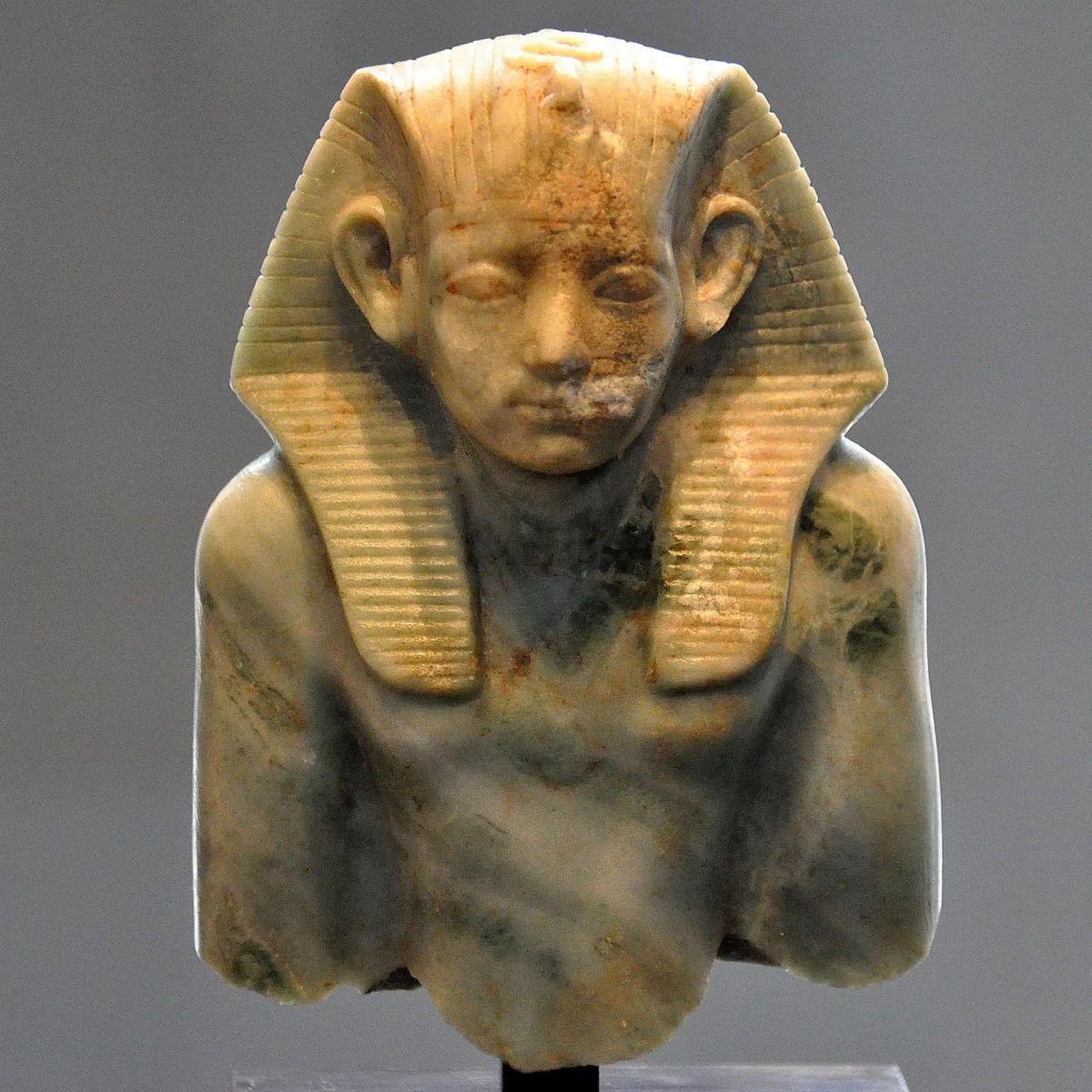
Cairo, Egypt – Often heralded as ancient Egypt’s Classical Age, the Middle Kingdom (circa 2040-1782 BCE) stands as a monumental period of cultural renaissance, administrative innovation, and artistic flourishing. While modern Egyptologists continue to debate its precise dynastic boundaries, generally encompassing the latter part of the 11th Dynasty through the mid-13th Dynasty, there is universal consensus that this era forged many defining characteristics of Egyptian civilization, leaving an indelible mark on subsequent millennia.
This period, a remarkable resurgence after the fragmentation of the First Intermediate Period, witnessed a reunification of the Two Lands under a strong central authority, fostering an environment where literature, art, and architecture reached unprecedented levels of sophistication and realism. From the grand mortuary complexes of its early pharaohs to the profound literary works exploring the human condition, the Middle Kingdom redefined what it meant to be Egyptian.
Defining an Era: The Middle Kingdom’s Elusive Identity
The very designations "Middle Kingdom" and "Second Intermediate Period" are constructs of 20th-century Egyptology, designed to compartmentalize Egypt’s vast history into manageable segments. Ancient Egyptians themselves did not categorize their eras with such labels. Periods marked by national unification under a robust central government are termed "kingdoms," while times of political fragmentation or social unrest are known as "intermediate periods."
However, scholars have long found the Middle Kingdom particularly challenging to define with a singular, iconic image, unlike the towering pyramids of the Old Kingdom or the expansive empire of the New Kingdom. As scholar Marc van de Mieroop observes, "While both the modern term ‘Middle Kingdom’ and the ancient presentation of [it] may suggest that this period parallels the Old and New Kingdoms, in many respects it is more difficult to define the Middle Kingdom than those other periods… It was a period of transformation." (97)
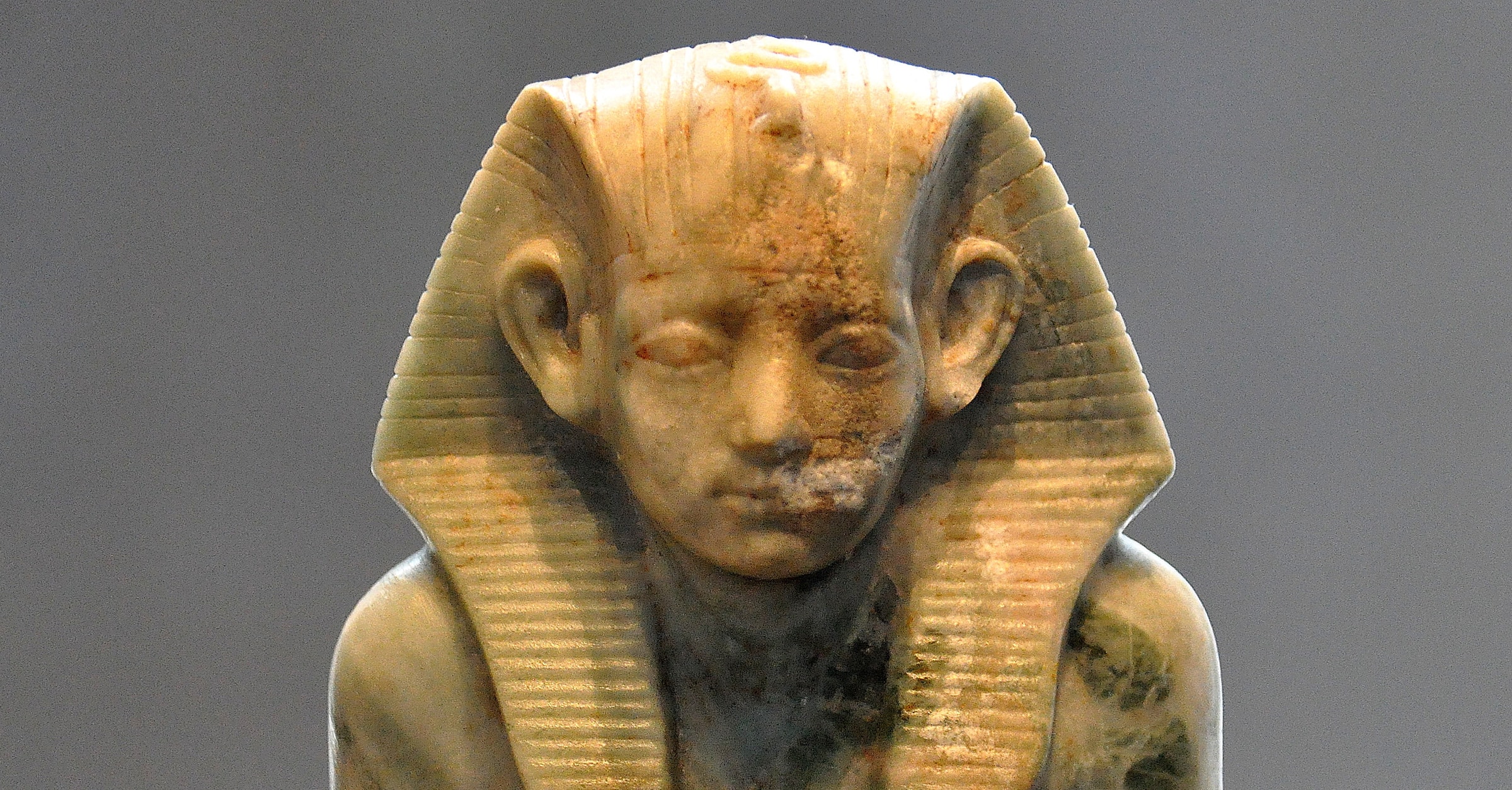
Yet, it is precisely this "transformation" that many argue serves as its defining characteristic. The radical shifts in art, literature, and political structure during this time were unlike anything seen before and profoundly influenced all that followed. While lacking the monumental scale of Giza’s pyramids, the Middle Kingdom’s intellectual and cultural contributions were immense, shaping the very essence of Egyptian identity as recognized today.
From Fragmentation to Reunification: The Genesis of the Middle Kingdom
The Middle Kingdom emerged from the crucible of the First Intermediate Period (2181-2040 BCE), a tumultuous era following the collapse of the Old Kingdom’s 6th Dynasty. During this time, the once-mighty central government effectively ceased to function, leaving regional administrators, known as nomarchs, to govern their districts (nomes) autonomously. This decentralization led to the rise of two competing kingdoms: Herakleopolis in Lower Egypt and Thebes in Upper Egypt, each vying for supreme control.
The turning point arrived with Prince Mentuhotep II (circa 2061-2010 BCE) of Thebes. Through strategic military campaigns, he decisively defeated the rulers of Herakleopolis, successfully reunifying the country. This monumental achievement earned him the epithet "second Menes," a revered reference to Narmer (also known as Menes), the legendary first king of the Early Dynastic Period (circa 3150-2613 BCE) who initially united Egypt. Mentuhotep II’s victory not only restored political stability but also established Thebes as the new capital, signaling a new dawn for Egypt.
The Eleventh Dynasty: Laying the Foundation
While Mentuhotep II is celebrated as the architect of reunification, the groundwork was laid by his predecessors. Intef I, a nomarch of Thebes around 2125 BCE, bravely challenged Herakleopolitan authority, initiating a rebellion that elevated Thebes to a formidable rival. His successors steadily expanded Theban influence and wealth, culminating in grander tombs and palaces. Mentuhotep I (circa 2115 BCE) continued this expansion, conquering surrounding nomes and solidifying Thebes’ stature.
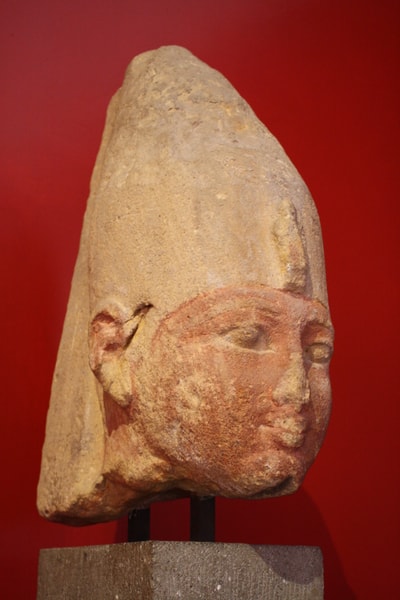
Wahankh Intef II (circa 2112-2063 BCE) is particularly credited with crucial steps toward unification. He captured the strategically vital city of Abydos and boldly claimed the title "King of Upper and Lower Egypt," further strengthening Thebes’ position through just rule and persistent military pressure against Herakleopolis.
Mentuhotep II built upon these successes, not only defeating Herakleopolis but also systematically rewarding loyal nomes and punishing those that had resisted Theban authority. With unification secured, his focus shifted to governance, further military endeavors, and ambitious building projects. His vast mortuary complex at Deir el-Bahri, on the western bank of the Nile near Thebes, stands as a testament to his vision, influencing 18th Dynasty architects centuries later. The Mentuhotep royal line actively promoted artistic expression and utilized military strength to expand boundaries and secure vital mining operations.
His successor, Mentuhotep III (circa 2010-1998 BCE), continued these policies, sending expeditions to distant Punt and fortifying the northeastern Delta. Mentuhotep IV (circa 1997-1991 BCE), whose reign remains shrouded in mystery, seemingly maintained stability. It was his vizier, Amenemhat, who would eventually ascend to the throne, ushering in the next, arguably most glorious, phase of the Middle Kingdom.
The Twelfth Dynasty: A Golden Age of Stability and Innovation
The 12th Dynasty, initiated by Amenemhat I (circa 1991-1962 BCE), is often cited by scholars as the true commencement of the Middle Kingdom’s "Classical Age." For over two centuries, Amenemhat’s lineage would preside over a unified, powerful Egypt, engaging robustly with its neighbors and cementing a cultural legacy that resonated for millennia.
Amenemhat I: A New Beginning and Strategic Reforms
Amenemhat I’s ascension was framed by divine endorsement, as recounted in an inscription during his viziership. Miraculous events—a gazelle giving birth on a chosen sarcophagus stone and a sudden rainstorm revealing a well—were interpreted as clear signs of the gods’ favor. The later Middle Kingdom literary masterpiece, the Prophecy of Neferty, further solidified this narrative, "predicting" the rise of a king named "Ameny" (Amenemhat) from the south who would unify Egypt and vanquish its foes.
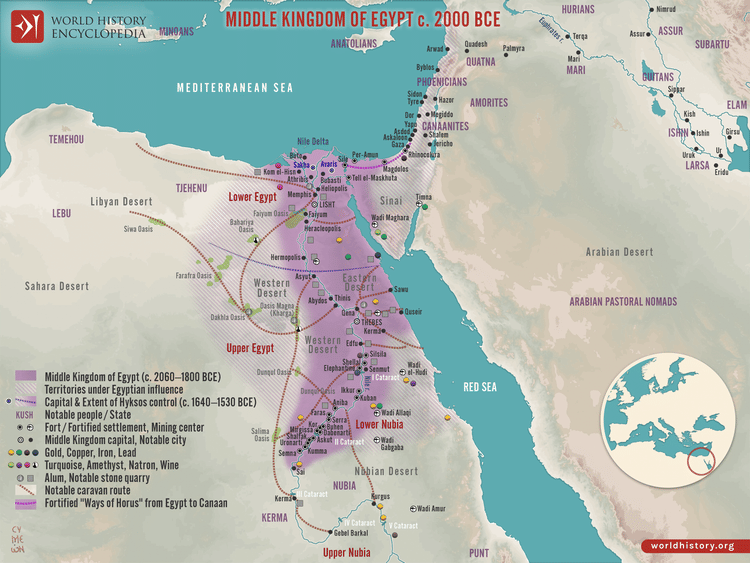
For reasons still debated, Amenemhat I strategically relocated the capital from Thebes to a new city called Iti-tawi, located south of Memphis, likely near modern Lisht. The name Iti-tawi, meaning "Amenemhat is he who takes possession of the Two Lands," emphasized national unity and perhaps served to distance his new dynasty from the Theban origins of the 11th Dynasty, presenting himself as an impartial ruler of all Egypt. Its proximity to the fertile Fayyum region and the old capital of Herakleopolis further underscored his intention to be seen as a king for all Egyptians, not just the south.
Amenemhat I implemented crucial administrative reforms, notably curbing the power of the local nomarchs by creating the first standing army directly under royal control, replacing the conscripted forces previously raised by local magnates. This centralized military force significantly enhanced royal authority. Despite his successes, his reign ended mysteriously, with evidence suggesting he was assassinated. His death and the subsequent power transition form the backdrop for The Tale of Sinuhe, one of ancient Egypt’s most celebrated literary works, reflecting the political intrigue and human drama of the era.
Senusret I and the Consolidation of Power
Amenemhat I was succeeded by Senusret I (circa 1971-1926 BCE), possibly after a co-regency. The practice of co-regency, where a chosen successor (often a son) ruled alongside the reigning monarch to ensure a smooth transition, is a distinctive, though debated, feature of the Middle Kingdom. Senusret I continued his father’s policies, improving national infrastructure and initiating grand building projects that evoked the power of Old Kingdom pharaohs. He began the construction of the great temple complex at Karnak, dedicated to Amun, a deity whose cult would grow immensely powerful. He further consolidated royal power by limiting the influence of nomarchs and priests, concentrating wealth and authority with the crown while fostering a highly efficient bureaucracy.
Economic Prosperity and Foreign Relations
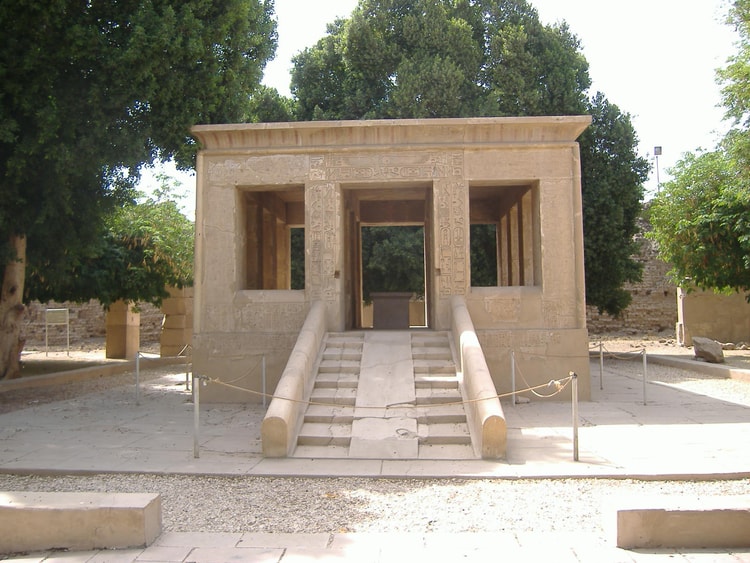
The 12th Dynasty’s efficient administration allowed for remarkable economic prosperity. The kings pursued ambitious irrigation and hydraulic projects in the Fayyum region, draining lakes and constructing canals to reclaim vast tracts of fertile land for agriculture. This revitalization of agricultural lands stimulated the national economy and improved access to water for a larger population. Senusret I, for instance, is credited with draining the Fayyum lake and constructing the White Chapel, a significant structure for archaeologists as it lists all the nomes of the time. Though later dismantled for use in Karnak, it has since been restored.
Militarily, the 12th Dynasty was assertive. Kings led expeditions into Nubia, establishing fortified posts at the Third Cataract of the Nile to secure resources and trade routes. They also conducted raids into Syria and Palestine, simultaneously fostering increased trade relations with cities like Byblos in the Levant. Expeditions to the Red Sea, utilizing overland routes and canals, further expanded Egypt’s reach and economic influence.
The Flourishing of Art and Literature: A Classical Legacy
The Middle Kingdom earned its "Classical Age" epithet primarily through its unparalleled artistic and literary output. Unlike the largely formulaic texts of the Old Kingdom (pyramid texts, monumental inscriptions), this era saw the emergence of true literature that explored universal human themes. Works like The Tale of the Shipwrecked Sailor and The Tale of Sinuhe offered compelling narratives of adventure and personal reflection. More profound philosophical texts, such as The Lay of the Harper, questioned the nature of the afterlife, while Dispute Between a Man and his Ba delved into the complexities of the human soul.
Sculpture and painting also underwent a significant transformation, moving towards a striking realism. While still serving the glory of the king and gods, Middle Kingdom art frequently depicted scenes of daily life: streams, fields, people fishing or walking. These vivid depictions in tombs were meant to remind the deceased’s soul of earthly life, guiding it toward the Field of Reeds, the blissful paradise of the afterlife envisioned as a perfect mirror of the terrestrial world. Statuary became more lifelike, capturing individual features and expressions with new techniques. Architecturally, a harmonious relationship between structures and the natural landscape was sought, a principle exemplified by Mentuhotep II’s complex and echoed in many 12th Dynasty temples. This artistic freedom and regional influence were actively encouraged by the kings, fostering a rich and diverse cultural landscape.
The King and the Nomarchs: A Redefined Relationship
A delicate balance characterized the relationship between the king and the powerful nomarchs during the 12th Dynasty. Unlike the Old Kingdom’s absolute centralization or the First Intermediate Period’s complete decentralization, the Middle Kingdom struck a middle ground. While the kings at Iti-tawi were undoubtedly powerful, provincial elites retained significant local authority and wealth. However, their loyalty to the crown was paramount, as evidenced by the large, well-crafted tombs at Beni Hassan, which house biographies of nomarchs and regional administrators expressing their devotion to the king. This symbiotic relationship, where local flourishing did not undermine royal authority, was a hallmark of 12th Dynasty stability.
Senusret III: The Warrior-King and Deified Pharaoh
Senusret III (circa 1878-1860 BCE) is arguably the most powerful and celebrated king of the Middle Kingdom, so prosperous was his reign that he was deified during his lifetime. He is widely considered the historical basis for the legendary Sesostris, a great Egyptian pharaoh described by Herodotus and Diodorus Siculus as a conqueror who campaigned across Europe and the known world. Senusret III’s reign was marked by aggressive military expansion into Nubia, securing its rich gold mines and extending Egypt’s southern boundaries with formidable fortifications that also facilitated trade. He also led campaigns into Canaan, further cementing Egypt’s regional influence.
Under Senusret III, the prestige of the nomarchs began to decline, with the title eventually vanishing from official records. This suggests a further centralization of power, with local administrations being absorbed into larger, centrally controlled districts. However, this did not necessarily mean a loss of status for the nomarch families, many of whom transitioned into royal administrators, maintaining their wealth and influence within the new bureaucratic structure.
Beneath the Surface: Realism and Existential Concerns
Despite the outward prosperity, Middle Kingdom literature reveals an underlying current of realism and even anxiety. While Senusret III’s campaigns brought security, the Execration Texts – clay objects inscribed with curses against enemies, then ritually smashed – became more prevalent than in any other period. This surge suggests a growing societal fear of loss and a desire for control in an increasingly comfortable, yet perhaps fragile, world.
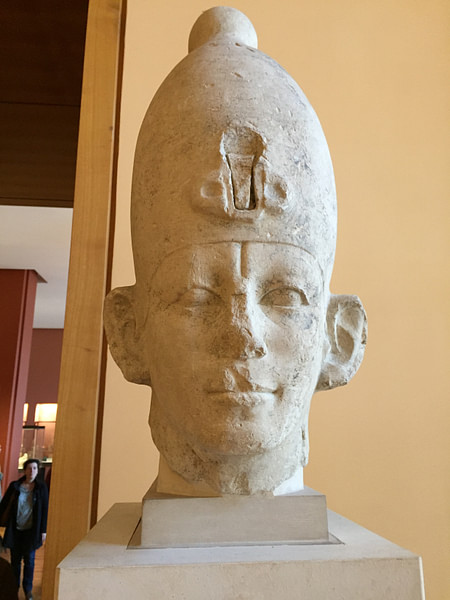
The realism in literature also extended to existential questioning. The Lay of the Harper challenges the traditional view of the afterlife, advocating for a focus on present life. The Ipuwer Papyrus, often misread as a historical account of the First Intermediate Period, is now largely interpreted as a literary lament from the Middle Kingdom, expressing a deep-seated fear of societal collapse and a yearning for an idealized past amidst the perceived uncertainties of the present. This heightened sense of realism, coupled with the flourishing of daily life depictions in art, suggests a growing preoccupation with the tangible world.
This focus on the present also coincided with significant religious developments. The cult of Osiris, the Lord and Judge of the Dead, gained immense popularity, particularly at Abydos, believed to be the burial site of his head. Pilgrimages to Abydos and the desire for burial near Osiris became widespread, promising eternal life and a favorable judgment. Concurrently, the cult of Amun, a synthesis of the sun god Ra and creator god Atum, rose to prominence in Thebes, assuring believers of divine protection and harmony in their earthly lives. These religious promises offered stability and continuity, mirroring the era’s artistic realism and its implied desire for an unbroken continuation of life.
Amenemhat III and IV: Legacy and Succession Challenges
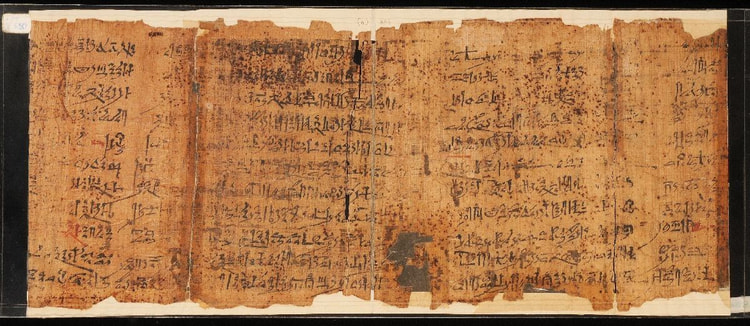
The artistic realism of the Middle Kingdom even extended to royal portraiture. Statues of Senusret III and his son, Amenemhat III (circa 1860-1815 BCE), depict them with a weariness reflective of their immense responsibilities, a stark contrast to the idealized youthfulness of earlier pharaohs. Amenemhat III, though not a renowned warrior, was a prolific builder, responsible for the magnificent mortuary temple at Hawara, known as "The Labyrinth," which Herodotus famously considered more impressive than the ancient wonders.
Amenemhat IV (circa 1815-1807 BCE) continued his father’s policies, completing projects and initiating new ones, with trade flourishing, particularly with the Levant. However, the co-regency system, if consistently applied, failed him; he left no male heir.
Sobekneferu: A Queen’s Brief Reign and the End of the 12th Dynasty
Upon Amenemhat IV’s death, the throne passed to his sister (or wife), Sobekneferu (circa 1807-1802 BCE). She holds the distinction of being the first confirmed female monarch to rule Egypt with full royal powers since the Early Dynastic Period (discounting the debated historicity of Nitocris of the 6th Dynasty). Unlike Hatshepsut of the New Kingdom, who was often depicted as male, Sobekneferu’s statues unequivocally portray her as a female ruler. She revitalized or founded Crocodilopolis in honor of her patron god Sobek and continued the grand building traditions of her dynasty. With her death without an heir, the powerful and prosperous 12th Dynasty, the zenith of the Middle Kingdom, came to an end.
The Thirteenth Dynasty and the Road to Fragmentation
The 13th Dynasty, which began with Sobekhotep I (circa 1802-1800 BCE), inherited the wealth and administrative structures of its predecessor but lacked the consistent leadership and personal strength of the 12th Dynasty kings. Historical records for this period are fragmented and often contradictory, making it difficult to precisely chart its decline. While some kings are well-attested, many are known only from obscure lists or isolated inscriptions, suggesting a rapid succession of weaker rulers. Manetho’s king list, a primary source for Egyptologists, notoriously overestimates the dynasty’s duration, indicating the confusion surrounding this era.
Though the 13th Dynasty nominally maintained national unity and continued building projects, the momentum of the 12th Dynasty was lost. Separate political entities began to emerge in Lower Egypt, most notably the Hyksos, an immigrant people who steadily gained power. By circa 1720 BCE, the Hyksos were firmly established, and by around 1782 BCE, they effectively controlled Lower Egypt, marking the transition from the Middle Kingdom into the Second Intermediate Period.
The Second Intermediate Period: A Nuanced Transition
The shift from the Middle Kingdom to the Second Intermediate Period is often simplistically portrayed as a chaotic decline, much like the end of the Old Kingdom. However, archaeological evidence paints a more nuanced picture. While the 13th Dynasty faltered, the Hyksos, though foreign, did not immediately plunge Egypt into anarchy. They largely respected Egyptian religion and culture, adopting many of its administrative practices and benefiting the country in ways later Egyptian scribes, biased against foreign rule, often failed to acknowledge.
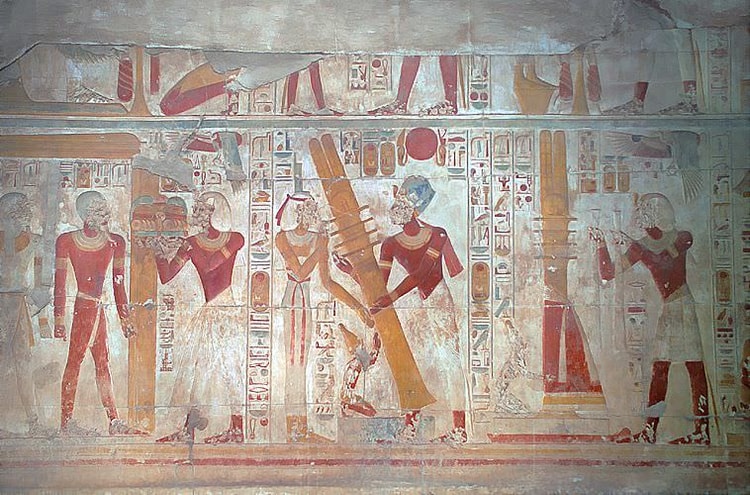
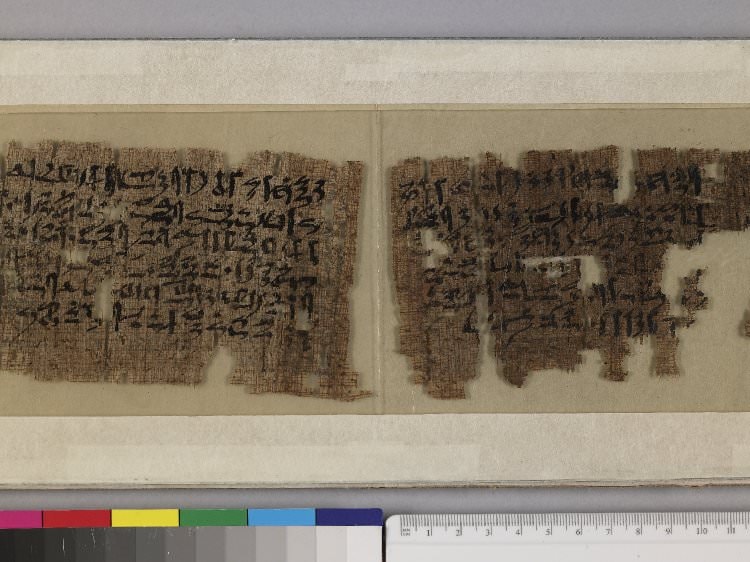
Nonetheless, there was a discernible loss of cultural refinement. Artistic achievements during the Second Intermediate Period generally exhibited a lower quality compared to the Middle Kingdom. Furthermore, the elegant hieroglyphic script, which had reached its zenith in the Middle Kingdom, began to give way to the more cursive hieratic script, reflecting a gradual shift in scribal practices and perhaps a decline in monumental inscription.
Legacy of the Classical Age
Despite the eventual decline, the Middle Kingdom’s achievements remained a benchmark for future generations. Scholars Bob Brier and Hoyt Hobbs succinctly summarize its impact: "During its flowering [in the Middle Kingdom], the Egyptian language attained a level of refinement that ever after made it the model for good prose in ancient Egypt. Art achieved an elegant realism: for the first time, pharaoh’s faces were shown with lines of care and age, rather than idealized… Even a thousand years later, Egyptians looked back on the Middle Kingdom as a glorious time." (25)
The Middle Kingdom’s legacy is profound. It solidified a unique Egyptian identity through its sophisticated literature, its innovative and realistic art, and its refined administrative structures. The fear of loss, so palpable in its literary works, eventually materialized with the dissolution of the 13th Dynasty and the subsequent period of disunity. Yet, the foundations laid during this "Classical Age" would continue to inspire and elevate ancient Egyptian culture for the remainder of its long and illustrious history, making it an era of enduring significance.