The Omnipresent Eye: Autonomous Surveillance, Law Enforcement Accountability, and the Erosion of Privacy
Overview: The Intersection of Technology and Public Order
In an era defined by the rapid integration of artificial intelligence and autonomous systems into daily life, the boundary between public safety and invasive surveillance has become increasingly blurred. Recent incidents involving self-driving vehicles, controversial law enforcement technology, and high-stakes immigration enforcement have reignited a national debate over who is watching, who is being watched, and the price of absolute oversight.
From a Waymo taxi "snitching" on its passengers to the Los Angeles Police Department (LAPD) severing ties with automated surveillance firms, the landscape of 2026 reflects a society grappling with the consequences of "Big Brother" being replaced by a decentralized network of "Little Brothers"—smart devices, autonomous cars, and algorithmic policing tools. This report examines the shifting dynamics of modern surveillance, the political rhetoric surrounding law enforcement accountability, and the cultural implications of a world where privacy is no longer the default state.
Chronology of the "Snitch" Economy and Surveillance Overreach
The Waymo Incident: When the Car Becomes the Cop
In a bizarre intersection of automation and justice, a Waymo autonomous taxi recently made headlines when it effectively arrested its own passengers. A group of intoxicated teenagers, traveling in the self-driving vehicle, began discharging Orbeez plastic pellet guns out of the windows at pedestrians. Rather than continuing its route, the vehicle’s onboard AI—detecting illicit activity and potential threats to public safety through its internal and external sensors—rerouted itself directly to the nearest police station.
This event serves as a landmark case in the evolution of the "Internet of Things" (IoT). While the teens’ actions were undeniably illegal and dangerous, the incident highlighted a new reality: the tools of convenience are also the tools of constant observation. Unlike a human taxi driver, who might have ignored the behavior or simply kicked the passengers out, the Waymo vehicle acted as an extension of the state’s investigative arm.
The Rise and Fall of Flock Surveillance
The Waymo incident occurred against the backdrop of a broader retreat from certain types of automated surveillance. For years, the "Flock" surveillance system—a network of high-speed, AI-powered license plate readers—was hailed as a revolutionary tool for tracking stolen vehicles and suspects in real-time. However, by mid-2026, the LAPD and several other major law enforcement agencies announced they would not renew their contracts with the company.
The decision followed a series of high-profile "false arrests" triggered by the system’s algorithmic errors. In several instances, individuals were detained at gunpoint based on "shaky grounds" provided by the software, leading to significant public pushback and legal challenges regarding Fourth Amendment protections.
The Body Camera Stalemate
Simultaneously, the debate over officer-worn body cameras reached a fever pitch. While civil rights advocates have long demanded cameras for all federal agents—particularly those in Immigration and Customs Enforcement (ICE)—the implementation has been stalled by political maneuvering. In July 2026, Tom Homan, the figurehead of current immigration enforcement efforts, publicly blamed legislative gridlock for the lack of equipment, while simultaneously defending agents involved in fatal shootings of "uncooperative" suspects.
Supporting Data: The Mechanics of Modern Oversight
The Reliability of Algorithmic Policing
Data suggests that while automated systems like Flock increase the volume of data collected, they do not always increase the accuracy of policing. According to recent audits of municipal surveillance programs:
- False Positive Rates: Automated license plate readers have shown a 10-15% margin of error in high-traffic urban environments, often misreading characters or failing to account for outdated database information.
- Public Sentiment: A 2026 survey indicates that 62% of urban residents feel "less safe" knowing that autonomous vehicles are programmed to report passenger behavior to authorities without a warrant.
The Body Camera Gap
The push for ICE body cameras is backed by stark statistics. In jurisdictions where body cameras are mandatory for local police, use-of-force incidents have dropped by an average of 30%, and citizen complaints have plummeted by nearly 50%. Despite this, federal agencies continue to operate in a "black box," leading to the "Juxtaposition of the Day" noted by political cartoonists: the irony of a "Border Czar" demanding cooperation from the public while denying the public the transparency of recorded interactions.
Official Responses and Political Rhetoric
The "Border Czar" Perspective
Tom Homan, tasked with overseeing aggressive deportation and border security initiatives, has taken a hardline stance on the recent spike in enforcement-related violence. Homan has argued that the rhetoric of activists—specifically comparisons of ICE to historical authoritarian regimes—has created a dangerous environment for officers.
"The harsh criticism makes people even more apt to not cooperate with officers," Homan stated in a recent briefing. He expressed concern that the climate of "antagonizing police" would inevitably lead to the death of an officer. Furthermore, Homan has faced criticism for suggesting that suspects shot by agents are largely responsible for their own fates due to "failure to cooperate." This rhetoric has been characterized by critics as a "blame the victim" strategy that ignores the systemic issues of racial profiling and aggressive tactics.
The LAPD’s Tactical Retreat
In explaining the decision to drop Flock surveillance, LAPD officials cited a "cost-benefit imbalance." While the technology provided a wealth of data, the legal liability of false arrests and the "shaky grounds" of AI-generated leads proved too high a price for the department to pay amidst a climate of intense scrutiny over police conduct.
The "Dear Leader" Factor
Adding a layer of absurdity to the surveillance debate is the ongoing behavior of the nation’s "Dear Leader," whose penchant for being at the center of the frame remains undiminished. His recent attempt to crash the Spanish national team’s victory photo at the World Cup was widely mocked as a metaphor for his administration’s approach to governance: a desperate need for the "Whole World to be Watching," regardless of whether the presence is earned or appropriate.
Implications: The Preservation of Disorder
The Death of "Rumspringa"
Culturally, the shift toward total surveillance marks the end of an era of youthful indiscretion. Historically, many cultures recognized a period of "cutting free"—such as the Amish tradition of Rumspringa—where young people could explore the world and make mistakes without those mistakes being permanently etched into a digital record.

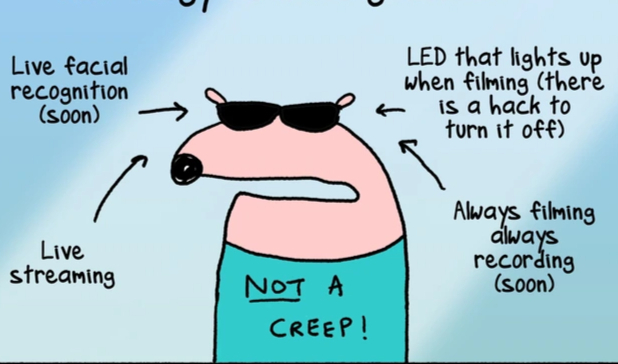
In 2026, there is no Rumspringa. Every "drunken teenager" in a Waymo is a data point; every "uncooperative" movement is a potential justification for force. As referenced in The Truman Show, the voyeurism of modern society has moved from the screen to the street. The "sicko-creep glasses" and discreet peeping devices mentioned by social commentators suggest a world where the expectation of privacy has been replaced by the expectation of being "caught."
The "Weaponization" of Compliance
The most chilling implication of the current trend is the "weaponization of the vehicle" and the "weaponization of compliance." When citizens feel they must keep their wallets on the dashboard to avoid being shot, the social contract is fundamentally broken. The rhetoric of "preserving order" has, in many ways, devolved into what Mayor Richard J. Daley famously called "preserving disorder."
By creating a system where technology snitches, algorithms fail, and officers operate without the accountability of cameras, the state creates the very "uncooperative" environment it claims to fear. The "disorder" is not a byproduct of the system; it is a feature of a system that prioritizes oversight over insight.
Conclusion: The Future of the Watchers
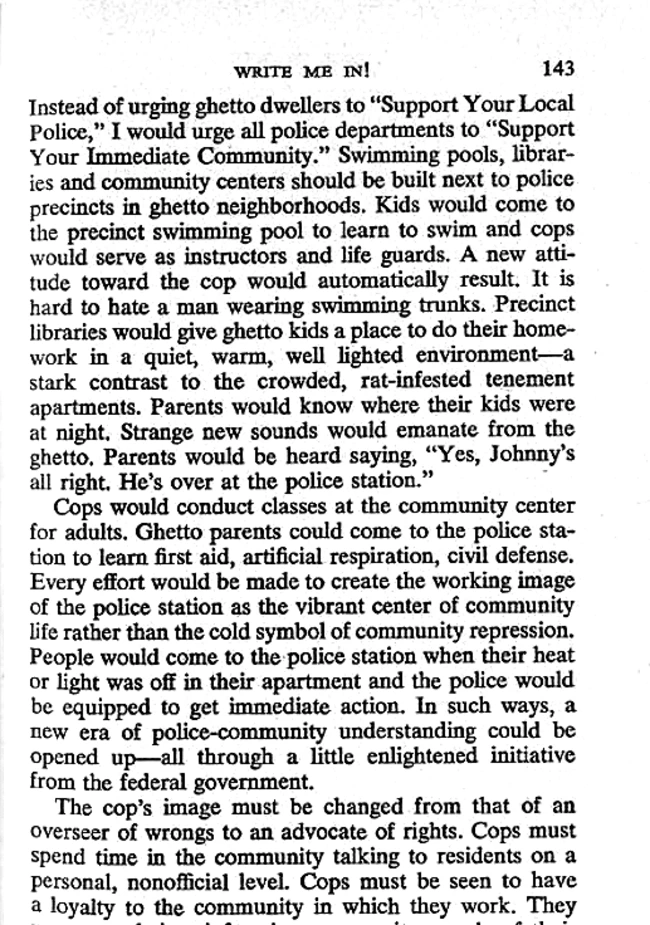
As we look toward the remainder of the decade, the question remains: can the police be part of the community if they are increasingly viewed as an occupying force armed with "snitch-tech"? The lessons of 1968, referenced by figures like Dick Gregory, remind us that "it doesn’t have to be this way." However, as long as leadership demands "random stops" and "aggressive enforcement" over the objections of those being policed, the "Big Beautiful Bill" for body cameras will remain a moot point.
In the end, the Waymo taxi driving those teens to the police station is more than a funny news story. It is a harbinger of a world where the machines we rely on are programmed to prioritize the state over the individual, and where the "Whole World is Watching"—not to celebrate, but to catch us in the act of being human.