Locus Magazine Issue #788: A Definitive Map of the Speculative Fiction Landscape in September 2026
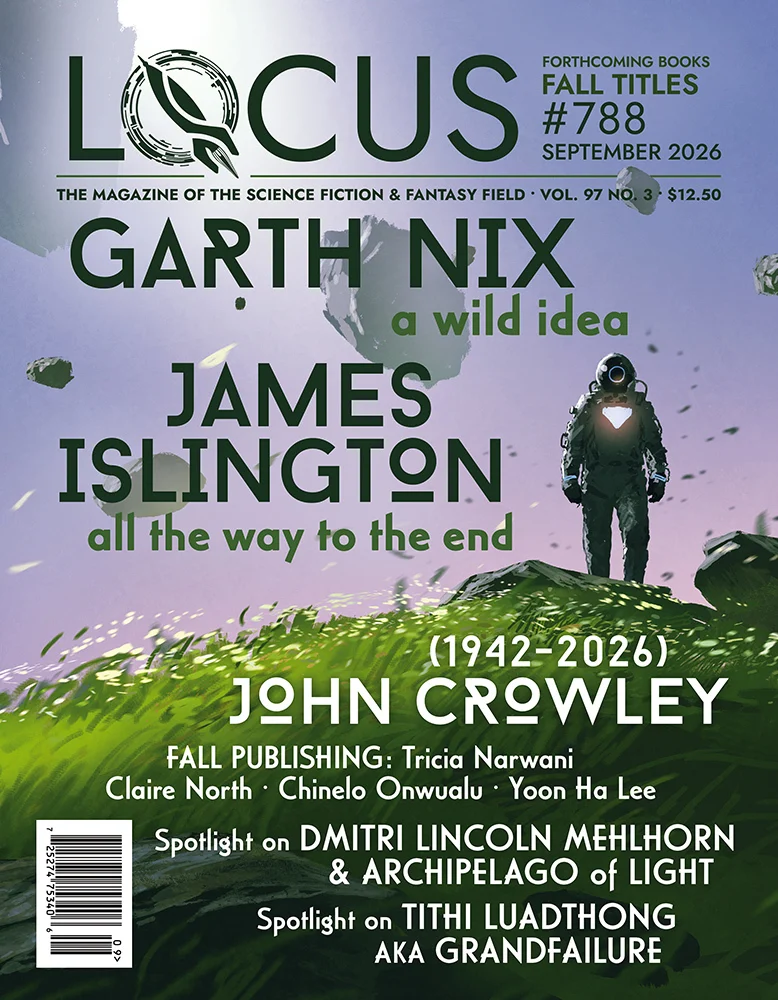
The September 2026 issue of Locus magazine, designated as issue #788 (Vol. 97, No. 3), has arrived as a monumental touchstone for the science fiction, fantasy, and horror communities. In its 59th year of publication, the 30-time Hugo Award-winning journal continues its tradition of providing the industry’s most comprehensive record of literary achievement, market trends, and critical discourse.
The current issue, featuring striking cover art by Tithi Luadthong (Grandfailure) and design by Francesca Myman, serves as a dual-purpose vessel: it is both a somber memorial for the giants of the genre and a vibrant forecast of the season’s most anticipated literary offerings. From the announcement of major award ballots to deep-dive interviews with world-building masters, Issue #788 captures a genre in the midst of a profound evolution, grappling with the rise of artificial intelligence while celebrating the enduring power of human imagination.
Main Facts: A Convergence of Legacy and Innovation
At the heart of the September 2026 issue are two flagship interviews that span the breadth of modern fantasy. Garth Nix, the Australian powerhouse known for the Old Kingdom series, sits down for a feature titled "A Wild Idea," exploring the creative impulses that drive his prolific output. Complementing this is a conversation with James Islington, titled "All the Way to the End," which delves into the intricate plotting and philosophical underpinnings of his epic narratives.
The issue also prioritizes the "Fall Titles" preview, a critical resource for librarians, booksellers, and enthusiasts. This section includes curated seasonal picks from the industry’s top reviewers and a comprehensive list of forthcoming titles in both the United States and the United Kingdom. This year’s spotlight shines on Chinelo Onwualu, alongside commentary from esteemed voices including Claire North, Tricia Narwani, and Yoon Ha Lee.

Beyond the interviews, the magazine provides a critical "Spotlight" on Dmitri Lincoln Mehlhorn and his work Archipelago of Light, as well as a visual feature on cover artist Tithi Luadthong. These features underscore Locus’s commitment to highlighting both the architects of the written word and the visual artists who define the genre’s aesthetic.
Chronology: Key Industry Milestones and News Cycles
The news cycle captured in Issue #788 reflects a busy summer and an even more active autumn for speculative fiction. The magazine tracks several pivotal events that occurred in the months leading up to September 2026:
Award Season Trajectory
The issue records the release of the 2026 World Fantasy Awards ballot and the Dragon Awards ballot, two of the most significant honors in the field. Notably, it reports on E.J. Swift’s historic win of the 40th Anniversary Clarke Award, a milestone that celebrates four decades of the UK’s premier science fiction prize. The Aurora Awards winners are also documented, providing a snapshot of the best in Canadian speculative fiction.
Legal and Technological Shifts
A significant portion of the "Data File" is dedicated to the intersection of technology and publishing. The magazine reports on the final approval of the Anthropic settlement, a landmark case concerning the training of Large Language Models (LLMs) on copyrighted literary works. This legal resolution comes at a time of heightened tension within the industry, further exemplified by the report that Apex Magazine was forced to remove a story due to suspected AI usage—a move that highlights the ongoing battle for authenticity in short fiction.
Institutional Recognition
In a move that bridges the gap between literature and history, the issue notes that the home of the late Ursula K. Le Guin has been officially recognized as a National Historic Landmark. This designation serves as a formal acknowledgment of Le Guin’s status as a central figure in American letters.

Supporting Data: Comprehensive Critical Analysis
Issue #788 maintains Locus’s reputation for rigorous criticism, featuring reviews of dozens of new titles across every sub-genre. The review section is categorized by the unique perspectives of the magazine’s long-standing critics:
The Heavy Hitters
- Gary K. Wolfe examines the latest from Alix E. Harrow (The Slantwise Histories) and two new anthologies edited by Jonathan Strahan: The Book of the Dead and Revolution in the Heart.
- Ian Mond provides a critical look at China Miéville’s The Rouse, Jaclyn Moriarty’s Time Travel for Beginners, and Emma Glass’s Mrs. Jekyll.
- Niall Harrison explores international and experimental works, including Huang Chong-Kai’s The Formosa Exchange (translated by Jeremy Tiang) and Hernan Diaz’s Ply.
Genre-Specific Deep Dives
- Gabino Iglesias focuses on the dark and the visceral, reviewing Josh Malerman’s Pictures of You, David Demchuk’s Red X, and Alex Grecian’s The Boatman.
- Colleen Mondor reviews a wide array of young adult and crossover fiction, including Sarah Beth Durst’s Sea of Charms and Melissa Albert’s The Children.
- Short Fiction Reviews: Maria Haskins, Paula Guran, and A.C. Wise provide exhaustive coverage of the latest issues of Asimov’s, Lightspeed, Uncanny, Clarkesworld, and various podcasts, ensuring that the short form receives equal scholarly attention.
Bestsellers and Listings
The magazine continues its data-driven approach by providing the July "Bestsellers" lists and a comprehensive "Books Received" section. These lists serve as the industry’s "paper of record," tracking which titles are moving in independent and chain bookstores across North America.
Official Responses and Commemorations
One of the most poignant aspects of Issue #788 is its role as a memorial. The magazine includes extensive obituaries and appreciations for John Crowley (1942–2026), a titan of literary fantasy best known for the masterpiece Little, Big.
The Legacy of John Crowley
The appreciations for Crowley are penned by peers and scholars, including Paul Park, Elizabeth Hand, Kelly Link, and John Clute. Their tributes reflect on a career that defied easy categorization, blending hermetic philosophy, American history, and domestic realism. The consensus among these writers is that Crowley’s passing marks the end of an era for "literary" fantasy, though his influence remains woven into the fabric of the genre.
Industry Health and Community
The magazine also includes a "Photo Story" regarding Asimov’s Science Fiction editor Sheila Williams, who remains in care. This update serves as a reminder of the tight-knit nature of the SFF community and its concern for its long-standing leaders. On a more celebratory note, the issue covers the 50th Anniversary of the legendary Berkeley bookstore Dark Carnival and provides a detailed report on GenCon, the world’s premier tabletop gaming convention, which continues to see record attendance.

Implications: The State of the Genre in 2026
The contents of Locus #788 point toward several burgeoning trends that will likely define the late 2020s in publishing:
1. The "Technopolitical" Divide
In his monthly commentary, "Technopolitics," Cory Doctorow addresses the friction between creators and the platforms that distribute (and sometimes exploit) their work. The inclusion of this column alongside reports of AI-related story removals and the Anthropic settlement suggests that the "tech-clash" is no longer a peripheral issue but a central, existential concern for professional writers.
2. A New Wave of Internationalism
The prominence of translated works (such as Huang Chong-Kai) and international spotlights (such as Chinelo Onwualu) indicates a maturing global market. The genre is increasingly looking beyond the US/UK axis for innovation, a trend supported by Locus’s expanded international rights reporting.
3. The Preservation of the Physical
Despite the digital shift, the reporting on Matt Haig opening a new bookshop and the 50th anniversary of Dark Carnival suggests a renewed value placed on physical literary spaces. This "brick-and-mortar" resilience is mirrored in the magazine’s own fundraising efforts, as it continues to rely on a dedicated subscriber base to fund its deep-dive journalism.
4. Horror’s Continued Ascendance
The volume of horror reviews—ranging from psychological thrillers to supernatural procedurals—confirms that the "horror boom" of the early 2020s has not yet peaked. Authors like Alma Katsu and Josh Malerman are no longer niche figures but are treated with the same critical weight as traditional "hard" science fiction writers.

In conclusion, Locus #788 is more than a magazine; it is a historical document. It captures a moment where the genre is looking back at its 20th-century masters with reverence while navigating a 21st-century landscape fraught with technological disruption and cultural expansion. For the student of speculative fiction, it is an essential guide to where the genre has been—and where it is going.