Unveiling the Nocturnal Waltz: Laura Sampson Retells The Twelve Dancing Princesses in "Enchanted Tales"
Introduction: The Enduring Allure of a Secret World
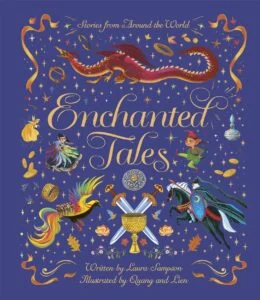
The human imagination has long been captivated by the idea of hidden realms, clandestine adventures, and the whisper of magic just beyond perception. Few tales embody this enchantment more profoundly than "The Twelve Dancing Princesses," a narrative that has pirouetted through centuries of folklore, captivating audiences with its mystery and romantic intrigue. In her latest work, Enchanted Tales, acclaimed author Laura Sampson breathes new life into this classic, offering a vibrant retelling that transports readers to a world where royal secrets are guarded by moonlight and true love holds the power to break the most potent of spells. Sampson’s rendition draws specifically from the version penned by Charles Deulin, a French writer whose deep connection to his home region along the French-Belgian border imbues the narrative with rich, authentic detail, making the fantastical feel intimately grounded in reality.
At its core, "The Twelve Dancing Princesses" presents an age-old riddle: how do twelve royal sisters manage to wear out their satin shoes each night, despite being locked securely in their chambers? The Duke, their perplexed father, offers a tempting reward – the hand of one of his daughters in marriage – to anyone who can unravel this perplexing enigma. Yet, a chilling pattern emerges: every suitor who attempts to solve the mystery vanishes without a trace. It is into this world of aristocratic intrigue and supernatural secrets that Michel, a humble cowherd known as "Stargazer," steps, guided by a fairy’s prophecy and the stirrings of a pure heart. Sampson’s skilled narration, complemented by the exquisite illustrations of Phung Nguyen Quang & Huynh Thi Kim Lien, invites readers to join Michel on his courageous quest, transforming a familiar narrative into a fresh and immersive experience.
The Enduring Magic of a Timeless Tale
The tale of "The Twelve Dancing Princesses" (classified as ATU 306 in the Aarne-Thompson-Uther Index of folk tale types) is a testament to the universal human fascination with mystery, forbidden pleasure, and the triumph of the underdog. Its widespread popularity across Europe, manifesting in countless variations, speaks to its adaptable themes and compelling narrative structure. While the Brothers Grimm’s rendition is arguably the most famous, Deulin’s French version, which Sampson thoughtfully retells, offers a distinct and particularly evocative flavor.
Charles Deulin (1827–1877), a novelist and folklorist from the small town of Montignies-sur-Roc, nestled on the French-Belgian border, was renowned for his ability to weave local customs, dialects, and landscapes into his literary works. His version of "The Twelve Dancing Princesses" is a prime example of this genius, grounding the fantastical elements in a tangible, almost journalistic realism. Sampson highlights this beautifully, noting that Deulin’s narrative is "full of details — food, clothes and place names — inspired by his home region." This meticulous attention to local color transforms the generic "kingdom" into the specific, identifiable settings of Montignies-sur-Roc and the magnificent Château of Beloeil, adding layers of authenticity and charm. The imagery of a young cowherd, Michel, with his "curly hair and pretty blue eyes," known as "Stargazer" for his dreaming gaze, immediately establishes him as an empathetic and relatable hero, a stark contrast to the often-stiff princes of other versions. The initial prophecy from a "fairy in a golden dress" – "Go to the Château of Beloeil, and you will marry a princess!" – sets the stage for an adventure that blends the mundane with the miraculous, a hallmark of Deulin’s storytelling and Sampson’s sensitive adaptation.
Chronology of Discovery: Unraveling the Mystery
Michel’s journey is a carefully orchestrated sequence of events, each building upon the last to reveal the secret of the princesses’ nightly escapades. Sampson meticulously charts this progression, allowing the reader to experience the unfolding mystery alongside the young protagonist.
Michel, the Stargazer, and His Prophecy
Our story begins in the picturesque village of Montignies-sur-Roc, home to Michel, a young cowherd whose contemplative nature earns him the moniker "Stargazer." Unlike his peers, Michel’s gaze is often directed upwards, lost in dreams of grander adventures than tending cattle. This inherent sense of wonder makes him a receptive vessel for the supernatural. One idyllic summer’s day, his ordinary life is irrevocably altered by the appearance of a luminous fairy, whose golden dress shimmers as she delivers a cryptic, yet exhilarating, prophecy: "Go to the Château of Beloeil, and you will marry a princess!" This divine intervention serves as the catalyst, propelling Michel from his humble existence towards a destiny he could only have dreamed of.
The Duke’s Desperate Decree and the Vanished Princes
Upon Michel’s arrival at the grand Château of Beloeil, he finds the ducal court in a state of agitation, buzzing with whispers of a strange and persistent mystery. Each morning, the twelve beautiful princesses, despite their suite of rooms being secured by "three strong bolts," awaken to find their elegant satin shoes inexplicably "worn through as if they had been dancing all night." This baffling phenomenon has driven their father, the Duke, to a desperate measure: "ANYONE WHO CAN SOLVE THE MYSTERY OF THE WORN-OUT SHOES MAY MARRY ONE OF MY DAUGHTERS!" The stakes are high, but so is the danger. Princes from across the land, lured by the promise of royal alliance, have attempted to uncover the truth, only to "vanish overnight," their fates unknown, their failures a grim warning.
A Seed of Hope: Michel’s Persistence and Lina’s Glimpse
Initially, Michel, acutely aware of his humble origins, harbors self-doubt. "I am no prince," he muses, "the duke will laugh at me if I come forward." Rather than openly declaring his intentions, he shrewdly seeks employment within the château’s extensive gardens, a strategic position that allows him proximity to the princesses without drawing immediate suspicion. His daily task involves crafting exquisite bouquets for the royal sisters. For a time, his efforts go unnoticed; the princesses accept his floral tributes with aristocratic indifference, never offering a glance or a word of thanks. However, patience and quiet observation are Michel’s strengths. One fateful day, the youngest princess, Lina, momentarily breaks rank. Her eyes meet Michel’s, and she offers a small, fleeting smile. In that instant, Michel’s heart "leapt," igniting a powerful resolve within him. The mystery is no longer merely an opportunity for advancement, but a personal quest, fueled by burgeoning affection.
The Fairy’s Return and the Gift of Wishes
That very night, the golden-dressed fairy reappears to Michel, this time bearing gifts that are as mysterious as they are magical. She presents him with "two baby laurel trees – a rose and a cherry – a golden bucket and a golden rake." Her instructions are clear and imbued with potent enchantment: "Plant these laurel trees, tend them with this rake, water them from this bucket and they will grant your wishes!" With this extraordinary endowment, Michel’s path to uncovering the truth is illuminated. He meticulously follows the fairy’s commands, planting the saplings, nurturing them with the golden tools, and patiently awaiting their promised magic.
The First Invisible Journey: Into the Secret World
His patience is soon rewarded. The cherry laurel blossoms, yielding a pristine white flower. Michel, driven by a desire to impress Lina, plucks the bloom and places it in his shirt buttonhole. To his astonishment, the flower renders him instantly invisible. "This is my chance to solve the princesses’ mystery!" he exclaims silently. That evening, concealed by the flower’s magic, he infiltrates the princesses’ locked suite, hiding beneath a bed. As soon as the heavy door is bolted for the night, the room comes alive with hushed excitement: the rustle of wardrobes, the soft murmur of voices, and bursts of girlish laughter. Then, a decisive series of "CLAP! CLAP! CLAP! CREAK!" signals the opening of a trapdoor in the floor. Michel, careful but swift, slips out from his hiding place and follows the princesses into the abyss. He is so close to Lina that he accidentally steps on her dress, causing her to glance back. "I must have tripped!" she dismisses, oblivious to his invisible presence.
The secret passage leads them down a winding staircase, along a mysterious corridor, and then into a sequence of breathtaking, enchanted woodlands: first, a forest of shimmering silver, then one of lustrous gold, and finally, a dazzling expanse of sparkling diamonds. Each step deeper into this secret world increases the sense of wonder. They emerge from the diamond woods onto the banks of a "glass-clear lake," where "twelve princes were waiting in twelve shining boats to row each princess across to a castle, which shone in the twilight." Michel, still invisible, seats himself beside Lina in her boat. Lina, sensing an unusual resistance, wonders, "Why is my boat so slow and heavy?" But the intoxicating "wild music coming from the castle" soon distracts her. Upon docking, the company rushes into the castle’s magnificent ballroom, a spectacle of "mirrors, sparkling lights and rich hangings." From a secluded corner, Michel watches, spellbound, as the princesses whirl across the "jewelled dancefloor." He observes Lina’s "velvet-black eyes" shining with unbridled joy. A pang of envy strikes him as he watches the princes dance with them, unaware of their tragic secret: these are the very suitors who had vanished, now trapped in an endless, enchanted night, a powerful potion having made them "forget everything of the world above."
The Princes’ Plight and the Sweet Deception
The truth behind the vanished princes is grim: they are not dead, but rather ensnared in an unbreakable enchantment, condemned to relive the same dance each night, their memories of the outside world erased. This adds a layer of pathos and danger to the narrative, highlighting the true cost of the princesses’ secret revelry. Sampson’s retelling underscores this tragedy, making Michel’s eventual triumph even more significant as he not only solves the mystery but also breaks this wider spell.
Gathering Evidence: The Sprigs of Truth
The ball continues until the princesses’ shoes are utterly "worn through," signifying the impending return. After a brief repast of "sugar cookies, waffles and cakes," Michel silently follows them back. As they traverse the magical woodlands, Michel, ever the astute observer, seizes the opportunity to gather irrefutable proof. In the silver woodland, he deliberately breaks off "a tiny sprig from one of the trees," eliciting a resonant "CLANG!" that echoes through the forest. "What was that?" one princess inquires, only for another to dismiss it as "Probably just a bird." Michel, having secured his evidence, races ahead, returning to the princesses’ suite via an open window and a hanging vine, shedding his invisibility flower just as dawn breaks. He resumes his duties, preparing the daily bouquets. Later, when he presents the flowers, Lina discovers the silver twig nestled amongst the blossoms. "How can this be?" she ponders, but wisely remains silent.
For the next two nights, Michel repeats his invisible surveillance, each time plucking a sprig from the golden and then the diamond woodlands, placing them in Lina’s bouquet. When Lina finds the diamond sprig, the weight of the evidence becomes undeniable. She confronts Michel, her voice laced with suspicion: "You must have followed us. How?" Michel simply replies, "I hid." Lina, now understanding the implications of his discovery, challenges him: "You know that telling our father this secret rewards you with a wedding to one of us. Will you tell him?" Michel’s response reveals his true character, prioritizing his integrity and perhaps his budding feelings over immediate reward: "I do not intend to." Puzzled by his unexpected silence, Lina asks, "But why stay silent?" Michel offers no verbal explanation, but his "blue eyes meet Lina’s," and the other princesses observe "her heart melt." Their reaction is swift and cruel: "How ridiculous! Lina wants to be a gardener’s wife!" they taunt. Lina, caught between her growing affection and social expectation, cries "Never!" and, in a moment of conflicted emotion, throws her bouquet at Michel "with disdain."
Supporting Data: Literary Context and Thematic Depth
Sampson’s retelling, while faithful to Deulin’s core narrative, gains depth through its engagement with broader folkloric traditions and its exploration of universal themes.
Folklore and its Adaptations: The Enduring Appeal
"The Twelve Dancing Princesses" belongs to a rich lineage of tales where enchantment and mystery intertwine. Its enduring appeal lies in its exploration of themes that resonate across cultures and generations: forbidden secrets, the allure of the unknown, the power of observation, and the triumph of virtue over deception. Deulin’s grounding of the tale in specific French-Belgian locales offers a unique regional flavor that distinguishes it from more generalized versions. Sampson’s choice to highlight this regional specificity enriches the reader’s experience, providing not just a fantasy but a glimpse into a particular cultural landscape.
Deulin’s Regional Specificity: A Grounded Fantasy
The "food, clothes, and place names" detail is not merely decorative; it serves to anchor the fantastical narrative in a believable reality. The mention of Montignies-sur-Roc and the Château of Beloeil lends a sense of historical veracity, inviting readers to imagine these places as actual sites of magic. This specificity allows the reader to connect more deeply with the story, seeing it not as a distant fairy tale but as something that could, perhaps, have truly happened in a known location. Sampson expertly retains and emphasizes these elements, ensuring that Deulin’s unique contribution to the tale is preserved and celebrated.
The Archetype of the Humble Hero: Michel’s Journey
Michel embodies the classic archetype of the humble hero who, through courage, wit, and moral integrity, rises above his station. His journey from "Stargazer" cowherd to prince is a powerful narrative of social mobility, driven not by cunning or manipulation, but by genuine curiosity, persistence, and ultimately, love. He faces not only the magical challenges of the secret world but also the social prejudices of the ducal court, proving that true nobility lies not in birthright but in character.
The Power of True Love: Breaking the Enchantment
The climax of Sampson’s retelling powerfully underscores the central theme of true love’s transformative power. The princesses, initially dismissive of Michel due to his social standing, conspire to ensnare him in the same forgetting spell that doomed the previous suitors. They invite him to join them openly that night, planning to offer him the enchanted golden cup. Michel, forewarned by overheard conversations, remembers the rose laurel. Whispering his wish into its petals, he is instantly transformed, dressed "like a prince, in black velvet that matched Lina’s eyes, and a diamond feather brooch sparkling on his cap." His princely appearance is a magical façade, but it allows him to mingle without suspicion.
During the night’s dance, Lina, despite her earlier disdain, finds herself drawn to Michel. "Don’t you look princely!" she laughs, embarrassed, yet clearly intrigued. Michel, ever honest, reminds her, "Maybe. But I’m still a gardener. Not good enough for you." Their dance is imbued with a deeper connection than the superficial waltzes with the enchanted princes. When the eldest princess offers Michel the golden cup, saying, "Gardener, secret-revealer, let’s drink to you!" Michel, with a "longing look at Lina," raises it to his lips, prepared to sacrifice his memory and freedom for love. But Lina, witnessing his silent sacrifice and overwhelmed by her feelings, cries "NO!" She rushes to him, seizing the cup before he can drink. "Gardener or not," she declares, "the thought of you trapped here forever breaks my heart!" This act of selfless love, driven by genuine emotion rather than societal expectations, is the pivotal moment. "True love broke the spell for everyone." Not just for Michel, but for all the enchanted princes and for the princesses themselves, freeing them from their nightly compulsion. Together, Michel and Lina return to the world above, and the trapdoor, the gateway to their secret world, "disappeared forever."
Symbolism in the Narrative: Layers of Meaning
The tale is rich with symbolism. The "worn-out shoes" are the undeniable proof of secret revelry, a physical manifestation of a hidden life. The "three strong bolts" represent the Duke’s futile attempts to control his daughters’ freedom. The "laurel trees" are ancient symbols of victory and honor, here imbued with magical properties, representing both a wish-granting power and Michel’s growing wisdom. The magical woodlands – silver, gold, and diamond – symbolize increasing value and danger, with Michel’s collection of sprigs serving as tangible evidence of his journey through these precious, perilous realms. The enchanted ballroom and its forgetting potion represent the seductive but ultimately destructive nature of escapism and superficial pleasure, contrasting sharply with the genuine connection that Michel and Lina eventually forge.
Official Responses and Critical Reception
While specific critical reviews for Laura Sampson’s Enchanted Tales are not provided, the very act of its publication by Templar Books, a reputable publisher known for its high-quality illustrated children’s books, speaks volumes about its anticipated reception. Sampson’s established reputation as a storyteller suggests that her retelling of "The Twelve Dancing Princesses" is crafted with sensitivity, imagination, and a deep understanding of folklore. The emphasis on Charles Deulin’s original text and its regional nuances indicates a scholarly yet accessible approach, appealing to both children and adults who appreciate the rich tapestry of fairy tales.
Sampson’s work in Enchanted Tales can be seen as a thoughtful response to the ongoing demand for engaging and beautifully presented retellings of classic stories. Her narrative style, characterized by its evocative language and emotional depth, likely resonates with contemporary readers, offering a fresh perspective on familiar narratives. The "enchanting" quality mentioned in the original text suggests that Sampson successfully captures the wonder and magic of the original tale while making it relevant and enjoyable for a modern audience. The stunning illustrations by Phung Nguyen Quang & Huynh Thi Kim Lien undoubtedly enhance the book’s appeal, bringing the vivid imagery of magical woodlands, glittering ballrooms, and expressive characters to life. This collaboration between author and illustrators creates a cohesive and immersive experience, reinforcing the enduring power of these stories.
Implications: The Legacy of Storytelling
Laura Sampson’s Enchanted Tales, and particularly her retelling of "The Twelve Dancing Princesses," carries significant implications for the preservation and evolution of folklore.
Cultural Significance: Preserving Heritage and Imparting Lessons
Fairy tales are more than mere entertainment; they are cultural touchstones, repositories of collective wisdom, and vehicles for transmitting values and morals across generations. Sampson’s work contributes to this vital tradition, ensuring that the intricate narrative of "The Twelve Dancing Princesses," with its themes of courage, honesty, social justice, and true love, continues to be heard and understood. By retaining the specific details from Deulin’s version, Sampson also helps preserve a regional slice of French folklore, highlighting the diversity and richness within the broader European tradition. The story imparts lessons about observation, perseverance, and the importance of looking beyond superficial appearances.
Modern Relevance: Timeless Themes for Contemporary Audiences
Despite its ancient origins, the story of "The Twelve Dancing Princesses" remains remarkably relevant in the modern era. Its themes resonate with contemporary concerns: the struggle against societal expectations, the yearning for personal freedom, the quest for identity, and the transformative power of genuine connection in a world often preoccupied with external validation. Michel’s journey from humble cowherd to prince, earned through his character rather than birth, is a powerful message about meritocracy and the ability of anyone, regardless of background, to achieve greatness. Lina’s ultimate choice to prioritize true love over royal status and her sisters’ taunts speaks to the importance of authenticity and emotional courage. Sampson’s retelling makes these themes accessible and engaging for a new generation, demonstrating that classic tales are not static relics but living narratives that continue to offer insights into the human condition.
The Future of Folklore: Keeping Traditions Alive
Authors like Laura Sampson play a crucial role in the future of folklore. By engaging with traditional tales, researching their origins, and crafting sensitive yet fresh retellings, they ensure that these stories do not fade into obscurity. Enchanted Tales serves as a bridge between the past and the present, inviting readers to reconnect with the magic and wisdom embedded in these timeless narratives. It highlights the dynamic nature of storytelling, where each generation finds new meaning and beauty in the stories that have shaped humanity for centuries.
Conclusion: A Dance of Love and Revelation
Laura Sampson’s Enchanted Tales offers a compelling and beautifully rendered journey into the heart of "The Twelve Dancing Princesses." Through her skillful prose, enriched by Charles Deulin’s regional specificities and the enchanting illustrations, Sampson transforms a familiar mystery into a vibrant exploration of love, courage, and self-discovery. Michel, the "Stargazer," proves that true heroism stems not from noble birth but from a pure heart and unwavering resolve. His love for Lina, forged in secrecy and tested by magical deception, ultimately breaks the powerful spell, freeing not only himself and Lina but all who were ensnared. The story culminates in a joyous resolution, where Michel, the cowherd, becomes a prince, his wishes fulfilled not by magic, but by the profound power of genuine connection. It is a testament to the enduring power of storytelling to transport, to teach, and to remind us that sometimes, the most extraordinary adventures begin with a humble dream and a single, daring step into the unknown. Readers are encouraged to delve into Enchanted Tales to experience this captivating journey firsthand, and rediscover the magic that lies within these timeless narratives.
12 Dancing Princesses © Laura Sampson from Enchanted Tales published by Templar Books. Illustration copyright © Phung Nguyen Quang & Huynh Thi Kim Lien.