The Ultimate Underdog Story: Peter Farrelly’s ‘I Play Rocky’ Chronicles the Birth of a Cinematic Legend
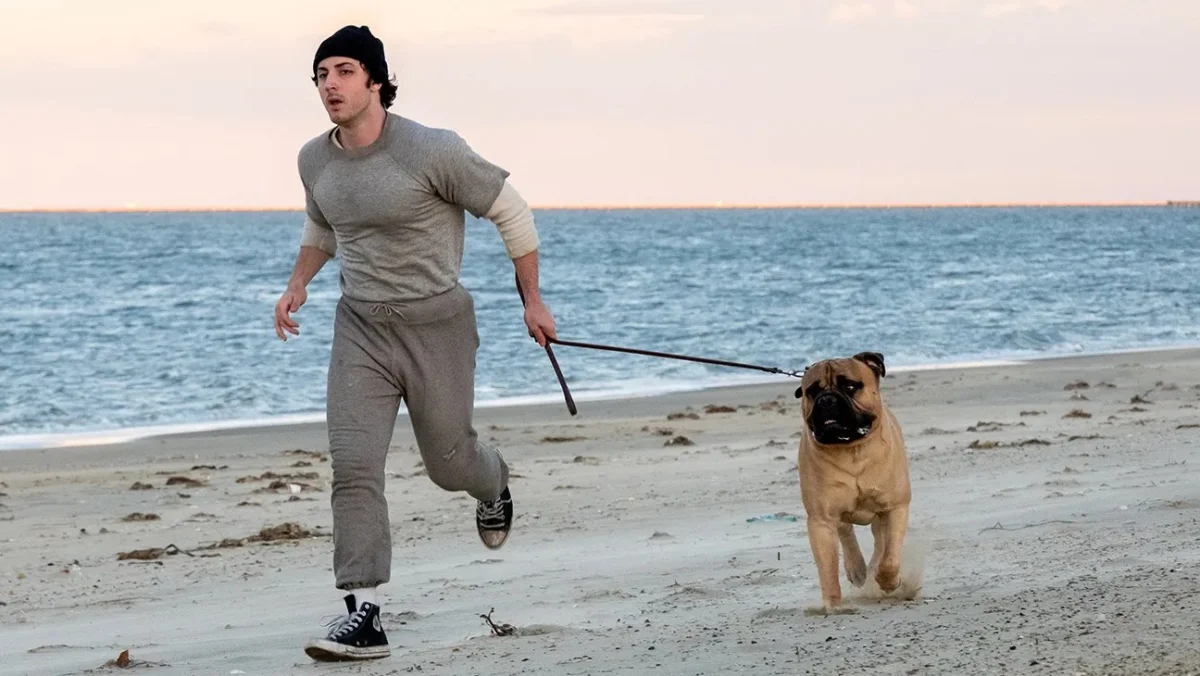
The Toronto International Film Festival (TIFF) has long served as a launchpad for films that bridge the gap between critical acclaim and commercial success. In its 2026 edition, few titles generated as much visceral audience reaction as I Play Rocky, the latest feature from Academy Award-winning director Peter Farrelly. The film, which serves as a biographical drama centered on Sylvester Stallone’s tumultuous journey to bring the original Rocky to the silver screen, arrived with high expectations and a heavy burden of legacy.
Starring Anthony Ippolito in a transformative performance as the young, hungry, and often desperate Stallone, I Play Rocky is less a traditional biopic and more a love letter to the "making-of" genre. It captures a specific, lightning-in-a-bottle moment in 1970s Hollywood when an unknown actor with a slurred speech pattern and a $100 bank balance dared to challenge the studio system.
Main Facts: The Production and the Players
I Play Rocky is directed by Peter Farrelly, a filmmaker whose career has evolved from the broad comedies of the 1990s (Dumb and Dumber) to prestigious, character-driven narratives like Green Book. The screenplay, penned by Peter Gamble, focuses on the high-stakes period between Stallone’s early failed auditions and the 1976 premiere of the film that would eventually win Best Picture.
The film features a robust ensemble cast:
- Anthony Ippolito as Sylvester Stallone: Capturing both the physical sunken-cheeked aesthetic and the internal grit of the future icon.
- AnnaSophia Robb as Sasha Czack: Stallone’s first wife, who serves as the emotional anchor and the catalyst for his writing career.
- Matt Dillon as Frank Stallone Sr.: Portraying the complicated, often harsh relationship between father and son.
- Tracy Letts as a composite studio executive: Representing the institutional resistance of 1970s Hollywood.
- P.J. Byrne and Toby Kebbell as Irwin Winkler and Robert Chartoff: The legendary producers who eventually gambled on Stallone.
- Jay Duplass as John G. Avildsen: The director of the original Rocky.
- Stephan James as Carl Weathers: Capturing the charisma of the man who would become Apollo Creed.
The film was acquired by Amazon MGM Studios, with a strategy involving a limited theatrical release starting November 6, 2026, followed by a wide expansion. The production notably proceeded without the formal involvement of Sylvester Stallone himself, a fact that has sparked discussions regarding the "mythologizing" of his life story versus the documented reality.
Chronology: From Poverty to the Pantheon
The narrative arc of I Play Rocky follows a strictly chronological path, beginning in the gritty, pre-gentrified streets of New York City and moving toward the sun-drenched but equally unforgiving landscape of Los Angeles.
The New York Struggle (1974–1975)
The film opens with Stallone, referred to early on as "Mike," navigating a series of demeaning auditions. The script emphasizes his "self-taught" nature, portraying a man who read classic literature and studied films with a religious fervor despite being treated as little more than an extra with a "look." A pivotal scene depicts the crushing poverty of the era: Stallone, down to his last few dollars, is forced to sell his beloved dog, Butkus, outside a liquor store because he can no longer afford to feed him. This moment serves as the emotional nadir of the first act.

The Inspiration and the Three-Day Sprint
Encouraged by Sasha (Robb) to "write a fricking script" that suits his specific talents, Stallone begins a series of failed attempts. The turning point occurs when he witnesses the Chuck Wepner vs. Muhammad Ali fight in March 1975. Inspired by the "Bayonne Bleeder’s" resilience against the greatest boxer in history, Stallone retreats into a feverish writing session. The film depicts this three-day marathon as a blur of coffee, cigarettes, and raw emotion, resulting in the first draft of Rocky.
The Hollywood Negotiation (1975–1976)
The second act moves to Los Angeles, where the screenplay becomes the hottest property in town. However, Stallone’s refusal to sell the script unless he is cast as the lead becomes the film’s central conflict. Farrelly highlights the absurdity of the studio system, where executives (led by a blustering Tracy Letts) offered Stallone hundreds of thousands of dollars to walk away—a fortune to a man sleeping on bus station benches—only for him to repeatedly decline.
Production and the "Steadicam" Revolution
Once the film is greenlit with a shoestring budget and a "no-name" lead, the story shifts into a procedural about low-budget filmmaking. This segment provides some of the film’s most technical delights, including a subplot regarding the invention of the Steadicam by Garrett Brown. The audience watches as the production team realizes that this new technology will allow them to film the iconic Philadelphia Museum of Art steps sequence with a fluidity never before seen in cinema.
Supporting Data: The Aesthetic and Critical Reception
Critics attending the TIFF premiere noted that I Play Rocky leans heavily into a "glossy" Hollywood aesthetic. While the source material involves deep poverty and domestic strife, Farrelly’s direction is designed to elicit cheers rather than discomfort.
Performance Metrics:
Anthony Ippolito’s performance has been cited as the film’s greatest asset. Rather than a caricature of Stallone’s later "action hero" persona, Ippolito leans into the vulnerability of the 1970s Stallone. His portrayal is described as "soulful" and "committed," avoiding the pitfalls of a simple vocal impression.
Technical Execution:
The film’s cinematography mimics the grainy, naturalistic style of 1970s cinema, particularly the works of Vilmos Zsigmond and Gordon Willis, before transitioning into a more polished, modern look as Stallone’s fortunes rise. This visual metaphor underscores the transition from the "New Hollywood" grit to the blockbuster era that Rocky helped usher in.
Audience Sentiment:
Early screenings at TIFF indicated a high "audience score" potential. Despite a critical grade of "B-" from some outlets due to its "sanded-down" narrative edges, the film’s ability to function as a "crowd-pleaser" was undeniable. Observers noted that the film effectively pulls the "emotional strings" of the audience, mirroring the very underdog structure of the movie it depicts.

Official Responses and Creative Choices
The production of I Play Rocky has not been without controversy, primarily due to the absence of Sylvester Stallone’s official endorsement. While Stallone has famously told his own version of these events in various documentaries and interviews, Peter Gamble’s script takes some creative liberties.
The "Made-for-the-Movies" Script
The screenwriter, Peter Gamble, has defended the "lightness" of the film’s tone. In interviews, the creative team suggested that while Stallone’s life had truly dark moments—including his father’s admission of physical abuse, played with a jarring levity by Matt Dillon—the goal of I Play Rocky was to celebrate the spirit of the creation rather than produce a gritty exposé.
Studio Strategy
Amazon MGM Studios has positioned the film as a major awards contender, particularly in the "Best Actor" and "Best Supporting Actor" categories for Ippolito and Letts. Their decision to release the film in November suggests a confidence in its ability to resonate with both holiday audiences and Academy voters.
Implications: The Legacy of the "Movie About the Movie"
I Play Rocky enters a growing sub-genre of films that dramatize the creation of cultural touchstones. Like Air (the story of the Air Jordan shoe) or The Offer (the making of The Godfather), Farrelly’s film suggests that modern audiences are increasingly interested in the "how" and "why" behind the icons they love.
The Mythologizing of Stallone
The film reinforces the myth of Sylvester Stallone as the ultimate self-made man. By focusing on his "self-educated" and "self-aware" nature, the film elevates him from a mere actor to a symbol of artistic integrity. However, by "sanding down" the hard edges of his struggle—such as the brevity of his depicted homelessness—the film risks romanticizing poverty in a way that some critics find problematic.
The Future of Original Mid-Budget Dramas
The irony of I Play Rocky is that it is a movie about how difficult it is to get original movies made, produced by a massive streaming giant. It highlights the shift in the industry: in 1976, Rocky was a risky gamble for United Artists; in 2026, a movie about the making of Rocky is considered a safe, bankable "brand" play for Amazon MGM.
Conclusion
While I Play Rocky may not capture the full, unvarnished pain of Sylvester Stallone’s early years, it succeeds as a vibrant, energetic piece of entertainment. It reminds audiences why they fell in love with the Italian Stallion in the first place, while introducing a new generation to the sheer audacity required to succeed in the "dream factory" of Hollywood. As the film moves toward its wide release in late November, it stands as a testament to the enduring power of the underdog—both the man who lived it and the actors who now seek to recreate it.