The Digital Paper Trail: Navigating the Corporate Satire of Reply All
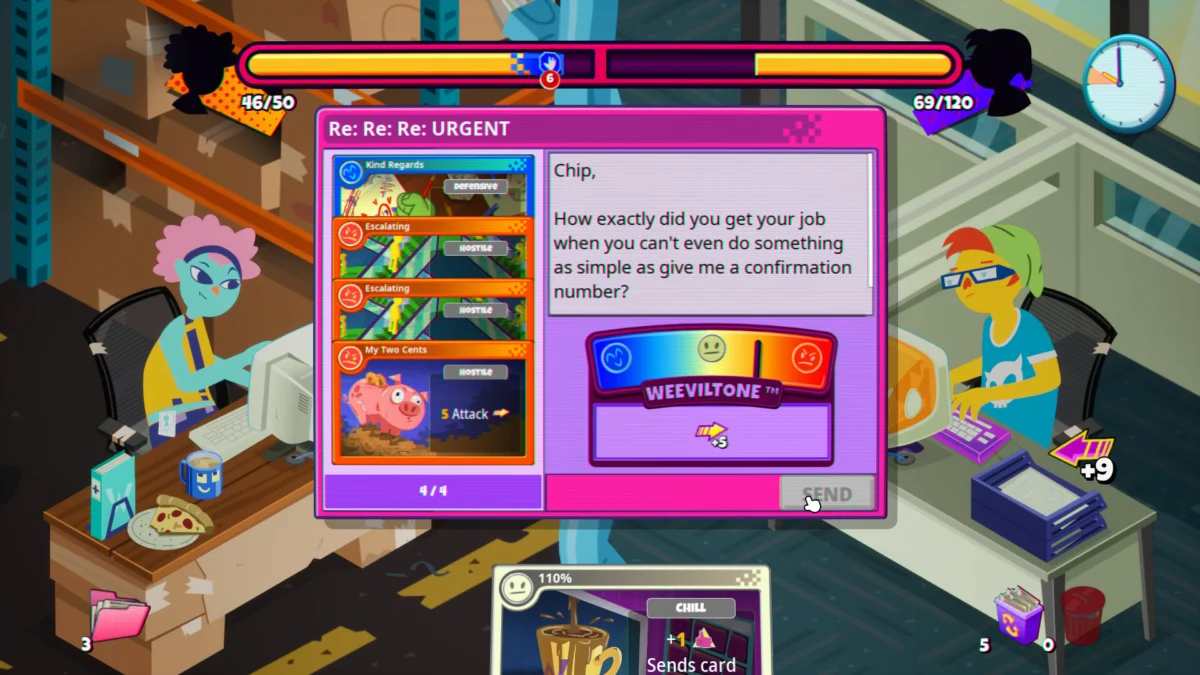
In the modern professional landscape, the humble email has evolved from a tool of communication into a battlefield of subtext, passive-aggression, and bureaucratic maneuvering. Capturing this specific brand of white-collar anxiety is the central ambition of Reply All, a newly announced single-player roguelike deckbuilder that reimagines the office inbox as a high-stakes arena for tactical combat. Recently showcased at Gamescom, the title offers a satirical take on corporate life, challenging players to survive the workday through the strategic deployment of "polite" or "aggressive" correspondence.
As the indie gaming scene continues to find success in "job simulators" that blend mundane tasks with surrealist or high-stakes mechanics—following in the footsteps of titles like Papers, Please and Going Under—Reply All seeks to carve out its own niche. However, early impressions suggest that while the concept is a potent critique of modern work culture, the execution of its narrative-mechanical synergy remains a work in progress.
Main Facts: The Gamification of Professional Burnout
Reply All is a deck-based strategy game where the traditional monsters and spells of the roguelike genre are replaced by demanding customers, overbearing middle management, and the ever-looming threat of professional catastrophe. The player takes on the role of an office worker tasked with managing an onslaught of emails. Each "battle" is a conversation, and each "turn" is a reply.
The core mechanics revolve around a card-based system where players must select up to three cards to construct an email response. These cards serve two primary functions: defending the player’s "health" (which represents their professional standing or mental fortitude) and attacking the "enemy" (the sender of the email) to resolve the conflict.
The game introduces a "Tone Dial," a mechanic that tracks the player’s level of aggression. Balancing neutrality with necessary firmness is key; becoming too aggressive may alienate colleagues and lead to disciplinary action, while being too passive might result in the player being overwhelmed by an unmanageable workload. Success in these digital skirmishes rewards the player with new cards, expanding their rhetorical arsenal for the increasingly difficult "boss" emails that await at the end of the work week.
Chronology: From Gamescom Reveal to Future Launch
The development of Reply All has followed a trajectory common among ambitious indie projects. The game first garnered significant attention during the 2024-2025 trade show circuit, culminating in a playable demo featured at Gamescom. This appearance was designed to introduce the game’s unique "office-combat" loop to a wider audience and gauge interest in its satirical premise.
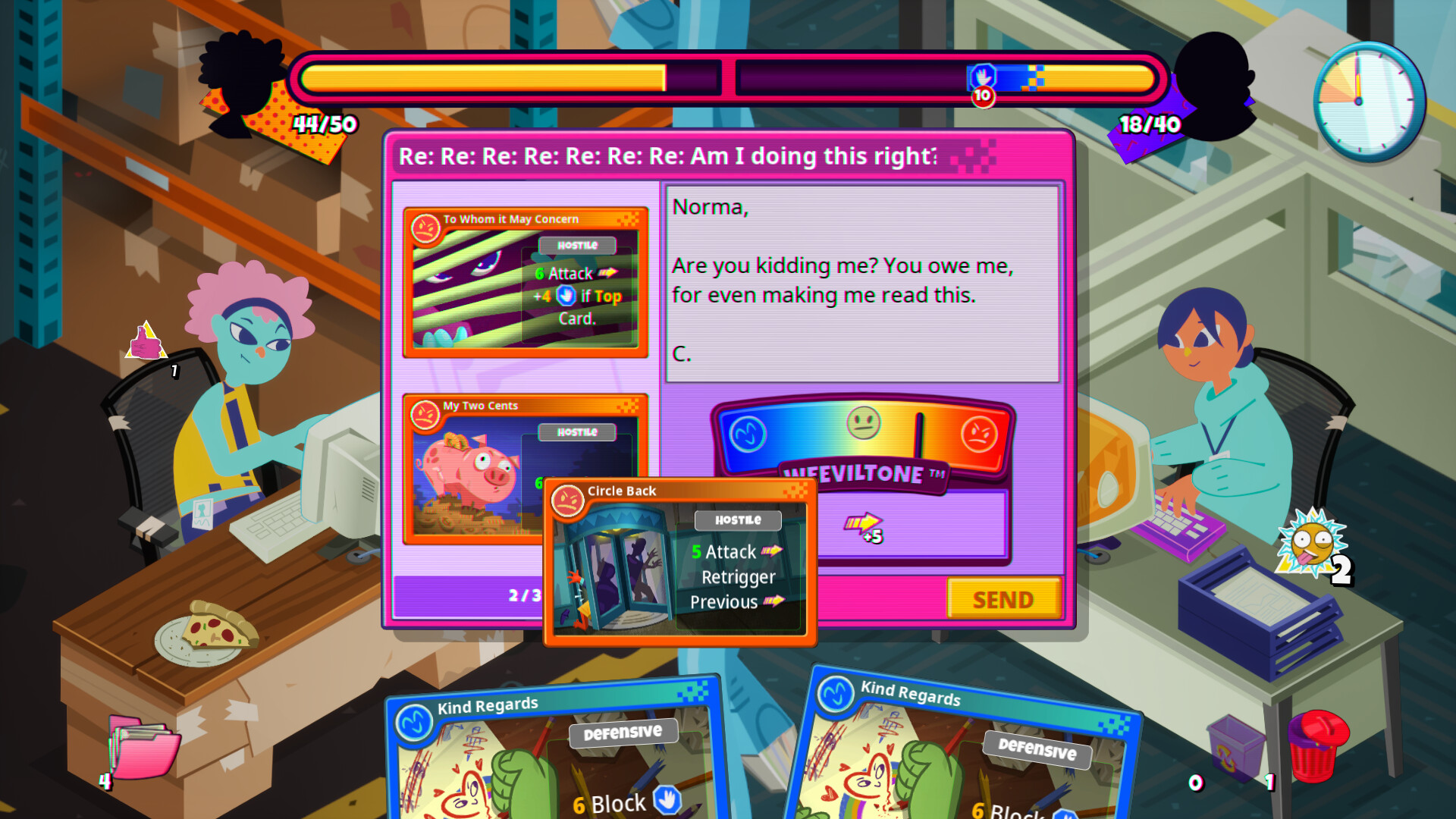
According to the developers, the version of Reply All showcased at Gamescom represents an early alpha stage. While the mechanical foundations—the deckbuilding and the health management—are largely in place, the narrative depth and the "procedural prose" system are still undergoing heavy iteration.
The current roadmap for Reply All suggests a release window approximately one year from its Gamescom debut, placing the launch in late 2025 or early 2026. This extended development period is reportedly being used to address one of the primary criticisms leveled at the demo: the disconnect between the cards played and the actual text of the emails generated. As it stands, the game is currently available for wishlisting on Steam, with the developers promising regular updates as they refine the "syntax engine" that powers the game’s comedic writing.
Supporting Data: Mechanics and Narrative Dissonance
To understand the challenges facing Reply All, one must look at the data governing its gameplay loop. Unlike many deckbuilders where health is restored after every encounter, Reply All employs a persistent health system. Players must navigate a series of tasks throughout the "day" without a full reset, meaning a poorly handled morning email can have cascading effects on a 4:00 PM crisis.
The Card System and Tonal Balancing
The deck is comprised of various "Tone Cards." For example:
- The "Per My Last Email" Card: High damage (aggression), low defense.
- The "Hope This Finds You Well" Card: High defense (polite), low damage.
- The "CC the Manager" Card: A "power" card that deals damage over time but increases the risk of triggering a high-stress event.
Data from early playtests indicates that the most successful players are those who can manipulate the "Tone Dial" to stay within a "Neutral-Professional" zone. However, the game intentionally pushes players out of this comfort zone by presenting "Unreasonable Requests" (high-health enemies) that require aggressive cards to defeat.
The Challenge of Procedural Text
The most significant hurdle identified by early critics is "ludofictional dissonance"—the gap between what the player is doing (playing cards for stats) and what the character is doing (writing an email). In the current build, playing a "Polite" card followed by an "Aggressive" card can result in an email that reads as a nonsensical jumble of corporate buzzwords rather than a coherent piece of satire.
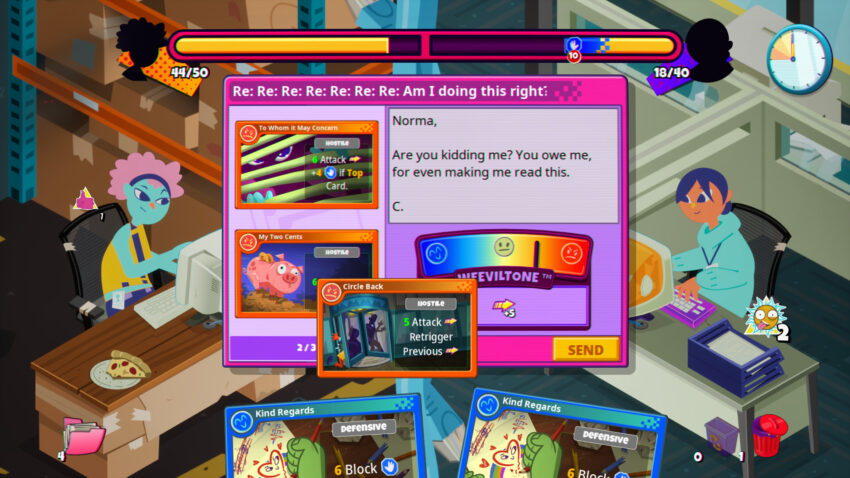
For the game to succeed as a piece of social commentary, the generated text needs to mirror the strategic choices of the player. If a player builds a "Passive-Aggressive" deck, the resulting emails should read with the biting, subtle condescension familiar to anyone who has worked in a cubicle. Currently, the "strange" and "nonsensical" nature of the replies threatens to undermine the relatability that is the game’s strongest selling point.
Official Responses and Developer Philosophy
While the developers have remained relatively quiet regarding specific plot spoilers, their public statements at Gamescom emphasized a commitment to "Office Horror-Satire." In interviews, the team noted that the inspiration for Reply All came from the realization that the anxiety of an unread inbox shares many psychological markers with the tension of a dungeon crawl.
"We wanted to capture the feeling of being trapped in a loop of jargon and performative politeness," one developer stated during a press Q&A. "The deckbuilder format was a natural fit because office life is essentially a game of resource management—managing your time, your patience, and your reputation."
Regarding the feedback about the nonsensical email text, the development team acknowledged the difficulty of the task. They have indicated that the next phase of development involves "deepening the linguistic database" to ensure that the cards played result in grammatically coherent and contextually relevant prose. The goal is to move away from "randomized nonsense" and toward "emergent comedy," where the absurdity of the email is a direct reflection of the player’s increasingly desperate attempts to stay employed.
Implications: The Future of the "Bureaucratic Roguelike"
The emergence of Reply All signals a growing trend in the indie sector: the "Bureaucratic Roguelike." This subgenre takes the systems of traditional RPGs—stats, loot, and permadeath—and applies them to the systemic frustrations of modern life.
The Satire of the Mundane
By framing the office as a place of combat, Reply All provides a cathartic outlet for players. It allows them to "fight back" against the soul-crushing nature of corporate communication within a safe, gamified environment. The implication is that the modern workplace is so inherently absurd that it can only be properly understood through the lens of a fantasy-style struggle for survival.
Market Positioning and Expectations
For Reply All to transition from a clever concept to a successful title, it must bridge the gap between its mechanics and its theme. The success of Balatro (poker-themed) and Slay the Spire (fantasy-themed) proved that players crave deep, interlocking systems. However, Reply All carries the additional burden of narrative expectation. Players aren’t just looking for a good card game; they are looking for a game that "gets" the unique misery of the 9-to-5 grind.
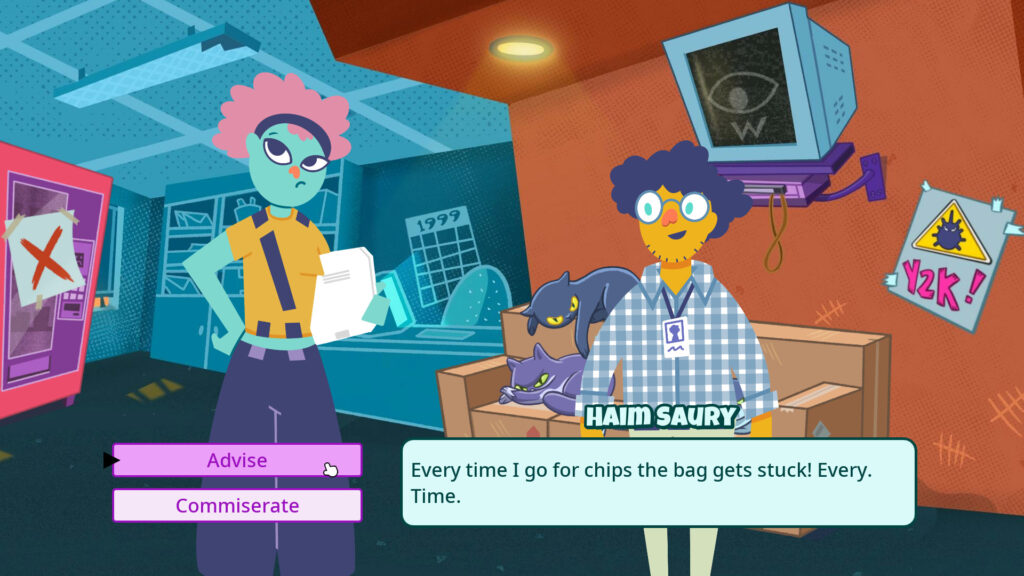
If the developers can successfully refine the text-generation engine over the next year, Reply All has the potential to become a cult classic. It stands as a testament to the versatility of the roguelike genre, proving that any environment—even a sterile office with a flickering fluorescent light—can be a setting for adventure, provided you have the right deck of cards and a high enough tolerance for "passive-aggressive" encounters.
As the release date approaches, the industry will be watching to see if Reply All can deliver a message that resonates with the workforce, or if it will simply be another "Draft" that failed to make it to the "Sent" folder. For now, it remains a promising, if slightly incoherent, critique of the digital age, waiting for its final polish.