Beyond the Brushstrokes: Lucasfilm Animation’s Art Director Unveils the Visual Alchemy of "Star Wars: Maul – Shadow Lord"
By [Your Name/Publication Name]
In the ever-expanding galaxy of Star Wars, visual storytelling is paramount. From the iconic silhouettes of starships to the intricate textures of alien worlds, every element contributes to the immersive experience that has captivated audiences for generations. For the recent Disney+ animated series, "Star Wars: Maul – Shadow Lord," the visual development team at Lucasfilm Animation faced the exhilarating challenge of bringing a complex narrative and beloved character to life with a distinct artistic vision.
This article delves into the meticulous process behind the series’ striking aesthetic, drawing insights from an exclusive conversation with Andre Kirk, Art Director at Lucasfilm Animation. Kirk provides a comprehensive look at the creative decisions, artistic considerations, and technical innovations that shaped the visual landscape of "Maul – Shadow Lord," focusing on key components such as the design of new characters like Jedi Master Eeko-Dio Daki, the sprawling city of Janix, and the nuanced evolution of Darth Maul himself.
The Genesis of a Shadow Lord’s Visual Identity
The creation of "Star Wars: Maul – Shadow Lord" was not merely about illustrating a script; it was a deep dive into character, environment, and the very essence of the Star Wars universe, filtered through a unique artistic lens. Art Director Andre Kirk emphasized that the visual development process is a collaborative endeavor, deeply intertwined with narrative and directorial intent.
"We recently spoke to Andre Kirk, art director at Lucasfilm Animation, about the challenges and processes involved in the visual development of Star Wars: Maul – Shadow Lord," the original article states. This sets the stage for a detailed exploration of how the animation team translated script and character concepts into tangible, visually compelling on-screen elements. Kirk’s role involved overseeing the artistic direction, ensuring a cohesive and impactful visual language that served the story’s thematic and emotional core.
Crafting the Familiar and the New: Character Design in "Maul – Shadow Lord"
The success of any Star Wars project hinges on its ability to honor established lore while introducing fresh, compelling characters. In "Maul – Shadow Lord," this balancing act was a central tenet of the design process.
Looti Vario: From Concept to Crime Lord
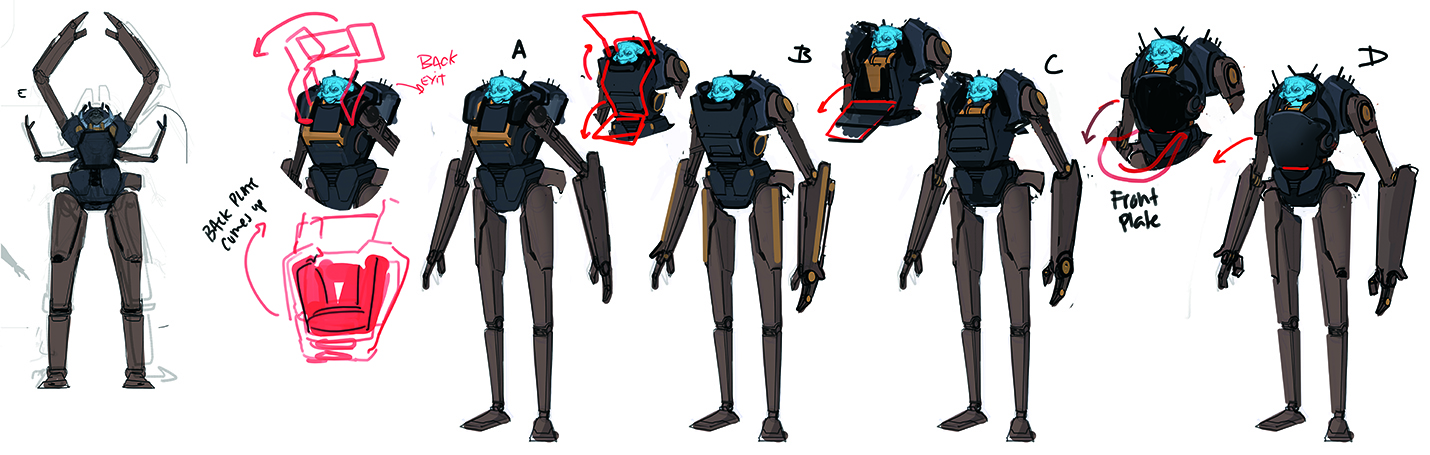
The character of Looti Vario, a pivotal figure in the series, presented a unique design challenge. As Kirk explains, "Looti Vario was fun to work on. We knew he was going to be an Aleena, a small lizard-type alien in the Star Wars universe, and we knew that we wanted to put him in a mech suit." This foundational concept sparked a cascade of creative exploration.
The team meticulously considered Looti’s role within the narrative. "So, a lot of discussion happens, between reading the script and talking to the supervising director, about what role does Looti have? When can we lean into the whimsical things like his teeny tiny gun?" This highlights how character function directly informed design choices, from his imposing mech suit to his comically small weaponry, a testament to the series’ blend of gravitas and playful absurdity.
Respect for existing Star Wars canon was paramount. "We always want to make sure we’re paying respect to the previous versions when we’re iterating on what’s come before, but also creating our own version of these characters," Kirk stated. The design of Looti Vario began with his established Aleena physiology, as seen in previous Star Wars iterations, but was then augmented with the specific needs of his character arc.
A significant focus was placed on conveying Looti’s expressive nature. "We knew that Looti Vario would have a lot of expressive emotions, so we concentrated on his open mouth, detailing out the teeth, gums, all of that to really realise his character." This granular attention to detail, down to the internal structure of his mouth, ensures that his emotional state is palpable to the audience, even within the confines of his mech suit.
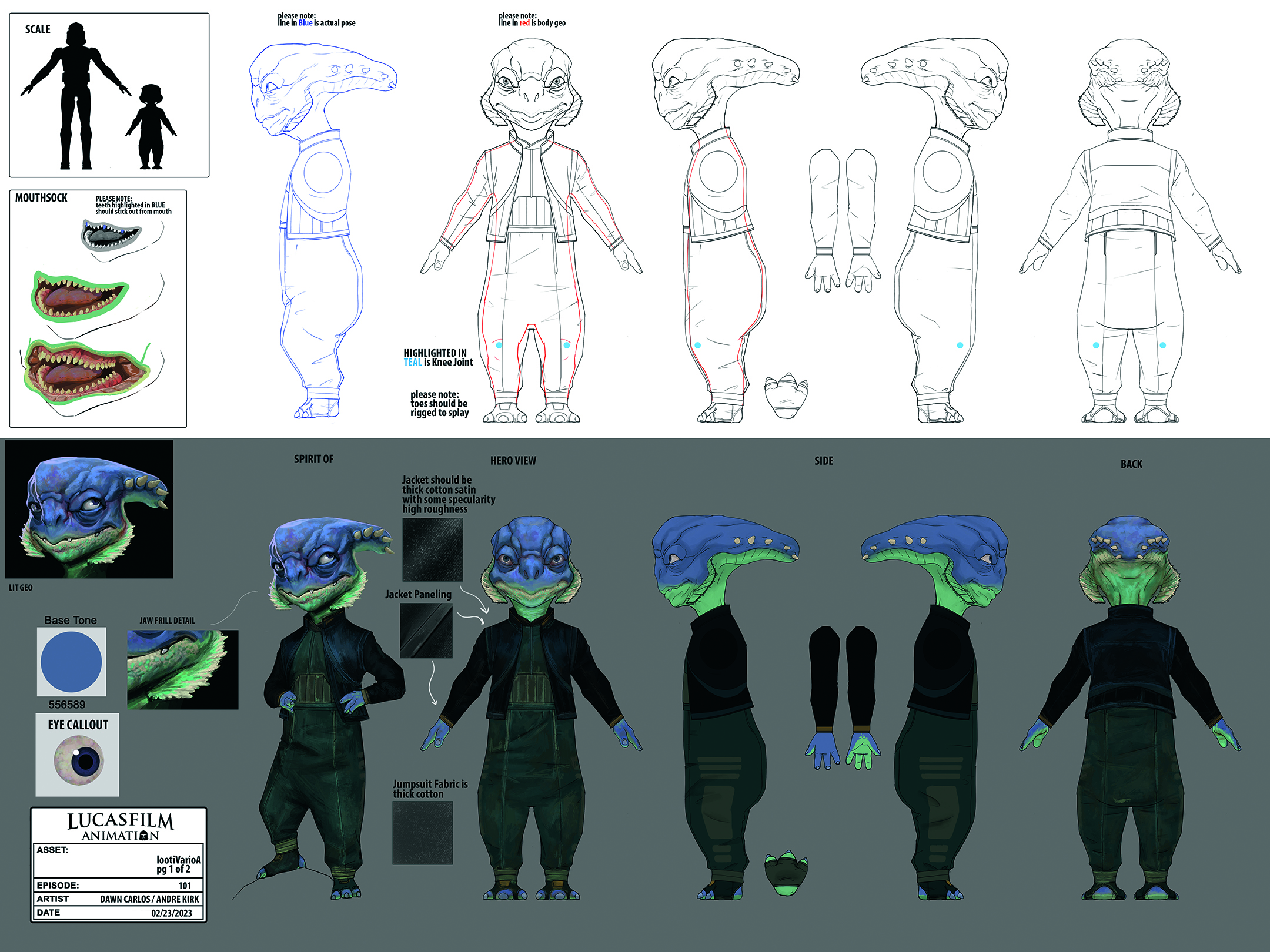
The concept art for Looti Vario underscores this dedication. Sketches reveal intricate studies of his exoskeleton, exploring its mechanics and fundamental shape, demonstrating a deep understanding of how the suit would integrate with his alien form. The team also delved into his potential backstory, a crucial element in building believable characters. "In a lot of the earlier versions of Looti, we attempted various outfits for him. Was it Napoleonic, was it purely functional, what would his taste in fashion be? It was about trying to suggest a back story for the character because we always encourage designers to think of a back story when they’re designing." This proactive approach to character development, even for elements not explicitly detailed in the script, imbues the character with a sense of lived history and depth.
Kirk elaborates on this philosophy: "For example, asking: ‘How did this guy become a mob boss? Feel free to inject any of your ideas into there.’ If it’s not written down specifically, it could be that what you’re suggesting becomes what this character is." This creative freedom allows designers to build a rich internal world for each character, a "head-canon" that informs every visual decision. The comprehensive development of Looti Vario, from his imagined origins to his graduation as a crime lord, ensured a character whose design was not only visually striking but also deeply rooted in a plausible, albeit fictional, personal journey.
Designing Jedi Master, Eeko-Dio Daki: A Study in Nuance
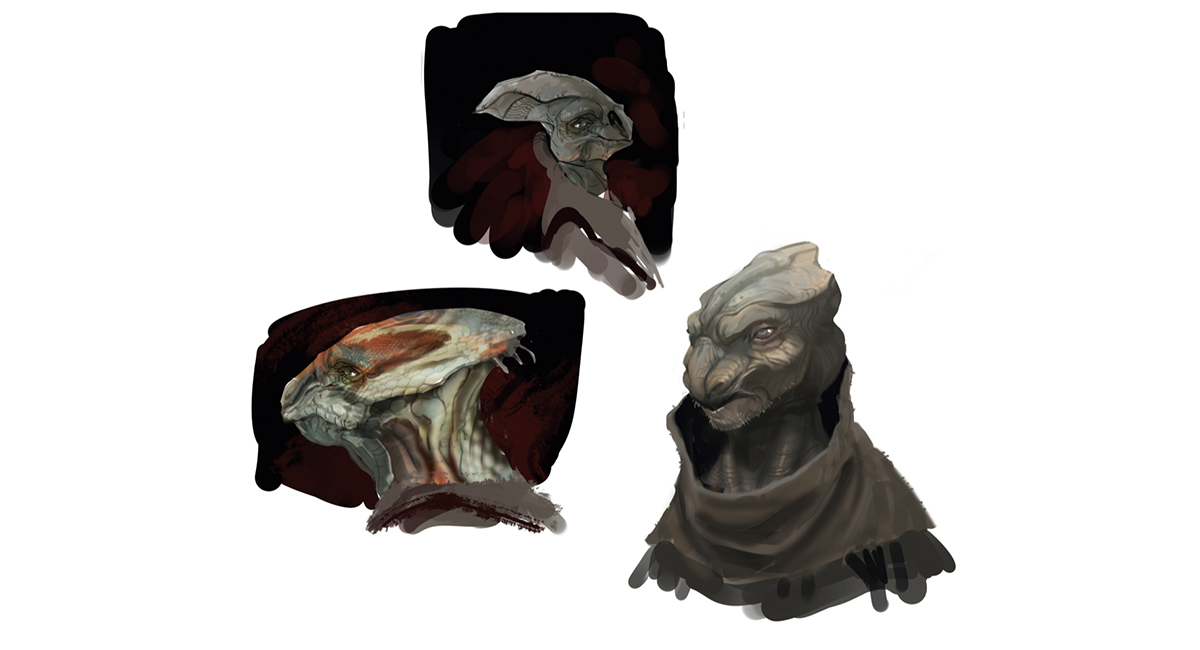
Jedi Master Eeko-Dio Daki presented a different set of design considerations, requiring a careful balance of the stoic nature of a Jedi with the narrative demands of a character on the run. Kirk notes the extensive development that went into his backstory and attire: "There was a lot of development on his back story, outfit and how he should be dressed. His costume is very similar to a flight suit, but where did he get it? Is it his originally? He’s on the run, but is he a pilot? In disguise?"
These questions underscore the critical role of the design department in fleshing out character motivations and circumstances. The seemingly simple choice of a flight suit becomes laden with narrative implications when viewed through the lens of a Jedi in hiding. The team grappled with how to convey his past and present predicament through his clothing.
Beyond the core costume, intricate details like his cape required meticulous attention. "And then there are things you might not consider, like his cape. How do you break that up into multicolours? How do you get those additional hues in there, but get it to store light fairly evenly? Do you paint in shadows so we can rely on [those] you get from the folds of the fabric? How will we do tattered edges on the fabric, the hood, the cape?" These are not merely aesthetic choices; they are functional elements that contribute to the believability and visual richness of the character.
A key aspect of the series’ distinctive visual style, as Kirk explains, is its deliberate departure from hyperrealism in favor of a painterly aesthetic. "Ultimately the question becomes how do we retain the painterly and stylised nature of the world without things getting too realistic? Sometimes where you do see real-world textures, like a cotton weave or something in a fabric, it’s oversized. It’s not attempting to be realistic."
This approach extends to surface textures, which are treated with a deliberate stylization. Kirk uses the analogy of "plaster gypsum" to describe the desired effect: "A lot of our surface texture is that and it’s telling the designers, ‘Hey, you might not have played with gypsum, but this is what it looks like, and this is what we’re after; where your surface texture goes in and out between paint, then weave, then paint, and then weave.’ It’s all of these observational things that you pass onto your design team that are able to integrate into their work and have it help develop their designs." This deliberate manipulation of texture imbues the world with a unique tactile quality, a signature of the series’ artistic direction. The interplay of "head shape, and light and shadow" further contributes to this stylized realism, ensuring that even familiar Star Wars elements are presented with a fresh, artistic interpretation.
Planning the Planet of Janix: A World Forged in Detail
The creation of a new planet and its urban centers is a monumental task in Star Wars, requiring a deep understanding of galactic architecture, culture, and environmental factors. The city of Janix served as a crucial backdrop for the events of "Maul – Shadow Lord," and its design was a testament to the team’s commitment to world-building.
Kirk highlights the high level of detail and fidelity expected in the design process: "There’s very little interpretation between the designs and the final product. So for instance, for the bridge (seen in episode 1 of the series), the design team would be responsible for showing you every angle of it: how it would work, how it connects to the buildings, how the buildings are made, what they look like from every angle." This meticulous approach ensures that the environment feels lived-in and functional, even if the audience only sees a fraction of its entirety.
The team also considered the practicalities of urban design within the Star Wars universe. "What the signs are on those buildings and just sort of laying out the space that you’re in." This attention to signage and spatial organization adds a layer of authenticity to the cityscape, making it feel like a genuine place rather than a mere visual backdrop.
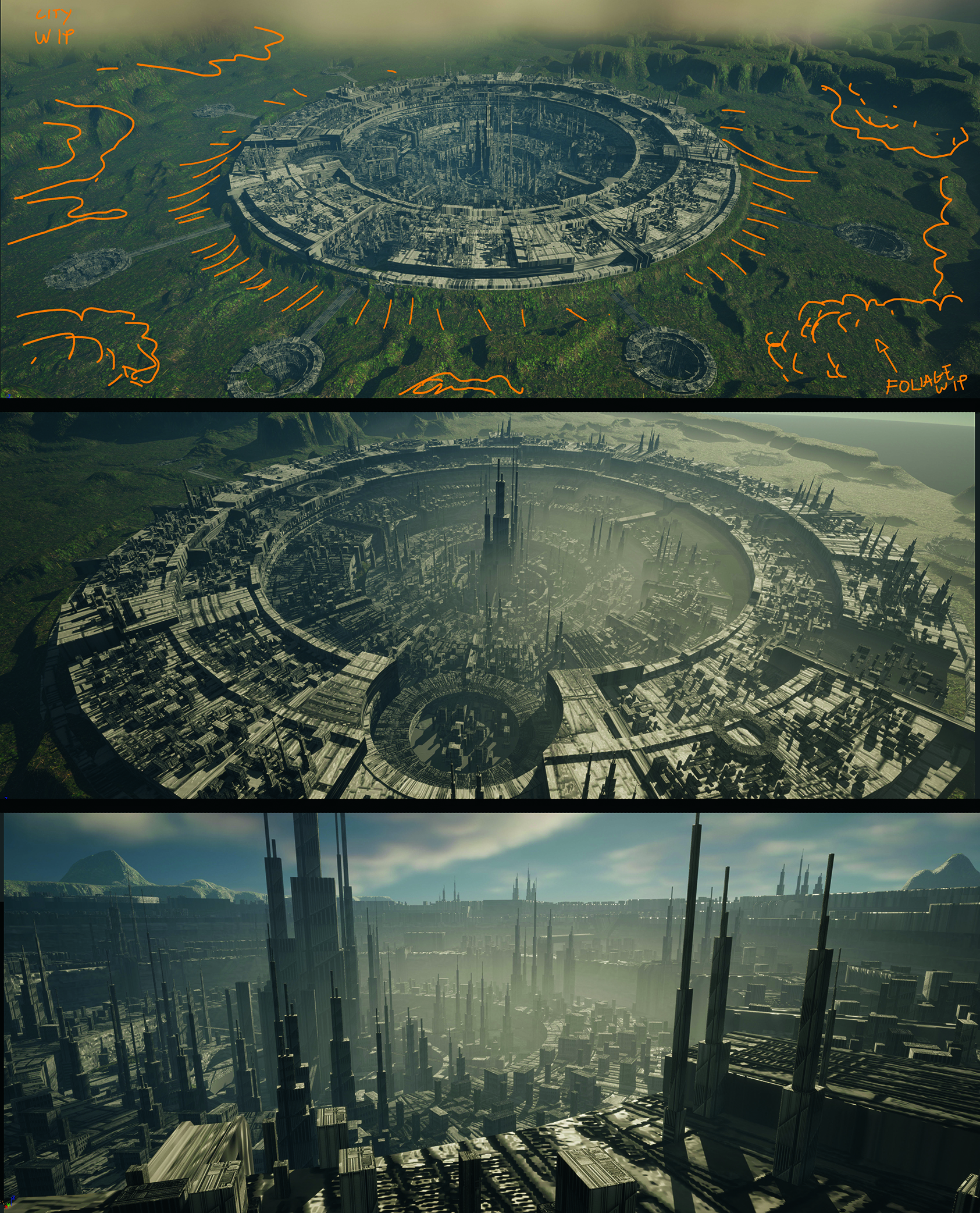
While artistic freedom is encouraged, the final designs are carefully curated to align with the director’s vision. "We give opportunity for the storyboard artists to move things around, but once we’ve checked with the supervising director on very specific things he wants, we’ll lock that down." This collaborative process ensures that the visual elements serve the narrative effectively. The goal is to create environments that are not only visually stunning but also logically coherent: "We don’t want someone to look at a scene and go ‘Wait. Where am I?’ It has to make sense not just for the story but also in a real-world city layout way, even though it’s something a viewer might never see." This dedication to unseen detail reinforces the immersive quality of the Star Wars universe.
The concept art for Janix, particularly the work by Chris Felker, showcases a masterful fusion of technology and nature, evoking a familiar Star Wars aesthetic while introducing unique elements. The visual echoes of Utapau from "Star Wars: Revenge of the Sith" suggest a deliberate continuation of established planetary design language, demonstrating how new worlds are often built upon the foundations of existing lore.
The Enduring Icon: The Making of Maul
The visual evolution of Darth Maul is a continuous narrative arc within the Star Wars saga. For "Maul – Shadow Lord," the challenge was to present him in a way that was consistent with his established character while reflecting his new circumstances as the "Shadow Lord."
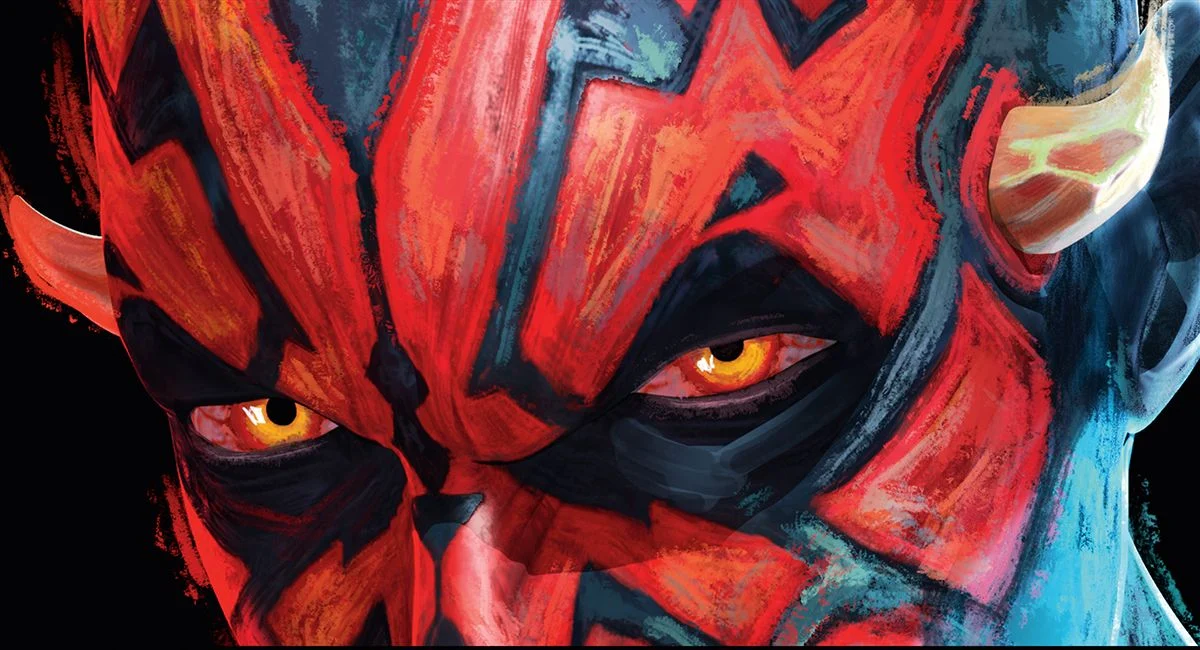
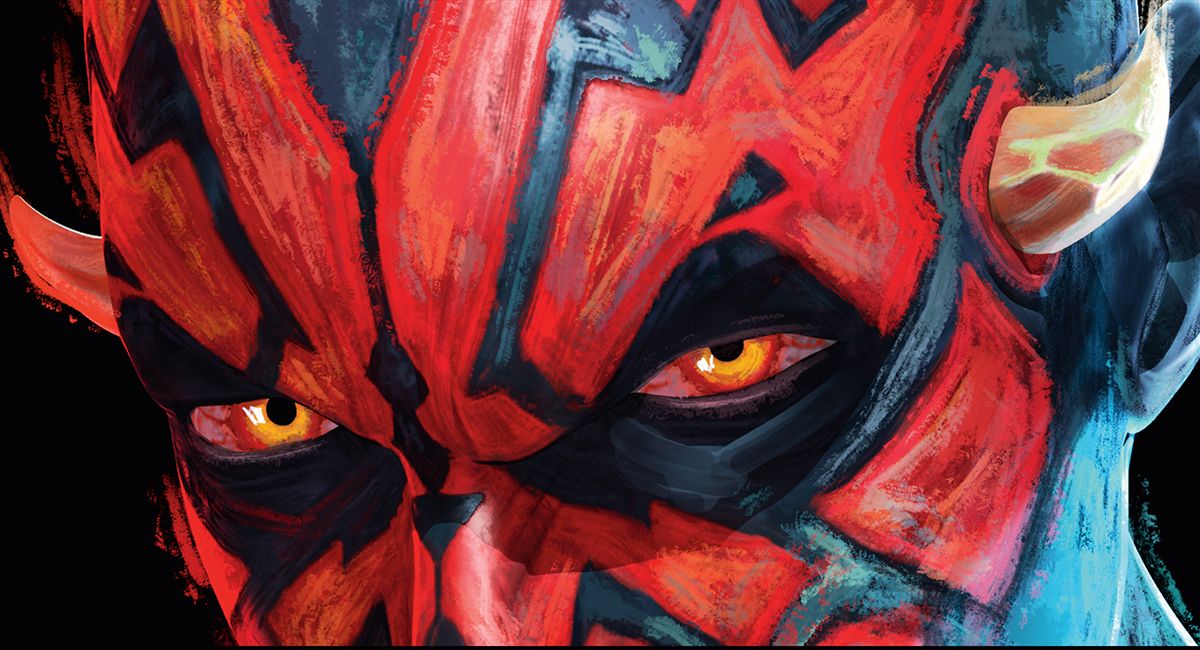
Kirk emphasizes the importance of maintaining the painterly quality across all visual elements, including the iconic character himself. "A lot of it is about breaking up solid colours into complementary colours and having additional hues to make your eye realise that this is a painted surface. It’s not a solid colour. So, with Maul, and for the environments, we don’t want that flat solid colour. We want to see that someone has painted that out of very similar hues and very similar values, but they’ve broken up that surface with paint."
This approach means moving away from a photorealistic rendering of Maul’s skin and attire. "So, with Maul, if we get in close, we don’t want to see the pores of the skin. We want to get closer to the painting… to see those brushstrokes. That is the surface of our world. It’s not reality. It’s something you have to sort of be aware of and go ‘Oh, that’s going too realistic.’ We want the paint to be the surface of objects and clothing and skin." This deliberate artistic choice reinforces the unique visual identity of the series.
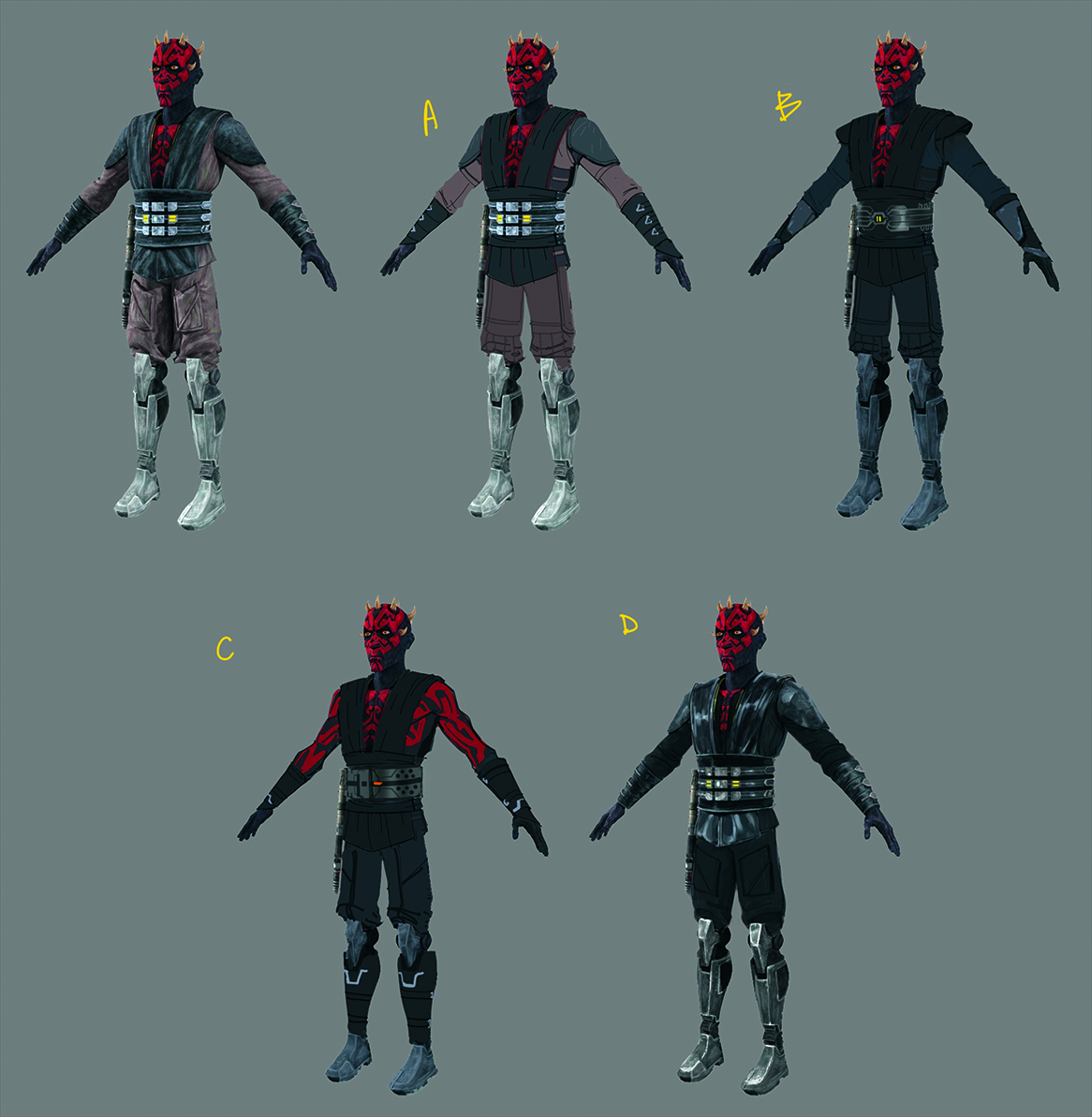
The process involved extensive work on Maul’s black outfit and his distinctive red and black skin. The goal was to achieve this painterly effect without drastically altering his appearance in neutral lighting. "There was a lot of work with that; particularly on Maul’s black outfit and his skin, but without totally shifting it so that in neutral light he doesn’t suddenly take on a warmer look."
Color theory played a significant role in defining Maul’s visual presence. "For Maul, we favoured a cool look to offset the red and the black areas, rather than have him always be warm." This strategic use of color not only enhances his visual impact but also aids the lighting team in integrating him seamlessly into various scenes. "When we introduce these complementary colours or hues, it is not to shift it into a different lighting environment so a character will stand out when acting opposite another character. It also makes it a lot easier for the lighting team if the colours are fairly neutral."
In terms of his physical form, the design team aimed for continuity with his previous appearances. "But in terms of Maul’s topology and his body, there weren’t too many changes because we were pretty happy with where he was in The Clone Wars season seven." This adherence to established character models ensures that fans recognize and connect with the familiar iteration of the character, while the new artistic direction adds a fresh layer of visual depth. The concept art by Chris Madden illustrates this delicate balance, maintaining Maul’s iconic silhouette while introducing subtle distinctions befitting the "Shadow Lord" persona.
The Art of Illusion: Embracing the Painterly Aesthetic
The overarching artistic philosophy behind "Star Wars: Maul – Shadow Lord" is a conscious embrace of a painterly aesthetic, moving away from hyperrealism towards a style that emphasizes brushstrokes, texture, and the expressive qualities of paint. This approach is not merely an artistic choice; it is a fundamental aspect of the show’s identity, differentiating it from other Star Wars animated projects.
Kirk’s insights reveal a deliberate effort to ensure that the visual language of the series consistently evokes the feeling of a hand-painted artwork. This involves a deep understanding of how light interacts with surfaces rendered in this style, and how to maintain a cohesive look across characters, environments, and props. The careful use of complementary colors, textured surfaces, and the deliberate avoidance of photographic realism are all key components of this artistic endeavor.
The success of "Star Wars: Maul – Shadow Lord" lies not only in its compelling narrative and character development but also in its visually rich and artistically distinctive presentation. Through the detailed insights provided by Andre Kirk, we gain a profound appreciation for the intricate processes and creative decisions that transform a script into a breathtaking animated experience, one brushstroke at a time. The series stands as a testament to the power of visual storytelling in the Star Wars galaxy, demonstrating that even in the realm of animation, art direction is a crucial element in forging unforgettable cinematic moments.