Jolt Physics Unleashes 5.6: Groundbreaking Hair Simulation and Enhanced Performance Set New Industry Standards
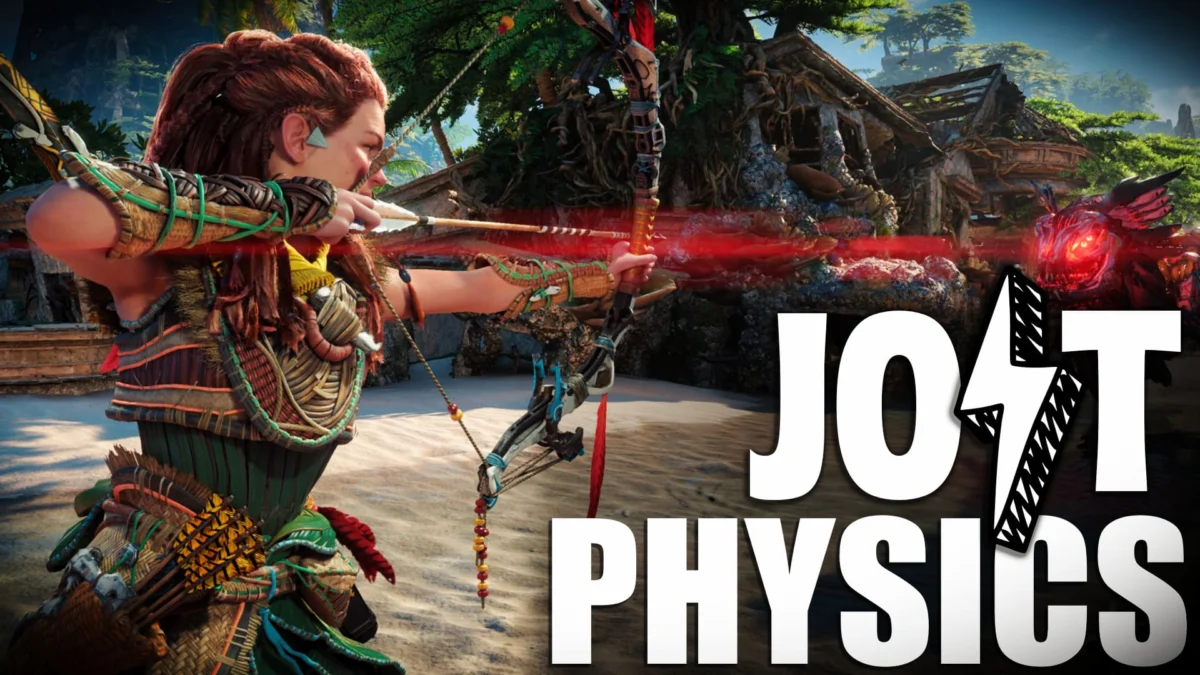
[City, State] – [Date] – In a significant leap forward for real-time physics simulation, Jolt Physics has officially launched version 5.6, a release poised to redefine the capabilities of game development and beyond. Hot on the heels of the recent unveiling of Box3D, Jolt Physics, a leading free and open-source cross-platform engine, continues its trajectory of innovation. This latest iteration introduces a suite of powerful new features, with its headline-grabbing hair simulation system taking center stage, promising unprecedented realism for character and environmental interactions.
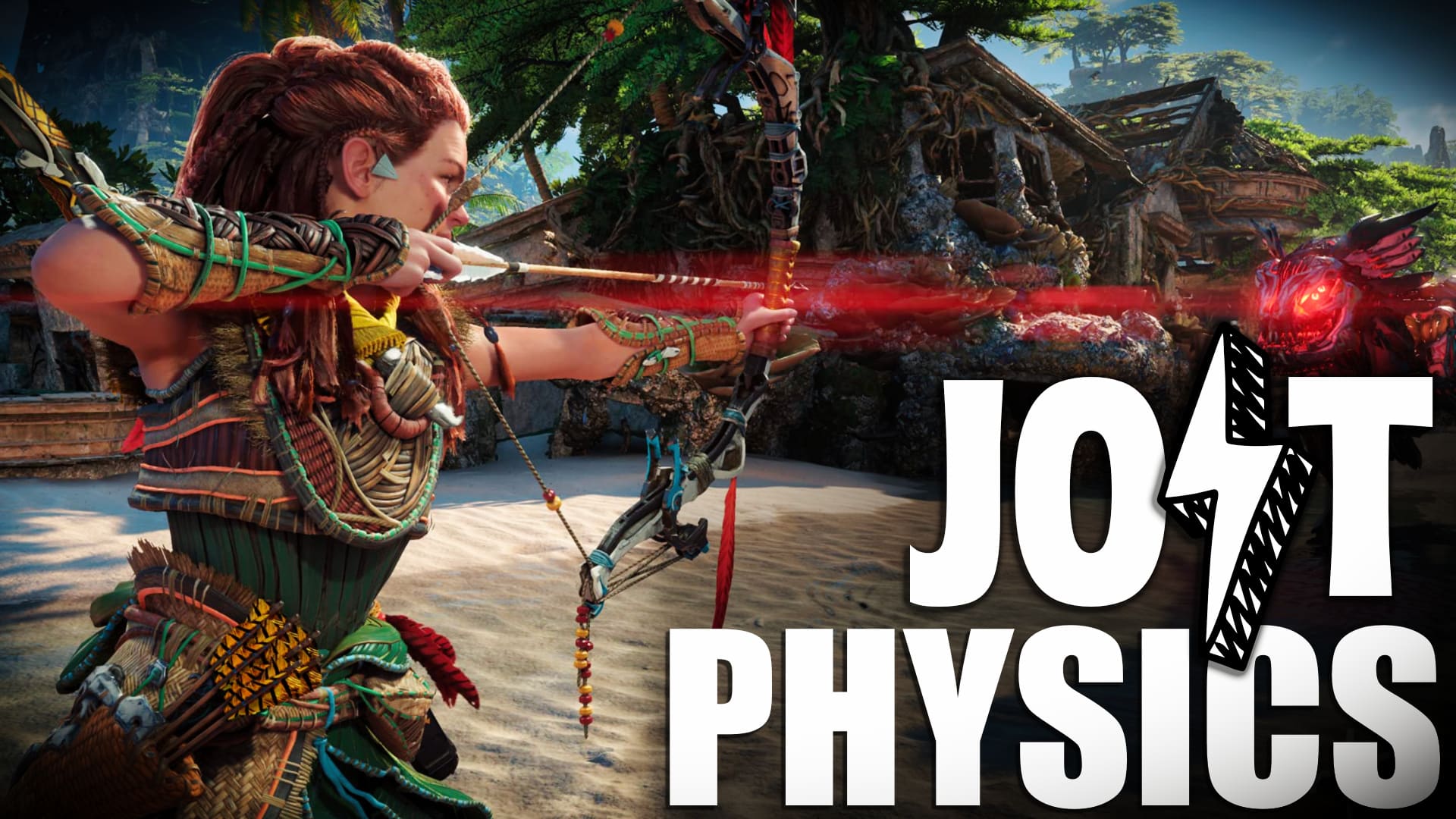
The impact of Jolt Physics is already deeply ingrained within the industry. Its robust and efficient architecture has made it a cornerstone for numerous open-source game engines, including the widely adopted Godot and GDevelop. Furthermore, its prowess has been recognized and leveraged in the development of critically acclaimed commercial AAA titles, such as Guerrilla Games’ Horizon Forbidden West, Kojima Productions’ Death Stranding 2, and Egosoft’s X4 series. The 5.6 release solidifies Jolt’s position as a go-to solution for developers demanding high fidelity and performance.
A New Era of Realism: The Dawn of Jolt’s Hair Simulation
The most talked-about feature in Jolt Physics 5.6 is undoubtedly its sophisticated hair simulation system. This groundbreaking addition empowers developers to create remarkably lifelike hair dynamics, moving beyond the rigid approximations often seen in current game engines. This system is designed to simulate the complex interactions of individual strands of hair, accounting for gravity, wind, character movement, and even collisions with other objects.
The implications for character design and immersion are profound. Imagine virtual characters whose hair flows naturally in the wind, reacts believably to a character’s frantic movements in combat, or even gets caught on environmental elements. This level of detail can dramatically enhance the visual fidelity and emotional impact of virtual experiences, pushing the boundaries of what players have come to expect.
The development of such a system is a testament to the Jolt Physics team’s dedication to tackling complex simulation challenges. Hair, with its numerous interconnected elements and subtle behaviors, presents a significant computational hurdle. The successful integration of a performant and scalable hair simulation system into Jolt Physics underscores the engine’s advanced algorithmic design and optimization techniques. This feature alone could become a major draw for studios seeking to elevate their character art and animation to new heights.
Beyond Hair: A Cascade of Enhancements in Jolt Physics 5.6
While the hair simulation system is the undeniable star, Jolt Physics 5.6 is a comprehensive update packed with numerous other improvements and new functionalities designed to enhance developer workflows and overall engine performance. These additions cater to a wide spectrum of needs within the game development community and beyond.
Key Features and Enhancements in Jolt Physics 5.6:
- Advanced Collision Detection: Jolt Physics 5.6 introduces refined algorithms for collision detection, leading to increased accuracy and reduced instances of false positives or missed collisions. This is crucial for ensuring robust and predictable physical interactions within complex virtual environments.
- Optimized Solver Performance: The core physics solver has undergone significant optimization. This translates to faster simulation times and the ability to handle more complex scenes with a greater number of physical objects without compromising frame rates. This performance boost is vital for open-world games, large-scale simulations, and real-time applications.
- Enhanced Constraint Systems: The engine’s constraint systems, which govern how physical bodies interact and are connected, have been improved for greater stability and flexibility. This allows for more nuanced and realistic simulations of joints, hinges, and other mechanical connections.
- Improved Multithreading Support: Jolt Physics continues to leverage multithreading for parallel processing of physics calculations. The 5.6 release includes further optimizations to ensure efficient utilization of modern multi-core processors, maximizing performance gains.
- Expanded API and Tooling: The release likely includes updates to the Jolt Physics API, providing developers with more control and access to advanced features. Furthermore, improvements to debugging tools and profiling capabilities can streamline the development process and help identify performance bottlenecks.
- New Simulation Types (Speculative): While not explicitly detailed in the provided snippet, advanced physics engines often introduce support for new types of simulations. This could include enhanced fluid dynamics, soft body physics, or even specialized simulations for material properties, further expanding Jolt’s versatility.
- Bug Fixes and Stability Improvements: As with any major software release, Jolt Physics 5.6 incorporates numerous bug fixes and stability enhancements, ensuring a more reliable and robust experience for developers.
The cumulative effect of these enhancements is a physics engine that is not only more powerful and realistic but also more efficient and easier to integrate into existing or new projects.
A Chronology of Innovation: Jolt Physics’ Steady Ascent
Jolt Physics has established a reputation for consistent and impactful development. The release of version 5.6 is not an isolated event but rather a natural progression in a well-defined roadmap of innovation.
- Early Development and Open-Sourcing: Jolt Physics initially emerged as a proprietary solution before its strategic decision to be open-sourced. This move democratized access to a high-performance physics engine, fostering a vibrant community of developers and contributors.
- Iterative Improvements: Prior to 5.6, Jolt Physics has seen a steady stream of releases, each building upon the previous versions with incremental performance gains, new features, and bug fixes. This consistent development cycle has earned the trust of developers who rely on its stability and ongoing support.
- Adoption in Major Titles: The integration of Jolt Physics into AAA titles like Horizon Forbidden West and Death Stranding 2 served as a powerful endorsement of its capabilities. These high-profile projects demand cutting-edge technology, and Jolt’s inclusion demonstrated its readiness for the most challenging of development environments.
- Community-Driven Growth: The open-source nature of Jolt Physics has been a significant driver of its success. Contributions from the community, including bug reports, feature requests, and even direct code contributions, have helped shape the engine into the powerful tool it is today.
- The Box3D Precedent: The recent release of Box3D, which brings Box2D physics into the third dimension, further highlights the proactive and innovative spirit of the Jolt Physics ecosystem. This suggests a broader commitment to pushing the boundaries of physics simulation across various dimensions.
- Jolt Physics 5.6: A New Benchmark: The release of 5.6, with its groundbreaking hair simulation, marks a significant milestone, setting a new benchmark for what is achievable in real-time physics.
This chronological overview illustrates a deliberate and sustained effort to not only keep pace with the evolving demands of the industry but to actively lead the charge in defining future possibilities.
Supporting Data and Technical Depth
While the provided snippet focuses on the headline features, a deeper dive into the technical underpinnings of Jolt Physics 5.6 reveals the sophisticated engineering involved. The hair simulation system, for instance, likely employs advanced techniques such as:
- Mass-Spring Systems: A common approach for simulating deformable objects, where hair strands are represented as a series of interconnected masses and springs. The complexity lies in managing the vast number of parameters and ensuring stability.
- Particle-Based Simulation: Treating each hair segment as a particle and simulating its movement based on forces and constraints. This can offer high fidelity but requires significant computational resources.
- Finite Element Methods (FEM): A more advanced mathematical approach that divides the hair into smaller elements and solves for their behavior. This can yield highly accurate results but is computationally intensive.
- Hybrid Approaches: It’s probable that Jolt Physics 5.6 utilizes a hybrid approach, combining the strengths of different simulation techniques to achieve a balance between realism and performance. For example, a core simulation might be augmented with specialized shaders or simplified models for distant hair.
The performance optimizations within the solver are also likely the result of:
- Iterative Solvers: Algorithms like Sequential Impulse (SI) or Projected Gauss-Seidel (PGS) are commonly used in physics engines. Jolt’s improvements could involve more efficient iteration strategies, better preconditioning, or optimized data structures.
- Parallel Processing Techniques: Advanced techniques for distributing the workload across multiple CPU cores, ensuring that the physics simulation scales effectively with increasing hardware capabilities.
- SIMD Instructions: Leveraging Single Instruction, Multiple Data (SIMD) instructions available on modern processors to perform the same operation on multiple data points simultaneously, significantly accelerating calculations.
The exact technical details would be found in the release notes and potential whitepapers accompanying the 5.6 release, offering a rich resource for technically inclined developers and researchers.
Official Responses and Community Reactions
The launch of Jolt Physics 5.6 has been met with considerable excitement and anticipation within the game development community. Developers who have relied on Jolt for its performance and flexibility are eager to explore the new capabilities.
- Developer Enthusiasm: Early reactions on forums and social media platforms indicate a strong positive reception. Developers are particularly impressed by the potential of the hair simulation system to elevate character models and create more immersive experiences.
- Open-Source Community Engagement: The open-source nature of Jolt Physics means that its development is a collaborative effort. The release of 5.6 is expected to spur further community engagement, with developers likely contributing feedback, suggesting improvements, and potentially developing integrations for various game engines.
- Industry Analysts’ Outlook: While direct official statements from Jolt Physics’ lead developer or core team might not be publicly available beyond the release notes, the industry’s response speaks volumes. The adoption of Jolt in major AAA titles has already established its credibility, and this latest release further solidifies its position as a leading physics engine.
- Godot and GDevelop Integration: It is highly probable that the development teams behind Godot and GDevelop will be working to integrate the new features of Jolt Physics 5.6 into their respective engines. This will make the advanced capabilities, including hair simulation, readily accessible to a wider audience of indie developers.
The buzz surrounding Jolt Physics 5.6 suggests that it is not just an incremental update but a significant advancement that will influence the direction of game development and other simulation-heavy industries.
Implications for the Future of Interactive Media
The release of Jolt Physics 5.6 carries profound implications that extend far beyond the realm of video games. Its advancements in realistic simulation will undoubtedly shape the future of interactive media and various technological sectors.
- Enhanced Realism in Gaming: The most immediate impact will be felt in the gaming industry. The ability to render highly realistic hair dynamics will allow for more believable and visually stunning character designs, particularly in genres that emphasize character interaction and visual fidelity. This could lead to a new generation of games with unprecedented levels of immersion.
- Advancements in Virtual and Augmented Reality (VR/AR): As VR and AR technologies continue to mature, the demand for realistic and responsive virtual environments grows. Jolt’s enhanced physics capabilities, especially the hair simulation, can contribute to more believable avatars and more interactive virtual worlds, making VR/AR experiences more engaging and immersive.
- Digital Content Creation and Animation: Beyond gaming, the hair simulation system has significant applications in the broader digital content creation pipeline. This includes animated films, visual effects (VFX) for movies and television, and even virtual fashion. The efficiency and realism offered by Jolt Physics could streamline these production processes.
- Robotics and Simulation: In fields like robotics, accurate physics simulations are crucial for training and testing robotic systems in virtual environments before deploying them in the real world. Jolt’s robust physics engine, with its enhanced capabilities, can provide more accurate and reliable simulations for robotic manipulation, locomotion, and interaction.
- Scientific Research and Education: Complex physical phenomena can be modeled and studied using advanced physics engines. Jolt’s capabilities could be leveraged in scientific research to simulate material behaviors, fluid dynamics, or even biological processes, offering new avenues for exploration and discovery. In education, it can provide students with powerful tools to visualize and understand complex physics concepts.
- The Democratization of Advanced Simulation: By remaining free and open-source, Jolt Physics 5.6 continues to democratize access to cutting-edge simulation technology. This empowers independent developers, small studios, and researchers who might otherwise lack the resources to acquire or develop such sophisticated tools.
In conclusion, Jolt Physics 5.6 is more than just a software update; it’s a significant technological leap. The introduction of its groundbreaking hair simulation system, coupled with a host of other performance and feature enhancements, solidifies Jolt’s position as a leader in the physics simulation landscape. As developers continue to explore its potential, we can expect to see a new wave of visually stunning, highly interactive, and deeply immersive experiences across a multitude of industries.