The Wordle Legacy: Tracking the Evolution and Future of the World’s Favorite Daily Puzzle

Main Facts: The Five-Letter Phenomenon
Since its public debut in late 2021, Wordle has transitioned from a modest personal project into a global cultural cornerstone. The game, which tasks players with identifying a secret five-letter word in six attempts or fewer, redefined the landscape of casual mobile gaming by emphasizing scarcity and communal experience. Unlike most modern games that utilize aggressive monetization and "infinite scroll" mechanics, Wordle offers only one puzzle per day, creating a shared global moment that resets at midnight.
As of mid-2024, the game continues to draw millions of daily users to The New York Times Games platform. However, for the most dedicated "Wordlers," the game is more than a morning ritual; it is a finite mathematical set. At its inception, the game’s creator, Josh Wardle, curated a list of approximately 2,315 solutions. This list, embedded within the game’s client-side code, serves as a roadmap for the game’s future. Current estimates suggest that with the current pace of one word per day, the original list of unused words will sustain the game until late 2027.
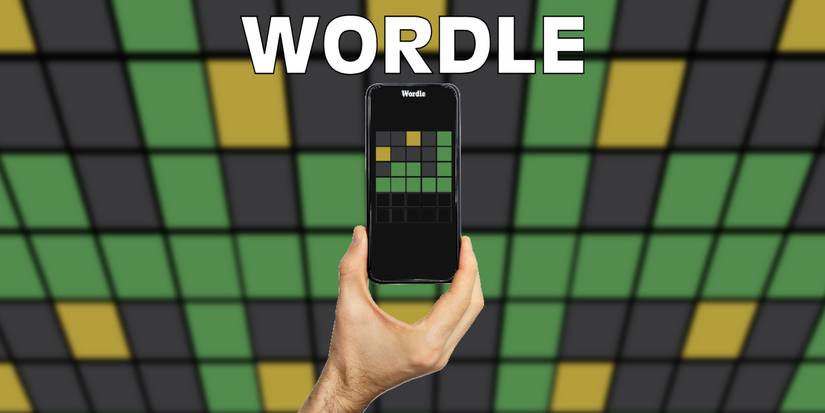
The allure of Wordle lies in its simplicity: a grid of empty tiles, a color-coded feedback system (green for correct placement, yellow for correct letter, gray for incorrect), and a "Share" button that allows players to post their results as a spoiler-free grid of colored squares. This social sharing mechanism is widely credited with the game’s viral explosion, turning a solitary linguistic challenge into a competitive social event.
Chronology: From a Love Letter to a Media Empire
The history of Wordle is as much a story of romance as it is of software engineering.
2013–2020: The Prototype
Josh Wardle, a software engineer known for creating experimental social projects like Place and The Button for Reddit, originally developed a prototype of Wordle in 2013. The game was intended as a gift for his partner, Palak Shah, who shared a love for word games like The New York Times Crossword. However, the initial version was bogged down by a massive dictionary of over 12,000 five-letter words, many of which were too obscure to be fun. The project was shelved for nearly a decade.
2021: The Pandemic Pivot
During the COVID-19 lockdowns, Wardle and Shah returned to the game. Shah refined the word list, whittling it down from 12,000 to roughly 2,500 common five-letter words that an average person would recognize. In October 2021, Wardle made the game public on a simple, ad-free website. On November 1, 2021, the game had 90 players. By the end of December, that number had surged to 300,000, propelled by the introduction of the emoji-based results grid.
2022: The New York Times Acquisition
By January 2022, Wordle had millions of daily players. Recognizing the game’s synergy with its existing suite of puzzles, The New York Times (NYT) announced on January 31, 2022, that it had purchased Wordle from Wardle for a price "in the low seven figures." The transition sparked fears among the player base regarding potential paywalls or changes to the game’s difficulty, though the NYT committed to keeping the game free to play.
2023–Present: Editorial Refinement
Under NYT ownership, the game moved from a static, pre-programmed script to a more curated experience. The Times appointed Tracy Bennett as the first dedicated Wordle editor in late 2022. Bennett’s role involves monitoring the upcoming word list to ensure that solutions are appropriate, timely, and not excessively repetitive.
Supporting Data: Decoding the Word List
The technical architecture of Wordle is unique because it is "client-side." When a user loads the website, the browser downloads a script that contains the entire list of past and future answers. This has allowed data miners to identify every word remaining in the game’s original database.
The Original Count and Removals
At the time of the NYT acquisition, the game contained 2,315 potential solutions. Shortly after taking ownership, the NYT removed six specific words from the future list:
- Agora (Obscurity)
- Pupal (Obscurity)
- Lynch (Sensitivity)
- Slave (Sensitivity)
- Wench (Sensitivity)
- Fibre (Regional spelling variation)
Categorization of Remaining Words
As of the latest updates, there are approximately 1,700 words remaining in the queue. These words are distributed across the alphabet, though the frequency of certain starting letters remains a key point of strategy for players.
- High-Frequency Starters: Words beginning with ‘S’, ‘C’, ‘B’, and ‘A’ dominate the remaining list.
- The "Trap" Words: A significant portion of the unused list consists of words ending in "-IGHT" or "-ATCH" (e.g., MIGHT, LIGHT, SIGHT, FIGHT). These are known as "traps" because players can exhaust their six guesses by changing only the first letter while the last four remain correct.
Statistical Strategy
Data analysis of the remaining words has led to the rise of "optimal" starting words. While "ADIEU" remains popular for its vowel density, linguistic researchers and the NYT’s own WordleBot suggest that "CRANE," "SLATE," or "TRACE" are statistically superior for narrowing down the remaining unused pool.

Official Responses and Editorial Control
The transition to The New York Times brought a level of professional oversight that the original version lacked. In various interviews, NYT representatives and editor Tracy Bennett have addressed the community’s most pressing concerns.
On Difficulty and "Hard Mode"
The Times has consistently denied allegations that they made the game "harder" after the purchase. "The list of words was largely set before we even acquired the game," Bennett noted in a 2023 feature. However, the editorial team does occasionally skip words that might be too obscure or might coincide uncomfortably with tragic world events.
Editorial Philosophy
The NYT’s goal is to maintain the "Aha!" moment. Bennett explains that the ideal Wordle word is one that is common enough to be in a person’s vocabulary but has a letter structure that isn’t immediately obvious. The editorial team also works to ensure that the game doesn’t feature too many "plurals ending in S," as those are generally considered less satisfying solutions.
The "WordleBot" Innovation
To support the community, the NYT launched WordleBot, an AI-driven tool that analyzes a player’s performance after they complete the puzzle. This official response to the game’s popularity provides data on how many "steps" were taken versus the "perfect" mathematical path, further legitimizing the game as a skill-based endeavor.

Implications: The "Wordle-ification" of Digital Media
The success of Wordle has had profound implications for the gaming industry and digital subscription models.
The Rise of the "Daily" Format
Wordle proved that "less is more." Following its success, a wave of "le" games emerged:

- Heardle: Identifying songs from short clips.
- Worldle: Identifying countries by their geographical outlines.
- Quordle/Octordle: Solving four or eight Wordles simultaneously.
- Connections: The NYT’s follow-up hit, which uses a similar daily-reset mechanic.
A New Model for Retention
For The New York Times, Wordle was a masterstroke in audience retention. By integrating the game into their "Games" app, they successfully funneled millions of casual players toward their news and cooking subscriptions. It demonstrated that a simple word game could be as effective a "top-of-funnel" marketing tool as a breaking news alert.
Cognitive and Social Benefits
Linguists and psychologists have noted that Wordle provides a "low-stakes" cognitive workout. The social aspect—sharing those colored grids—helped maintain a sense of community during periods of social distancing. It normalized the idea of "digital puzzles" as a healthy part of a daily routine, rather than a time-wasting distraction.

The Finite Future
The most intriguing implication is the game’s expiration date. While the NYT can theoretically add new words to the list indefinitely, the original 2,315-word set represents a specific era of the game. As we move toward 2027, the "Dictionary of Wordle" will eventually run dry, forcing the Times to decide whether to recycle the list, expand into more obscure vocabulary, or evolve the format into something entirely new.
For now, the remaining 1,700+ words stand as a testament to the power of a simple idea, a clean interface, and the universal human desire to solve a mystery, one five-letter word at a time.