Remembering Pearl Harbor: The Day That Ignited America’s Entry into World War II
December 7, 1941, dawned as a seemingly peaceful Sunday in Hawaii, but by its close, the world had irrevocably changed. Without warning or a declaration of war, Imperial Japan launched a devastating surprise aerial assault on the United States naval base at Pearl Harbor. This audacious act of aggression, a tactical masterpiece for Japan but a profound strategic miscalculation, plunged the United States into the Second World War and reshaped the course of 20th-century history.
A Gambit on a Sunday Morning: The Attack on Pearl Harbor
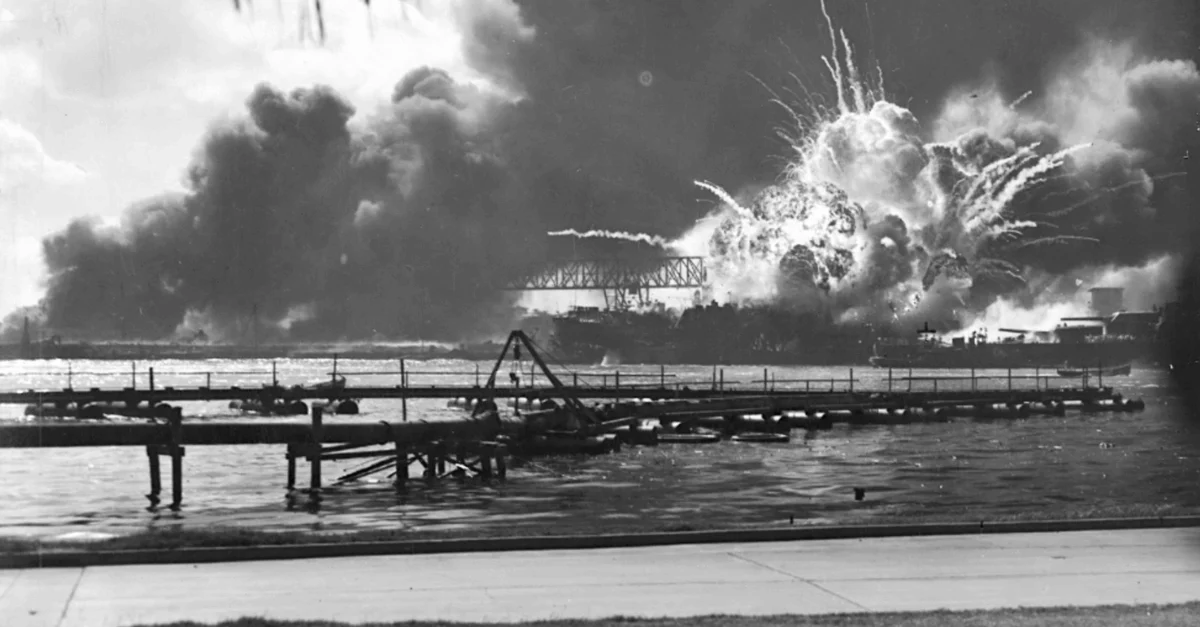
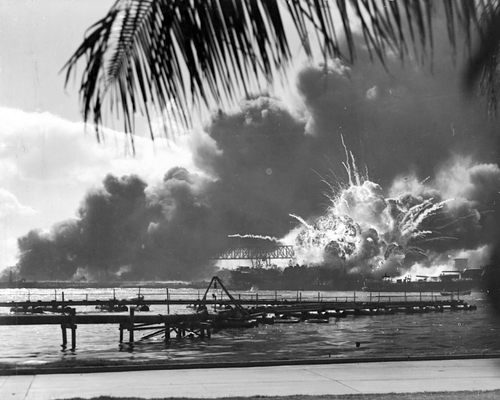
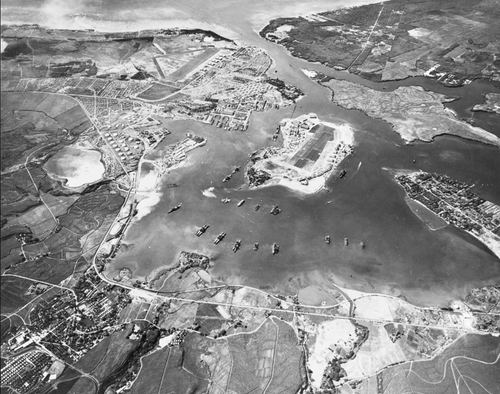
The morning of December 7, 1941, began with an eerie calm over the Hawaiian island of Oahu. At 7:55 AM local time, this tranquility was shattered by the roar of Japanese aircraft and the explosion of bombs and torpedoes. A massive aerial fleet, launched from six Imperial Japanese Navy aircraft carriers, descended upon Pearl Harbor, the primary home of the U.S. Pacific Fleet. The attack was executed in two waves, involving 353 Japanese fighters, bombers, and torpedo planes, targeting battleships, airfields, and other critical infrastructure.
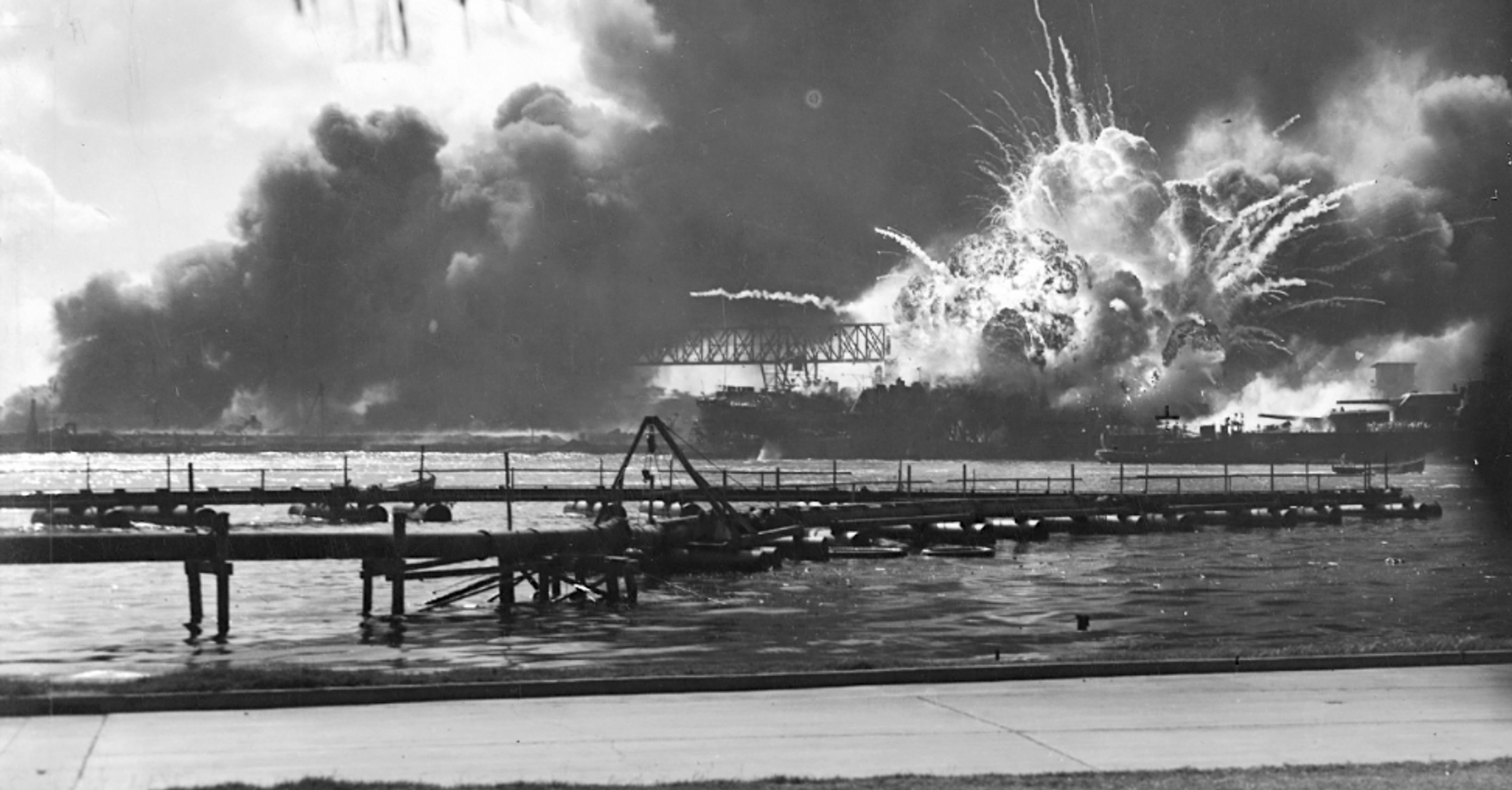
The surprise was absolute. Within minutes, the harbor became a scene of unimaginable chaos and destruction. "Battleship Row," where seven of the U.S. Navy’s eight battleships were moored, bore the brunt of the assault. The USS Arizona was struck by an armor-piercing bomb that ignited its forward magazine, causing a catastrophic explosion that tore the ship apart and killed 1,177 crew members, many of whom remain entombed within its sunken hull. The USS Oklahoma capsized after being hit by multiple torpedoes, trapping over 400 sailors inside. Other battleships, including the USS West Virginia, California, and Nevada, sustained severe damage.
Beyond the battleships, airfields across Oahu, such as Hickam Field and Wheeler Field, were targeted, destroying nearly 200 U.S. aircraft on the ground before they could even take off. Japanese pilots, trained for precision and equipped with specialized shallow-water torpedoes that American intelligence believed impossible to use in Pearl Harbor, inflicted devastating damage. By the time the second wave departed, leaving behind a harbor engulfed in smoke and fire, 2,403 Americans were dead, and 1,178 wounded. Eighteen U.S. Navy ships were sunk or seriously damaged. The Japanese, in stark contrast, lost just 29 aircraft and five midget submarines.
Despite the crushing blow, the attack failed to achieve its ultimate strategic objective. Crucially, the U.S. Pacific Fleet’s three aircraft carriers – USS Enterprise, Lexington, and Saratoga – were out at sea on maneuvers and escaped unharmed. Additionally, the vital fuel oil storage depots and shipyard facilities at Pearl Harbor remained largely intact. These omissions would prove critical, allowing the U.S. Navy to eventually recover and project power across the Pacific.
The Road to War: Japan’s Imperial Ambitions and Resource Crisis
The attack on Pearl Harbor was not an isolated act but the culmination of decades of Japanese expansionist policy and a growing resource crisis, exacerbated by global geopolitical shifts.
A Rising Sun: Japan’s Expansionist Drive
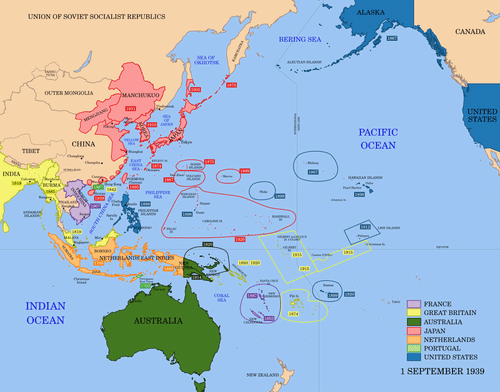
Following its rapid modernization during the Meiji Restoration (1868), Japan harbored ambitions to become a major world power, emulating Western imperial states. Its limited natural resources fueled a desire to establish a vast empire in East Asia and the Pacific. Early victories against China in the First Sino-Japanese War (1894-95) and Russia in the Russo-Japanese War (1904-05) cemented its regional dominance, leading to the acquisition of Taiwan, the Pescadores Islands, and eventually the annexation of Korea in 1910.
During World War I, Japan sided with the Allies, gaining control over former German colonies in the Pacific, including the Mariana, Caroline, and Marshall Islands. These territorial gains brought Japan closer to U.S. interests in the Philippines and Guam, setting the stage for future confrontation.
Japan’s Military Government and Ideological Underpinnings
In the 1930s, Japan’s democratic institutions weakened, and a powerful military government, fueled by ultranationalist ideology, rose to prominence. This shift was driven by a confluence of factors: social and economic hardships exacerbated by the Great Depression, a rapidly growing population straining domestic resources, and a pervasive belief in Japan’s racial and cultural superiority. Emperor Hirohito, though a constitutional monarch, increasingly served to legitimize the decisions of this militarist leadership. The military promised to protect Japan against perceived foreign threats and secure the resources necessary for its "destiny."
The military’s expansion required vast quantities of raw materials that Japan simply did not possess. By 1937, military spending consumed 65-75% of the national budget, more than double the figure from 1931, putting an immense strain on the economy.
The Manchurian Incident and Escalation in China
Japan openly defied international norms and the League of Nations by invading Manchuria in September 1931. This resource-rich region of northeastern China was strategically vital, and Japan established the puppet state of Manchukuo in 1932. The League’s failure to impose effective sanctions only emboldened Japan, leading to its withdrawal from the organization in March 1933.
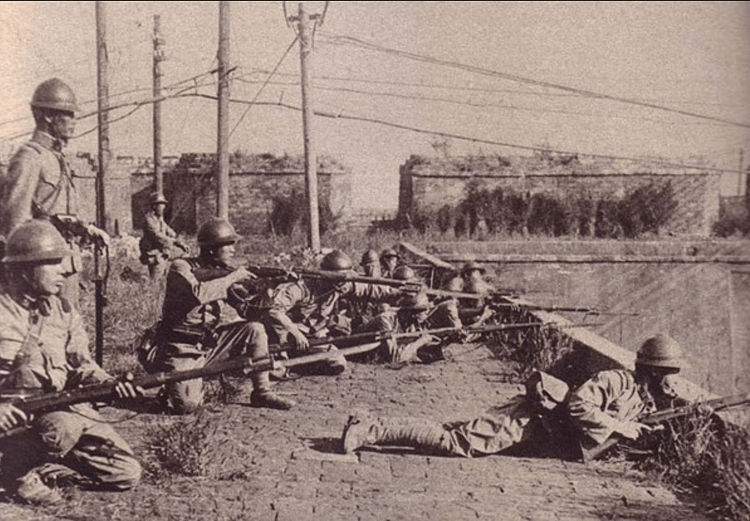
The aggression escalated into a full-scale war with China in July 1937, marking the beginning of the Second Sino-Japanese War. Japan sought to protect its assets and suppress Chinese nationalism, but the conflict quickly devolved into brutal occupation, exemplified by atrocities like the "Rape of Nanking." As the war dragged on, Japan turned to Southeast Asia in its relentless search for imperial glory and crucial natural resources.
The Critical Need for Resources and the "Southern Strategy"
Japan’s war economy was voracious, demanding immense imports of oil (Japan produced only 6% of its needs), iron ore, coal, lead, tin, rubber, and nickel. A significant portion of its oil, at least two-thirds in 1936, came from the United States. Recognizing its vulnerability, Japan began stockpiling, but it was clear this would not suffice for a prolonged conflict.
The Japanese military was divided between a "Northern Strategy" (focusing on Siberia and confrontation with the Soviet Union) and a "Southern Strategy" (targeting resource-rich Southeast Asia). A crushing defeat by Soviet forces at the Battle of Nomunhan (Khalkhin Gol) in 1939 solidified the navy’s argument for the Southern Strategy. The fall of France and the Netherlands to Nazi Germany in 1940 further encouraged this path, as their colonial holdings – particularly the oil-rich Dutch East Indies (Indonesia) and rubber-producing British Malaya – appeared vulnerable. Japan’s occupation of northern French Indochina in September 1940 and southern Indochina in July 1941 was a direct move to secure these resources and establish forward operating bases.
The United States’ Stance: Isolationism Under Strain
Through the late 1930s, the United States, while increasingly concerned by Japan’s aggressive expansion, largely maintained a policy of isolationism, focusing on domestic issues and avoiding entanglement in foreign conflicts.
American Neutrality and Economic Pressure
Despite public sentiment for neutrality, President Franklin D. Roosevelt’s administration began to take steps to impede Japanese aggression. Initially, these were moral condemnations and limited aid to China. However, as Japan’s actions grew more brazen, the U.S. began to exert economic pressure. By June 1941, U.S. economic sanctions blocked the export of vital materials like crude oil, gasoline, copper, iron, and steel to Japan. Britain and the Dutch East Indies soon followed suit, enacting similar embargoes. Japanese financial assets in U.S. banks were frozen, severely crippling Japan’s ability to purchase necessary resources.
This "ABCD Line" (America, Britain, China, Dutch East Indies) effectively cut off Japan’s lifeline of raw materials. The U.S. hoped these measures would compel Japan to halt its expansion and withdraw from China and Indochina. Instead, the embargo created a strategic dilemma for Japan: either abandon its imperial ambitions and suffer economic collapse or expand further to forcibly acquire the necessary resources.
Diplomatic Deadlock and Strategic Miscalculation
The diplomatic channels between Washington and Tokyo grew increasingly strained. The U.S. demanded Japan cease its aggression, while Japan saw the U.S. as the primary obstacle to its destiny. The economic stranglehold left Japan with a stark choice. Rather than retreating, the militarist government resolved to escalate.
Admiral Yamamoto Isoroku, Commander-in-Chief of the Combined Fleet, understood that Japan could not win a prolonged war against the United States due to America’s vastly superior industrial capacity. However, he believed a swift, decisive pre-emptive strike against the U.S. Pacific Fleet at Pearl Harbor could buy Japan crucial time – perhaps six months to a year – to consolidate its gains in Southeast Asia. The hope was that such a devastating blow would cripple the U.S. Navy and demoralize the American public, forcing the U.S. to negotiate a peace deal that would allow Japan to retain its "Greater East Asia Co-Prosperity Sphere." This audacious gamble was a desperate attempt to avoid a protracted war Japan knew it could not win. Yamamoto famously remarked, "I fear all we have done is to awaken a sleeping giant and fill him with a terrible resolve." His words would prove prophetic.
The Execution: Planning and Operational Details
The plan for Pearl Harbor was a meticulously crafted operation, shrouded in secrecy and daring in its ambition.
Yamamoto’s Daring Plan
Admiral Yamamoto, initially against war with the U.S., became the driving force behind the Pearl Harbor attack once the decision for war was made. He argued passionately against more conventional plans to attack the Philippines, insisting that a decisive blow against the U.S. Pacific Fleet was paramount. His plan hinged on absolute surprise and the innovative use of aircraft carriers as the primary offensive weapon. Key to the success were specialized shallow-water torpedoes, developed by Japanese engineers, which could operate effectively in Pearl Harbor’s relatively shallow waters, a capability the U.S. military believed impossible. Commander Minoru Genda, a brilliant naval aviator, conducted the feasibility study and refined the attack strategy, emphasizing the need for coordinated dive-bomber and torpedo attacks.
The task force, comprising six aircraft carriers, two battleships, two heavy cruisers, one light cruiser, nine destroyers, and three submarines, departed from Japan in late November 1941, maintaining strict radio silence and following a northern, seldom-traveled route to avoid detection.
Intelligence Blunders and Missed Warnings
Despite Japan’s efforts, the U.S. did have fragments of intelligence. American codebreakers, through "Magic" intercepts, had deciphered Japanese diplomatic communications indicating an impending attack somewhere in the Pacific. However, the exact target remained a mystery, with the Philippines generally considered the most likely location. A "war warning" was indeed sent to commanders in the Pacific, including Hawaii, but its urgency and specificity were not fully conveyed or understood.
On the morning of December 7, several critical warnings were tragically missed or misinterpreted. A U.S. Navy destroyer sank a Japanese midget submarine attempting to enter Pearl Harbor hours before the main attack, but this incident was not elevated to the highest command due to communication issues. Similarly, a newly installed radar station on Oahu detected the incoming first wave of Japanese aircraft, but the inexperienced operator’s report was dismissed by a superior officer who assumed the blips were a flight of friendly B-17 bombers due from the mainland. These crucial intelligence failures, compounded by inter-service rivalries and a general complacency about the possibility of a large-scale attack on Pearl Harbor, allowed Japan to achieve total surprise.
Furthermore, the formal Japanese declaration of war was intentionally delayed. It was meant to be delivered to the U.S. State Department 30 minutes before the attack, but bureaucratic delays in Tokyo and translation issues in Washington meant it was presented well after the bombs had begun to fall, cementing the perception of a treacherous, unprovoked assault.
Immediate Aftermath and Official Responses
The reverberations of Pearl Harbor were felt instantly across the globe, fundamentally altering the geopolitical landscape.
"A Date Which Will Live in Infamy"
Within hours of the attack, news reached Washington D.C. On December 8, 1941, President Franklin D. Roosevelt addressed a joint session of the U.S. Congress, delivering one of the most famous speeches in American history. He denounced December 7, 1941, as "a date which will live in infamy," and requested a declaration of war against Japan. The vote in Congress was nearly unanimous, with only one dissenting voice.
Great Britain, already at war with Nazi Germany, and other Allied nations swiftly followed suit, declaring war on Japan. In turn, Germany and Italy, bound by the Tripartite Pact, declared war on the United States on December 11, formally drawing America into the global conflict. The attack instantly shattered America’s deep-seated isolationist sentiment, unifying a previously divided nation with a surge of patriotism and a fierce determination to seek retribution. Recruitment offices were inundated, and the vast industrial might of the United States began to mobilize for total war.
Initial Japanese Triumphs
Pearl Harbor was not an isolated incident but part of a coordinated series of Japanese attacks across the Pacific. Simultaneous assaults targeted U.S. forces in the Philippines, Guam, and Wake Island, as well as British holdings in Malaya and Hong Kong. The day after Pearl Harbor, Japanese aircraft sank two key British warships, HMS Prince of Wales and HMS Repulse, off the coast of Malaya, demonstrating the devastating effectiveness of air power against capital ships.
These initial attacks marked the beginning of a rapid and brutal Japanese expansion throughout Southeast Asia and the Pacific in early 1942. Within months, Japan had captured vast territories, including the Philippines, Malaya, Singapore, Burma, and the Dutch East Indies, securing the very resources it had gone to war to obtain.
Enduring Implications and Legacy
The attack on Pearl Harbor was a pivotal moment, not just for the United States but for the entire world, with profound and lasting implications.
The Tipping Point of World War II
Pearl Harbor transformed World War II into a truly global conflict. The entry of the United States, with its immense industrial capacity and manpower, dramatically shifted the balance of power. No longer an "arsenal of democracy" from afar, America became a direct combatant, fighting a two-front war against the Axis powers in both Europe and the Pacific. This decisive event effectively ended American isolationism for good, ushering in an era of U.S. global leadership that continues to this day.
The attack initiated the long and brutal Pacific War, characterized by island-hopping campaigns, fierce naval battles, and immense casualties. The initial Japanese triumphs eventually gave way to the relentless Allied counteroffensive, culminating in the devastating consequences for Japan in August 1945 with the dropping of atomic bombs on Hiroshima and Nagasaki, bringing World War II to its grim conclusion.
A Strategic Miscalculation
While a tactical triumph, the Pearl Harbor attack proved to be a catastrophic strategic blunder for Japan. Yamamoto’s prescient warning about "awakening a sleeping giant" proved accurate. The failure to destroy the U.S. aircraft carriers and critical fuel depots meant that the U.S. Navy could rapidly rebuild and project power. Moreover, the attack ignited a unified and unwavering American resolve to fight until unconditional surrender, a resolve Japan had desperately hoped to avoid. Instead of buying time for consolidation, Pearl Harbor galvanized the United States into an industrial and military powerhouse that would ultimately overwhelm Japan.
Lessons Learned and Enduring Symbolism
The attack underscored critical lessons regarding intelligence coordination, military preparedness, and the devastating potential of surprise attacks. It led to significant reforms in U.S. military intelligence and defense strategies.
Today, Pearl Harbor remains a powerful symbol of national resilience, sacrifice, and determination. The USS Arizona Memorial stands as a solemn tribute to those who perished on that "Day of Infamy," ensuring that the memory of December 7, 1941, continues to resonate as a stark reminder of the costs of war and the enduring spirit of a nation united in adversity.