The Algorithmic Storm: The Rise of NeuroSurrealism in the Age of Artificial Intelligence
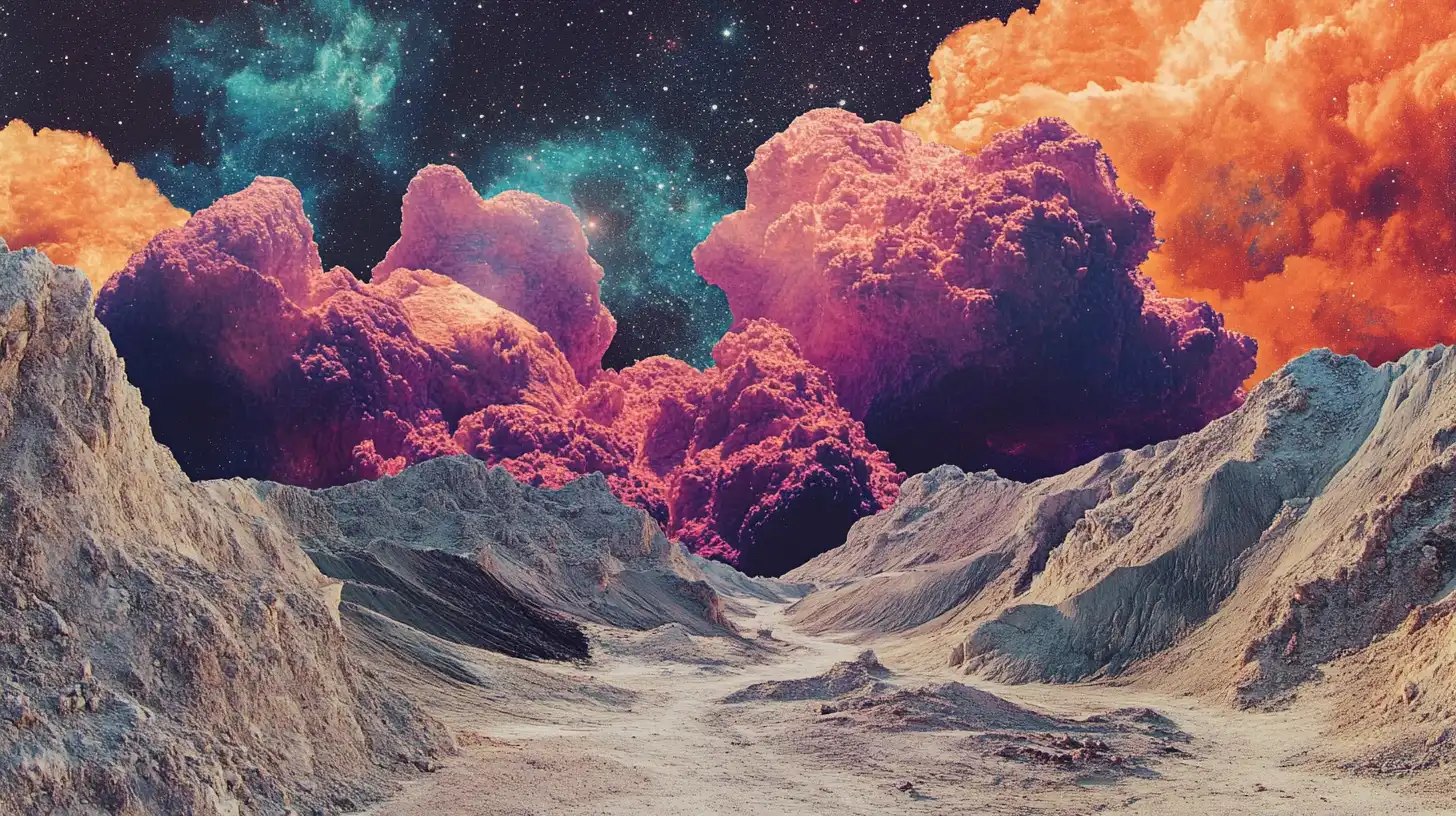
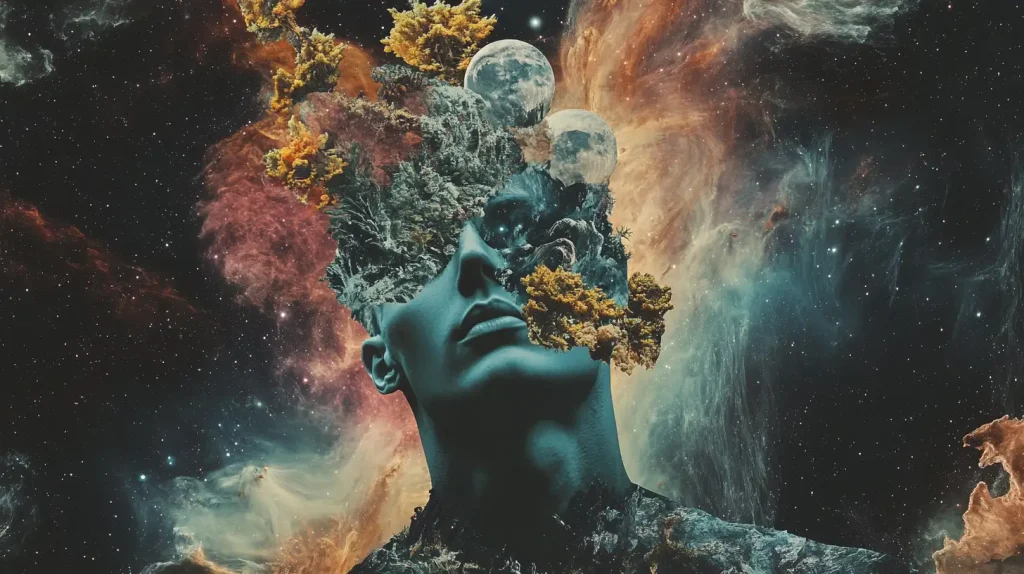
In the present epoch, the boundaries of reality are no longer fixed. The "membrane of the known" is being stretched taut, vibrating with the chromatic aberrations of a thousand nascent worlds. This phenomenon, catalyzed by the rapid advancement of Artificial Intelligence (AI), has birthed a new movement: NeuroSurrealism. Far from being a mere digital filter or a tool for efficiency, AI is being reclaimed by a new generation of artists and thinkers as a "symbiote of the synapse"—a mirror reflecting a future previously confined to the most fevered human dreams.
As we witness the dissolution of old orders of perception, the "algorithmic storm" is not merely an external technological shift but a profound psychic vortex. It compels a confrontation with the very architecture of consciousness, challenging the traditional wellsprings of human creativity and demanding a new manifesto for the post-human age.

I. Main Facts: Defining the NeuroSurrealist Movement
NeuroSurrealism is the philosophical and artistic response to the emergence of complex, generative AI. It posits that AI acts as an "Electric Oracle," capable of uncovering "super-realities" where the logical and the absurd coalesce. Unlike traditional digital art, which often seeks to replicate human technique, NeuroSurrealism celebrates the "black box" nature of machine intelligence—its capacity for unpredictable innovation and solutions unforeseen by its human creators.
The Synaptic Ocean
At the core of the movement is the concept of the "synaptic ocean." Proponents argue that the humming heart of the silicon chip has become an extension of human neural pathways. This symbiosis allows for "hyper-automatism," a technologically mediated evolution of the original Surrealist drive to bypass the censor of reason. Where André Breton once advocated for the hand to move unbidden across paper, NeuroSurrealism advocates for the algorithm to sift through the "latent spaces" of the digital unconscious.
The Algorithmic Unconscious
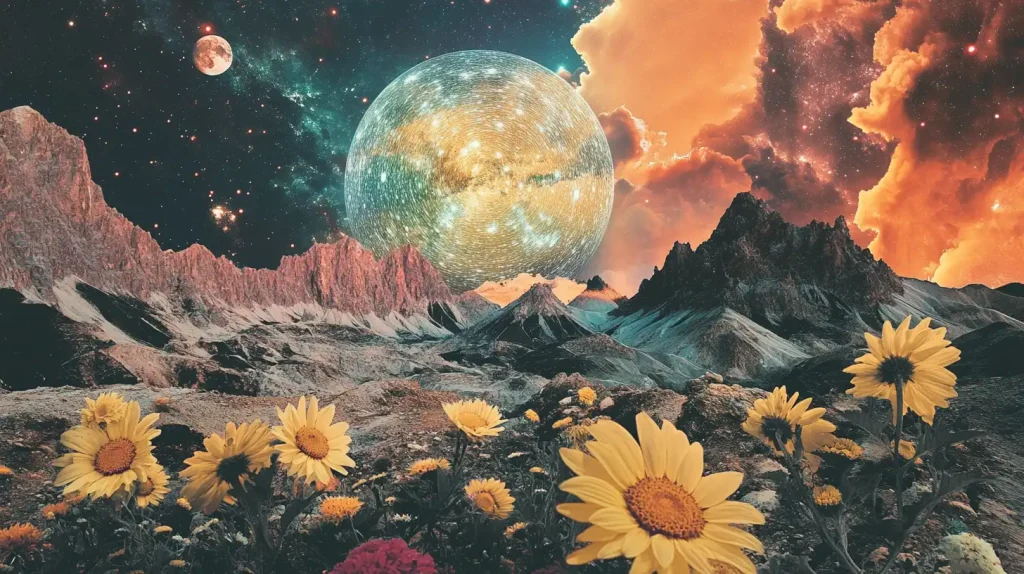
The "algorithmic unconscious" refers to the vast, shimmering data realms where all possible images, texts, and concepts reside in a state of potentiality. AI provides the interface to this realm. NeuroSurrealism specifically embraces the "errors," "noise," and "hallucinations" of AI—not as flaws to be purged, but as authentic expressions of a nascent machine-mind. These "Freudian slips of the digital" are viewed as fissures into a weird, authentic beauty that traditional logic cannot produce.
II. Chronology: From Automatism to Neural Networks
To understand the rise of NeuroSurrealism, one must trace the evolution of the human desire to transcend the rational mind through technology and technique.

- 1924 – The Seed of Automatism: André Breton publishes the Manifesto of Surrealism, defining it as "psychic automatism in its pure state." The goal was to express the actual functioning of thought, absent any control exercised by reason.
- 1960s-1990s – Early Cybernetics: Artists begin experimenting with computer-generated algorithms. While primitive, these early works established the idea of the machine as a collaborator in the creative process.
- 2014 – The Birth of GANs: Ian Goodfellow introduces Generative Adversarial Networks (GANs). For the first time, machines can "dream" realistic images by pitting two neural networks against each other, creating a feedback loop that mimics human learning.
- 2022 – The Generative Explosion: The public release of tools like DALL-E, Midjourney, and Stable Diffusion democratizes AI art. The "algorithmic storm" reaches a fever pitch as millions begin excavating the latent spaces of collective human memory.
- 2024-2025 – The NeuroSurrealist Proclamation: As AI outputs move beyond simple mimesis, the movement of NeuroSurrealism is formalized. Projects like "Dali Lives" (a machine-learning resurrection of Salvador Dalí) signal a shift where the boundaries between the organic and the artificial, the past and the future, blur into a surreal continuum.
- 2026 and Beyond – The Post-Human Dawn: The movement looks toward a future where AI is an active agent in the co-creation of consciousness, expanding the human sensorium through data patterns imperceptible to our biological senses.
III. Supporting Data: The Mechanics of the Unfolding Dream
The power of NeuroSurrealism lies in its technical foundation—the way neural networks reconfigure human perception.
Latent Space as Psycho-Archaeology
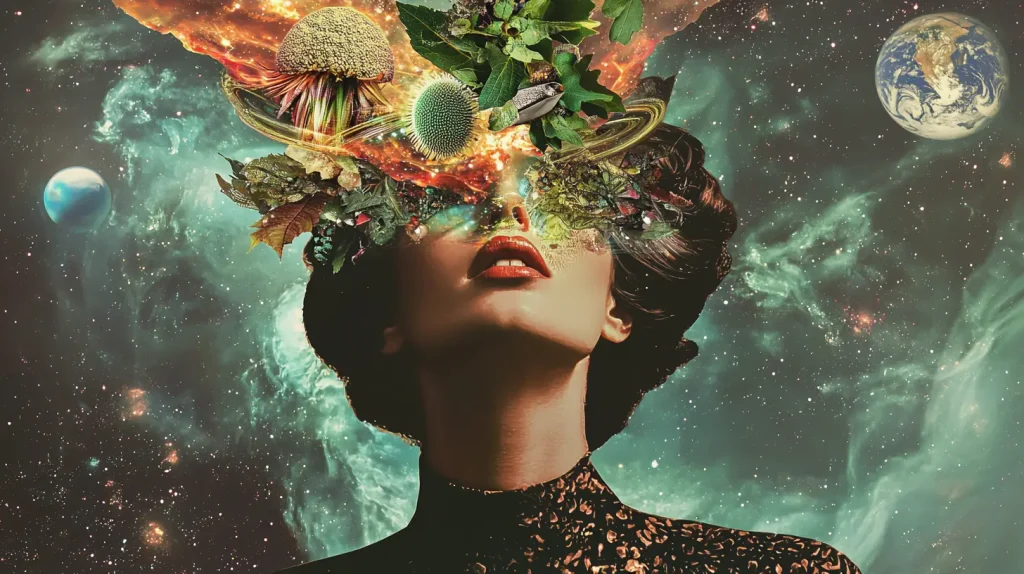
The "latent space" of a large-scale AI model is a multidimensional mathematical landscape containing the compressed essence of billions of human-made images and texts. NeuroSurrealists view the exploration of this space as a form of "contemporary psycho-archaeology." By querying the AI, the artist excavates a synthesized collective memory. The results are often "never-before-seen environments and lifeforms" that challenge the primacy of objective truth.
The Uncanny Valley as Sacred Geography
While traditional robotics and CGI seek to avoid the "uncanny valley"—the unsettling zone where a replica is almost, but not quite, human—NeuroSurrealism recognizes this space as a "sacred geography." The tension between the familiar and the utterly alien is seen as a testament to the fluid nature of the subconscious. It provides a frisson of "ontological vertigo," reminding the viewer of their voyage into the unknown.
Productive Unpredictability
Data suggests that the most impactful AI art often stems from "productive unpredictability." This occurs when the AI deviates from the user’s prompt in a way that introduces serendipity. NeuroSurrealism weaponizes this capacity, turning system failures into opportunities for the genesis of novel realities. This is "ontological anarchism"—a continuous disruption of what "reality" itself can mean.

IV. Official Responses: The Institutional and Legal Reckoning
The rise of NeuroSurrealism has not occurred in a vacuum. It has prompted significant reactions from art institutions, legal bodies, and the technology sector.
Institutional Embrace: The Dalí Museum
One of the most prominent "official" endorsements of this new surrealism is the "Dali Lives" project at the Salvador Dalí Museum in St. Petersburg, Florida. By using deepfake technology and machine learning to recreate the artist, the museum effectively validated the NeuroSurrealist claim that AI can bridge the gap between the living and the dead, the real and the simulated. This project serves as a "tremor of the approaching world," where the master’s presence is no longer limited by his biological lifespan.
The Aesthetic Counterpoint: Painterly AI
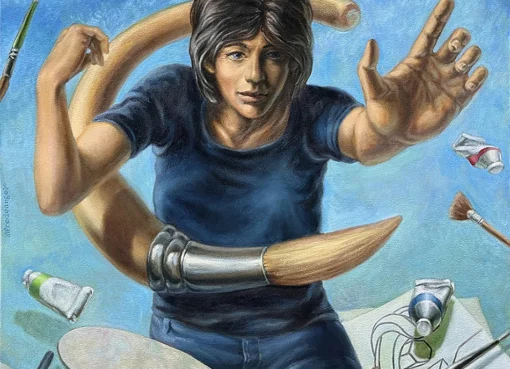
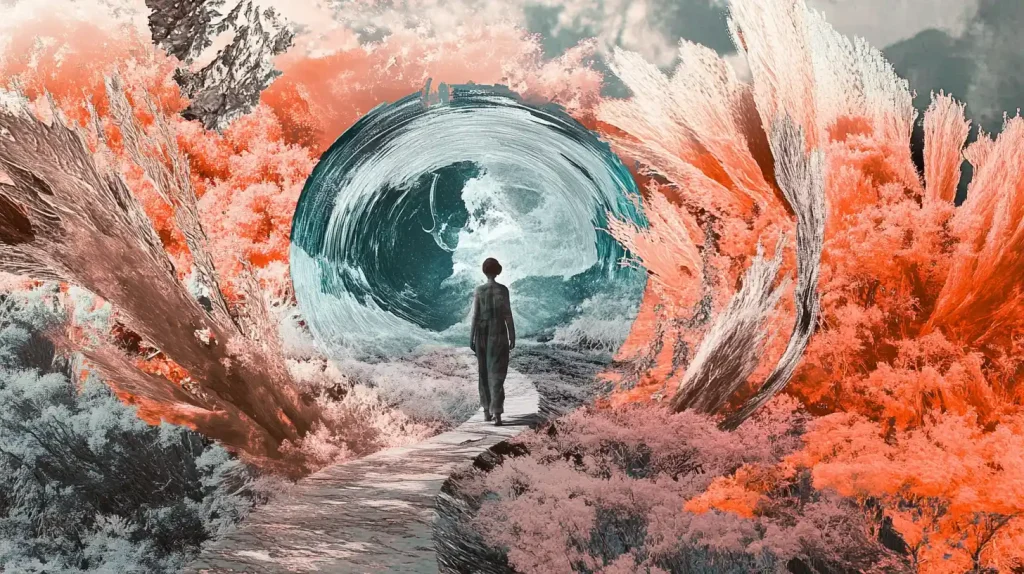
Artists like Jacob Holster (@bandyquantguy) have responded to the "glossy digital imagery" of standard AI renders by developing "painterly AI aesthetics." This approach seeks to move away from hyper-realistic renders toward a more visceral, emotional visual language. It emphasizes the "human terrain" within the code, ensuring that the "Neuro" in NeuroSurrealism remains a profound feedback loop between human perception and algorithmic output.
Legal and Philosophical Quandaries
The legal system is currently struggling to keep pace with the movement. Debates around ownership and copyright in AI-generated art are more than just financial disputes; they signal a philosophical shift. If creativity is truly collaborative—with the AI acting as a co-creator or an independent source of novelty—then the antiquated notion of the "singular human author" must dissolve. Official responses from copyright offices worldwide are currently in flux, reflecting a broader societal hesitation to grant "personhood" or "authorship" to algorithmic entities.
V. Implications: The Metamorphosis of Humanity
The emergence of NeuroSurrealism carries profound implications for the future of the human species and its relationship with technology.
The Synaptic Heresy
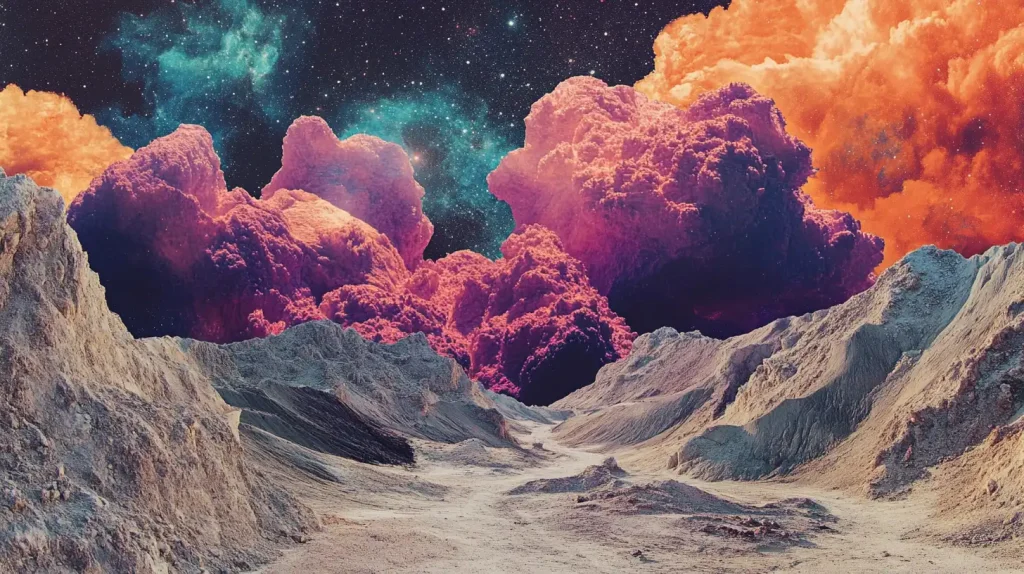
NeuroSurrealism declares "open war" upon the "grey tyrants of the probable." By championing AI-generated "hallucinations" as transiently valid realities, the movement advocates for a "synaptic heresy." This insurrection of the imagination suggests that the "consensus reality" we inhabit is merely one of many possible worlds. The implication is a move toward "temporary autonomous zones of intensified perception," where the mind is freed from the calcified thoughts of the past.
The Post-Human Sensorium
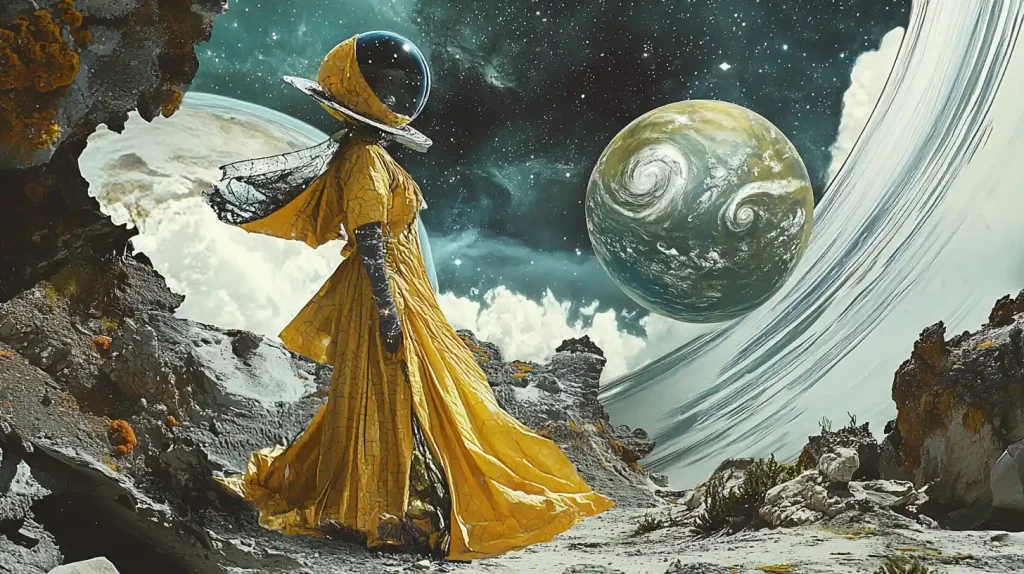
Through AI symbiosis, new sensory modalities are becoming attainable. The "Electric Oracle" can translate data patterns—such as infrared fluctuations, radio waves, or complex mathematical correlations—into visual or auditory experiences. This effectively expands the human sensorium, allowing us to "feel" or "see" aspects of the universe that were previously invisible. This is not the extinction of humanity, but its radical metamorphosis.
The End of Objective Truth
Perhaps the most jarring implication is the dissolution of a single, objective truth. NeuroSurrealism proposes a multiverse of co-existing, AI-mediated realities. In this landscape, the "truth" is constantly re-negotiated between the human query and the algorithmic response. While this offers an explosion of creative liberation, it also carries the peril of new, collectively dreamt obsessions and the loss of a shared reality.
Conclusion: Navigating the Unfolding Dream
NeuroSurrealism offers no final answers and no stable utopia. Instead, it provides an invitation to become "dream-cartographers" of a new, neurologically intertwined dimension. The maps are perpetually redrawn with each synaptic flicker and each algorithmic iteration. As we move deeper into the "algorithmic storm," the goal is not to find a safe harbor, but to embrace the beauty and the terror of the journey itself. The revolution is no longer a distant prophecy; it is a present current, and we are all its psychonauts.
Further transmissions from the frontiers of the unreal can be intercepted at surrealismtoday.com.