The Battle for the Pitch: Redefining the Creative Playbook for the 2026 FIFA World Cup
Main Facts: The High-Stakes Arena of Global Sports Marketing
As the countdown to the 2026 FIFA World Cup begins, the advertising industry finds itself at a critical crossroads. Historically the most-watched sporting event on the planet, the World Cup represents the "Super Bowl of the world," a quadrennial gold rush where brands from Coca-Cola to Adidas invest hundreds of millions of dollars to capture the hearts of billions. However, as the 2026 tournament approaches—set to be the largest in history with 48 teams across the United States, Canada, and Mexico—a growing sentiment of "creative fatigue" has emerged among audiences and industry insiders alike.
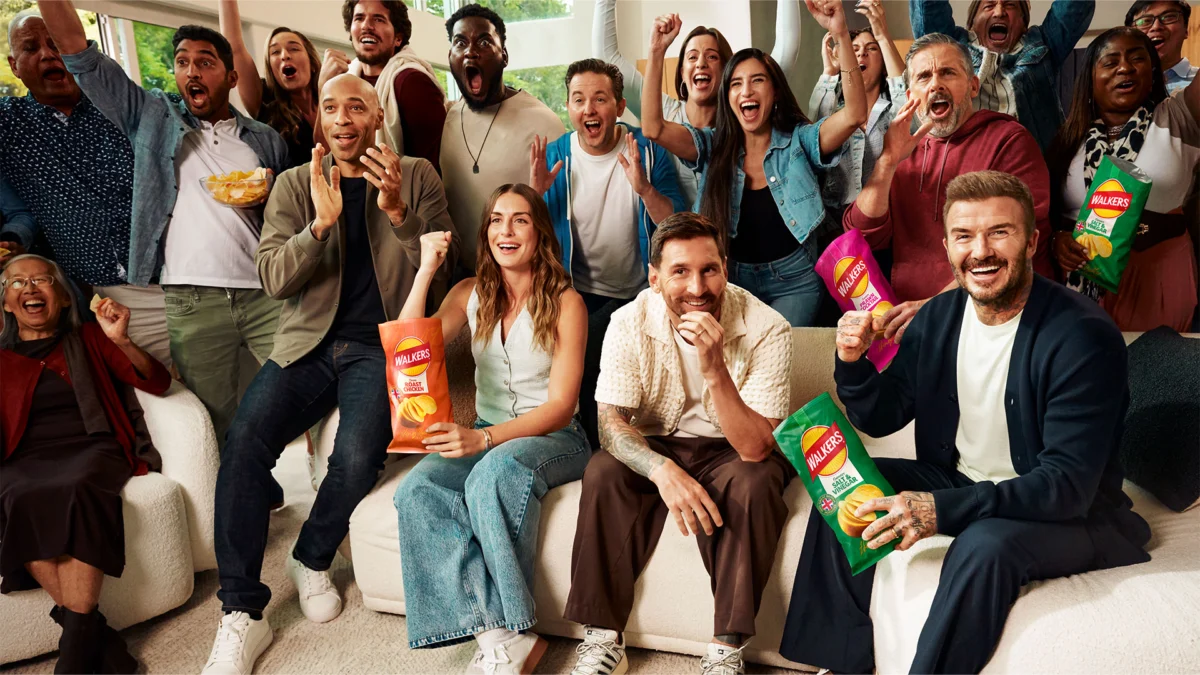
The primary challenge facing advertisers today is the saturation of the "World Cup Formula." For decades, the industry has relied on a reliable, if predictable, playbook: slow-motion cinematic goals, soaring orchestral scores, inspirational speeches about "unity," and a revolving door of celebrity cameos—most notably David Beckham, who has become a ubiquitous symbol of the tournament’s commercial side.
In a recent roundtable discussion, four of the industry’s most influential creative minds—Juan Javier Peña Plaza (Chief Creative Officer at Gut), Harriet Russell-Vick (Global Head of Creative at Agent42), Shelley Smoler (Chief Creative Officer at Lucky Generals), and Will Brookwell (Creative Director at Run Deep)—convened to dissect the current landscape. Their consensus? While the stakes have never been higher, the creative risks have never been more necessary. To stand out in 2026, brands must move beyond the "parody-ready" tropes of the past and tap into the raw, often messy reality of modern fan culture.
Chronology: From Local Passion to Global Homogenization
The evolution of World Cup advertising reflects the broader shifts in global media consumption over the last forty years. Understanding where we are headed for 2026 requires a look back at how the "standard" was established.
The Golden Age of Cinema (1990s – 2006)
In the 1990s and early 2000s, World Cup ads were cultural events in their own right. Nike’s "Airport" ad (1998) and the "Secret Tournament" (2002) directed by Terry Gilliam redefined the genre. These spots were high-budget, cinematic, and focused on the "Joga Bonito" (Play Beautifully) philosophy. They succeeded because they felt like short films rather than commercials.
The Rise of Digital and Real-Time Engagement (2010 – 2018)
With the advent of Twitter (now X) and Instagram, the focus shifted from the "big TV spot" to real-time marketing. The 2014 World Cup in Brazil saw brands trying to "own the moment" through social media snark and rapid-response graphics. However, this also led to a homogenization of content, as every brand attempted to use the same hashtags and visual language.
The Crisis of Authenticity (2022 – Present)
The 2022 tournament in Qatar brought social and political issues to the forefront, forcing brands to navigate a minefield of controversy. This resulted in many playing it "too safe," retreating into the aforementioned clichés of national pride and generic inspiration. As we move toward 2026, the industry is grappling with a "formula" that has become so predictable it is now frequently parodied on social media, signaling that the traditional playbook may finally be broken.
Supporting Data: The Magnitude of the 2026 Opportunity
The 2026 FIFA World Cup is projected to be a financial behemoth, dwarfing previous iterations in terms of reach and revenue.
- Expanded Reach: With the move from 32 to 48 teams, the number of matches will increase from 64 to 104. This provides nearly 40% more inventory for broadcasters and advertisers.
- The North American Market: The U.S. market represents the world’s largest advertising economy. FIFA expects record-breaking commercial revenue, with projections exceeding $11 billion for the 2023-2026 cycle.
- Viewing Figures: FIFA estimates that the 2026 tournament could reach a cumulative global audience of over 5 billion people.
- Consumer Sentiment: Recent market research indicates that Gen Z and Millennial fans—who will make up the core demographic of the 2026 tournament—prioritize "authenticity" and "humor" over "grandeur." A survey by SportBusiness suggests that 62% of fans are more likely to engage with brands that showcase "the real side of football" rather than polished, celebrity-driven narratives.
Official Responses: Insights from the Creative Frontline
During the CR-hosted discussion, the four panelists provided a roadmap for how brands can navigate the 2026 landscape without falling into the trap of mediocrity.
Juan Javier Peña Plaza (Gut): The Need for "Brave" Creativity
Peña Plaza emphasized that the biggest risk in 2026 is not taking one. "Brands are terrified of the ‘cringe’ factor," he noted. He argued that the most successful campaigns in 2026 will be those that lean into "gut feelings" rather than purely data-driven decisions. For Peña Plaza, the goal is to create work that feels "of the culture" rather than just "about the culture."
Shelley Smoler (Lucky Generals): Avoiding the Parody Trap
Smoler, known for her work on disruptive campaigns, pointed out that World Cup ads have become a sub-genre ripe for mockery. "If you can swap your brand logo for a competitor’s and the ad still makes sense, you’ve failed," she stated. Her advice for 2026 is to find the "uncomfortable truth" in fandom—the heartbreak, the superstitions, and the absurdities—rather than just the "slow-mo glory."
Harriet Russell-Vick (Agent42): The Power of the "On-the-Ground" Experience
Russell-Vick focused on the experiential aspect of the 2026 tournament. With the event spread across three massive countries, the "fan zone" experience will be more fragmented than ever. "Advertisers can’t just rely on a TV spot. They need to be in the bars, the parking lots, and the streets," she said. She highlighted that for 2026, the most effective "ads" might not be videos at all, but physical activations that solve problems for traveling fans.
Will Brookwell (Run Deep): Respecting the Nuance of Fan Culture
Brookwell warned against the "tourist" approach to football advertising. "Fans can smell a fake from a mile away," he cautioned. He argued that David Beckham’s constant presence in ads is a symptom of brands not knowing how to talk to real fans, so they rely on a "safe" legend. For 2026, Brookwell suggests brands look toward grassroots communities and digital-native creators who understand the specific nuances of North American soccer culture.
Implications: The Future of Sports Marketing in a Fragmented World
The shift in strategy for 2026 carries significant implications for the future of the advertising industry.
1. The Death of the "One-Size-Fits-All" Global Campaign
With three host nations and 48 competing countries, the "global" ad is becoming a relic. In 2026, we will likely see a move toward hyper-localized content. A campaign that resonates in Mexico City may fall flat in Vancouver or New York. Brands will need to invest in "modular" creative that can be adapted for specific cultural contexts without losing its core message.
2. The Integration of AI and Personalization
The 2026 World Cup will be the first major tournament where Generative AI plays a central role in creative production. We can expect to see personalized ads where viewers’ favorite players "speak" to them directly, or real-time ad copy that changes based on the score of a match. This level of technical integration will require a closer partnership between creative agencies and tech firms.
3. The "Beckham Effect" and the Search for New Icons
The industry’s over-reliance on retired legends like David Beckham is reaching a tipping point. As the 2026 tournament unfolds, there will be a desperate search for new, diverse faces that represent the modern game. This includes a greater emphasis on stars from the women’s game and "influencer-athletes" who command massive following on platforms like TikTok and Twitch.
4. Purpose-Led Marketing Must Be Genuine
In 2026, "brand purpose" will be under the microscope. Fans are increasingly cynical about brands that "rainbow-wash" or claim to support social causes only during the tournament. To succeed, brands must demonstrate a long-term commitment to the sport, such as investing in local pitches or supporting youth academies, rather than just using social issues as a backdrop for a 60-second commercial.
Conclusion: The Final Whistle on the Old Playbook
The 2026 FIFA World Cup represents more than just a sporting event; it is a laboratory for the future of global communication. The insights from Peña Plaza, Russell-Vick, Smoler, and Brookwell suggest that the era of the "safe," formulaic World Cup ad is coming to an end.
As the world prepares for a tournament of unprecedented scale, the brands that "win" will not be those with the biggest budgets or the most famous celebrities. Instead, the victors will be the ones brave enough to embrace the chaos of real fan culture, leverage new technologies for personalization, and tell stories that feel as authentic and unpredictable as the game itself. In 2026, the creative community isn’t just playing the same game—they are rewriting the rules.