Unearthing the Enduring Threads: Shan Winn’s "Heaven, Heroes, and Happiness" Reveals Proto-Indo-European Legacy in Western Thought
FOR IMMEDIATE RELEASE
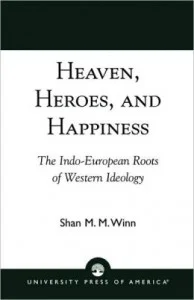
In a compelling exploration that bridges millennia, Shan Winn’s "Heaven, Heroes, and Happiness: The Indo-European Roots of Western Ideology" offers a profound look into the deep-seated continuities between ancient Indo-European worldviews and the fabric of modern Western society. Far from merely recounting historical facts, Winn’s work, as reviewed by a leading authority in Norse mythology, posits that the conceptual frameworks established by a people originating in the Bronze Age Pontic-Caspian steppe continue to resonate within our contemporary understanding of governance, social order, and even spirituality. The book is lauded as an "excellent introduction" and a "fascinating study," highly recommended for anyone seeking to understand the often-unseen architects of Western thought.
The Enduring Echoes of Antiquity: A Core Thesis
Shan Winn’s "Heaven, Heroes, and Happiness" embarks on an ambitious intellectual journey, challenging the prevalent tendency to emphasize the stark differences between pre-Christian European worldviews and our modern perspectives. While acknowledging the undeniable shifts and divergences that have occurred over centuries, Winn masterfully argues for a considerable degree of continuity, demonstrating how the fundamental structures of thought, society, and belief systems established by the ancient Proto-Indo-Europeans have persisted and subtly shaped Western ideology. This central thesis is not merely an academic assertion but an invitation to re-examine the very foundations of what we consider "Western."
The book meticulously traces these enduring threads, revealing that the legacy of the Proto-Indo-Europeans extends far beyond linguistic connections. It delves into the profound influence they exerted on social hierarchies, cosmological interpretations, and even the underpinnings of later philosophical and religious movements. By illuminating these ancient roots, Winn provides a fresh lens through which to understand the present, suggesting that many aspects of our current societal organization and conceptual frameworks are not entirely novel, but rather sophisticated evolutions of age-old patterns. The reviewer’s endorsement underscores the book’s success in making these complex historical and anthropological connections accessible and highly relevant, positioning it as a pivotal read for those interested in the deep history of ideas.
Tracing the Genesis: The Proto-Indo-Europeans and Their Spread
To fully appreciate Winn’s arguments, one must first grasp the identity and historical trajectory of the Proto-Indo-Europeans (PIE). These were not a monolithic empire but rather a group of culturally and linguistically related peoples who emerged and flourished during the Bronze Age, leaving an indelible mark on the Eurasian continent.
Origins and Migrations
The consensus among archaeologists and linguists places the homeland of the Proto-Indo-Europeans in the Pontic-Caspian steppe, a vast grassland region stretching across parts of what is now Ukraine, Southern Russia, and Kazakhstan. This period, roughly spanning from 4500 to 2500 BCE, saw these communities develop a distinctive way of life that would prove remarkably influential. They were primarily nomadic or semi-nomadic pastoralists, their lives intrinsically linked to their herds of cattle, sheep, and goats. This mobile lifestyle, driven by the needs of their livestock, fostered a culture of adaptability and expansion.
Crucially, the Proto-Indo-Europeans were pioneers in technological innovation. They are widely credited with being among the first peoples to effectively domesticate horses for riding and traction, a development that revolutionized transportation, warfare, and communication across vast distances. The ability to travel faster and farther, coupled with the development of wheeled carts, facilitated their extensive migrations and enabled them to exert a profound cultural and genetic influence across a massive geographical area. From their steppe homeland, waves of migrations, often referred to as the "Indo-European expansions," carried their languages, customs, and social structures westward into Europe and southward and eastward into parts of Asia. These migrations were not necessarily always violent conquests but often involved a complex interplay of assimilation, cultural exchange, and, at times, dominance. The result was the profound shaping of many of the societies that would eventually become the Celts, Slavs, Greeks, Romans, and Germanics, all of whom derived significant aspects of their cultural and societal models from this Bronze Age proto-culture.
The Linguistic Tapestry
Perhaps the most tangible and widely recognized legacy of the Proto-Indo-Europeans is the vast Indo-European language family. This family encompasses an astonishing array of languages spoken by billions of people across the globe today. Almost all modern European languages, with a few notable exceptions such as Basque, Finnish, and Hungarian, are direct descendants of the original Proto-Indo-European language. Beyond Europe, this family extends to include languages like Persian (Farsi), Hindi, Sanskrit, and many others across the Indian subcontinent and parts of Central Asia.
The shared linguistic roots provide invaluable insights into the Proto-Indo-European culture. By reconstructing common vocabulary, linguists can infer aspects of their environment, social structures, religious beliefs, and daily lives. For example, shared words for "horse," "wheel," "sheep," "king," and certain deities offer strong evidence for their pastoral lifestyle, technological prowess, and hierarchical societal organization. The existence of this massive linguistic family underscores the sheer scale of their cultural spread and the deep, pervasive influence they had on the development of human communication and thought across two continents. Shan Winn’s work leverages this linguistic foundation to then explore the even deeper, more abstract cultural and ideological connections.
Beyond Language: The Unseen Architectures of Society and Thought
Winn’s central argument gains significant traction when moving beyond the linguistic connections to explore the deeper, structural influences of Proto-Indo-European thought. The book meticulously illustrates how these ancient peoples bequeathed to Western civilization more than just a family of languages; they provided fundamental blueprints for social organization, cosmic understanding, and even the genesis of profound religious concepts.
The Tripartite Social Order
One of the most striking and persistent legacies highlighted by Winn is the Indo-European tripartite hierarchical structure. This model divided society into three distinct functional tiers:
- The Rulers and Priests: Occupying the highest stratum, this class held both temporal authority and sacred knowledge. They were responsible for maintaining cosmic and social order, mediating between the human and divine realms, and ensuring the prosperity and stability of the community.
- The Warriors: The second tier was comprised of the martial class, dedicated to protection, defense, and conquest. Their primary function was to wield force, enforce justice, and expand the community’s influence through military prowess.
- The Commoners: The broadest base of the social pyramid, this class encompassed farmers, merchants, craftspeople, and all those engaged in production and sustenance. Their labor supported the entire society, providing food, goods, and resources.
What makes this specific structure so significant, as Winn emphasizes, is its near-unique prevalence within Indo-European societies. While human societies can adopt countless organizational forms, this tripartite division, which might seem almost intuitive to those familiar with Western history, is remarkably specific to the Indo-European cultural sphere. It stands in contrast to dualistic or more complex class systems found in other ancient civilizations. This structure was remarkably uniform across various Indo-European cultures, manifesting in diverse ways: the varna system in ancient India (Brahmins, Kshatriyas, Vaishyas), the early Roman social divisions, and the medieval European estates of "those who pray, those who fight, and those who work" (oratores, bellatores, laboratores). Even in modern Western societies, while not strictly enforced, this tripartite division continues to serve as a subtle yet pervasive "primary reference point" around which political, economic, and social discourse often coalesces, influencing our understanding of leadership, defense, and economic production.
Cosmic Reflections: Tripartite Cosmology and Sacred Numbers
The social order was not merely a pragmatic arrangement; it was deeply rooted in a corresponding cosmology. Winn reveals that the divine realm itself was often perceived as being ordered according to this same tripartite structure. The gods and goddesses of Indo-European pantheons frequently had their roles and interactions closely tied to their position within this cosmic hierarchy. For example, supreme deities often embodied sovereignty and sacred law, warrior gods represented strength and protection, and fertility goddesses oversaw agricultural bounty and progeny. This mirroring of the earthly and divine realms provided a powerful legitimization for the social structure, imbuing it with sacred significance.
Furthermore, the number three held immense symbolic weight within Indo-European mythologies and rituals, appearing with a frequency that rivals the significance of the number seven in the ancient Middle East or four in many American Indian groups. This triadic principle permeated their understanding of the world, from divine triads (like the Roman Capitoline Triad of Jupiter, Juno, and Minerva, or the Norse trio of Odin, Thor, and Freyr, albeit more complexly) to rituals involving three repetitions, three sacred objects, or three stages. This consistent emphasis on triadic structures, both social and cosmic, points to a deep-seated cognitive and cultural pattern that Winn meticulously uncovers.
The Zoroastrian Bridge: Indo-European Roots in Monotheistic Thought
Another compelling example of Indo-European continuity, highlighted by Winn, is the figure of Zarathustra (or Zoroaster), the Iranian prophet who lived in the second millennium BCE. Zarathustra emerged from an Indo-Iranian society, a branch of the broader Indo-European family. His teachings, which developed into Zoroastrianism, represented a radical departure in many respects from the polytheistic traditions of his ancestors, emphasizing a cosmic dualism between a benevolent creator deity (Ahura Mazda) and a destructive spirit (Angra Mainyu). This dualism, along with a strong ethical component and a focus on free will and a final judgment, profoundly influenced later monotheistic religions, most notably Judaism, Christianity, and Islam.
Winn argues that despite the revolutionary nature of Zarathustra’s philosophy, he did not create it ex nihilo. Instead, he drew upon and reconfigured existing Indo-European mythical themes and concepts, using them as "raw materials" for his new spiritual framework. These themes might have included earlier notions of cosmic order, the struggle between opposing forces, and the importance of truth and righteousness. This demonstrates not just a direct transfer, but a dynamic process of adaptation and transformation, where ancient ideological foundations provided the fertile ground for entirely new religious paradigms that would go on to shape global history. The influence of Zoroastrianism, through its Indo-European lens, on the development of key tenets in Abrahamic religions, is a testament to the enduring and adaptable nature of these ancient conceptual roots.
Scholarly Foundations and Contentious Debates
Shan Winn’s synthesis of Indo-European ideology draws significantly from the intellectual scaffolding provided by two monumental figures in the field: Georges Dumézil and Marija Gimbutas. However, the reception and critical evaluation of their respective theories within academia, and as reflected in the reviewer’s commentary, highlight the complex and often contentious nature of reconstructing ancient cultures.
Georges Dumézil: Architect of Tripartism
Georges Dumézil, the French philologist and comparative mythologist, is widely acknowledged as the intellectual architect behind the identification and detailed analysis of the tripartite functional ideology in Indo-European societies. His pioneering work in the mid-20th century revolutionized the study of Indo-European mythology and social structures. Dumézil’s methodology involved a rigorous comparative approach, examining myths, sagas, and social institutions across a wide range of Indo-European cultures – from ancient India and Iran to Rome, the Norse lands, and Celtic traditions. Through this painstaking analysis, he demonstrated the remarkable recurrence of the three functions: sovereignty (magical and juridical), force (military), and production (fertility and wealth).
The reviewer’s ready acceptance of the "soundness" of Dumézil’s ideas reflects the broad academic consensus regarding the validity and profound impact of his tripartite hypothesis. Dumézil’s work provided a powerful framework for understanding not just the social organization but also the pantheons and narrative structures of Indo-European peoples, showing how the gods themselves often embodied these functions (e.g., a sovereign god, a warrior god, and a fertility deity). His insights transformed disparate myths and legends into a coherent ideological system, offering a robust and enduring model for interpreting a vast body of ancient material. His legacy continues to be a cornerstone of Indo-European studies, providing a fundamental lens through which scholars analyze ancient societies.
Marija Gimbutas: The "Old Europe" Hypothesis and Its Critics
In contrast to the generally accepted theories of Dumézil, the work of Marija Gimbutas, a Lithuanian-American archaeologist, has generated considerably more debate and controversy. Gimbutas is best known for her "Old Europe" hypothesis and her Kurgan hypothesis regarding the origins of the Proto-Indo-Europeans.
According to Gimbutas, pre-Indo-European Europe (what she termed "Old Europe," roughly 7000-3500 BCE) was a utopian civilization characterized by peace, egalitarianism, and a deeply embedded matriarchal social structure. These societies, she argued, worshipped a Great Goddess, celebrated fertility and creativity, developed highly complex cultures, and placed a very high value on art. They were agrarian, sedentary, and largely devoid of warfare. The arrival of the Proto-Indo-Europeans, identified with the "Kurgan culture" from the steppe, was depicted by Gimbutas as a cataclysmic event. These patriarchal, hierarchical, and warlike "Kurgan people" supposedly conquered, subjugated, and ultimately erased the peaceful ways of Old Europe, imposing their own aggressive, male-dominated ideology and pantheon.
The reviewer’s critique of Gimbutas’s work is quite pointed, reflecting a broader academic skepticism regarding the more sweeping aspects of her claims. While acknowledging that pre-Indo-European cultures might have been "closer" to Gimbutas’s envisioned peaceful, agrarian lifestyle than the Indo-Europeans, the reviewer contends that Gimbutas "greatly overstates her case." The creation of such a "stark dichotomy," portraying Old Europe as purely benevolent and Indo-Europeans as solely destructive, is seen as overly simplistic and ideologically driven. The reviewer suggests that Gimbutas’s "utopian model" resonated deeply with the "unrealized hopes and dreams of mid-to-late-twentieth-century liberalism/progressivism," providing a supposedly historical blueprint for a more equitable future. This critique highlights the potential for academic theories to become intertwined with contemporary social and political aspirations, sometimes at the expense of nuanced historical accuracy.
Winn, according to the reviewer, "mostly accepts Gimbutas’s work uncritically," especially in the assumption that any goddesses found in Indo-European pantheons must be "holdovers" from Old Europe. This implies a "cartoonishly patriarchal" view of Indo-Europeans, suggesting they were incapable of originating their own female deities. Such an uncritical adoption, the reviewer argues, overlooks the complex evolution and internal diversity of Indo-European religious systems. However, a crucial piece of nuance is added: Winn does make a "passing reference to the obvious, almost Zoroastrian dualism inherent in Gimbutas’s vision." This acknowledgment, though brief, hints at an awareness of the stark, almost Manichaean division Gimbutas creates between "good" Old Europe and "bad" Indo-European invaders, mirroring the cosmic battle between good and evil in Zoroastrianism. This critical engagement, even if limited, suggests a degree of internal tension within Winn’s own acceptance of Gimbutas’s framework.
Implications for Understanding Western Identity
The profound insights offered by Shan Winn’s "Heaven, Heroes, and Happiness" carry significant implications for how we understand the very essence of Western identity. By tracing the deep historical roots of our ideologies, the book compels us to reconsider the origins of our societal structures, cultural values, and even the undercurrents of our philosophical and religious thought.
The Enduring Legacy of Indo-European Thought
Winn’s work vividly demonstrates that the concepts laid down by the Proto-Indo-Europeans – the tripartite social order, the corresponding cosmology, and the philosophical foundations that influenced figures like Zarathustra – are not merely ancient relics but living traditions that continue to shape Western societies. This enduring legacy manifests in various forms:
- Political Structures: While modern democracies boast egalitarian ideals, the echoes of the tripartite division can still be observed in the separation of powers (executive, legislative, judiciary), the distinct roles of civilian and military institutions, and the fundamental division between governance and economic production.
- Social Narratives: The heroic ideal, the emphasis on individual agency within a structured society, and the narrative archetypes of rulers, warriors, and common folk continue to inform our stories, myths, and even our understanding of social roles and responsibilities.
- Ethical Frameworks: The Zoroastrian connection, with its emphasis on cosmic struggle, free will, and moral choice, highlights how even early Indo-European-influenced thought contributed to ethical paradigms that became foundational to later monotheistic traditions and, by extension, secular Western ethics.
Acknowledging these deep historical roots can provide a richer, more nuanced understanding of contemporary debates about identity, values, and societal organization. It reveals that many of our "modern" problems and solutions are, in some sense, re-engagements with ancient patterns and challenges.
Navigating Continuity and Change
The reviewer’s initial statement—emphasizing both the "real and weighty" differences and the "considerable degree of continuity"—serves as a crucial framework for interpreting Winn’s findings. The book successfully navigates this balance, showing that while societies undoubtedly evolve and adapt, certain underlying cultural "grammars" persist. The Indo-European framework, as presented by Winn, acts as one such grammar, providing a template upon which countless variations have been built over millennia.
This appreciation of continuity does not negate the importance of change or the agency of individuals and groups to forge new paths. Rather, it enriches our understanding by providing a deeper historical context. It helps us see how present-day phenomena are not isolated occurrences but are often intricately woven into a much longer tapestry of cultural development. For example, understanding the deep roots of hierarchy helps us critically evaluate its manifestations today, just as understanding the evolution of religious thought from Indo-European themes allows for a more comprehensive appreciation of modern spiritual landscapes.
A Call for Critical Engagement
Finally, the scholarly debates surrounding figures like Marija Gimbutas, which Winn engages with, serve as a vital reminder of the dynamic and ongoing nature of historical and archaeological inquiry. No single theory is definitive, and the reconstruction of ancient cultures is a continuous process of discovery, interpretation, and re-evaluation. The reviewer’s nuanced critique of Winn’s uncritical acceptance of certain aspects of Gimbutas’s work underscores the importance of critical thinking and the evaluation of source material.
"Heaven, Heroes, and Happiness" is therefore not just a narrative of ancient influences but also an invitation to engage critically with historical scholarship itself. It encourages readers to delve deeper, to question assumptions, and to appreciate the complexity inherent in piecing together the distant past. The value of books like Winn’s lies in their ability to synthesize vast amounts of complex information and present a compelling narrative, even as they prompt further investigation and debate.
Ultimately, "Heaven, Heroes, and Happiness" stands as an excellent introduction to the intricate world of Indo-European society and mythology, and a truly fascinating study of how their worldviews and ways of life continue to echo in the present day. It is a highly recommended read for anyone seeking to understand the deep historical currents that have shaped, and continue to shape, the Western world.
Click here to view or buy Heaven, Heroes, and Happiness at Amazon.com.