The Avengers Legacy: From 1963 Comic Origins to the Global Cinematic Phenomenon
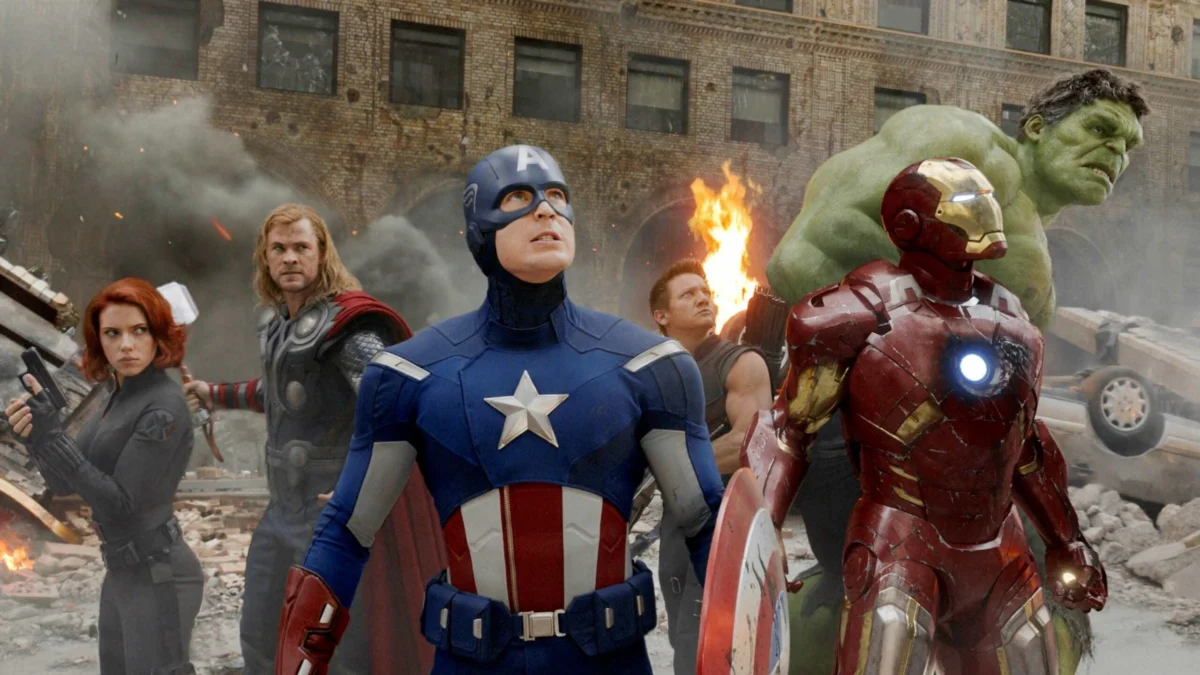
The "S.H.I.E.L.D. Clearance Assessment" recently surfaced as a comprehensive evaluation of pop-culture literacy, challenging fans to prove their knowledge of Earth’s Mightiest Heroes. Beyond a mere trivia exercise, the assessment highlights the profound cultural footprint left by the Avengers over six decades. Since their inception in the pages of Marvel Comics in 1963 to their record-breaking dominance in the Marvel Cinematic Universe (MCU), the Avengers have redefined the superhero genre, blending mythological grandeur with deeply human flaws.
This report examines the evolution of the Avengers, analyzing the pivotal moments, character arcs, and narrative shifts that have transformed a fledgling comic book team into a multi-billion-dollar entertainment juggernaut.
1. Main Facts: The Foundations of a Super-Team
The Avengers were never intended to be a static entity; they were conceived as a "rotating door" of the world’s most powerful individuals. In September 1963, writer Stan Lee and artist Jack Kirby launched The Avengers #1, a strategic move to unite Marvel’s solo stars under one banner. Unlike the Justice League of DC Comics, which often featured a god-like status for its members, the Avengers were defined by their friction and internal conflicts.
The fundamental facts of the franchise’s history center on several key pillars:
- The Catalyst: The team’s formation was inadvertently caused by Loki, the Asgardian God of Mischief.
- The Original Roster: The comic’s founding members included Iron Man, Thor, Ant-Man, the Wasp, and the Hulk. Captain America did not join until The Avengers #4.
- The Cinematic Shift: In 2008, the release of Iron Man launched a serialized cinematic experiment that would eventually culminate in Avengers: Endgame, one of the highest-grossing films of all time.
- The Philosophy of Sacrifice: Central to the Avengers’ ethos is the "Avengers Initiative"—a concept introduced by Nick Fury to bring together a group of remarkable people to see if they could become something more.
2. Chronology: A Timeline of Heroism and Heartbreak
To understand the Avengers, one must navigate the dual timelines of their publication history and their cinematic progression.
The Silver Age Origins (1963–1970s)
In the original 1963 narrative, Loki attempted to manipulate the Hulk into a destructive rampage to draw out his brother, Thor. However, the plan backfired when Iron Man, Ant-Man, and the Wasp joined the fray. Recognizing that they were more effective together than apart, the Wasp suggested the name "The Avengers." This era established the team as a government-sanctioned but independent force, often operating out of Avengers Mansion in New York City.
The MCU Modern Era (2008–2012)
The modern global obsession began in 2008. Directed by Jon Favreau, Iron Man introduced Robert Downey Jr. as Tony Stark. The film’s final line—"I am Iron Man"—shattered the long-standing trope of secret identities. By 2012, The Avengers (directed by Joss Whedon) brought together the disparate threads of Thor, Captain America, and the Hulk, marking the first time a multi-franchise crossover had succeeded on such a massive scale.
The Age of Ultron and Internal Schism (2015–2016)
The chronology took a darker turn with the creation of Ultron. In the MCU, Tony Stark—driven by post-traumatic stress—sought to create a "suit of armor around the world." This led to the birth of an artificial intelligence that deemed humanity the primary threat to peace. This era highlighted the dangers of unilateral heroism, leading directly into the events of Captain America: Civil War, where the team fractured over the Sokovia Accords.
The Infinity Saga Conclusion (2018–2019)
The narrative peaked with the arrival of Thanos. In Avengers: Infinity War (2018), the team suffered its first total defeat. Thanos successfully collected the six Infinity Stones and executed "The Snap," erasing half of all life in the universe—an event later termed "The Blip." It took five years and a desperate "Time Heist" in Avengers: Endgame (2019) for the remaining heroes to reverse the damage, resulting in the permanent deaths of Natasha Romanoff (Black Widow) and Tony Stark.
3. Supporting Data: Science, Magic, and Mythology
The success of the Avengers is rooted in the "pseudo-science" and lore that grounds their powers. The S.H.I.E.L.D. assessment highlights several critical data points regarding the team’s mechanics.
The Physics of the Hulk
Dr. Bruce Banner’s transformation is the result of exposure to Gamma Radiation. While real-world gamma rays are lethal, the Marvel Universe posits that Banner’s unique physiology allowed him to absorb the energy, creating a persona fueled by adrenaline and rage. This "limitless strength" makes the Hulk the team’s ultimate deterrent, though he remains a liability due to his unpredictable nature.
The Enchantment of Mjolnir
Thor’s hammer, Mjolnir, is not merely a weapon but a moral barometer. Forged in the heart of a dying star (Nidavellir) and enchanted by Odin, it bears the inscription: "Whosoever holds this hammer, if he be worthy, shall possess the power of Thor." The data shows that very few have achieved this "worthiness." Aside from Thor and Vision, Steve Rogers (Captain America) proved his worth during the final battle against Thanos, a moment that served as the emotional climax for a decade of storytelling.
The Red Room Legacy
The history of Natasha Romanoff (Black Widow) provides a grittier, espionage-focused data set. Trained in the Red Room, a covert Soviet facility, Romanoff was subjected to psychological conditioning and physiological enhancements. This backstory serves as a bridge between the Avengers’ cosmic battles and the world of international geopolitics, emphasizing that not all "super" heroes possess innate powers.
4. Official Responses: The Impact on Culture and Industry
The "official response" to the Avengers phenomenon can be measured through industry shifts and critical reception.
The Disney/Marvel Synergy
Following Disney’s acquisition of Marvel in 2009, the "Marvel Formula" became the gold standard for franchise building. Kevin Feige, President of Marvel Studios, has been credited with maintaining a "cohesive tapestry" that allows individual films to feel unique while contributing to a larger whole. Critics have noted that the Avengers’ success forced every major studio in Hollywood to attempt their own "shared universes," though few have replicated Marvel’s longevity.
Fan Reception and "The Blip"
The emotional response to Infinity War was unprecedented. The decision to let the villain win—and to end the film with the literal disintegration of beloved characters—sparked a global conversation about grief and resilience. Sociologists have noted that "The Blip" became a metaphor for real-world collective trauma, allowing audiences to process themes of loss through the lens of high-concept fantasy.
The Mantle of Captain America
One of the most significant "official" transitions within the lore was Steve Rogers passing his vibranium shield to Sam Wilson (The Falcon). This move was met with both acclaim and intense discussion regarding the symbolism of a Black man representing the American ideal. The series The Falcon and the Winter Soldier explicitly addressed these themes, cementing Sam Wilson as the official Captain America for the next generation of the MCU.
5. Implications: The Future of the Initiative
As the Avengers move beyond the original "six," the implications for the future of the franchise are vast. The transition from the "Infinity Saga" to the "Multiverse Saga" suggests a move away from a single, centralized team toward a more fragmented, cosmic-scale narrative.
The Rise of New Leaders
With the departure of Iron Man and the original Captain America, leadership has shifted toward figures like Doctor Strange, Captain Marvel, and Sam Wilson. The implication is that the "Avengers" name is no longer tied to a specific roster but has become a symbol of global (and intergalactic) cooperation.
Technological and Ethical Challenges
The inadvertent creation of Ultron by Tony Stark remains a cautionary tale in the lore. As the MCU explores themes of Artificial Intelligence and the Multiverse, the ethical implications of "preemptive protection" continue to be a central theme. The franchise suggests that the greatest threat to the Avengers is often their own desire to control the uncontrollable.
The Legacy of "Forever"
The final section of the S.H.I.E.L.D. assessment, titled "Legacy Forever," underscores the idea that the Avengers are more than just a team; they are a modern mythology. Much like the Greek gods or Arthurian legends, these characters provide a framework for exploring human morality, the burden of power, and the necessity of unity in the face of "inevitable" threats.
In conclusion, the Avengers have evolved from a 1963 comic book experiment into the definitive narrative of the 21st century. Whether through the lens of a S.H.I.E.L.D. clearance quiz or a multi-million-dollar cinematic epic, the message remains the same: when the world is under threat, there will always be a need for those who are willing to assemble and fight the battles that others cannot.