Hara Castle: Echoes of Resistance and the Shimabara Rebellion
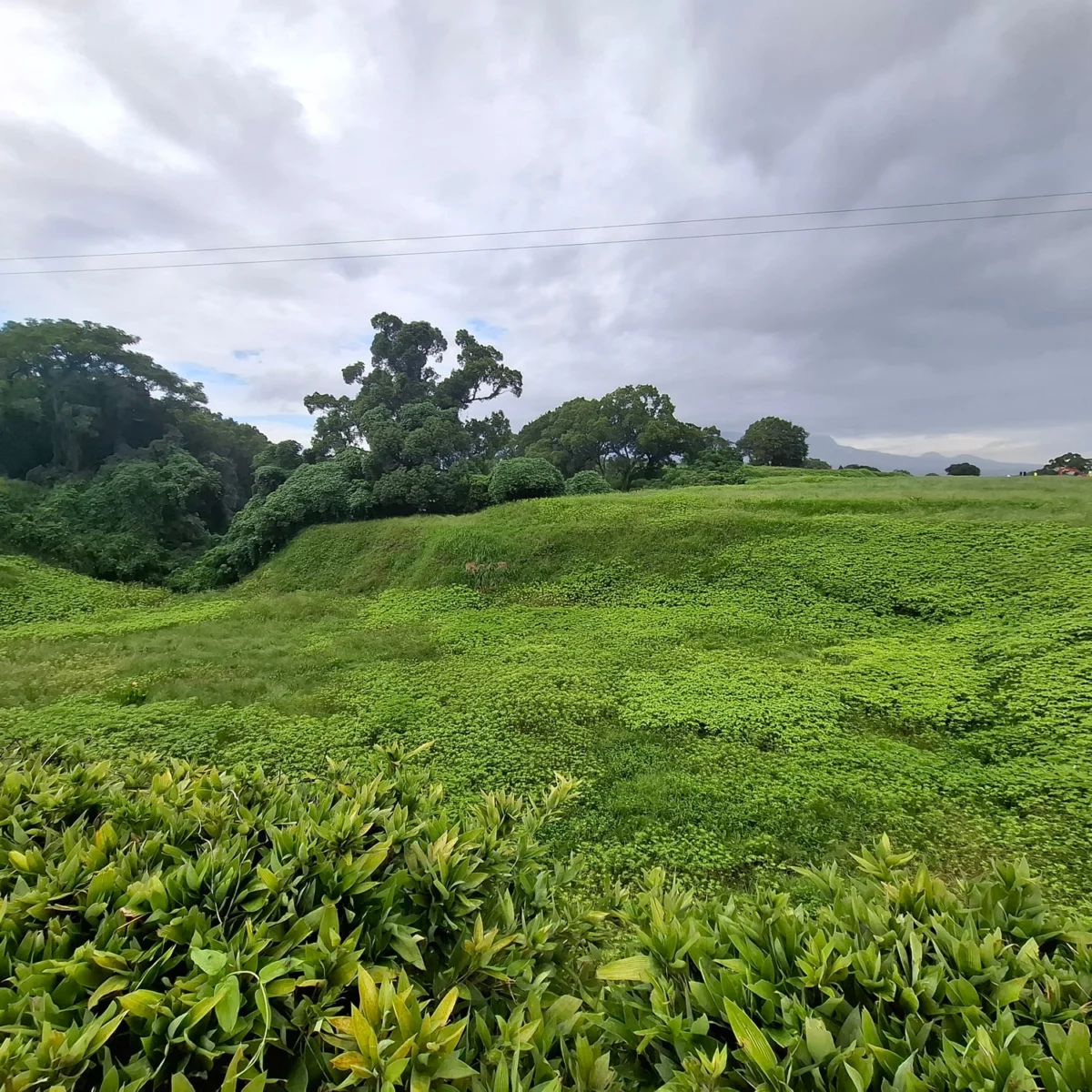
Hara Castle, a name steeped in both strategic significance and profound tragedy, stands today as a poignant ruin on Japan’s southern island of Kyushu. Originally conceived as a subsidiary fortification in 1496, it underwent significant upgrades between 1599 and 1604, only to be systematically dismantled and abandoned by the daimyō (feudal lord) Matsukura Shigemasa (1574-1630). Yet, this forgotten stronghold would briefly flare back into prominence in 1638, becoming the final bastion for the desperate rebels of the Shimabara Rebellion (1637-38). Its weathered stones and silent grounds, now accessible to visitors from the city of Shimabara, bear witness to a pivotal, bloody chapter in Japanese history that reshaped the nation’s policies on religion, governance, and isolation.
The Genesis of a Stronghold: Hara Castle and the Arima Clan
The story of Hara Castle begins with the powerful Arima clan, who dominated the Hinoe domain, located east of Nagasaki. In 1496, Arima Takazumi, the then daimyō, commissioned its construction as a vital supporting fortification to the clan’s primary seat, Hinoe Castle, situated approximately five kilometers (three miles) inland. Nestled on a hillside coastline overlooking the vast Ariake Sea, Hara Castle was strategically positioned, making it a naturally defensible stronghold against both land and sea incursions. Its initial design, while rudimentary, established the foundation for its future strategic importance.
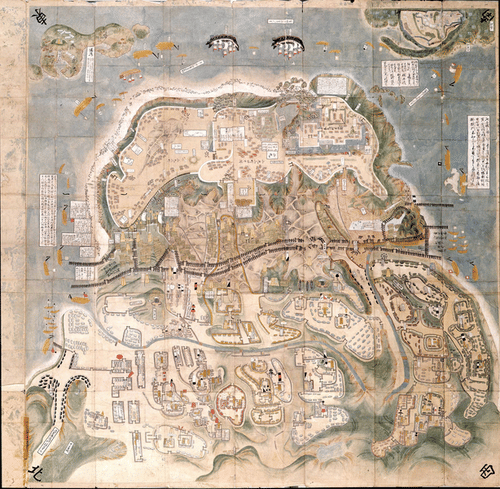
Generations later, Arima Harunobu (1567-1612), a direct descendant of Takazumi, undertook a comprehensive modernization of Hara Castle between circa 1599 and 1604. These extensive upgrades transformed it into the domain’s primary castle, showcasing the Arima clan’s rising influence and military ambition. Harunobu’s improvements were substantial, incorporating robust stone walls, intricate dry moats, and reinforced gates. The castle complex was meticulously designed, featuring a multi-tiered structure with main, second, and third baileys (known as honmaru, ninomaru, and sannomaru respectively), along with outer baileys such as the named Amakusamaru. The central honmaru even boasted a tenshu (keep), a symbol of a daimyō‘s power and prestige. The addition of numerous yagura (watchtowers) further enhanced its defensive capabilities, making it a formidable fortress.
Significantly, Arima Harunobu’s reign coincided with a period of intense cultural and religious flux in Japan. Although initially resistant to foreign influences, Harunobu eventually converted to Christianity, a faith that had gained considerable traction in Kyushu due to the efforts of Jesuit missionaries. He was notably baptized by Alessandro Valignano (1539-1606), a highly influential Jesuit priest. This personal conversion had profound implications, as it fostered a strong Christian community within his domain. Ironically, the very defensive improvements Harunobu invested in would, decades later, prove instrumental in enabling Christian rebels to withstand a prolonged siege by the shogunate. Harunobu’s own fate foreshadowed the tragedy to come; despite his conversion, he was ultimately ordered to commit seppuku (ritual suicide) by the shogunate, accused of involvement in a bribery scandal, a stark reminder of the nascent Tokugawa shogunate’s intolerance for perceived challenges to its authority.
Harunobu’s son, Arima Naozumi (1586-1641), inherited his father’s lands and, at the explicit behest of the powerful Shogun Tokugawa Ieyasu (1543-1616), renounced his Christian faith. Naozumi then began a brutal campaign of persecution against the Christian followers in his domain, reversing his father’s legacy. However, persistent Christian uprisings and the general unrest in the region proved too much for Naozumi. Frustrated by the continuous struggle, he voluntarily sought a transfer out of Shimabara, paving the way for Matsukura Shigemasa (1574-1630) to assume control of the domain in 1614. This change of leadership marked a critical turning point, setting the stage for the castle’s abandonment and its dramatic re-entry into history.
The Matsukura Clan and the Seeds of Rebellion
Matsukura Shigemasa, a daimyō known for his ambition and ruthlessness, inherited a domain simmering with religious tension and economic hardship. His vision was not to preserve the Arima legacy but to forge his own. In 1618, Shigemasa embarked on an audacious project: the construction of Shimabara Castle. This grand new edifice, pulled down in the mid-1870s and meticulously rebuilt in the 1960s as a museum, was designed to be a magnificent symbol of his power and the shogunate’s authority in the region.
However, Shigemasa’s project was undertaken under the strictures of the Ikkoku-ichijō (One Castle Per Province) mandate. This crucial law, enacted by the Tokugawa shogunate in 1615 following the tumultuous Siege of Osaka Castle, was designed to centralize power and prevent any daimyō from accumulating excessive military might through multiple fortified strongholds. Its purpose was clear: to safeguard against future regional uprisings and consolidate the shogunate’s absolute control over Japan.
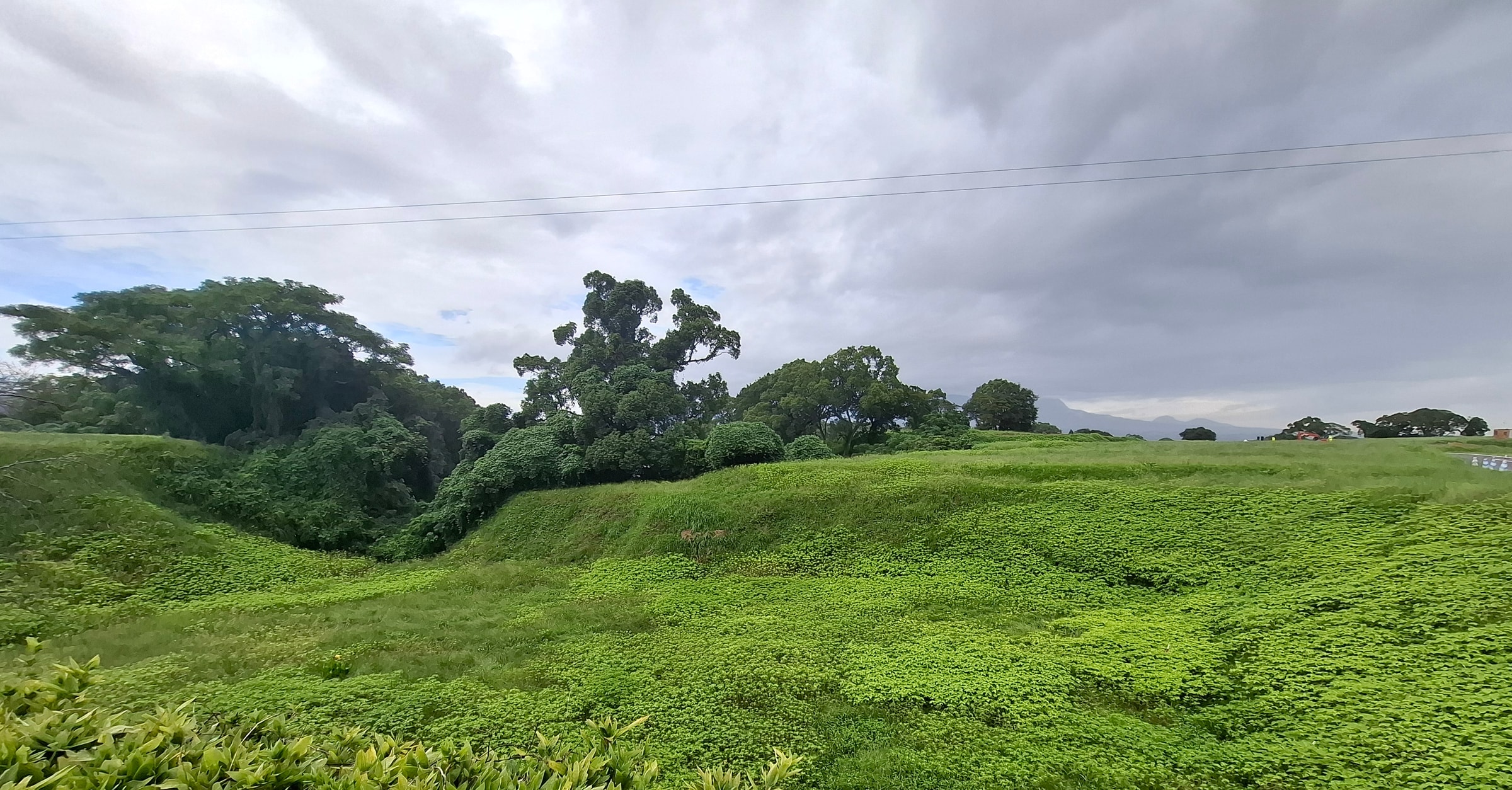
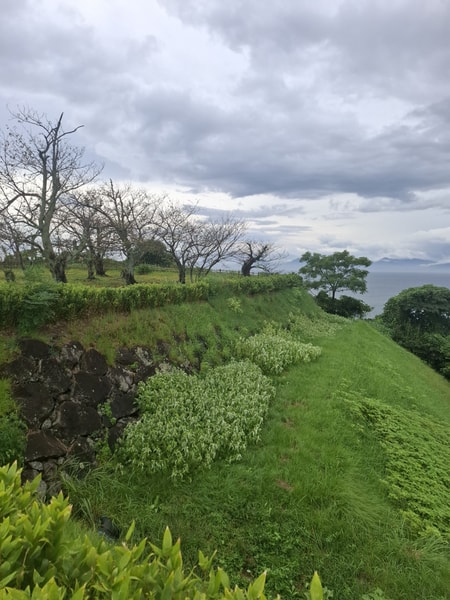
In compliance with this law, Shigemasa issued a decree that would forever alter the fate of Hara and Hinoe Castles. Both were ordered abandoned and systematically cannibalized. Their valuable resources—timber, stones, and other building materials—were repurposed for the construction of Shimabara Castle. Hara Castle, once a formidable fortress, became a shadow of its former self. What remained were its indestructible foundations, the intricate dry moats, and the massive stone walls – features too difficult and costly to fully dismantle. Many of its buildings, stripped of their purpose and maintenance, slowly fell into various states of disrepair. Hara Castle was rendered obsolete, seemingly insignificant, awaiting a dramatic and unexpected resurgence in the year 1638.
Shigemasa’s reign was characterized by heavy taxation, primarily to fund his lavish Shimabara Castle project, and an unwavering persecution of Christians. His death in 1630 at the Obama Hot Springs brought his equally oppressive son, Matsukura Katsuie (1598-1638), to power. Katsuie not only continued his father’s policies but intensified them, pushing the domain’s populace to its breaking point. The relentless persecution of Christians, coupled with exorbitant taxes and the added misery of a devastating famine, created an unbearable burden for the peasants. Growing acts of disobedience escalated into open defiance against local administrators. These simmering tensions eventually boiled over in late 1637, igniting what would become known as the Shimabara Rebellion.
The rebellion coalesced around a charismatic, sixteen-year-old messianic figure named Amakusa Shiro (1621-1638), whose baptismal name was Jerome. The dissidents, a diverse group of impoverished peasants, former samurai, and devout Christians, achieved some initial successes against local authorities. However, facing the overwhelming might of the shogunate’s rapidly mobilizing forces, they were eventually forced to retreat. In early 1638, in a desperate strategic move, they embarked by sea and sought refuge in the abandoned Hara Castle. Upon arrival, they ingeniously dismantled their vessels, repurposing the materials—wood, ropes, and sails—to construct improvised defenses, reinforcing the castle’s dilapidated fortifications. Within the seemingly fragile confines of Hara Castle, some 30,000 to 40,000 rebels, a mix of men, women, and children, established makeshift buildings and campsites. Behind its ancient, partially ruined walls, they awaited their fate, knowing that a massive shogunate force, numbering approximately 100,000 men, was steadily advancing towards them.
The Epic Siege of Hara Castle
The shogunate, viewing the rebellion as a direct challenge to its authority, mobilized an unprecedented force to crush it. Itakura Shigemasa (1588-1638), a seasoned military commander, was appointed to lead the shogunate’s army, which outnumbered the rebels almost three to one. The strategic position of Hara Castle, with its back to the Ariake Sea, presented a double-edged sword for the rebels. While it ruled out any assault from the rear, offering a degree of natural protection, it also made the castle easier for the shogunate to envelop and rendered any large-scale escape virtually impossible.
Historians debate the rebels’ mindset at this critical juncture. Some argue that they were fully aware of their inevitable fate, choosing Hara Castle for a symbolic last stand. However, a more plausible theory suggests they held onto a desperate hope for reinforcements from fellow rebels on the Amakusa Island chain and surrounding areas, or perhaps even divine intervention.
The shogunate’s siege tactics were comprehensive, utilizing all available resources. Attempts were made to tunnel beneath the castle’s walls, aiming to undermine its foundations. Artillery towers were erected to bombard the besieged with cannon fire. In a desperate move to break the stalemate, the shogunate even requested assistance from a Dutch trading ship, De Ryp, which provided cannonade support from the Ariake Sea. However, these initial efforts proved largely ineffective against the rebels’ determined resistance and the castle’s inherent defensive strengths. During one particularly fierce attempt to breach the walls, the shogunate’s commander, Itakura Shigemasa, was tragically killed, a testament to the rebels’ ferocity.
As is typical of siege warfare, numerical superiority alone is not always the deciding factor, especially when confronted with difficult terrain, robust fortifications (even dilapidated ones), and fiercely determined defenders. The shogunate forces, facing unexpected resistance, settled into a prolonged siege, aiming to starve the rebels into submission. Food stores within the castle were already critically low due to the preceding famine and the rapid influx of tens of thousands of people. The rebels scavenged what they could from the nearby coastline and surrounding fields, but their primary sustenance came from large stores of mochi (rice cakes), which they ingeniously mixed with other available foods to create a filling soup known as guzōni—a dish that, remarkably, is still eaten in the area today as a culinary legacy of the rebellion.
The siege dragged on for months, a brutal war of attrition. The rebels, weakened by starvation and constant bombardment, eventually succumbed. A final, overwhelming assault by the shogunate forces broke through the castle’s defenses. The starved and exhausted rebels were overwhelmed, and a horrific massacre ensued, with thousands slaughtered where they stood. Many of the dead were buried on site, either by the shogunate’s forces or gradually by the passage of time. When the dust finally settled, Hara Castle was once again a ruin, its stones silent witnesses to the devastating conclusion of the Shimabara Rebellion.
The Aftermath and Shogunate Responses
The suppression of the Shimabara Rebellion sent shockwaves through the Tokugawa shogunate. While the immediate threat was neutralized, the sheer scale of the uprising and the prolonged resistance of the rebels underscored severe underlying issues within the shogunate’s governance.
Matsukura Katsuie, the daimyō whose oppressive policies had directly fueled the revolt, faced immediate and severe repercussions. Although he was not present in his domain during the outbreak of the rebellion, an investigation revealed his extreme belligerence toward Christians, his overtaxation of the populace, and general misrule as the direct causes. In an unprecedented move for the Edo period (1603-1868), Katsuie was stripped of his power and status, and subsequently executed by beheading – the only instance of a daimyō meeting such an ignominious end during this era. This drastic punishment served as a chilling warning to other feudal lords about the consequences of misgovernance and disrespect for shogunate authority.
To restore order and rebuild the devastated region, Kōriki Tadafusa (1584-1656) was appointed as the new daimyō. Tadafusa implemented a series of progressive policies aimed at healing the wounds of rebellion. He granted significant tax relief, offered pardons to former rebels, and actively promoted settlement in the region to revive its economy and population. These measures were crucial in stabilizing the domain and preventing further unrest, reflecting the shogunate’s pragmatic approach to long-term stability once the immediate threat was quashed.
The Enduring Legacy: Policy, Persecution, and Preservation
The Shimabara Rebellion and the dramatic siege of Hara Castle had profound and lasting implications for Japan, shaping its domestic and foreign policies for centuries to come.
The Ikkoku-ichijō Edict Reconsidered
The rebellion unexpectedly challenged the efficacy of the Ikkoku-ichijō (One Castle Per Province) edict. The law’s primary intent was to prevent daimyō from projecting power against the shogunate by dismantling supplementary fortifications. Yet, here, an abandoned castle, repurposed by a peasant army, had held out against the might of the shogunate for an extended period. This led to a critical re-evaluation. While the edict successfully curtailed the power of feudal lords, it failed to anticipate a popular uprising utilizing a forgotten stronghold. Following the siege, the shogunate’s men meticulously knocked down and buried the castle’s stone walls, not merely as a symbol of the rebellion’s crushing defeat, but to ensure that Hara Castle could never again be used as a base for insurrection. This act was a clear admission that the limitations of the edict had been exposed, even if its primary purpose of hindering daimyō rebellion remained intact. It highlighted that while the law reduced the likelihood of a lord rebelling, it did not eliminate the possibility of a stronghold, even a derelict one, being leveraged against the shogunate in times of extreme crisis.
The Rise of the Kakure Kirishitan
Perhaps the most enduring legacy of the Shimabara Rebellion was its role in cementing Japan’s isolationist policy known as sakoku ("locked country"). Although the shogunate had already begun implementing sakoku measures, the rebellion starkly revealed the perceived threats posed by foreign religions and governments. It provided a powerful justification for the expulsion of the Portuguese from Japan’s shores and an intense escalation of Christian persecution. Christianity was outlawed, and practitioners faced severe punishments, including torture and execution.
As a result, many remaining Christians were forced underground, becoming known as Kakure Kirishitan (Hidden Christians). They practiced their faith in utmost secrecy, conducting sermons in hidden rooms and disguising religious symbols as ordinary household items – a statue of the Virgin Mary might be hidden within a Buddhist Kannon figure, or a rosary might be disguised as a necklace. Over time, cut off from external ecclesiastical authority and relying primarily on oral tradition, their faith evolved significantly, diverging from orthodox Catholicism. Communities often became isolated, leading to considerable variations in beliefs and practices from one village to another. When Japan reopened and religious freedoms were established in 1873, the world was astonished to discover that the religion had survived, with some 30,000 Kakure Kirishitans emerging from hiding. Although their numbers continue to dwindle, some Japanese still practice the ancient traditions of the Kakure Kirishitan today, a testament to their incredible resilience.
Hara Castle Today: A Site of Remembrance
Today, Hara Castle exists as a designated National Historic Site and is a candidate for UNESCO World Heritage status, recognized for its profound historical significance. Visitors to the site are guided by various information boards, available in both Japanese and English, which recount the castle’s storied past. A modern VR experience offers a glimpse into what the castle might have looked like during its heyday, allowing visitors to visualize its former grandeur.
From the main bailey, one can gaze across the Ariake Sea to Yushima Island in the distance—the very island where the rebel leaders secretly met to plot their insurrection. The nearby Arima Christian Heritage Museum provides a comprehensive and moving account of the Shimabara Rebellion and the siege of Hara Castle. Through beautifully carved reliefs, short documentary videos, intricate miniature figurine set-ups, and period-specific artifacts, the museum vividly brings the history to life. A particularly poignant exhibit is a recreation of a burial site unearthed by archaeologists at Hara Castle, displaying the sword-chipped bones of rebels killed during the massacre, alongside numerous crucifixes uncovered during the excavations. These tangible remnants offer a chilling and powerful connection to the human cost of the rebellion.
Hara Castle is more than just a ruin; it is a profound historical landscape that encapsulates themes of religious persecution, peasant suffering, strategic ambition, and the enduring human spirit of resistance. Its stones speak not only of a decisive battle but of a pivotal moment that irrevocably altered the course of Japanese history, shaping its identity for centuries to come.