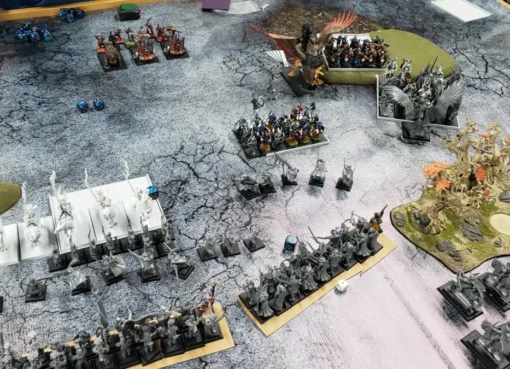
Navigating the Labyrinth of Rules: A Deep Dive into Teaching New Mechanics in Tabletop RPGs

FOR IMMEDIATE RELEASE
[City, State] – [Date, e.g., May 28, 2026] – The world of tabletop role-playing games (TTRPGs) is a vibrant tapestry of intricate narratives, collaborative storytelling, and, inevitably, a myriad of rules. From the foundational mechanics of dice rolls to the nuanced intricacies of combat maneuvers, social interactions, and world-specific lore, game masters (GMs) and players alike constantly engage with new systems. A recent episode of the esteemed podcast, Polygamerous, featuring veteran GMs Ang, Josh, and JT, delved into the critical yet often overlooked art of teaching new rules to players, offering invaluable insights into fostering engaging and frustration-free gaming experiences.
The episode, titled "GC_238_teaching-new-rules_final," available on the Polygamerous platform, serves as a comprehensive guide for GMs grappling with the introduction of novel mechanics, custom house rules, or entirely new game systems. The hosts meticulously explored best practices, drew distinctions between the pedagogical approaches required for one-shot adventures versus long-running campaigns, and illuminated various other facets of seamlessly integrating new elements into the gaming table. Their discussion underscores a fundamental truth: the successful adoption of new rules is paramount to player enjoyment, narrative coherence, and the overall longevity of a gaming group.
The art of rule dissemination extends beyond merely reading from a rulebook; it requires a blend of pedagogical skill, empathetic understanding of player learning styles, and a strategic approach to implementation. As TTRPGs continue to evolve, with new systems and supplements emerging regularly, the ability to effectively introduce and integrate these innovations becomes an increasingly vital skill for any aspiring or experienced game master.
The Unveiling: Mastering the Introduction of New Game Mechanics
The Polygamerous podcast episode, spearheaded by Ang, Josh, and JT, tackled the universal challenge faced by game masters: how to effectively introduce new rules, systems, or mechanics without overwhelming players or disrupting the flow of the game. The hosts underscored that the process begins long before the dice hit the table, emphasizing preparation as the cornerstone of successful rule integration.
The Genesis of a New Rule: Preparation and Pre-computation
Before presenting any new rule to players, GMs are advised to achieve a profound understanding of the mechanic themselves. This involves not just reading the rule but comprehending its intent, its impact on gameplay, and its potential interactions with existing systems. As highlighted in the podcast, a GM’s confidence in explaining a rule directly correlates with player confidence in understanding and utilizing it. This preparatory phase might involve running mock scenarios, consulting online forums for clarifications, or even creating quick reference sheets. Resources like "How To Make Your Own GM Screen" (linked in the podcast description) become invaluable here, allowing GMs to consolidate crucial information into an easily accessible format, reducing the need to constantly flip through rulebooks during play. Such screens can be customized with new rule summaries, flowcharts, or specific examples, acting as a dynamic teaching aid.
The Initial Presentation: Context, Conciseness, and Clarity
When the moment arrives to introduce a new rule at the table, the Polygamerous hosts advocated for a multi-pronged approach focused on context, conciseness, and clarity. Instead of an exhaustive lecture, GMs should strive to introduce rules as they become relevant within the narrative. For instance, a new combat maneuver is best explained just before a character attempts it, rather than in a pre-game info-dump.
- Contextualization: Explain why the rule exists and what problem it solves or what opportunities it creates within the game world. This helps players grasp its narrative significance and practical application.
- Conciseness: Provide the core mechanics succinctly. Avoid jargon where possible and break down complex rules into manageable chunks.
- Clarity: Use clear, unambiguous language. Provide a concrete example immediately after the explanation, perhaps by demonstrating it with NPCs or running a quick, low-stakes practice round.
This phased introduction ensures that players aren’t inundated with information they don’t immediately need, allowing them to absorb rules organically as they play.
The Evolution of Learning: A Chronological Framework for Rule Integration
The process of teaching new rules is not a singular event but rather an ongoing cycle that evolves with the game session and the campaign itself. The Polygamerous discussion implicitly outlines a chronological framework that GMs can adopt, moving from initial exposure to mastery.
Phase 1: The "Need-to-Know" Onboarding (Session 0/Initial Encounter)
For entirely new systems or significant rule overhauls, the first exposure is critical. In a "Session 0" or the very first session, GMs should focus on the absolute core mechanics required for immediate play. This includes character creation essentials, basic action resolution (e.g., how to make an attack roll or skill check), and fundamental safety rules. The goal here is to get players interacting with the game as quickly as possible, allowing them to learn by doing. Overloading them at this stage can lead to analysis paralysis and frustration.
Phase 2: Gradual Integration (Ongoing Play)
As the game progresses, more specialized rules can be introduced. This is where the distinction between one-shots and campaigns becomes particularly relevant.
- One-Shots: Due to their limited duration, one-shots necessitate a highly focused approach. GMs should select only a handful of new rules or mechanics that are central to the adventure’s premise and integrate them deeply into the narrative. Players have less time to internalize complex systems, so the introduced rules should be intuitive and have an immediate, noticeable impact. The goal is a quick grasp and immediate gratification.
- Campaigns: Long-running campaigns offer the luxury of gradual rule integration. GMs can introduce mechanics episodically, allowing players to master one set of rules before moving on to the next. For example, complex crafting rules might only be introduced when characters gain access to a workshop, or advanced social combat mechanics when they engage in high-stakes political intrigue. This staggered approach respects the learning curve and builds upon previously acquired knowledge, fostering deeper understanding and retention. The Edge Cases Series (another linked resource) might represent a collection of specific, niche rules or scenarios that could be introduced incrementally as a campaign unfolds, showcasing how even highly specialized mechanics can be woven into a long-form narrative.
Phase 3: Reinforcement and Refinement (Post-Introduction)
Learning doesn’t stop after the initial explanation. GMs must be prepared to reinforce rules through gentle reminders, quick look-ups, and consistent application. This phase also involves active listening and adaptation. If players consistently misinterpret a rule, the GM might need to re-explain it in a different way, provide more examples, or even consider house-ruling adjustments for clarity or balance. This iterative process ensures that rules become second nature, allowing players to focus more on role-playing and strategic decision-making rather than mechanical recall.
Supporting Data: Pedagogical Principles and Practical Tools for Rule Mastery
The insights shared by Ang, Josh, and JT are deeply rooted in established pedagogical principles, adapted for the unique collaborative environment of TTRPGs. Effective rule teaching leverages cognitive science to optimize learning and retention.
Core Pedagogical Principles in TTRPGs:
- Active Learning: Players learn best by doing. GMs should design scenarios that require players to use the new rules, providing immediate feedback on their understanding and application.
- Scaffolding: Introduce rules in a structured manner, building from simple concepts to more complex ones. Each new rule should ideally connect to or expand upon a previously understood mechanic.
- Repetition with Variation: While rote repetition can be dull, encountering a rule in different narrative contexts helps solidify understanding. For instance, a stealth mechanic might be used for infiltration one session and for evasion the next.
- Feedback and Correction: GMs should provide constructive feedback, gently correcting misunderstandings and celebrating correct application. This creates a safe learning environment.
- Multimodal Instruction: Utilize various methods: verbal explanation, written notes (on a GM screen or handout), visual aids (maps, tokens), and practical demonstration. Different players have different learning styles.
Tools and Resources for GMs:
- Custom GM Screens: As mentioned, a personalized GM screen (like those encouraged by "How To Make Your Own GM Screen") is a powerful tool for quick rule recall, both for the GM and, if visible, for players. It can summarize key mechanics, spell effects, or combat modifiers, reducing cognitive load during play.
- Player Handouts: For complex systems or critical new rules, concise player handouts can be invaluable. These might include flowcharts, condensed rule summaries, or character-specific abilities.
- Session Recaps: Beginning each session with a brief recap of previous events can also serve to reinforce recently introduced rules or mechanics that were central to past challenges.
- Digital Tools: Online character sheets, virtual tabletops, and digital dice rollers often have built-in rule references or macros that can automate complex calculations, allowing players to focus on the narrative rather than the math.
- Source Material Exploration: Resources like "Libra Valoris" and the "Edge Cases Series" could be interpreted as examples of game supplements or rulebooks that, due to their depth or specificity, necessitate a thoughtful approach to integration. A GM might draw inspiration from how these materials structure their rules or adapt their specific mechanics into their own games, requiring careful teaching strategies. They represent the diverse and often complex tapestry of rulesets available in the TTRPG landscape, each demanding a tailored approach to learning.
Official Responses and Community Consensus on Effective Rule Teaching
While the podcast episode itself serves as an "official response" from experienced GMs, their advice resonates deeply with the broader TTRPG community’s consensus on best practices. Through forums, actual play series, and game design discussions, several common themes emerge regarding effective rule integration.
The Collaborative Learning Environment:
A central tenet is that rule learning is a collaborative effort, not solely the GM’s burden. Players are encouraged to ask questions, consult rulebooks (if available and appropriate), and even teach each other. The GM acts as a facilitator and arbiter, but peer-to-peer learning can be highly effective. This approach fosters a sense of shared ownership over the game and its rules.
Avoiding the "Info-Dump" Trap:
The community widely cautions against the "info-dump," a common pitfall where GMs provide an exhaustive, uncontextualized explanation of all new rules at once. This often leads to players zoning out, retaining very little information, and feeling overwhelmed. The Polygamerous hosts’ emphasis on contextual and concise introductions directly addresses this issue.
The "Rule of Cool" vs. Rule Fidelity:
Another frequent discussion revolves around balancing rule fidelity with the "rule of cool" – the idea that narrative enjoyment can sometimes override strict adherence to rules. While not directly a teaching method, understanding this balance influences how rules are presented and enforced. Sometimes, bending or simplifying a new rule in the moment can smooth the learning process and maintain narrative flow, with a promise to clarify strict interpretation later.
Leveraging Actual Play Examples:
The explosion of actual play podcasts and web series, such as Critical Role (whose Vox Machina Season Four Trailer was linked in the podcast description), has inadvertently become a powerful tool for rule education. Viewers often learn complex game systems by observing experienced players and GMs navigate them in a narrative context. The seamless integration of dice rolls, character abilities, and narrative consequences in these productions demonstrates the ideal outcome of effective rule teaching, making seemingly daunting systems appear approachable and exciting. Watching these shows can inspire GMs to emulate similar clarity and flow at their own tables.
Broader Implications: Elevating the TTRPG Experience
The implications of mastering rule teaching extend far beyond individual game sessions, touching upon player engagement, game longevity, and the very evolution of the TTRPG hobby.
Enhanced Player Experience and Engagement:
When rules are introduced effectively, players experience less frustration and more immersion. They can make informed decisions, understand the consequences of their actions, and fully engage with the narrative and their characters. This leads to higher satisfaction, reduced dropout rates, and a more vibrant, invested gaming group. Players who feel competent in the rules are more likely to experiment, take risks, and contribute creatively to the story.
Reduced GM Burden and Increased Creativity:
For the game master, effective rule teaching translates to less in-game interruption for rule look-ups and explanations. This frees up cognitive load, allowing the GM to focus more on improvisation, narrative pacing, and world-building. A confident understanding of the rules by the players also empowers the GM to introduce more complex and innovative mechanics without fear of overwhelming the table, thereby expanding the creative possibilities of their campaigns.
Fostering Game Longevity and Adaptability:
A group adept at learning and integrating new rules is more resilient. They are better equipped to tackle long-running campaigns that naturally introduce new subsystems, pivot to different game genres, or even develop their own robust house rules. This adaptability ensures that the gaming experience remains fresh and exciting over extended periods, preventing stagnation and burnout. The ability to adapt rules, as implied by the exploration of "edge cases" or specific systems like "Libra Valoris," allows groups to tailor their games precisely to their preferences, fostering unique and deeply personal gaming experiences.
Driving Innovation in TTRPG Design:
Finally, the ease with which new rules can be learned and adopted has a direct impact on the broader TTRPG industry. Game designers are more likely to experiment with novel mechanics if they believe GMs can effectively teach them. A community of skilled rule educators encourages innovation, pushing the boundaries of what TTRPGs can achieve and leading to the development of increasingly diverse and sophisticated systems.
In conclusion, the Polygamerous podcast episode, featuring Ang, Josh, and JT, serves as a timely reminder that the art of teaching new rules is a cornerstone of the TTRPG experience. By embracing thoughtful preparation, strategic delivery, and continuous reinforcement, game masters can transform potentially daunting learning curves into seamless pathways to deeper immersion and richer storytelling, ensuring that the fires of collaborative imagination continue to burn brightly at gaming tables worldwide. This dedication to the craft, supported by patrons like Amedeo Rosa, ensures that invaluable insights continue to flow to the community, nurturing the very heart of tabletop role-playing.