The Privacy-First Unicorn: How Even Realities is Redefining the Smart Glasses Race
The landscape of wearable technology has long been dominated by a "capture-first" mentality. From the early, ill-fated days of Google Glass to the modern success of the Meta Ray-Ban collaboration, the industry has largely assumed that a camera is a prerequisite for "smart" eyewear. However, a new contender has shattered this paradigm, reaching unicorn status by betting on the exact opposite.
Even Realities, a Shenzhen-based startup founded by former Apple engineers, has officially crossed the $1 billion valuation threshold following a massive $150 million funding round. By prioritizing heads-up displays (HUD) and privacy over photography and video recording, the company is positioning itself as a sophisticated alternative to the hardware being developed by Silicon Valley giants like Meta, Snap, and Google.
Main Facts: A $1 Billion Bet on "Invisible" Technology
The recent $150 million funding round was led by Chinese tech titans Meituan and Tencent, with significant participation from HSG (formerly Sequoia China). This influx of capital elevates Even Realities to a rare position in the hardware startup world: a profitable, high-valuation "unicorn" that is already shipping products globally.
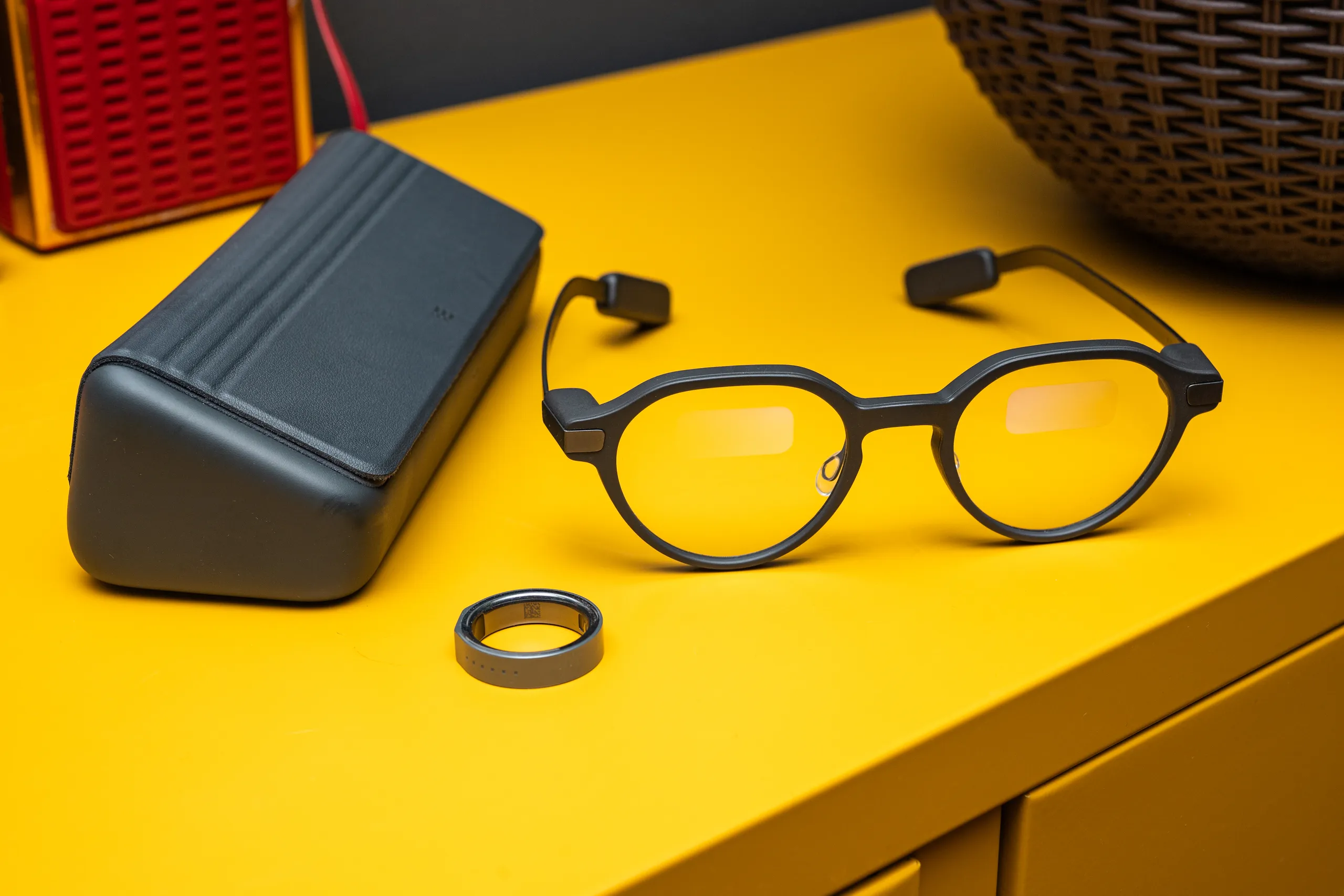
Unlike the Meta Ray-Bans, which focus on "capturing the moment" through high-definition cameras and social media integration, Even Realities’ flagship product, the Even G2, features no camera at all. Instead, it utilizes a sophisticated waveguide display system to project information directly into the wearer’s field of vision.

The G2 is designed to look indistinguishable from premium traditional eyewear. It offers a suite of productivity tools—including real-time translation, AI-driven teleprompters, and navigation—without the social friction or privacy concerns associated with recording devices. Priced at a base of $599, the device targets a professional demographic that values discretion and utility over social media content creation.
Chronology: From Apple’s Design Labs to Global Expansion
The rise of Even Realities has been remarkably swift, reflecting the pedigree of its founding team and the accelerating demand for functional Augmented Reality (AR).
- 2023: The Foundation: Even Realities was founded in Shenzhen by a group of engineers and designers, several of whom played key roles in Apple’s hardware development cycles. The mission was clear: to solve the "wearability" problem that has plagued AR glasses for a decade.
- Early 2024: The G1 Pilot: The company launched its first-generation glasses, the G1. While initially viewed as a developer-leaning product, the G1 exceeded sales expectations, surpassing its 10,000-unit target and proving that there was a market for non-camera smart glasses.
- Mid-2024: Rapid Scaling: As interest grew, the company’s workforce exploded. What began as a lean team of 30 to 40 employees in early 2024 expanded to a global workforce of nearly 400 by mid-2025.
- 2025 – Early 2026: Market Penetration: Even Realities successfully entered the U.S., South Korean, Japanese, and European markets. Strategic focus was placed on the U.S., which quickly became the company’s primary revenue driver.
- July 2026: Unicorn Status: The announcement of the $150 million Series B round officially values the company at $1 billion, providing the runway needed to compete with Big Tech’s looming AR releases.
Supporting Data: Understanding the "Professional" Wearable Market
The success of Even Realities is backed by a shifting tide in consumer behavior. According to Counterpoint Research, the global intelligent eyewear market grew by a staggering 83% year-over-year in Q1 2026. This growth isn’t just coming from tech enthusiasts; it is being driven by a specific professional demographic.
Demographic Breakdown
Internal data from Even Realities suggests that their user base is significantly different from that of Snap or Meta:

- Geography: Over 50% of active users are based in the United States.
- Age and Profession: The core demographic consists of male professionals aged 30 to 50.
- Executive Adoption: Approximately 33% of surveyed users identify as executives or business owners.
The Cost of Innovation
While the G2 starts at $599, the average order value (AOV) often approaches $1,000. This is due to:
- Prescription Support: Unlike many AR headsets, the G2 supports high-index prescriptions (from -12.00 to +12.00), a necessity for the 60% of the global population that requires vision correction.
- The R1 Smart Ring: A significant portion of users opt for the $149 R1 ring, which allows for gesture-based control (scrolling and clicking) without needing to touch the frames of the glasses, further enhancing the "invisible" nature of the tech.
Official Responses: Privacy as a Product Feature
CEO Will Wang has been vocal about the company’s philosophy, particularly regarding the decision to omit cameras. In a recent statement, Wang emphasized that smart glasses are the "most personal" computing devices ever created, and therefore, they require a different ethical framework than smartphones or laptops.
"Privacy cannot be an afterthought; it must be baked into the hardware," Wang stated. By removing the camera, Even Realities eliminates "social friction"—the awkwardness people feel when they suspect they are being recorded in a restaurant, office, or private meeting.
To further bolster these claims, the company has implemented several software-level safeguards:

- Ephemeral Transcription: The live translation and "Conversate" AI features transcribe audio into text in real-time but do not store the raw audio recordings.
- Encrypted Data Streams: User data is end-to-end encrypted, and the company’s infrastructure is designed to comply with the world’s strictest data protection laws, including the EU’s GDPR.
- Local Processing: Much of the AI "copilot" logic is handled on-device or via a tethered smartphone, reducing the reliance on permanent cloud storage.
Implications: A New Front in the AR War
The rise of Even Realities represents a significant strategic challenge for Meta and the "Big Four" (Meta, Apple, Google, Samsung). While Meta’s Orion project and Apple’s Vision Pro focus on high-fidelity, immersive experiences, Even Realities is winning by focusing on subtlety.
The Death of the "Glasshole" Stigma
The term "Glasshole" was coined to describe the perceived arrogance and privacy-invasive nature of early Google Glass users. By removing the camera, Even Realities has effectively bypassed this stigma. This makes their glasses viable for environments where cameras are strictly prohibited or socially frowned upon, such as corporate boardrooms, hospitals, and high-security government facilities.
The "Holistic Adaptive Optics" (HAO) Advantage
One of the most significant technical implications of Even Realities’ success is their investment in optics. Their proprietary "Even HAO" system integrates the microchip, waveguide, and prescription lens into a single unit from the start. This differs from the "clip-on" or "insert" approach used by competitors. This integration allows for a thinner frame and better weight distribution, solving the comfort issues that usually lead users to abandon wearables after a few weeks.
AI as a Productivity Tool, Not a Toy
The company’s "Conversate" feature—an AI copilot that provides real-time conversation prompts, fact-checking, and meeting summaries—suggests a shift in how AI will be consumed. Rather than asking a chatbot to write a poem, Even Realities users are using AI to navigate complex social and professional interactions. This "B2B" and "Prosumer" focus may prove more sustainable than the "creator economy" focus of Snap and Meta.

Conclusion: The Road Ahead
As the smart glasses market continues its 80%+ annual growth, the "camera-free" niche established by Even Realities may become the standard for professional wearables. The company’s $1 billion valuation is not just a reflection of its current sales, but a bet on a future where technology is seen but not felt, and where "smart" doesn’t necessarily mean "watching."
However, challenges remain. To maintain its lead, Even Realities must continue to expand its developer ecosystem to ensure that the "no camera" constraint doesn’t limit the utility of the G2. Furthermore, as Meta and Google inevitably iterate on their own "lite" AR glasses, Even Realities will need to prove that its holistic optics and privacy-first stance are enough to keep users from gravitating toward the massive ecosystems of the Silicon Valley giants.
For now, the message to the industry is clear: The next revolution in wearable tech might not be televised—it might not even be recorded. It will simply be projected, privately, into the eyes of the people leading it.