The State of Speculative Fiction: Literary Honors, Industry Upheaval, and the Legacy of the Fantastic
The landscape of speculative fiction and the broader creative arts is currently navigating a pivotal junction between historical reverence and future uncertainty. From the prestigious halls of the Orwell Prize to the contentious negotiations over artificial intelligence in children’s television, the industry is grappling with how to define "the real" in an increasingly digital and politically charged era. This report examines the major developments in the field, including literary milestones, the 40th anniversary of a cinematic classic, and the burgeoning ethical debates surrounding generative technology.
Main Facts: A Convergence of Awards and Industry Friction
The speculative fiction community recently celebrated a major literary milestone with the announcement of the 2026 Orwell Prizes. American author Ben Lerner has been awarded the Orwell Prize for Political Fiction for his novel Transcription, a work that interrogates the intersections of technology, memory, and human connection. Simultaneously, the World Science Fiction Society (WSFS) has signaled the beginning of its next administrative cycle, releasing the agenda for the 2026 Business Meeting at LAcon V.
However, these celebrations are tempered by significant industrial concerns. A coalition of talent agents, the Agents of Young Performers Association, has issued a public warning regarding "take it or leave it" contracts allegedly being issued by major studios. These contracts reportedly require child voice actors to surrender the rights to their voices for use in generative AI—a move that has sparked outrage across the entertainment sector.
Chronology: From the Labyrinth of 1986 to the Frontiers of 2026
The current state of the genre can be understood through a timeline that stretches from the mid-1980s to the projected future of the 2020s.
The 1986 Foundation: The Legacy of Labyrinth
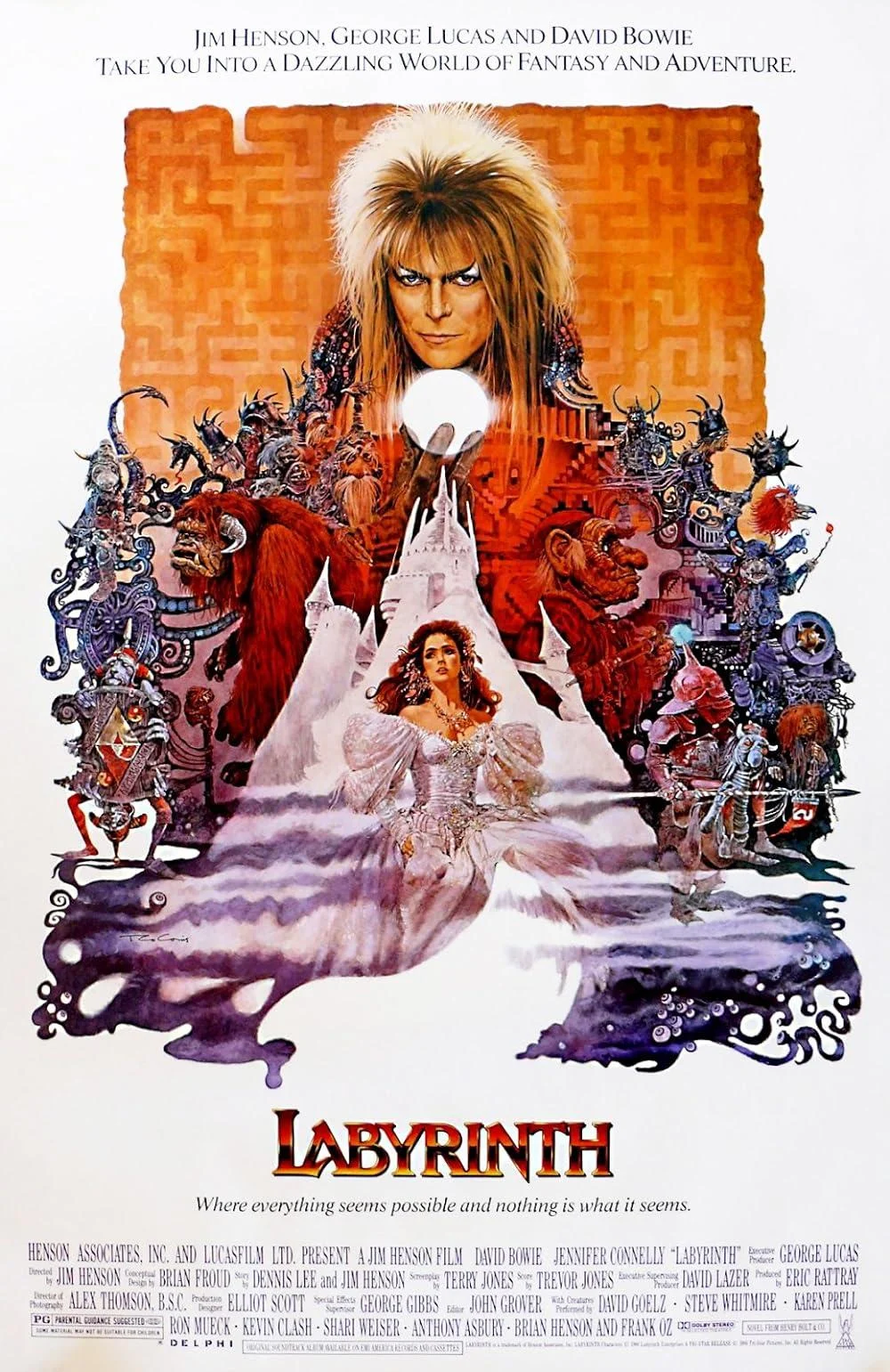
June 27, 2026, marks the 40th anniversary of the U.S. premiere of Labyrinth, the seminal dark fantasy film directed by Jim Henson and executive produced by George Lucas. At the time of its release, the film represented a high-water mark for practical effects and puppet-based storytelling, following the footsteps of The Dark Crystal (1982). Despite a lukewarm initial reception in the United States, the film achieved cult status and financial success through international markets and home media, solidifying David Bowie’s role as the Goblin King and Jennifer Connelly’s breakout performance in the cultural zeitgeist.
The Present: Literary Recognition and Community Care
In June 2026, the Orwell Foundation recognized the year’s best in political writing. Alongside Ben Lerner’s win in fiction, Karen Bartlett secured the non-fiction prize for The Escape from Kabul, a harrowing account of Afghan women lawyers following the 2021 collapse of the city.

Within the community, attention has also turned toward the health of its members. Longtime Australian fan and community figure Robin Johnson is currently recovering at St. John of God Hospital in Ballarat. Reports indicate Johnson is undergoing rehabilitation following a fall caused by respiratory issues, highlighting the close-knit nature of the global fan network.
The 2026 Horizon: WSFS and Future Narratives
Looking ahead to July 2026, the WSFS Business Meeting at LAcon V is set to address the governance of the Hugo Awards and the future of Worldcon. This follows a period of intense scrutiny regarding the "fantastic" versus the "realistic" in literature, as championed by authors like Andrea Hairston, who continues to advocate for Afrofuturism and Indigenous Futurism as a means of resisting "inevitable" (and often oppressive) technological realities.
Supporting Data: Examining the Works and the Tech
The Orwell Prize: Making Politics Art
The Orwell Prize carries a cash award of £5,000 and is intended for works that fulfill George Orwell’s ambition to "make political writing into an art." Fiammetta Rocco, the judging chair and former helmer of the International Booker Prize, described Ben Lerner’s Transcription as a "forensic study of our insatiable appetite for new technology."
The novel follows a narrator who interviews an eccentric intellectual in Providence, Rhode Island, only to be forced to proceed without a recording device after a mishap. This premise serves as a springboard for a deeper exploration of the "unreliable stories we tell ourselves about hunger, love, and connection."
The AI Contract Controversy
The open letter from the Agents of Young Performers Association has garnered over 1,000 signatures. The primary allegation involves a major international children’s franchise—identified by industry reports as Peppa Pig—which reportedly attempted to insert clauses allowing for the perpetual AI reproduction of children’s voices for commercial assets. This development follows a broader trend where studios seek to "future-proof" their intellectual property by decoupling the character from the human performer.
Cinematic Retrospective: Labyrinth by the Numbers
- Production Cost: $24 million.
- Initial Return: $39 million (bolstered by strong UK performance).
- Technical Scale: Some puppets required up to five puppeteers; Jim Henson’s Creature Shop spent 18 months in pre-production.
- Critical Standing: Currently maintains an 86% audience rating on Rotten Tomatoes.
Official Responses: Industry Voices and Artistic Resistance
The reaction to recent trends has been divided between institutional defense and creative rebellion.

The Studio Perspective
While major studios have been hesitant to comment directly on specific contract negotiations, satirical commentary by writers like David Perlmutter highlights the absurdity of the current legal landscape. In a fictionalized "multiverse" scenario, Producers Guild of America Chairman "Lou Weingarten" is depicted as arguing that fictional characters do not have rights, stating, "We exist all the time; they exist only when allowed to exist… you can’t pay people for work they didn’t do." While satirical, this reflects a very real tension in the industry regarding the ownership of "performance" in the age of digital replication.
The Authorial Resistance
Author Andrea Hairston, writing for Reactor, has issued a scathing critique of the "realism" often used to justify the adoption of Generative AI and other disruptive systems. "Realism is often the default setting of acquiescence—empire normal, keeping us in line," Hairston asserts. She argues that for writers of color and marginalized voices, the "fantastic" is not an escape but a tool for survival and the "conjuring of a wondrous future" that refuses to comply with a colonized or technologically determined reality.
The Scientific Approach
In a more analytical vein, C.L. Kagmi of the Science Fiction and Fantasy Writers Association (SFWA) has highlighted how neuroscience is being used to enrich the genre. By studying the building blocks of human perception—genes, proteins, and neurons—authors are better equipped to construct truly "alien" minds that operate outside human sensory spectrums, thereby expanding the horizons of what science fiction can achieve.
Implications: Where Does the Genre Go From Here?
The convergence of these events suggests several critical implications for the future of speculative fiction and entertainment.
1. The Ethical Boundary of Performance: The controversy surrounding child voice actors and AI suggests that the next great labor battle in Hollywood will not be about wages alone, but about the "biological copyright" of an actor’s voice and likeness. If studios successfully implement "take it or leave it" clauses for minors, it sets a precedent that could eventually eliminate the need for human actors in long-running franchises.
2. The Rejection of "Inevitable" Realism: As AI and climate change are framed as "inevitable realities," we may see a surge in "Fantastic History" and Futurism that intentionally breaks from traditional realism. Works like Daniel José Older’s Ballad & Dagger exemplify this trend, using urban fantasy to explore the recovery of lost histories and the healing of diverse communities.

3. The Enduring Power of Practical Craft: The 40th-anniversary celebrations of Labyrinth serve as a reminder of the lasting emotional resonance of practical effects. In an era of CGI saturation, the "Muppets DNA" of Henson’s work continues to enchant audiences, suggesting that there remains a significant market for tangible, human-crafted storytelling.
4. The Maturation of Young Adult (YA) Horror and Fantasy: The latest roundups from The Guardian indicate that the YA and children’s markets are becoming increasingly sophisticated. Titles like Wishbound and Demon Hunters are blending complex social themes with "pared-back" horror and "meticulously researched history," proving that the next generation of readers is being prepared for the high-concept political fiction rewarded by the Orwell Prize.
As we move toward the 2026 Business Meetings and beyond, the speculative fiction community remains a microcosm of the world at large: a place where the struggle for agency—whether against a slasher movie villain, a corporate AI contract, or the "shadow on the soul"—continues to define the stories we tell.