The Lowbrow Lifeline: Rediscovering Frank Willard’s ‘Moon Mullins’ Amidst Personal Crisis
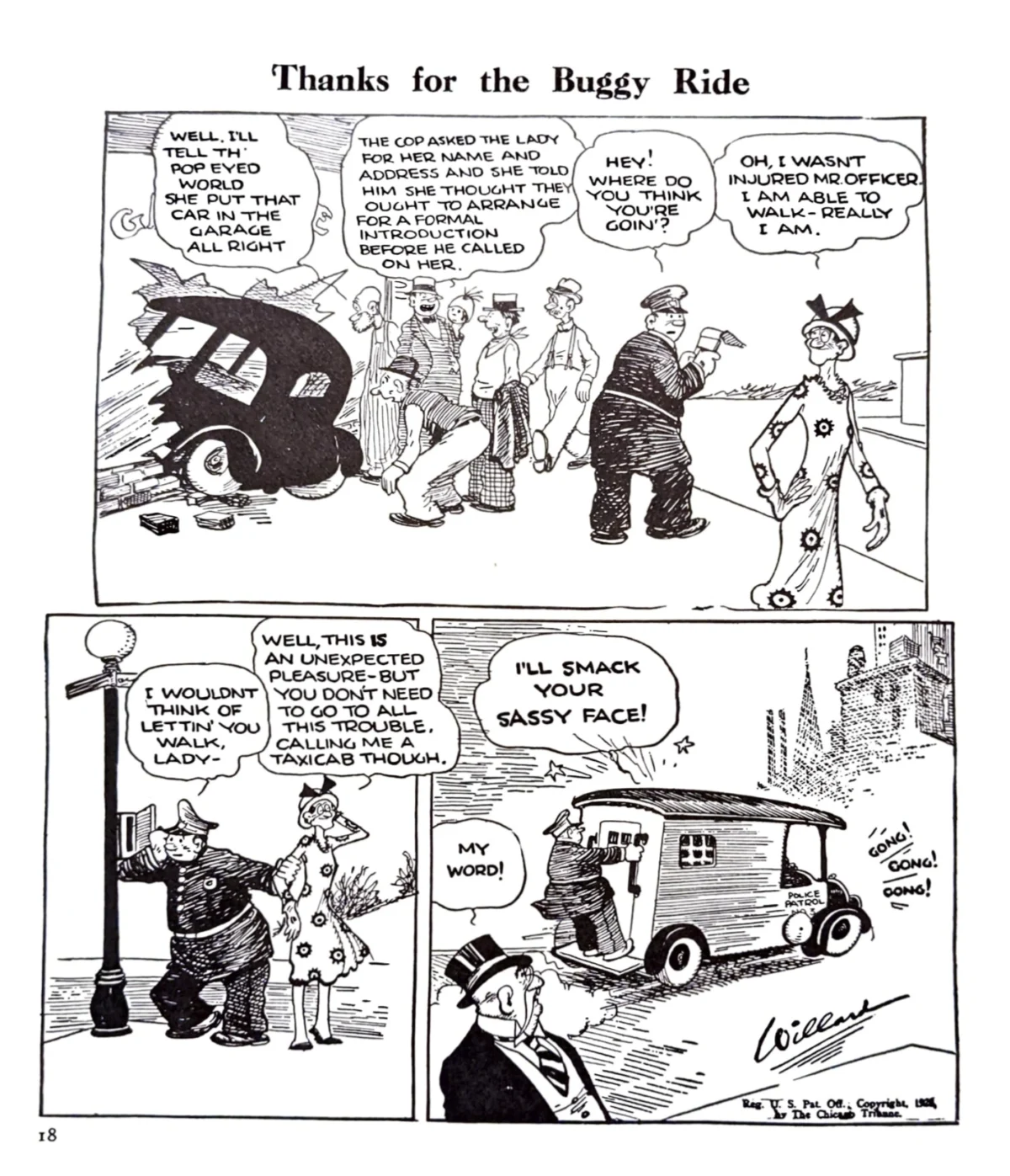
In the quiet, oppressive aftermath of a collapsing marriage, literature often serves as either a mirror or a window. For Jean Marc Ah-Sen, the search for a literary tonic led him away from the "macroscopic, earth-shattering stakes" of contemporary fiction and toward the yellowed, gargantuan ink-washes of early 20th-century comic strips. Specifically, he found solace in the work of Frank Willard and his most enduring creation, Moon Mullins.
What began as a distraction from mounting legal troubles and the suffocating silence of a post-separation home evolved into a deep exploration of a forgotten cultural titan. Moon Mullins, which at its zenith reached a daily audience of 14 million readers, represents a specific era of American "lowbrow" comedy—a world of rooming-house brawls, feckless prizefighters, and the grit of the working-class "undesirables."
Main Facts: The Scale and Scope of a Comic Empire
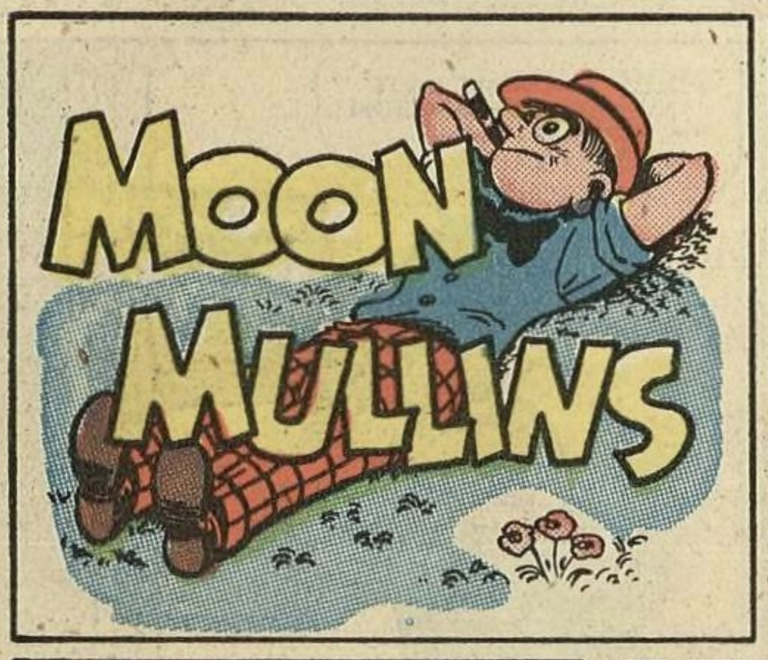
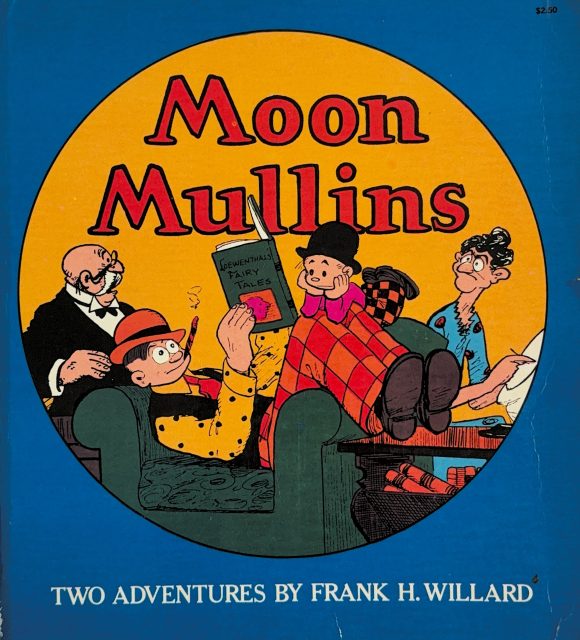
The primary subject of this exploration is the comic strip Moon Mullins, which debuted on June 19, 1923, under the pen of Frank Willard. Distributed by the Chicago Tribune-New York News Syndicate (and later King Features), the strip became a cornerstone of American newspaper culture for nearly seven decades.
A Gargantuan Canvas
Willard’s original drawing boards were massive, standing 22 inches long and 16.5 inches wide. This physical scale reflected the outsized personalities contained within the panels. For enthusiasts like Ah-Sen, these dimensions are more than a technicality; they represent a "hulking" presence in the history of the medium, shared by contemporaries like Rudolph Dirks (The Katzenjammer Kids) and Harry Tuthill (The Bungle Family).

The Ensemble of 1323 Wump Street
The strip’s narrative engine was the rooming house located at 1323 Wump Street. The cast was a "crackbrain ensemble" that mirrored the diverse, often desperate archetypes of the early-to-mid 20th century:
- Moon Mullins: A feckless, "banjo-eyed" prizefighter with a penchant for cigars and a permanent case of "layaboutism."
- Kayo: Moon’s younger brother, who slept in a dresser drawer—a visual shorthand for the strip’s cramped, working-class setting.
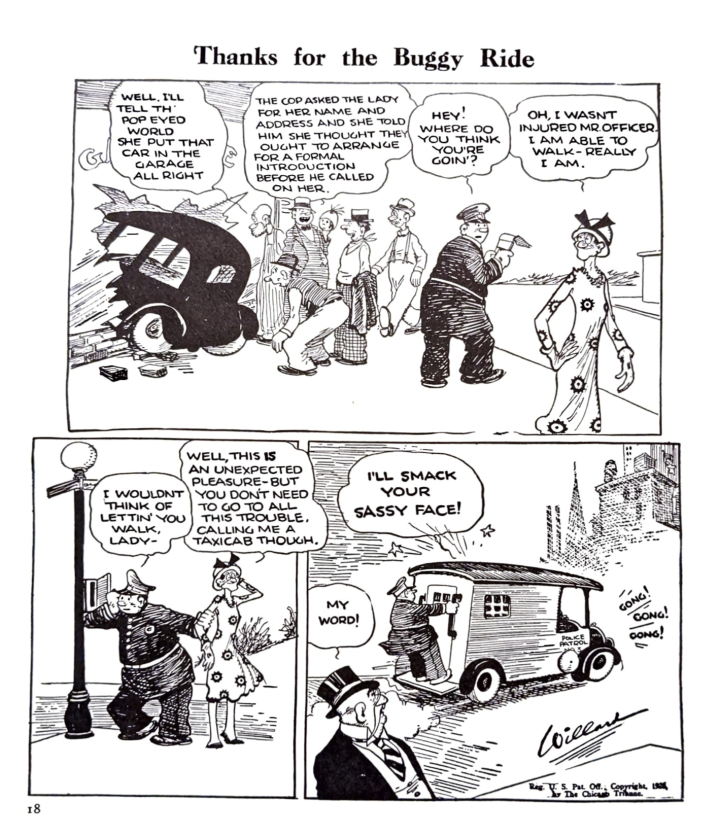
- Emmy Schmaltz: The landlady, characterized by her social pretensions and constant evasion of authority.
- Lord Plushbottom: An impoverished aristocrat who had fallen on hard times, serving as a foil to the more uncouth residents.
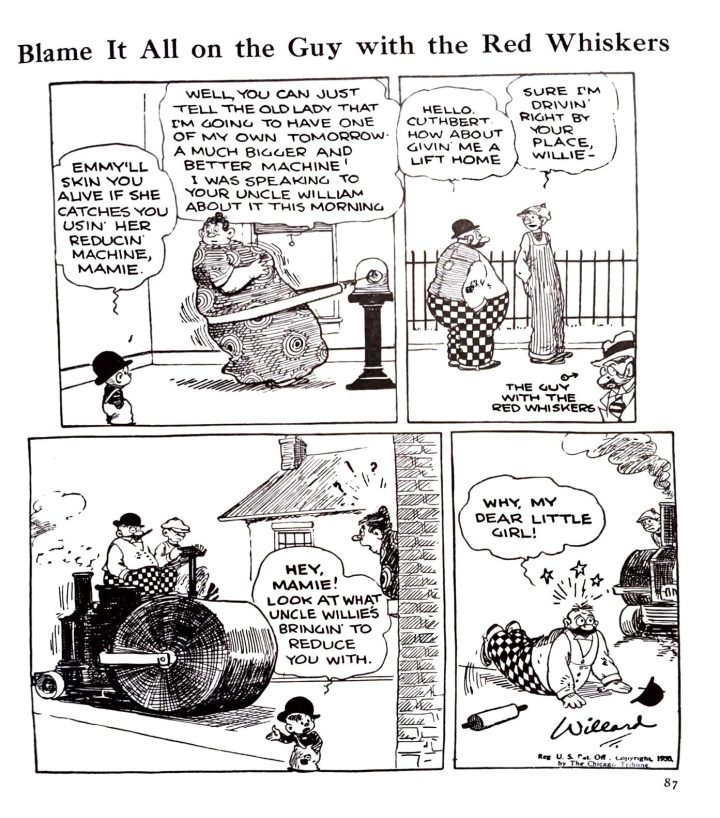
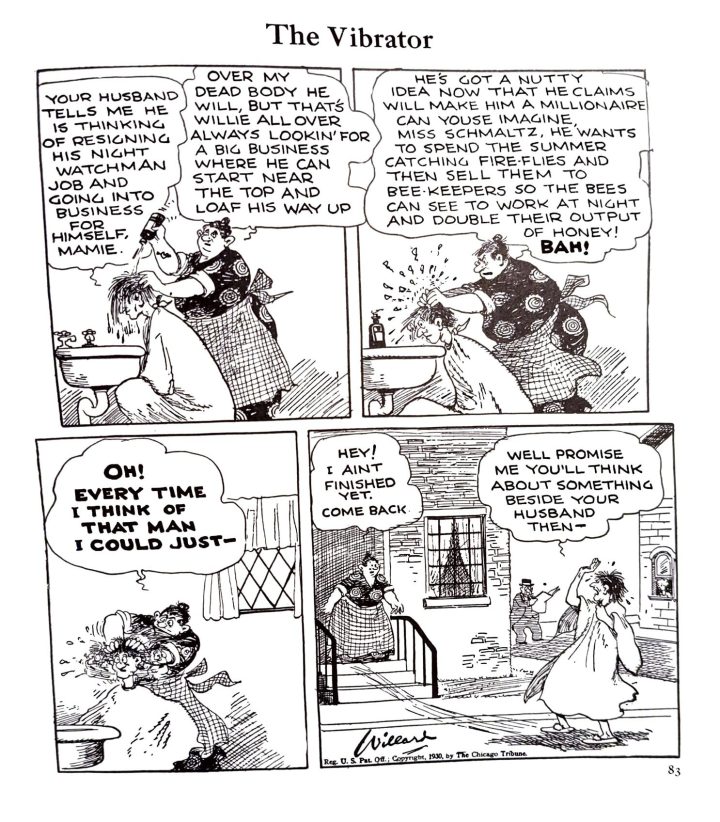
- Uncle Willie and Aunt Mamie: The quintessential bickering couple, representing the "frank-hearted pluck" of the American poor.
Chronology: From the Jazz Age to the Archie Era
The lifespan of Moon Mullins tracks the evolution of American media, surviving the Great Depression, World War II, and the shift toward middle-class domesticity in the 1950s.
The Willard Era (1923–1958)
Frank Willard remained at the helm of the strip until his death in 1958. During this period, the strip focused on the "Dust Bowl economic bootstrapping" and the slapstick violence of the urban poor. It was during these decades that the strip reached its peak circulation of 350 North American newspapers.
The Johnson Succession (1958–1991)
Following Willard’s death, his long-time assistant Ferd Johnson took over the strip. Johnson claimed to have been the primary artist since 1933 and the lead writer since 1943, alleging that Willard spent much of his later years golfing or drinking. Johnson attempted to modernize the strip, moving the characters into the middle class and cleaning up the humor for a more family-friendly audience. However, the strip struggled to maintain its relevance in a changing cultural landscape, eventually concluding its 68-year run in 1991.
Cross-Media Presence
At the height of its popularity, Moon Mullins transcended the funny pages. The brand expanded into:
- Merchandise: Kellogg’s cereal box prizes and a Milton Bradley board game.
- Animation: Brief segments in the Saturday morning Filmation cartoon Archie’s TV Funnies in the early 1970s.
- Cultural Idiom: The name "Moon" became a common nickname for men with the surname Mullins across the United States.
Supporting Data: The Typology of Personages
The enduring appeal of Moon Mullins—and the reason it resonated so deeply with Ah-Sen during his divorce—lies in its recognizable character archetypes. These "typologies" are not merely historical relics but reflections of universal human behaviors.
Real-World Parallels
Ah-Sen notes that the residents of 1323 Wump Street felt familiar even decades after their creation. Emmy Schmaltz echoed the "attention-starved" landlords of modern-day Toronto, while Lord Plushbottom mirrored the "underwitted bosses" of the financial district who put on airs of liquidity while drowning in debt. Moon himself was a stand-in for the roughnecks found in martial arts circuits—men who took their "lumps as they came" with a trademark "hangman’s stoicism."
The "Rooming House" Subgenre
The strip belongs to a specific lineage of "close quarters conflict." This tradition includes:
- The Broons: The long-running Scottish strip.
- The Greens: Frank Quitely’s underground take on the genre.
- Rising Damp: Eric Chappell’s classic British situation comedy.
The humor in these works is derived from the friction of disparate personalities forced into proximity by economic necessity.
Official Responses and Critical Context: The Shadow Side of the Strip
While Moon Mullins provided a "therapeutic tonic" for many, modern critical analysis must contend with the problematic elements that contributed to its eventual decline.
The Minstrel Legacy
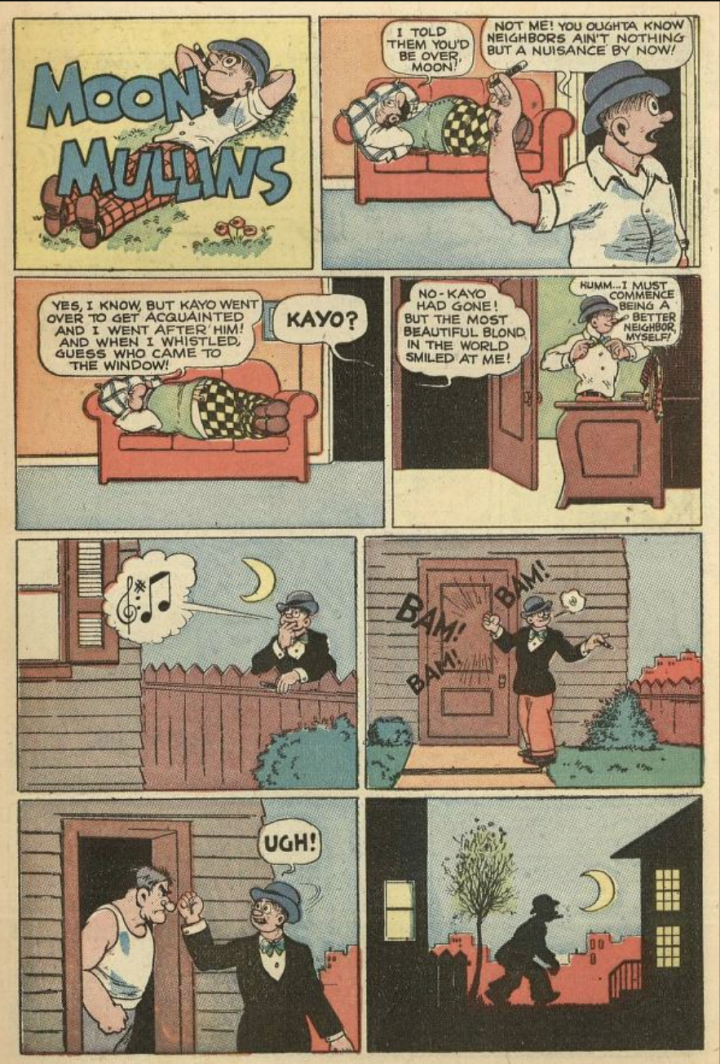
A significant "bitter taste" in the Mullins archive is its reliance on racist minstrel-show representations. The character "Mushmouth," Lord Plushbottom’s driver, is a derisive caricature that utilizes offensive tropes of African American Vernacular English. These depictions have made the strip difficult to reprint or celebrate in a contemporary context without significant editorial framing.
Gender and Class Tropes
The strip’s characterization of women was notoriously inflexible, rarely deviating from the categories of "floozy, shrew, or matron." Furthermore, the portrayal of the "downtrodden" often lacked sympathy, sometimes framing poverty as a result of laziness rather than systemic failure—as seen in Aunt Mamie’s descriptions of Uncle Willie’s desire to "loaf his way up" to the top.
Historical Scholarship
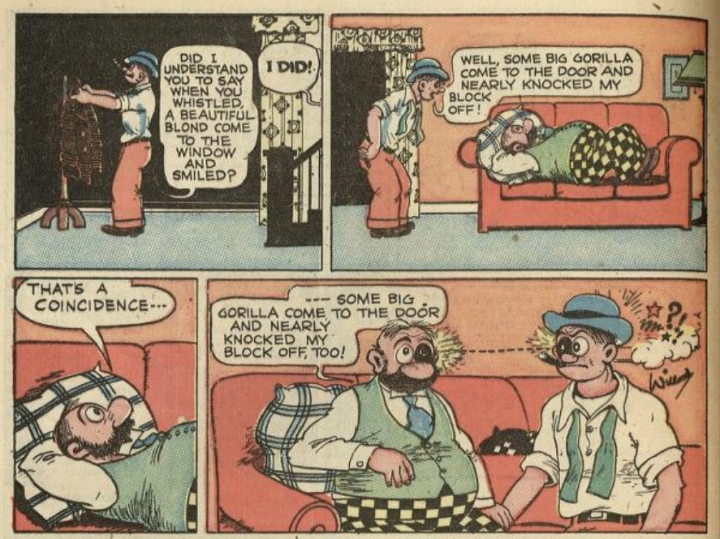
Comic historian R.C. Harvey, in his definitive history Frank Willard and a Touch of Moonshine, describes the work as "lowbrow comedy for the masses." Harvey’s research paints a picture of a creator who was as volatile as his characters. Willard was known to have physically assaulted an editor for stealing his ideas and frequently relied on "wallpapering"—a practice where old drawings were cut and pasted together to meet deadlines while Willard pursued leisure activities.
Implications: The Stoicism of the Slapstick
The rediscovery of Moon Mullins suggests that there is a "comic strip for every malady." For those navigating the "wave" of divorce or legal instability, the strip offers a lesson in endurance.
The Philosophy of the "Lump"
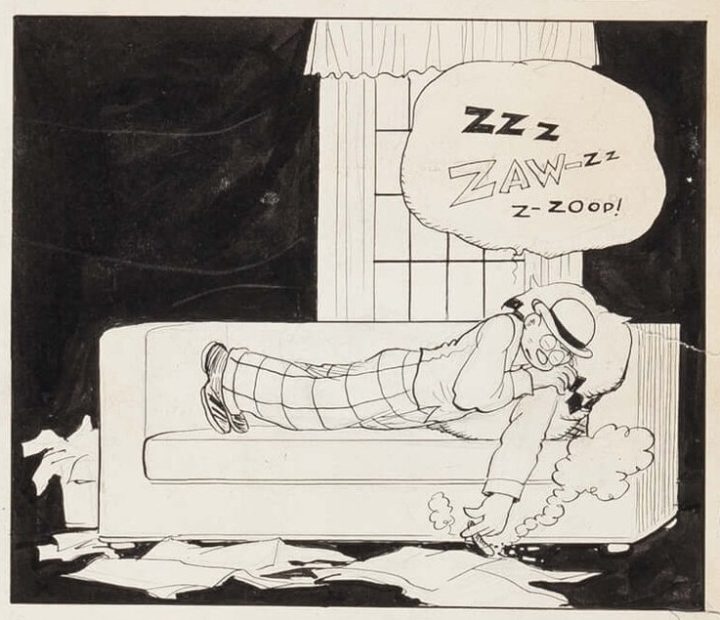
The titular character, Moon, is a man who is "out socially" and constantly falling afoul of his intimates. Yet, he bears his misfortunes with a "jugheadedness" that approaches the philosophical. In a 1930 Sunday strip, Moon awakens in a house fire caused by his own cigar. Believing he has died and gone to hell, he simply remarks: “So! This is where they sent me.”
The Value of the Inconnu
For the modern reader, the therapeutic quality of Willard’s work lies in its "familiar yet inconnu" (unknown) nature. It provides a world where humor occasionally touches on social significance but primarily functions as a refuge.
Conclusion: A Rebound with the Past
Ultimately, the story of Moon Mullins is a testament to the power of "lowbrow" art to sustain the human spirit through "ill-circumstance." While the strip is marred by the prejudices of its time, its core—the "frank-hearted pluck" of characters who refuse to be defeated by their own incompetence—remains a potent reminder of the need to "endure and believe in a future when all’s well." For Jean Marc Ah-Sen, Moon Mullins was more than a comic; it was a "revitalizing tonic" that allowed him to savor the richness of life once again, one slapstick panel at a time.